The first sound you may hear at a Japanese shrine is not a prayer. It is water dipping from a wooden ladle, gravel underfoot, and perhaps the soft rattle of a bell. Knowing the shrine prayer etiquette steps lets you join that quiet rhythm with confidence, whether you are visiting a famous Kyoto shrine or a small neighborhood sanctuary tucked beneath old trees.
For Japan lovers worldwide, this is less about memorizing a rigid performance and more about showing care. A Shinto shrine is a place connected with kami – sacred presences associated with nature, ancestors, places, and aspects of life. Follow the local signs, watch what regular visitors do, and move with a little patience. That spirit matters more than perfect choreography.
Start by Knowing: Shrine or Temple?
Japan’s shrines and temples can stand close together, and both are deeply worth visiting, but their prayer customs are not identical. A Shinto shrine is often marked by a torii gate, which may be painted vermilion or left in natural wood. You will commonly see shimenawa sacred rope, zigzag paper streamers called shide, and sometimes guardian foxes, lions, or other figures.
A Buddhist temple usually has a gate, a main hall, incense burners, and images of Buddhist figures. At a shrine, the familiar pattern is usually two bows, two claps, a silent prayer, and one final bow. At a temple, clapping is generally not part of the prayer. This article focuses on shrines, so spotting that torii is your first useful clue.
Shrine Prayer Etiquette Steps, From Gate to Prayer
1. Bow lightly at the torii gate
The torii marks the boundary between the everyday world and the shrine’s sacred space. Before passing through, pause and make a small bow toward the gate. If the entrance is busy, a respectful nod is perfectly fine.
Avoid walking directly down the center of the approach, called the sando. The middle is traditionally reserved for the kami. Walk along the left or right side instead. It is a small gesture, but it changes how you experience the visit: you are not rushing toward an attraction, you are arriving as a guest.
Not every shrine has the same layout, and huge popular sites can be crowded. Do your best without weaving awkwardly through people. Courtesy toward fellow visitors is part of the etiquette too.
2. Purify at the temizuya
Near the entrance, you may find a water pavilion called a temizuya or chozuya. This is for symbolic purification before approaching the main hall. It is not a handwashing station in the ordinary sense, so do not put your hands, face, or bottle under the communal water source.
The usual sequence is simple:
- Hold the ladle in your right hand and rinse your left hand.
- Switch the ladle to your left hand and rinse your right hand.
- Pour a little water into your cupped left hand, then use that water to rinse your mouth discreetly. Do not touch the ladle with your mouth and do not spit into the basin.
- Rinse your left hand once more, then tip the ladle upright so remaining water runs down the handle.
Place the ladle back where you found it. The goal is symbolic cleanliness, not a dramatic splash. In winter, when the water is startlingly cold, everyone understands a quick, calm version.
Some shrines have covered the water basin, removed ladles, or posted their own instructions. Follow the signage. Local guidance always takes priority over a general etiquette guide.
3. Approach the offering box without rushing
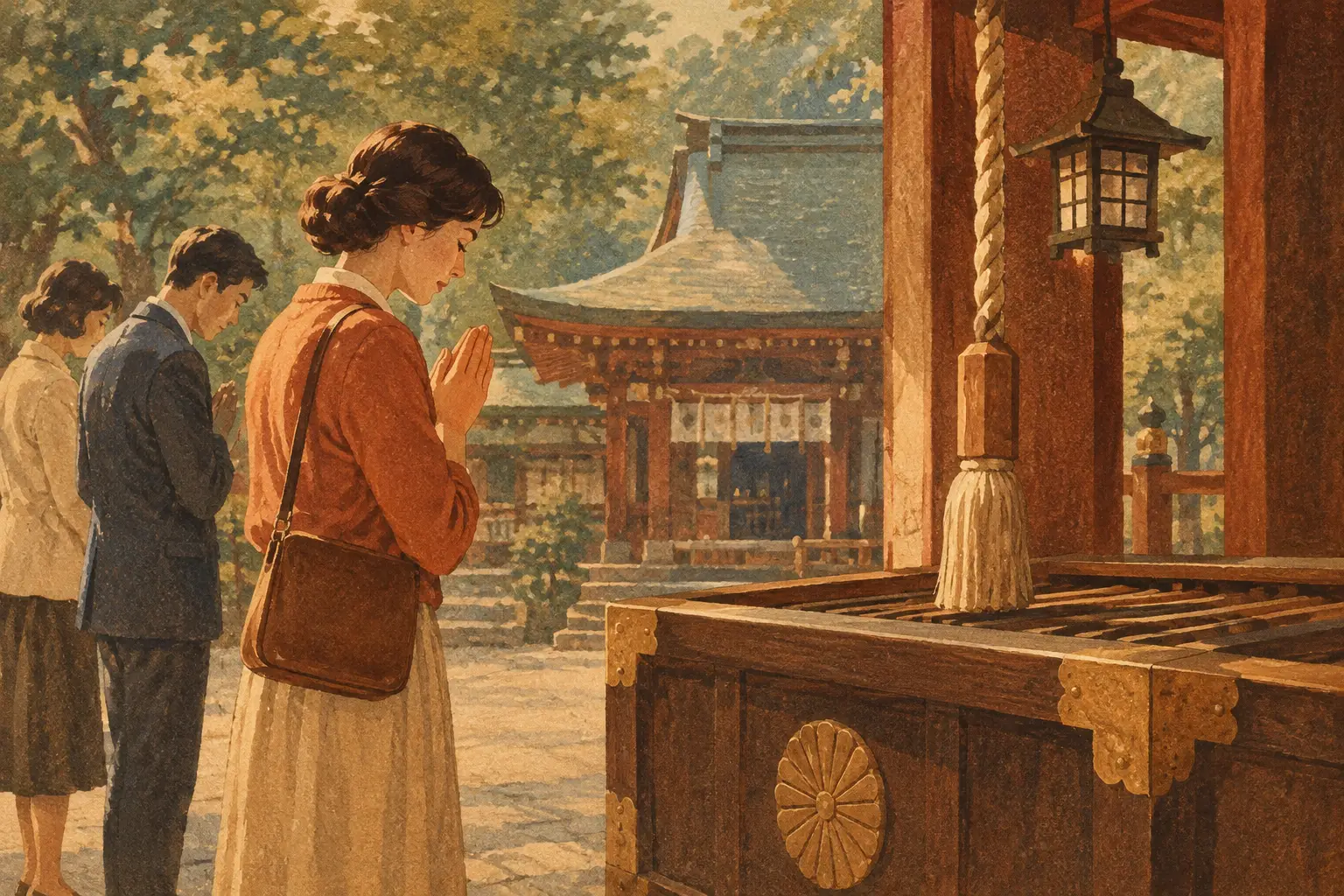
At the main hall, stand before the offertory box, called a saisenbako. If there is a line, wait quietly and give the person ahead of you room to finish. Many visitors place a coin in the box as an offering.
You may hear that a 5-yen coin is especially lucky because go-en sounds like the Japanese word for a good connection or relationship. It is a lovely bit of wordplay, but it is not a requirement. Any modest coin is fine. The amount does not measure the sincerity of your visit.
Place or gently toss the coin in the box. Do not throw it hard enough to make a show of it. If a bell rope hangs in front of the hall, ring it gently before praying. Some shrines do not have one, and that is completely normal.
4. Bow twice, clap twice, and pray quietly
This is the central gesture most people mean when they ask about Japanese shrine prayer. After your offering, make two deep bows. Bring your hands together at chest height and clap twice. Then keep your hands together and pray silently for a moment.
There is no need to recite Japanese words. You can offer thanks, express a hope, reflect on your trip, or simply stand quietly. A prayer at a shrine does not need to be complicated. For many visitors, a moment of gratitude is the most natural place to begin.
When you are finished, make one more deep bow. Step away to the side rather than turning immediately and cutting in front of the next person. This final bow completes the exchange with respect.
The rhythm is: two bows, two claps, silent prayer, one bow. Remembering that pattern will carry you through most Shinto shrine visits.
What “Respectful” Looks Like Beyond the Ritual
Etiquette is not only what happens at the offering box. Keep your voice low, especially near the main hall. Put away food and drinks unless the shrine has a designated rest area. Smoking, loud calls, and playful posing can feel out of place in a sacred space, even at a highly photographed destination.
Photography is often welcome on shrine grounds, but the main hall’s interior may be off-limits. Look for signs before taking pictures, and never photograph a private ceremony, priest, or worshipper without clear permission. If you are wearing a kimono or yukata, enjoy the experience, but remember that respectful clothing is more about behavior than costume perfection.
Sacred ropes, gates, fences, and closed doors are not photo props. Do not step over barriers or touch ritual objects. The appeal of a shrine often lies in its wabi sabi – its quiet weathering, asymmetry, and sense of time. Let that atmosphere remain undisturbed for the next visitor.
Ema, Omikuji, and Goshuin: Meaningful Additions
After praying, you may want to explore the smaller rituals around the grounds. Ema are wooden votive plaques on which visitors write wishes or thanks. Buy one at the shrine office, write thoughtfully, and hang it in the designated area. A wish can be personal, practical, funny, or serious. There is no need to write in Japanese.
Omikuji are paper fortunes. If you draw one that seems unfavorable, do not panic. Many shrines provide a place to tie it up, symbolically leaving the bad fortune behind. If you receive a good fortune, you can keep it as a memento or tie it there if the shrine’s instructions say you may.
A goshuin is a handwritten shrine seal, often paired with calligraphy, collected in a dedicated goshuincho book. Treat the book respectfully. Do not hand over a notebook full of unrelated stamps, and do not interrupt a shrine worker while they are assisting someone else. These are not souvenir stamps in the casual sense – they are records of your visit to a sacred place.
A Few Situations Where the Rules Change
Some shrines are extremely popular, while others are active local centers where families come for milestones, business owners request good fortune, and priests conduct ceremonies. During New Year’s hatsumode visits, crowds can be enormous. You may not be able to bow at the gate or purify at the basin with the same unhurried pace. Follow the flow, be considerate, and avoid blocking anyone.
If you attend a formal blessing or purification ceremony, staff will guide you. You may be asked to bow, receive a small ritual object, or make an offering. Do not worry about getting every movement right. Watch closely and follow the instructions. Quiet attentiveness is better than trying to anticipate the ritual.
At mountain shrines, on pilgrimage routes, or at shrines associated with a particular craft, the mood may feel especially tied to the landscape. A shrine gate at the edge of cedar forest can bring a sense of mono no aware – an awareness of passing time and fragile beauty. Slow down enough to notice it.
Leaving the Shrine Gracefully
When you leave, walk back along the side of the approach. At the torii gate, turn toward the shrine and make one final small bow before returning to the street. You do not need to repeat the water ritual on the way out.
A shrine visit is not a test with points deducted for a clumsy clap or the wrong coin. It is an invitation to pause, observe, and participate with humility. Carry that feeling beyond the gate, and even a short visit can become one of the most memorable parts of your time in Japan.