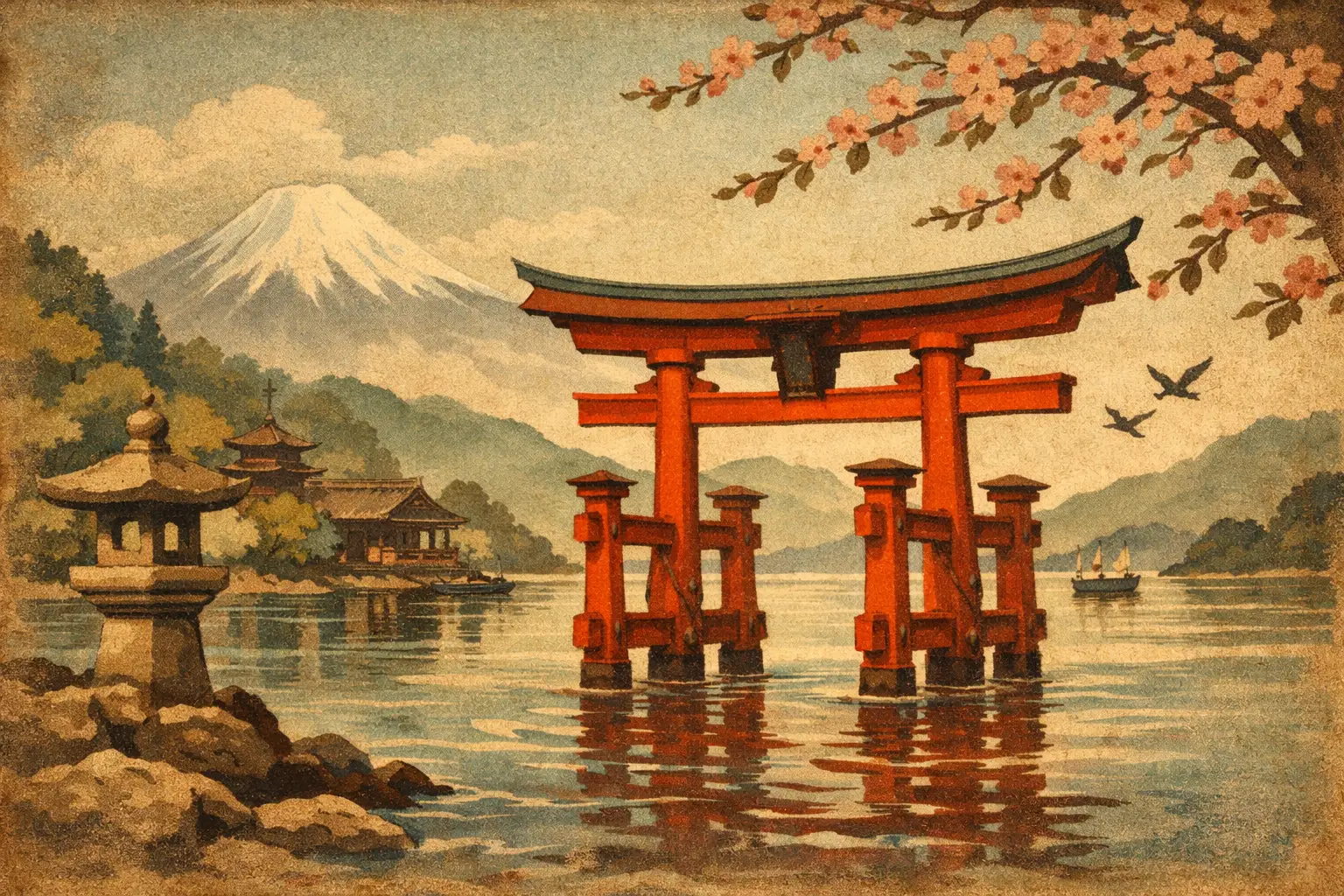
If you have ever stood before a shrine entrance in Japan and felt that little jolt of wonder, you are not alone. One of the first questions many Japan lovers ask is simple: why are torii gates red? That vivid color feels impossible to ignore, especially when it frames a forest path, a mountain trail, or a quiet shrine courtyard.
The short answer is that the red, or more accurately vermilion, has long been associated with protection, purification, and sacred space in Japan. But like so much in Japanese culture, the real answer is richer than a one-line explanation. It blends religion, history, imported pigments, practical building needs, and the way color shapes emotion.
Why are torii gates red at Shinto shrines?
A torii marks the boundary between the ordinary world and the sacred world of a Shinto shrine. Passing through one is not just walking under a gate. It signals a shift in atmosphere. You leave daily concerns behind and step into a place where kami, often translated as spirits or divine presences, are honored.
That is where the red color matters. In Japan, vermilion has long carried protective meaning. It was believed to ward off evil, repel disease, and purify spaces. So when a shrine uses red torii, the color is doing symbolic work. It is not decoration in the casual sense. It helps declare that this place is spiritually set apart.
This idea also connects with a broader East Asian history of red as a powerful and auspicious color. In Japan, that symbolism took on a distinct religious life through both Shinto and Buddhism. At many shrines and temples, bright vermilion became tied to sacred architecture because it was thought to create a protective barrier against impurity and misfortune.
For visitors, even those who are not religious, the effect is immediate. A red torii does not look neutral. It feels intentional, ceremonial, and alive. That emotional charge is part of why these gates remain so memorable.
The shade is usually vermilion, not just red
When people ask why are torii gates red, they are usually noticing a very specific shade. It is often a brilliant orange-red called shu, or vermilion. That distinction matters because vermilion has deep historical and ritual associations in Japan.
Traditional vermilion pigment was made from cinnabar or later from substitute materials, and it became prized for both its beauty and symbolic force. In shrine architecture, vermilion was associated with vitality, the sun, and protection from negative forces. It also stood out dramatically against natural surroundings – dark cedar, gray stone, green moss, misty hills. That contrast gives many shrine approaches their unforgettable atmosphere.
If you have visited places like Fushimi Inari Taisha in Kyoto, with its tunnel of torii gates climbing the mountain, you know exactly how powerful that color can be. It is almost cinematic, yet deeply traditional. The visual experience is part of the meaning.
History, status, and imported influence
The red torii did not appear out of nowhere. Japan’s sacred architecture evolved over centuries, and color choices were shaped by both native beliefs and continental influence from China and Korea. As Buddhism entered Japan and artistic exchange increased, the use of vermilion in religious spaces became more common.
Over time, the color also gained prestige. Vermilion pigments could be expensive, and painted structures carried an aura of importance. A brightly painted shrine gate signaled care, status, and ritual seriousness. In that sense, color was spiritual, but it was also social. It showed that the shrine had patrons, resources, and a visible place in community life.
This is one of those moments where Japanese culture resists a single tidy answer. The red is not only symbolic, and it is not only practical. It is both. Like a great tea bowl that carries wabi sabi in its surface while also serving an everyday function, a torii’s color can hold many meanings at once.
There was also a practical reason
Sacred symbolism gets most of the attention, but practical concerns mattered too. Traditional vermilion coatings helped protect wood from weathering, insects, and decay. In Japan’s humid climate, that was no small thing.
Shrines built from wood face constant pressure from rain, heat, and seasonal change. A mineral-based coating could help preserve the structure while also giving it a powerful sacred appearance. So the famous color had a real-world advantage. It helped the gate last longer.
This is a good reminder that Japanese design often blends utility and beauty without making a hard division between them. A shrine gate can be spiritually charged and materially sensible at the same time. That balance feels very Japanese.
Why are torii gates red if some torii are not?
Here is where things get more interesting. Not all torii are red. Some are left unpainted, especially if they are made from natural wood or stone. Others may be black, weathered brown, or even gray. So if red is so important, why do these other torii exist?
The answer depends on the shrine, region, history, and material. Some shrines prefer the natural look of wood, which can feel more rustic and closer to the kami of the landscape. Others preserve older architectural traditions or make decisions based on maintenance and cost. A stone torii, for example, does not need paint in the same way a wooden one does.
There is also an aesthetic difference. An unpainted torii can carry a quieter feeling, something closer to mono no aware – that gentle awareness of impermanence and passing time. Moss on stone, fading grain in wood, and a weather-softened surface create a different sacred mood than bright vermilion. Neither is more authentic. They simply express different aspects of shrine culture.
The color creates a threshold you can feel
One reason red torii remain so iconic is that they do more than symbolize sacred space. They help people feel the crossing into it. Color works on the body before it works on the intellect.
A bright gate at the edge of a forest trail catches your attention. It interrupts the ordinary. It frames the landscape and says, in effect, pay attention now. That is powerful design. Even if you know nothing about Shinto, you sense that something is changing as you pass beneath it.
This may be part of why torii gates photograph so beautifully, but the real experience is stronger in person. The gate does not just sit in the scene. It organizes the scene. It turns a path into an approach, a walk into a small ritual.
For many travelers, this is one of the unforgettable pleasures of visiting shrines in Japan. You begin with visual excitement, but very quickly the experience becomes quieter and deeper.
Red torii and Inari shrines
If you have seen long rows of torii gates, there is a good chance they were at an Inari shrine. Inari is associated with rice, agriculture, prosperity, and business, and these shrines are famous for their many donated torii.
At places like Fushimi Inari, the repetition of vermilion gates creates a path that feels almost otherworldly. Each gate is typically donated by an individual or company as an act of devotion or gratitude. The color reinforces the sacred continuity of the route, while the repeated forms make the journey feel immersive.
This is one of the clearest examples of how torii operate as both religious objects and cultural icons. They are photogenic, yes, but they are also records of faith, community support, and ongoing tradition.
What the red says to Japan lovers worldwide
For many of us outside Japan, the red torii is one of the first visual symbols that pulls us toward the country. It appears in travel dreams, art prints, ukiyoe-inspired imagery, and memory. But the more you learn, the more rewarding it becomes.
The color is not random. It carries layers of belief, preservation, history, and emotion. It marks a threshold. It protects. It stands out against nature while somehow belonging completely within it. That tension is part of its beauty.
And maybe that is why the question matters. Asking why are torii gates red is really a way of asking how Japan turns space into meaning. A gate becomes more than wood or stone. A color becomes more than color. The ordinary world pauses for a moment, and something sacred comes into view.
Next time you see a vermilion torii, whether on a shrine path in Japan or in a photo that stirs your wanderlust, take an extra second before passing through. The answer is in the history, yes, but also in the feeling.