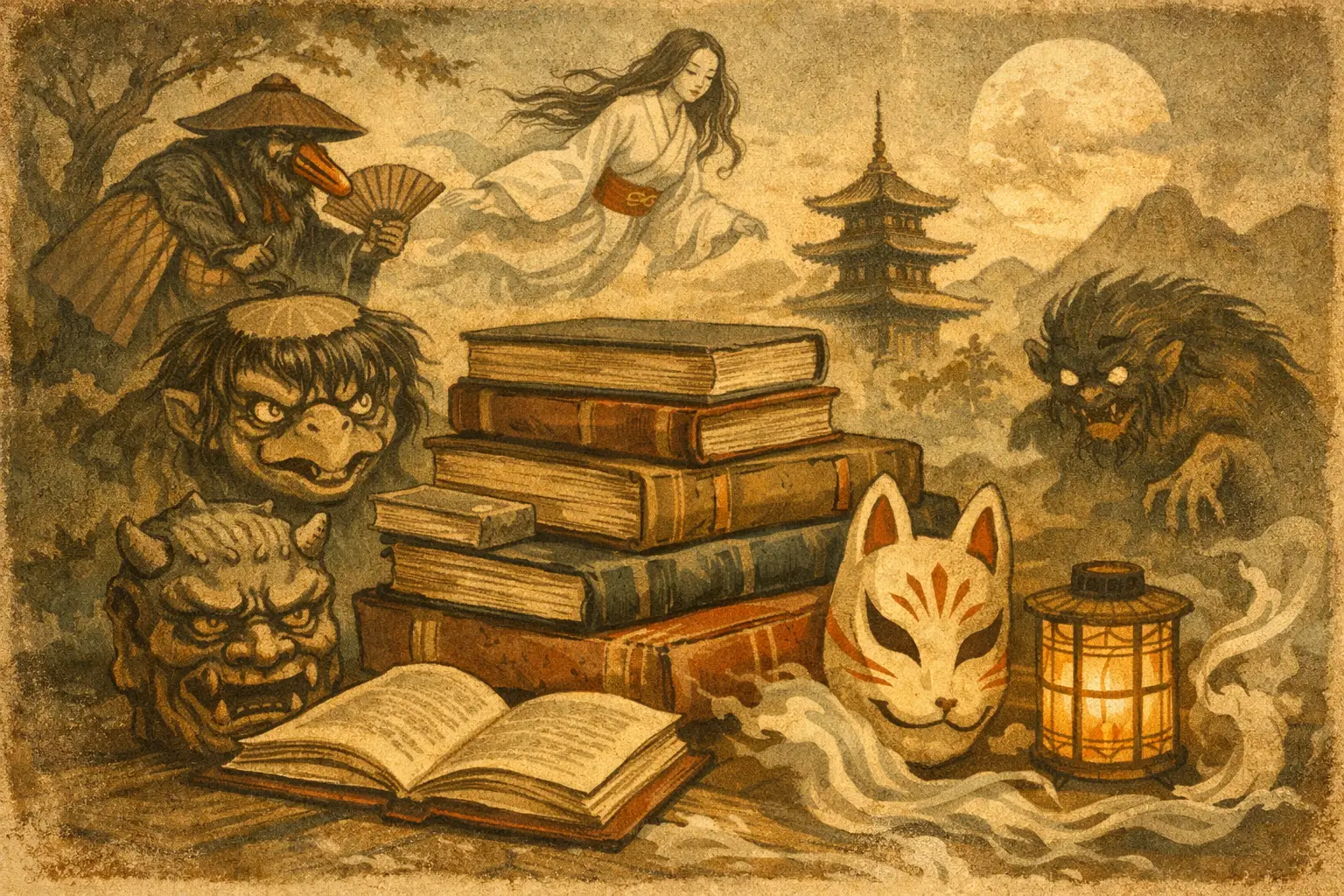
A lantern-lit mountain road. A fox that may be a woman in disguise. A temple bell heard from the bottom of the sea. The best books on japanese folklore do more than supply spooky creatures for a rainy-night read. They show how stories have traveled through villages, shrines, theaters, woodblock prints, and family conversations for centuries.
For Japan lovers worldwide, folklore is one of the most rewarding ways to get closer to the country’s texture and imagination. You will meet yōkai, kami, onryō, tanuki, kappa, dragons, and fox spirits, but also ordinary people facing jealousy, grief, hunger, loyalty, and wonder. Some of these books are beautiful reading companions; others help you understand where the tales came from and why they still matter.
How to choose books on Japanese folklore
There is no single shelf called “Japanese folklore.” A ghost-story collection can feel very different from a study of local customs, and a guide to yōkai is not the same as a book of Shinto myths. That variety is part of the fun.
If you want stories first, choose a collection of translated folktales or supernatural fiction. If you want context for a trip to a shrine, museum, or historic town, add a cultural guide that explains the beliefs behind the figures. Readers interested in art will especially enjoy books that connect stories with ukiyo-e, scroll paintings, and prints. The best approach is usually one atmospheric collection plus one reliable reference work.
A small caution: many classic English-language collections were produced in the late 19th or early 20th centuries. They can be enchanting, but their translations and comments sometimes reflect the assumptions of their era. Read them for their literary atmosphere, then balance them with newer scholarship and translations.
12 best books on Japanese folklore
1. Kwaidan by Lafcadio Hearn
For many English-language readers, this is the gateway book. Hearn’s retellings of Japanese ghost stories include “Mimi-nashi Hōichi,” the tale of a blind biwa player who performs for the dead, and “Yuki-Onna,” the unforgettable snow woman. The prose has an old-fashioned, hushed quality that suits the material beautifully.
It is not a field guide to folklore, and Hearn reshaped stories through his own literary sensibility. Still, if you want moonlight, temple gates, sea ghosts, and a strong feeling of mono no aware, start here.
2. Japanese Tales translated by Royall Tyler
This is a superb choice for readers who want a broad, thoughtfully translated collection rather than only famous ghost stories. Tyler brings together tales from different periods and sources, including Buddhist parables, animal stories, courtly tales, and the strange, unsettling narratives known as setsuwa.
The range is its strength. One story may be funny and earthy, the next morally severe, the next quietly heartbreaking. It makes clear that Japanese folklore is not one mood or one monster-filled genre.
3. Japanese Ghost Stories translated by Lafcadio Hearn and others, edited by Jay Rubin
For a concentrated dose of the uncanny, this collection is hard to beat. It gathers ghostly tales from major literary voices and traditional sources, with an eye for stories that stay with you after the final page. Expect vengeful spirits, lovers divided by death, and the eerie consequences of broken promises.
This is a strong pick for a book club or autumn reading list. It is more literary than encyclopedic, so pair it with a yōkai guide if you want to identify every creature and cultural reference.
4. The Book of Yōkai by Michael Dylan Foster
Want to know why a one-eyed, one-legged umbrella might hop into a story? Foster is your guide. The Book of Yōkai introduces dozens of supernatural beings with intelligence, humor, and a clear sense of how yōkai have changed over time.
Rather than treating these figures as frozen relics, Foster shows how they have moved between oral tales, picture scrolls, popular prints, children’s culture, and modern life. This is one of the best books on Japanese folklore for readers who love both strange creatures and the history behind them.
5. Pandemonium and Parade by Michael Dylan Foster
If The Book of Yōkai makes you curious, go deeper with this study of the hyakki yagyō, or night parade of one hundred demons. Foster traces the image of a chaotic supernatural procession through art, literature, and popular culture.
This is more academic than the previous title, but it remains readable for committed enthusiasts. It is especially satisfying for travelers who have seen yōkai imagery in Kyoto shops, museum exhibitions, or old illustrated books and want to understand the long visual tradition behind it.
6. Tales of Old Japan by A. B. Mitford
Published in 1871, this is another foundational English collection. It includes well-known tales such as “The Forty-Seven Rōnin,” along with stories of monsters, ghosts, and justice. Its age is both its appeal and its limitation: the language can feel wonderfully antique, while the framing can feel dated.
Read it as a historical artifact as much as a storybook. It offers a glimpse of which Japanese narratives first captivated English-speaking audiences, but it should not be your only source for understanding Japan.
7. Japanese Mythology by Michael Ashkenazi
Folklore and mythology overlap, especially when stories involve kami, creation, sacred places, and ritual. Ashkenazi provides a concise, accessible overview of major myths and their continuing presence in Japanese culture.
This is a useful companion before visiting shrines or reading texts connected to Amaterasu, Susanoo, Inari, or the origins of the imperial line. It will not replace a folktale collection, but it gives the sacred background that many stories assume readers already know.
8. Fox by Kiyoshi Nozaki
Kitsune are everywhere in Japanese storytelling: clever tricksters, loyal messengers, seductive shapeshifters, and guardians linked to Inari worship. Nozaki’s focused study explores fox beliefs, legends, customs, and artistic representations.
Choose this one if foxes are the thread pulling you into folklore. It is specialized and occasionally dated, but its single-subject focus reveals just how much cultural meaning can gather around one animal.
9. The Fox Wife by Choo Hee-jae
This novel is not a folklore reference, but it belongs on this list for readers who connect most deeply through fiction. Drawing on kitsune lore, it follows a fox spirit navigating love, danger, and identity in a richly imagined historical setting.
Think of it as a bridge book. After reading traditional fox tales, a novel like this lets you feel how an old folkloric figure can still carry emotional force. It also makes a wonderful choice for readers who want cultural atmosphere without academic notes.
10. The Shinto Religion by Stuart D. B. Picken
Some folktales only fully open up once you understand the relationship between people, place, and kami. Picken’s introduction to Shinto helps explain festivals, shrine practices, purification, sacred objects, and the reverence for natural presences that run through Japanese storytelling.
This is not a campfire collection of legends. It is context. Read a chapter or two alongside ghost stories and shrine tales, and many details that once seemed decorative begin to feel meaningful.
11. Japanese Fairy Tales by Yei Theodora Ozaki
Ozaki’s collection introduced generations of English readers to “Momotarō,” “Urashima Tarō,” “The Tongue-Cut Sparrow,” and other enduring tales. The storytelling is direct, charming, and highly readable, making this a friendly entry point for adults sharing Japanese stories with younger family members.
Like other early translations, it benefits from being read with awareness of its period. But these stories remain lively, and their repeated images of gratitude, cleverness, transformation, and consequences make them easy to remember.
12. The Yanagita Kunio Guide to the Japanese Folk Tale edited by Fanny Hagin Mayer
For readers ready to move beyond retellings, this is an invaluable look at the work of Yanagita Kunio, often called the father of Japanese folklore studies. It introduces folk narrative types and the methods used to collect and classify tales from communities across Japan.
This is the most scholarly selection here, but it changes how you read everything else. You begin to notice regional variation, recurring story patterns, and the difference between a tale preserved on a page and one that lived through performance and local memory.
Build a reading path that fits your Japan obsession
Start with Kwaidan if you want atmosphere, or Japanese Fairy Tales if you want the classic stories everyone should know. Move to The Book of Yōkai when you want names, origins, and visual culture. Then choose a focused route: fox lore with Nozaki, shrine context with Picken, or serious folk-study with Yanagita Kunio.
Better yet, let a future journey shape the stack. Reading sea legends before a coastal trip, mountain spirits before walking old pilgrimage routes, or Inari stories before visiting Fushimi Inari Taisha gives a place new layers. That is the pleasure of folklore: it does not sit quietly in a book. It waits in a gate, a forest path, a festival mask, or the sudden feeling that an ordinary object might have a story of its own.