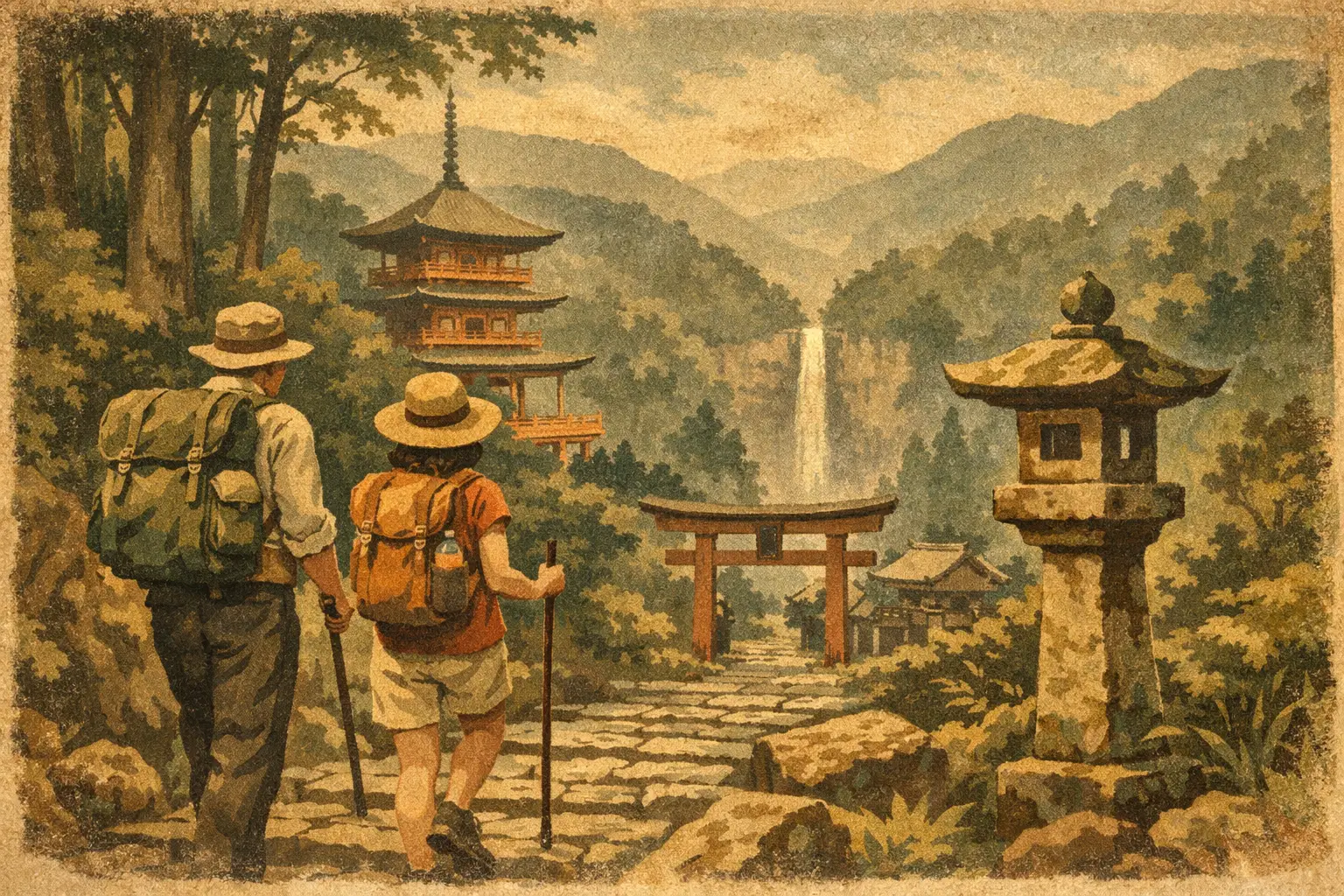
Mist hangs over cedar forests, stone steps glisten after rain, and a tiny roadside jizo appears just when your legs start asking hard questions. That is the mood of the Kumano Kodo – and a good Kumano Kodo walking guide should prepare you for more than mileage. This is not just a hike. It is a pilgrimage route where landscape, faith, and quiet effort come together in a way that feels deeply Japanese.
For travelers who love shrines, mountain villages, onsen, and the slower side of Japan, the Kumano Kodo can become the highlight of a trip. It gives you that rare feeling of stepping into living tradition rather than just viewing it from a platform or behind a rope. If you are the kind of person who gets excited by old cedar groves, weathered torii, and a bit of mono no aware, you are very much in the right place.
What makes the Kumano Kodo special
The Kumano Kodo is a network of pilgrimage trails on the Kii Peninsula in Wakayama Prefecture. For more than a thousand years, emperors, aristocrats, monks, and ordinary pilgrims traveled these paths to reach the sacred Kumano Sanzan – Kumano Hongu Taisha, Kumano Nachi Taisha, and Kumano Hayatama Taisha.
What makes it stand out is the balance. It is spiritual without feeling exclusive, historic without feeling frozen in time, and beautiful without needing to be dramatic every second. One day you are walking through deep forest on old stone paths. The next, you are soaking in an onsen and eating a beautifully simple kaiseki-style dinner in a family-run inn. There is a real wabi sabi quality here – things are worn, quiet, and all the better for it.
Kumano Kodo walking guide to choosing a route
Most first-time visitors do not walk the entire network, and that is completely fine. The best route depends on your fitness, time, and how much rural navigation you want to handle.
The Nakahechi route is the classic choice for first-timers. It is the most established, the easiest to plan, and the one with the strongest pilgrimage feel for many international travelers. It usually starts around Takijiri-oji, often called the traditional trailhead, and continues over several days toward Kumano Hongu Taisha. If you want temple-and-forest energy with decent infrastructure, this is the route to choose.
The Kohechi route is tougher and more remote, linking Koyasan with Kumano Hongu Taisha through mountain terrain. It is beautiful, but this is not where most people should start unless they already know they enjoy demanding multi-day walks.
The Iseji route, running south from Ise toward Kumano, offers coastal scenery and a different rhythm. It is rewarding, though logistically a bit less straightforward for many overseas visitors.
For a shorter experience, some travelers walk one or two sections of the Nakahechi rather than turning the trip into a major trek. That can be the sweet spot if your Japan itinerary also includes Kyoto, Nara, or Osaka.
How many days do you need?
Three to five days is a comfortable range for a first visit focused on the Nakahechi. Three days gives you a meaningful taste. Four days feels more relaxed. Five gives you room for weather, slower pacing, and side visits without rushing every morning.
The biggest mistake is overestimating how fast you will move. Trail distances may not look huge on paper, but elevation, stone steps, humidity, and the simple fact of carrying gear can slow you down. If you enjoy stopping for photos, shrine visits, and quiet breaks, build in extra time. This is one of those places where hurrying misses the point.
Where to start and finish
A common walking pattern begins at Takijiri-oji and ends at Kumano Hongu Taisha. From there, many travelers continue by bus to Yunomine Onsen, Kawayu Onsen, or Watarase Onsen for a restorative night. Some then visit Kumano Nachi Taisha and Nachi Falls, even if they are no longer walking every section.
That approach works well because it combines the trail with some of the most emotionally satisfying cultural stops in the region. After days of forest walking, arriving at Hongu feels earned. Following it with an onsen soak feels even better.
What the walking is really like
A lot of people imagine a gentle woodland stroll. Parts of the trail do feel peaceful and moderate, but there are also steep climbs, uneven stone surfaces, tree roots, and long downhill stretches that can be hard on knees. In wet weather, sections become slippery fast.
You do not need to be an elite hiker, but you should be reasonably fit and comfortable walking for several hours a day. If you regularly walk in your daily life and can handle hills, you will likely be fine on the standard first-timer sections. If you almost never hike, prepare honestly and choose shorter days.
Summer brings heat and humidity. Winter can be cold, though often clear and beautiful. Spring and fall are the most popular for good reason. Fall, especially, has that subtle ukiyoe-like beauty of mist, layered ridgelines, and changing leaves.
What to pack without overpacking
Packing light matters on the Kumano Kodo. Even if you arrange luggage transfer for some sections, your daypack should stay compact.
Bring broken-in walking shoes or trail runners with good grip, a rain jacket, moisture-wicking layers, water, snacks, blister care, and a small towel. Add cash, because rural Japan still rewards people who do not rely entirely on cards. A basic first-aid kit, portable charger, and offline maps are also smart.
What you do not need is a giant expedition setup. This is not wilderness camping for most travelers. Many walkers stay in guesthouses or minshuku with meals included, so the experience is often more comfortable than people expect.
Lodgings, meals, and the booking reality
Accommodation on the Kumano Kodo is part of the charm. You may stay in small inns, family-run guesthouses, or traditional lodgings with tatami rooms and set dinners. Meals are often one of the quiet joys of the trip – local vegetables, river fish, pickles, miso soup, and beautifully prepared seasonal dishes.
The trade-off is limited capacity. This region is not built for last-minute mass tourism. During peak seasons, the best places can book out well in advance. If you have fixed travel dates, reserve early.
Dietary restrictions can be possible, but flexibility helps. Rural Japan is improving on this front, yet options are not endless. If you are vegetarian, vegan, or have serious allergies, communicate clearly and early.
Practical tips that make the walk smoother
A few small choices matter a lot
Start walking early each day. Weather is usually kinder, buses are easier to connect with, and arriving before dark removes a lot of stress.
Use luggage transfer if your itinerary allows it. There is no prize for suffering under a heavy backpack when the point of the trip is to feel present.
Carry paper details of your lodgings and route, even if your phone is working. Mountain areas are not the place to trust one battery icon.
Respect the pilgrimage atmosphere. You do not need to be religious, but this is still a sacred landscape. Quiet voices, simple courtesy, and awareness at shrines go a long way.
Is the Kumano Kodo worth it if you are not a serious hiker?
Yes, often. The key is choosing the right section and not treating it like a challenge event. Many Japan lovers are drawn here not because they chase altitude or personal records, but because they want a deeper encounter with the country. The Kumano Kodo delivers that beautifully.
If what you love about Japan includes shrines, traditional inns, local food, onsen, mountain views, and old cultural pathways, this trip has real magic. If your ideal vacation is luxury shopping, nightlife, and minimal walking, it may not be your best match. It depends on what kind of connection you want.
For many travelers, this trail becomes one of the most memorable parts of Japan because it feels personal. You notice the sound of water, the smell of cedar, the patience built into roadside markers and weathered stones. It is less about checking off sights and more about entering the rhythm of a place.
That is why a Kumano Kodo trip stays with people. Not because every step is easy, but because the effort changes how you see what you came for. If Japan already has a place in your heart, this pilgrimage road has a way of making that bond feel even stronger – one quiet uphill path at a time.