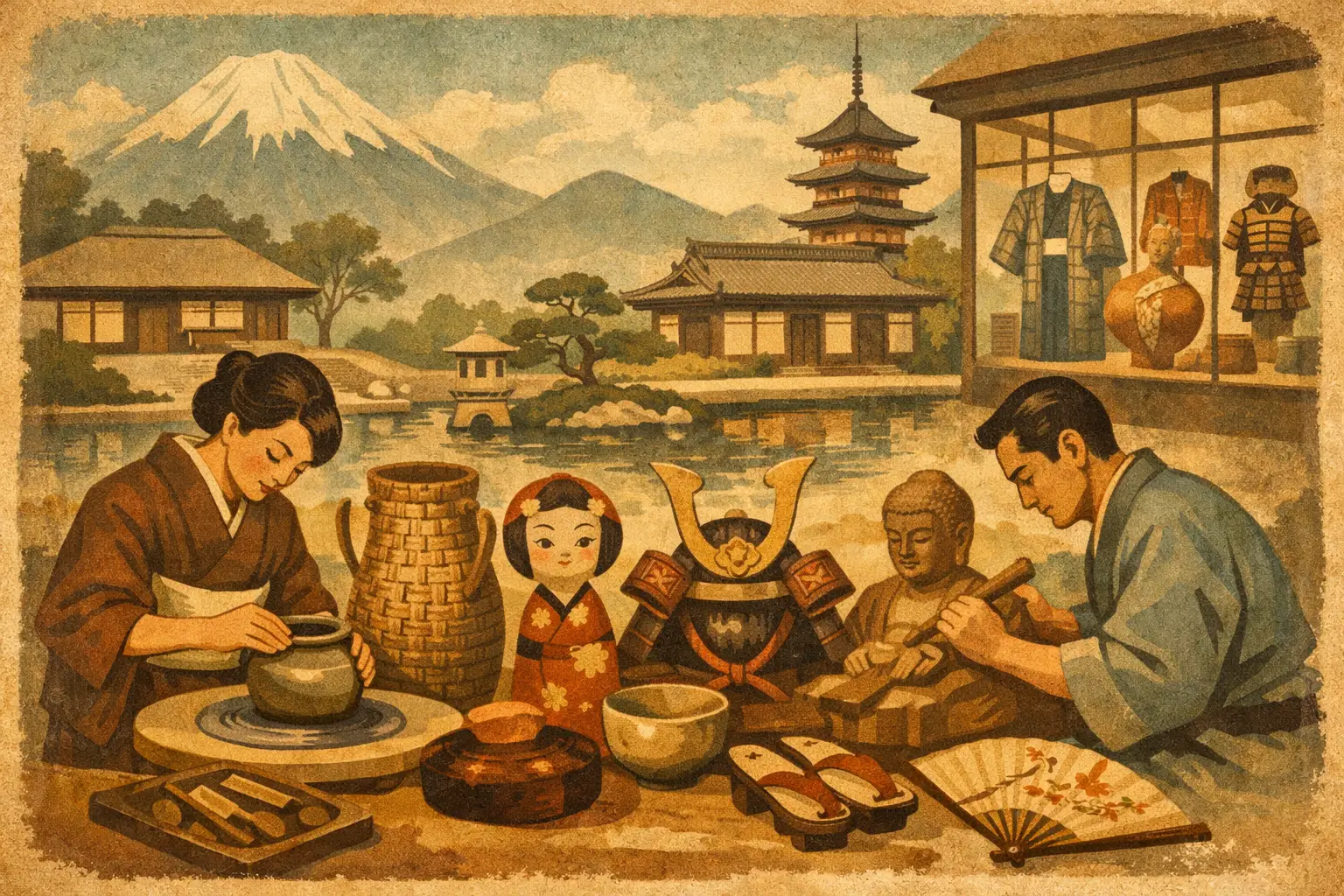
A tea bowl with a thumbprint in its glaze, a kimono whose pattern changes with the season, a sheet of washi paper thin enough to glow in the light – these are the details that make Japan’s crafts impossible to admire only from a distance. The best Japanese craft museums bring you close to the hands, materials, and regional stories behind objects you may have seen in shops or on a tea table.
For Japan lovers worldwide, these places are more than rainy-day stops between temples. They can shape an entire trip. You begin to notice the sheen of urushi lacquer, the quiet irregularity of wabi sabi in pottery, and the patience hidden inside a woven textile. Some museums are major collections with national treasures; others are smaller, regional spaces where you can watch a craftsperson work or try a technique yourself.
Why craft museums belong on a Japan itinerary
Japan has no single “Japanese craft” style. A Mashiko cup, a Kanazawa gold-leaf box, Kyoto yuzen silk, and Shigaraki jar all come from different climates, materials, histories, and ways of living. Museums give context that a quick souvenir purchase cannot. You learn why clay from one town fires orange, why a pattern is reserved for summer, or why an imperfect surface can be the point.
They are also a welcome change of pace. After the crowds at a famous shrine, spending an hour with ceramics or handmade paper can feel wonderfully focused. The best visits leave you with a sharper eye, whether you are a collector, a kimono fan, a casual traveler, or someone who simply wants to bring home one meaningful object.
The best Japanese craft museums by region
1. National Crafts Museum, Kanazawa
If you can visit only one major craft museum, make it the National Crafts Museum in Kanazawa. Housed in beautifully relocated historic buildings, it presents modern and contemporary Japanese craft across ceramics, textiles, lacquerware, wood, bamboo, metal, and glass.
What makes it special is its range. You will see revered techniques alongside daring contemporary forms that challenge the idea of what a bowl, screen, or textile can be. Kanazawa is already one of Japan’s great craft cities, so this museum works especially well at the beginning of a stay. Visit before exploring gold leaf, kutani ware, kaga yuzen, and the old teahouse districts.
2. Ishikawa Prefectural Museum of Traditional Arts and Crafts, Kanazawa
A short distance from Kanazawa’s major gardens and museums, this smaller museum is ideal for understanding the local traditions that still define Ishikawa Prefecture. Its displays cover the region’s designated crafts, including kutani porcelain, yamanaka lacquerware, kaga yuzen silk dyeing, and gold-leaf work.
This is a practical, friendly stop rather than an intimidating art-history marathon. The objects are arranged to help visitors compare techniques, and the museum often offers making experiences. If you want to recognize quality when browsing Kanazawa’s craft shops later that day, come here first.
3. Kaga Yuzen Traditional Industry Center, Kanazawa
Kimono lovers should make time for this focused museum dedicated to kaga yuzen, Kanazawa’s elegant hand-painted silk-dyeing tradition. Unlike the bold geometry of some textile styles, kaga yuzen is admired for its painterly flowers, grasses, birds, and subtle natural shading.
The museum explains the long process behind a finished kimono, from the original sketch to resist paste and hand-applied color. Look closely at the leaves in the designs: the style is known for realistic touches, including slightly damaged or insect-nibbled foliage. It is a lovely expression of mono no aware, the beauty of nature as it changes and passes.
4. Kyoto Museum of Crafts and Design
Kyoto’s craft heritage can feel overwhelming because it is everywhere: in incense shops, tea utensils, dyed fabrics, folding fans, and temple interiors. The Kyoto Museum of Crafts and Design gives you a clear starting point. It introduces dozens of traditional Kyoto crafts, from Nishijin weaving and Kyo-yaki ceramics to bamboo work, dolls, fans, and metalwork.
This is one of the most accessible museums for first-time visitors because it explains the categories without assuming you already know them. Demonstrations are a major draw when available. Seeing a craftsperson’s hands at work turns “traditional craft” from a label into something alive.
5. Kyoto Seishu Netsuke Art Museum
In a restored machiya townhouse, the Kyoto Seishu Netsuke Art Museum celebrates netsuke – the tiny carved toggles once used to secure pouches and small containers to kimono belts. They may be small enough to fit in your palm, but the carving can be astonishingly detailed.
Expect animals, mythical creatures, comic characters, vegetables, masks, and scenes from daily life. This is a museum for slowing down. A single netsuke can reveal a joke, a folk belief, or a miniature world of Edo-period taste. Because the building is intimate, it is best for visitors who enjoy close looking rather than rushing through a large collection.
6. Japan Folk Crafts Museum, Tokyo
The Japan Folk Crafts Museum, also known as the Mingeikan, is essential for anyone curious about ordinary objects made extraordinary through use. Founded by philosopher and collector Yanagi Soetsu, it is rooted in the mingei movement, which celebrated the beauty of anonymous, handmade objects created for everyday life.
The collection includes pottery, textiles, baskets, woodwork, and folk objects from Japan and beyond. Do not expect flashy labels or a slick interactive experience. The power is in the atmosphere and the objects themselves: a sturdy storage jar, a handwoven cloth, a humble spoon. This is where wabi sabi feels less like a social-media phrase and more like a way of seeing.
7. The Paper Museum, Tokyo
In Tokyo’s Kita Ward, The Paper Museum tells the story of paper from ancient methods to modern industry. It may sound specialized, but it is a rewarding choice for anyone who loves shodo calligraphy, origami, prints, bookmaking, or stationery.
Japanese washi is not merely a writing surface. Its fibers, strength, translucency, and texture have made it central to screens, lanterns, sliding doors, conservation, and art. This museum gives helpful technical background without losing the tactile magic of the material. Check current programming before you go, as workshops and temporary displays can make a visit even better.
8. Mashiko Museum of Ceramic Art, Tochigi
Mashiko is one of Japan’s most approachable pottery towns, and its museum offers the context needed to appreciate its earthy, functional ceramics. The area became especially influential through artists connected with the mingei movement, including Hamada Shoji.
The museum is a strong choice if you want to pair viewing with shopping and studio visits. Mashiko ware often feels warm and unpretentious: rich glazes, sturdy forms, and surfaces that invite daily use. Go during a pottery festival if you enjoy crowds and the thrill of buying directly from makers; visit outside festival dates for a quieter, more contemplative experience.
9. Shigaraki Ceramic Cultural Park, Shiga
Shigaraki is one of Japan’s Six Ancient Kilns, and its clay has produced distinctive ceramics for centuries. The Shigaraki Ceramic Cultural Park combines exhibitions, artist studios, outdoor works, and a setting that makes the material itself feel present. You may know the town for its cheerful tanuki statues, but the ceramic tradition goes much deeper.
This is an especially good destination for travelers who want to see craft as a living practice, not a completed chapter of history. The work on view can range from traditional vessels to ambitious contemporary sculpture. It takes more effort to reach than a central Kyoto museum, but that is part of the appeal for serious ceramic fans.
10. Seto-Gura Museum, Aichi
Seto is another major name in Japanese ceramics, so much so that “setomono” became a common Japanese term for pottery. The Seto-Gura Museum introduces the town’s long production history through ceramics, trade displays, and reconstructions that place the objects in everyday life.
Choose this museum if you are traveling between Nagoya and central Japan or want to understand the commercial side of ceramics. Seto’s story is not only about tea bowls for connoisseurs. It is also about tiles, tableware, exports, workshops, and the objects that filled Japanese homes.
How to choose the right museum for your trip
If your time is short, choose by material rather than trying to see everything. Kanazawa is the strongest all-around craft destination, while Kyoto is perfect for textiles and refined decorative arts. Tokyo offers the best contrast between folk craft at the Mingeikan and paper culture at The Paper Museum. For pottery, Mashiko, Shigaraki, and Seto reward travelers willing to leave the largest cities.
Check exhibition schedules and workshop availability before finalizing plans. Craft museums often rotate fragile textiles, paper, and lacquerware, so a repeat visit can be genuinely different. Also allow time for the museum shop, but buy thoughtfully. The most memorable piece may be a modest cup, a small textile, or a sheet of handmade paper that you will actually use.
The real gift of visiting these museums is not a checklist of famous names. It is walking back onto a Japanese street and seeing the country differently: the noren curtain outside a shop, the grain in a lacquer tray, the glaze on a breakfast bowl, the careful fold of wrapping paper. That extra attention is where a trip becomes personal.