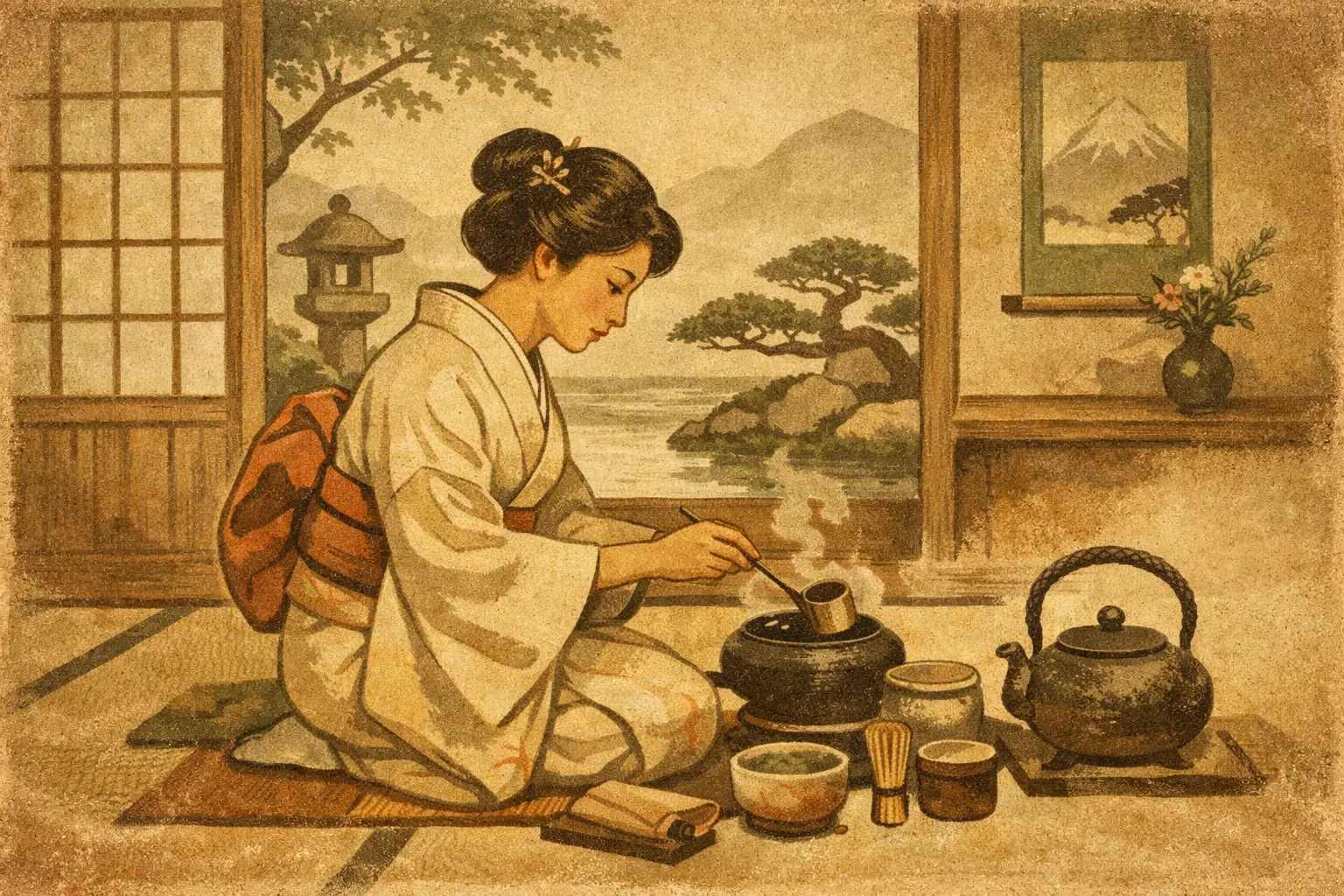
The first surprise in any guide to Japanese tea ceremony is this – it is not really about tea. Yes, matcha is prepared and shared, but the deeper point is attention. The sound of water, the feel of a tea bowl in your hands, the way a host folds a cloth with care – all of it asks you to slow down and notice what is usually missed.
That is exactly why so many Japan lovers feel drawn to chanoyu, also called sado or chado, the way of tea. It brings together so many parts of Japanese culture in one experience: ceramics, seasonal sweets, tatami rooms, calligraphy, kimono, garden design, and the quiet emotional current of wabi sabi. If you love Japan not just as a destination but as a way of seeing, the tea ceremony can stay with you long after the last sip.
What the Japanese tea ceremony really is
The Japanese tea ceremony is a traditional practice centered on preparing and serving powdered green tea, usually matcha, in a highly considered setting. The form most visitors encounter today comes from centuries of refinement, especially through the influence of Sen no Rikyu, who shaped the aesthetics of simplicity, humility, and presence that many people now associate with tea.
Still, this is not a museum piece frozen in time. Tea schools continue to teach it, practitioners still adapt it to season and place, and different gatherings can feel more formal or more approachable. Some are held in dedicated tea rooms with strict etiquette. Others are designed for beginners and international visitors. Both can be meaningful.
At its heart, chanoyu is guided by four ideals: harmony, respect, purity, and tranquility. You do not need to memorize the Japanese terms to appreciate them, but knowing them helps. Wa is harmony, kei is respect, sei is purity, and jaku is tranquility. Those values shape everything from the arrangement of flowers to the pace of movement.
A practical guide to Japanese tea ceremony etiquette
If you are worried about doing something wrong, you are not alone. Many first-time guests feel nervous, especially because the setting can look formal from the outside. The good news is that sincerity matters more than perfection.
When you enter, you may be asked to remove your shoes. In a tatami room, movements are usually quiet and deliberate. If you are shown where to sit, follow the host’s lead. In more traditional settings, guests kneel in seiza, but many places that welcome international visitors allow cross-legged sitting or provide stools. It depends on the venue, so do not assume every ceremony will demand the same level of physical formality.
Before tea is served, you may receive a seasonal sweet called wagashi. Eat it before drinking the matcha, since the sweetness balances the tea’s bitterness. When the bowl is placed before you, it is common to bow slightly in thanks. You may also turn the bowl slightly before drinking, a gesture of respect that avoids sipping from its front. After drinking, you wipe the rim lightly if instructed, admire the bowl, and return it carefully.
That might sound like a lot, but in practice the host usually guides guests through the key moments. If you are attentive, polite, and willing to follow along, you will be fine.
What happens during a tea ceremony
A full formal tea gathering can be quite long and includes a meal, charcoal preparation, thick tea, and thin tea. Most travelers, though, attend a shorter version focused on wagashi and usucha, or thin matcha.
You will usually begin by entering a tea room or a space designed to echo one. The room itself matters. Scrolls, flowers, utensils, and even empty space are all chosen with intention. This is where mono no aware quietly enters the experience – that awareness that beauty is fleeting, shaped by season, weather, and the unrepeatable mood of the day.
The host then cleans the utensils in a ritualized way. This is not just practical cleaning. It is part of the ceremony, a visible act of care that prepares the space and focuses the mind. Water is handled with precision, matcha is scooped into the bowl, hot water is added, and the tea is whisked with a bamboo chasen until a light foam appears.
Guests receive the bowl one at a time or in a set order, depending on the style of gathering. There is usually very little casual chatter. Silence is not awkward here. It is part of the shared atmosphere.
The tools and details that make it special
One reason tea ceremony fascinates so many people is that it gathers craftsmanship from across Japan into one intimate moment. The tea bowl, or chawan, is often the star. Some are rough and earthy, others refined and elegant. A bowl may feel slightly uneven, soft at the rim, or deeply textured in the hand. That is not a flaw. Very often, it is the point.
This is where wabi sabi becomes real instead of decorative vocabulary. Tea aesthetics often favor irregularity, patina, understatement, and things that reveal time. A hand-built bowl with subtle glaze drips may say more than a polished object ever could.
Beyond the bowl, there is the bamboo whisk, the tea scoop, the lacquered tea caddy, the iron kettle, the linen cloth, and the seasonal sweets made to reflect flowers, leaves, or snow. If you already love Japanese crafts, tea ceremony can feel like seeing many art forms suddenly speaking to one another.
Why tea ceremony feels so different from a cafe matcha
Matcha is now everywhere, from specialty cafes to home kitchen lattes, and that is not a bad thing. It has introduced many people to Japanese tea culture. But tea ceremony is a different experience entirely.
In a cafe, matcha is often about flavor, energy, or trend. In chanoyu, taste matters, but the larger focus is relationship – between host and guest, person and object, movement and stillness. The phrase ichigo ichie is often connected to tea. It means something like one time, one meeting, reminding everyone present that this exact encounter will never happen again in the same way.
That perspective changes the room. A tea bowl is not just a vessel. A flower arrangement is not just decoration. Even the pause before drinking has weight. For many visitors, that shift is the real revelation.
How to experience tea ceremony in Japan
If you want to attend one during a trip, you have options. Kyoto is the most obvious place, with many tea houses and cultural centers offering ceremonies for visitors. But you can also find experiences in Tokyo, Kanazawa, and other cities, as well as at temples, gardens, and museums.
The best choice depends on what you want. A tourist-friendly session in English is excellent for understanding the basics and feeling welcomed. A more formal event in Japanese may offer greater depth, but it can also be harder to follow if you are completely new. Neither is automatically better. One gives access, the other gives immersion.
Look for a setting that matches your interest level. If you care about kimono, choose a place where you can wear one. If you love ceramics, find a program that explains the utensils. If you want something contemplative rather than performative, smaller venues often feel more personal.
And yes, some experiences are more polished for social media than for cultural depth. Beautiful photos are part of travel, but if the event feels rushed or staged, the atmosphere can flatten. The best tea experiences do not just show you Japan. They briefly change how you pay attention.
Can you study tea ceremony as a beginner?
Absolutely. You do not need years of background knowledge or fluent Japanese to begin. Many people start with a workshop, then take classes later in their home country or during longer stays in Japan. There are different tea schools, and each has its own style and teaching approach.
For beginners, the biggest challenge is not complexity but patience. Tea ceremony asks you to repeat small actions until they become natural. If you enjoy fast results, that can feel demanding. If you love ritual, craft, and embodied learning, it can be deeply rewarding.
There is also no need to romanticize it. Some classes are strict. Some etiquette can feel intimidating. Kneeling can be uncomfortable. The formality is real. But for many people, that structure becomes part of the appeal. Within a fixed pattern, tiny details begin to matter more.
For all Japan lovers worldwide, that may be the most beautiful thing about chanoyu. It does not ask you to collect one more cultural fact. It asks you to sit still, accept the season, and meet a simple bowl of tea as if it were enough.