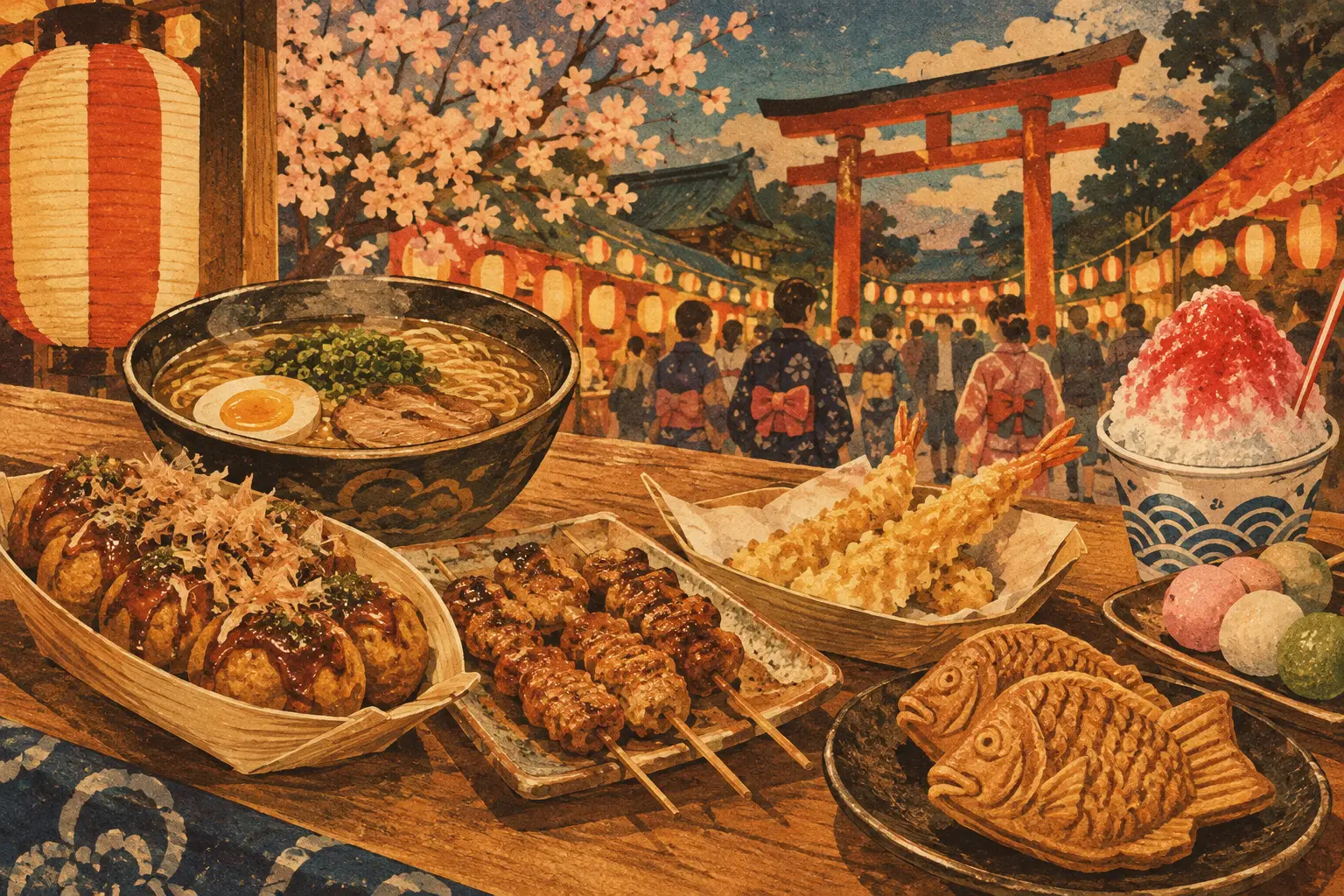
The first clue that you have reached a real Japanese matsuri is often the smell: charcoal smoke curling around a shrine approach, sweet soy sauce caramelizing on a hot griddle, and the bright sugar scent of shaved ice. The top Japanese festival foods are not simply snacks between attractions. They are part of the event itself, eaten shoulder to shoulder with locals beneath paper chochin lanterns while taiko drums carry through the evening.
At a summer festival, you may find dozens of yatai, or food stalls, lined up in a row. At a temple fair or a neighborhood celebration, there may be only a few. Either way, eating from the stalls is one of Japan’s most joyful travel rituals. Bring cash, arrive hungry, and let your nose help you choose.
Top Japanese Festival Foods Worth Ordering
1. Takoyaki
Takoyaki is a festival classic from Osaka: round, piping-hot wheat-flour balls with tender pieces of octopus inside. Vendors turn them quickly in molded cast-iron pans, then finish them with tangy sauce, Japanese mayonnaise, aonori seaweed powder, and fluttering bonito flakes.
They look easy to eat, but the center is molten. Give your takoyaki a minute or two, then split one open with the little wooden pick. The contrast of a lightly crisp shell and creamy interior explains why people happily wait in line for them.
2. Yakisoba
Yakisoba is the sound and smell of a busy festival griddle. Wheat noodles are stir-fried with cabbage, pork, and a dark, savory-sweet sauce, then topped with beni shoga, the vivid red pickled ginger that cuts through the richness.
It is filling enough to share, especially if you are saving room for sweets. Some stalls serve it in a plastic tray, while others pile it into a soft hot-dog-style roll called yakisoba pan. Neither is elegant, and that is exactly the point.
3. Yakitori
Yakitori means grilled chicken skewers, but this simple description misses the pleasure of ordering them at a yatai. Chicken thighs, scallions, wings, meatballs, and sometimes chicken skin are grilled over charcoal until smoky and glossy.
Choose shio for a clean salt seasoning or tare for a sticky soy-based glaze. If you are not comfortable with every chicken cut, point to what you want before ordering. Festival stalls are friendly places to be adventurous, but there is no need to pretend you love every option.
4. Okonomiyaki
Often called a Japanese savory pancake, okonomiyaki is much more satisfying than that label suggests. A batter of flour, egg, shredded cabbage, and fillings such as pork or seafood is cooked on a griddle, then topped with sauce, mayonnaise, seaweed, and bonito flakes.
The name loosely means “grilled as you like it,” although festival versions usually have a set selection of toppings. Osaka-style okonomiyaki is mixed together before cooking, while Hiroshima-style versions layer ingredients and often include noodles. Either can be a full meal, so plan accordingly.
5. Karaage
Japanese fried chicken, called karaage, is a dependable choice when the group cannot agree on one thing. Bite-size chicken pieces are marinated, coated in starch, and fried until deeply crisp while staying juicy inside.
Look for a stall that is frying fresh batches rather than holding a mountain of chicken under a heat lamp. A squeeze of lemon, if offered, adds brightness. It is familiar enough for cautious eaters but still distinctly Japanese in its ginger-garlic seasoning.
6. Taiyaki
Taiyaki is a fish-shaped cake with a warm filling, traditionally sweet red bean paste. Do not let the fish shape confuse you: there is no fish in the dessert. The outer batter is similar to a soft waffle, with crisp edges when it comes straight from the iron.
Custard, chocolate, sweet potato, and matcha fillings are common now. Red bean paste is worth trying at least once, especially for travelers who want to understand anko, one of Japan’s beloved traditional sweets. Its gentle sweetness has a lovely wabi sabi simplicity.
7. Imagawayaki
If taiyaki is the playful fish-shaped favorite, imagawayaki is its round, substantial cousin. These thick, griddled cakes are usually stuffed with anko or custard and are sold under different regional names, including obanyaki.
They travel well and make a comforting cool-weather festival treat. Be careful with the first bite because the filling can stay hot long after the cake leaves the pan.
8. Mitarashi Dango
Mitarashi dango are chewy rice-flour dumplings threaded onto a skewer and coated in a glossy sweet-salty soy glaze. Their appealing texture is closer to mochi than bread: soft, springy, and pleasantly bouncy.
This is a wonderful food to seek out at shrine or temple grounds, where traditional sweets feel especially at home. The flavor is not intensely sugary, which makes dango a smart break between fried foods and richer desserts.
9. Kakigori
On a humid July or August night, kakigori can feel like a rescue. This shaved-ice treat is piled high in a paper cup and drenched in syrup, often strawberry, melon, lemon, blue Hawaii, or matcha.
Basic festival kakigori is wonderfully nostalgic, while specialty shops may use finer ice, fruit purée, condensed milk, or elaborate toppings. At a crowded matsuri, the simple version is part of the fun. Eat it fast before Japan’s summer heat turns it into a bright puddle.
10. Choco Banana
Few yatai foods are more cheerful than choco banana: a banana on a stick covered in chocolate and sprinkles, cookie crumbs, or colorful sugar pearls. It is often displayed in a dazzling row that seems designed to test every visitor’s self-control.
This is not a centuries-old culinary tradition, and it does not need to be. Festivals combine old customs with playful pop culture, community games, and foods made for wandering. Choco banana belongs to that lively side of the matsuri.
11. Ringo Ame
Ringo ame, or candied apples, bring a glassy red shine to festival stalls. The apple is coated in a hard sugar shell, creating a sharp crack before the juicy fruit underneath.
They are beautiful to carry but can be awkward to eat while walking. If you have time, stand aside near a bench or a quieter edge of the festival. The same stall may sell candy-coated grapes, strawberries, or small citrus fruits, depending on the season.
12. Senbei
Senbei are rice crackers that can be savory, sweet, grilled, or brushed with soy sauce. Freshly grilled senbei are especially good, with a toasted aroma and a firmer crunch than packaged crackers.
They are a practical choice if you want something less messy than noodles or sauce-covered skewers. Some are wrapped in nori, while others feature regional seasonings. A local senbei can be a small edible souvenir of the town hosting the festival.
How to Eat at a Japanese Festival Like a Regular
Start with one savory dish and one sweet dish rather than buying everything at once. Festival portions vary, and a plate of yakisoba plus takoyaki can be more filling than it looks. Sharing is the best strategy when traveling with friends, because it turns the evening into a tasting tour.
Carry yen in small bills and coins. Many yatai remain cash-first, even in cities where card payments are otherwise common. Check the price before you order, keep a small hand towel or tissues in your bag, and look for trash and recycling stations nearby. Eating while walking is accepted at many festivals, but if the lanes are packed, stepping to the side is kinder and easier.
Do not expect every stall to have English menus. Pointing, smiling, and using a few Japanese words goes a long way. “Kore onegaishimasu” means “this one, please,” and “arigato gozaimasu” is always appreciated. If you have allergies, it is safer to prepare a clear Japanese allergy card before the festival, since small stalls may not have ingredient information available.
The season changes the menu, too. Summer matsuri bring kakigori and cold drinks, while autumn events may feature roasted sweet potatoes, chestnuts, and mushroom dishes. At New Year shrine visits, you might find amazake, a sweet, low-alcohol or alcohol-free rice drink depending on the version. Local festivals can also spotlight specialty ingredients from the surrounding area, which is where food becomes a doorway into place.
A matsuri meal will not be the most refined meal of your Japan trip. It may be greasy, loud, sticky, and eaten from a tray while trying not to spill sauce on your yukata. But that is the charm. Follow the lantern light, choose the stall with the happiest line, and let a warm skewer or melting cup of kakigori become part of your own Japan memory.