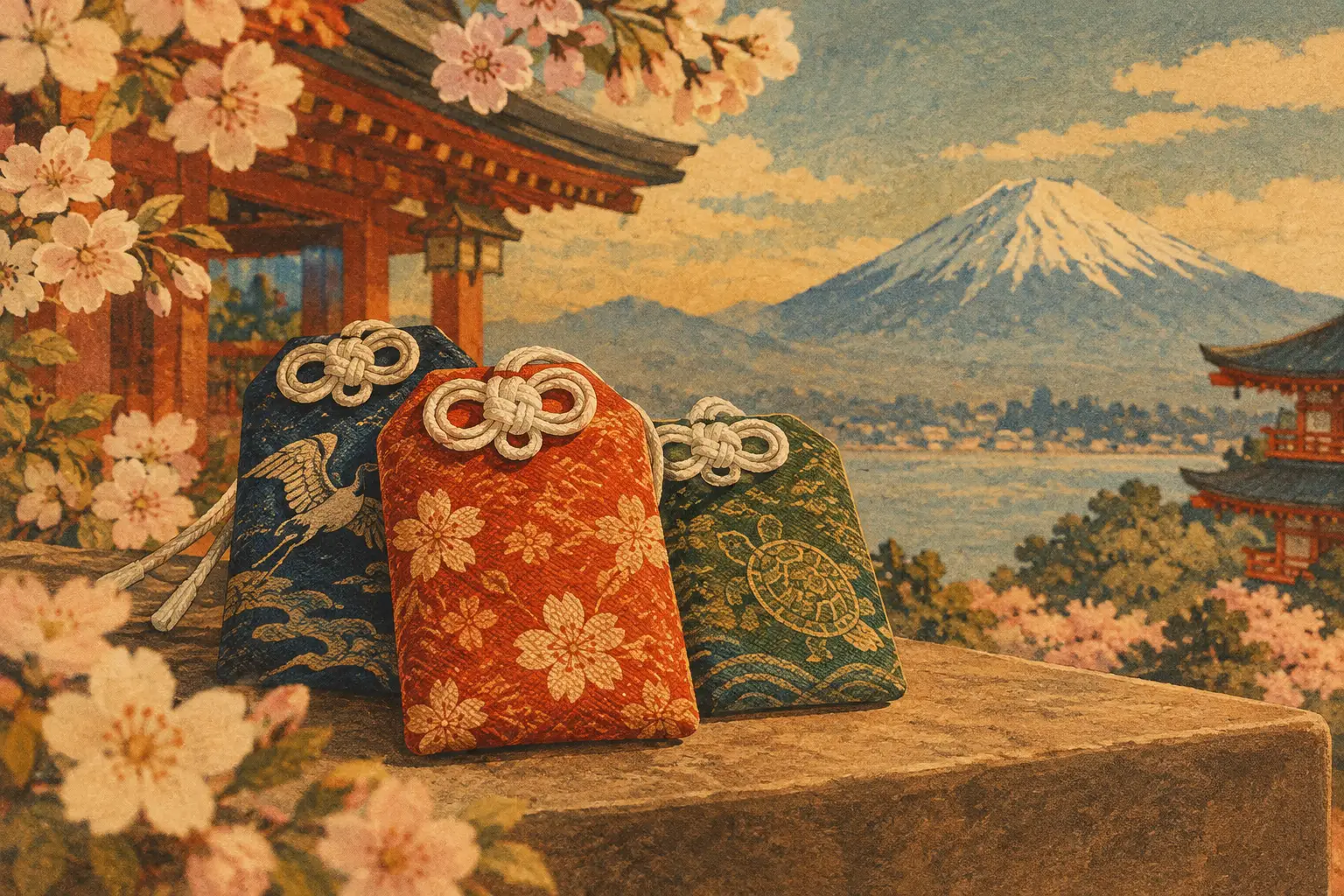
A small embroidered pouch from a shrine can look like the perfect Japan keepsake. But the omamori charm meaning reaches far beyond a pretty souvenir. An omamori is a protective amulet, usually received at a Shinto shrine or Buddhist temple, meant to carry a blessing for a particular part of life. It may sit quietly in a handbag, hang from a backpack, or travel in a car – a compact, personal connection to a place of prayer.
For Japan lovers worldwide, understanding omamori means looking past the silk cord and colorful fabric. These little charms offer a beautiful glimpse of how spiritual practice, daily hope, craftsmanship, and respect for place come together in Japan.
What does an omamori mean?
The word omamori comes from the Japanese verb mamoru, meaning “to protect.” The honorific “o” adds a note of respect. In practical terms, an omamori is a protective charm that contains a prayer, invocation, or sacred item associated with the shrine or temple where it was received.
Omamori are available at both Shinto shrines and Buddhist temples. This sometimes surprises first-time visitors who expect a hard line between the two traditions. Japanese religious life has long included overlapping customs, and omamori are part of that lived reality. A shrine may offer blessings connected with kami, or sacred presences in Shinto, while a temple’s amulet may reflect Buddhist devotion. For the person carrying one, the purpose is often wonderfully direct: safety on the road, success on an exam, good health, an easier childbirth, or protection for a beloved pet.
That does not mean every omamori works like a wish-granting token. It is better understood as a physical reminder of a prayer and a relationship with a sacred site. The charm carries hope, but it also asks the holder to move through life with care.
Omamori charm meaning changes with its purpose
You will usually see a small sign near a shrine or temple office explaining each charm’s purpose. The Japanese characters on the pouch can offer a clue, though designs vary widely by location. Some omamori use traditional brocade patterns, while others feature local symbols such as Mount Fuji, a sacred animal, a famous gate, or seasonal flowers.
Common types include kōtsū anzen for traffic safety, gakugyō jōju for academic achievement, kenkō for health, and shōbai hanjō for thriving business. There are also charms for household safety, happy relationships, safe travel, easy delivery during childbirth, and warding off misfortune.
A traveler might choose a kōtsū anzen omamori before a road trip or place it in a car. A student may keep an academic charm in a pencil case before entrance exams. Someone who misses a friend or family member can offer a health omamori as a thoughtful gift. The charm is personal, but it does not have to be only for the person who receives it.
Some of the most memorable omamori are highly local. A shrine known for maritime history may offer protection for journeys by sea. A temple associated with healing may have a health-focused amulet. This is one reason it is worth taking a moment to read the signs rather than choosing only the brightest color. The story of the place is part of the charm.
Why you should not open an omamori
The usual guidance is simple: do not open the pouch. Traditionally, the sacred object or written prayer inside should remain enclosed. Opening it is considered disrespectful because it disrupts the amulet’s spiritual purpose.
For visitors used to examining every detail of Japanese craft, this can feel slightly frustrating. The weaving, stitching, and tassels invite a closer look. Yet leaving the pouch closed is also part of appreciating it. Its hidden interior creates a small boundary between everyday curiosity and reverence.
Do not worry if an omamori becomes a little worn through ordinary use. A softened fabric edge or faded cord can show that it has genuinely accompanied someone through daily life. There is a touch of wabi-sabi in that quiet wear: beauty shaped by time, care, and imperfection. Still, if the pouch tears open accidentally, it is best to treat it respectfully and return it to the original shrine or temple when you can.
How to choose and carry one respectfully
There is no secret test for selecting the right omamori. Choose the blessing that fits your situation, or choose one for someone you care about. If you feel drawn to the place itself, that is meaningful too. A charm received during a rainy morning visit to a mountain temple may hold memories that matter just as much as the words printed on its label.
Carry it somewhere appropriate to its purpose. A travel charm can go in a suitcase or day bag. A health charm may be kept in a wallet, purse, or at home. An academic charm belongs naturally in a school bag. Many people attach omamori to a phone or key ring, although a pouch can wear faster if it gets knocked around every day.
A little common sense goes a long way. Keep it reasonably clean and avoid tossing it loose among trash, dirty shoes, or items likely to damage it. You do not need to build a shrine around your charm or become anxious about handling it perfectly. Respect is the point, not fear.
If you buy several, it is generally fine to carry more than one. Some people worry that charms from different shrines or temples will conflict. Practices and opinions vary, but there is no universal rule that one omamori cancels another. Think of them as distinct expressions of goodwill and prayer rather than competing accessories.
How long should you keep an omamori?
A common custom is to return an omamori after about one year, especially around the New Year. The original shrine or temple may accept old amulets for a respectful burning ceremony, often called otakiage. This is not simply throwing something away. It is a way to give thanks and release the charm properly.
Returning it to the place where you received it is ideal. If you live far from Japan, that may not be possible, and plenty of international visitors face this exact situation. Some Japanese shrines and temples provide instructions for mail returns, but policies differ, so check directly before sending anything. If returning it is impossible, keep it respectfully rather than casually discarding it.
There is also room for personal meaning. An omamori connected to a major trip, a difficult year, or someone dear to you may become a cherished memento. You can honor that feeling while remembering its original sacred context. Treating it as more than décor is the most important part.
Buying an omamori is part of the visit
At many shrines and temples, omamori are received in exchange for a suggested donation. The funds often help maintain historic buildings, gardens, festivals, and community religious life. When you choose an amulet, you are participating in a living tradition rather than just collecting a Japan-themed object.
This is especially meaningful at lesser-known temples and shrines. A handmade-looking brocade pouch, a design unique to a regional pilgrimage route, or a charm marked with the name of a centuries-old temple can become a small doorway into local culture. It may lead you to ask why that place protects travelers, honors a particular deity, or celebrates a seasonal festival.
If you are visiting Japan, pause before leaving the shrine grounds. Look at the votive tablets, listen for the bell, notice the cedar scent after rain, and let the setting stay with you. An omamori is small enough to pack, but its real value is the memory and intention that travel home with it.
The next time you spot one hanging from a friend’s bag or tucked beside a Japanese cash register, see it as a gentle companion rather than a mystery trinket. It is a reminder that hope can be held in the hand – stitched into cloth, tied with a cord, and carried forward with care.