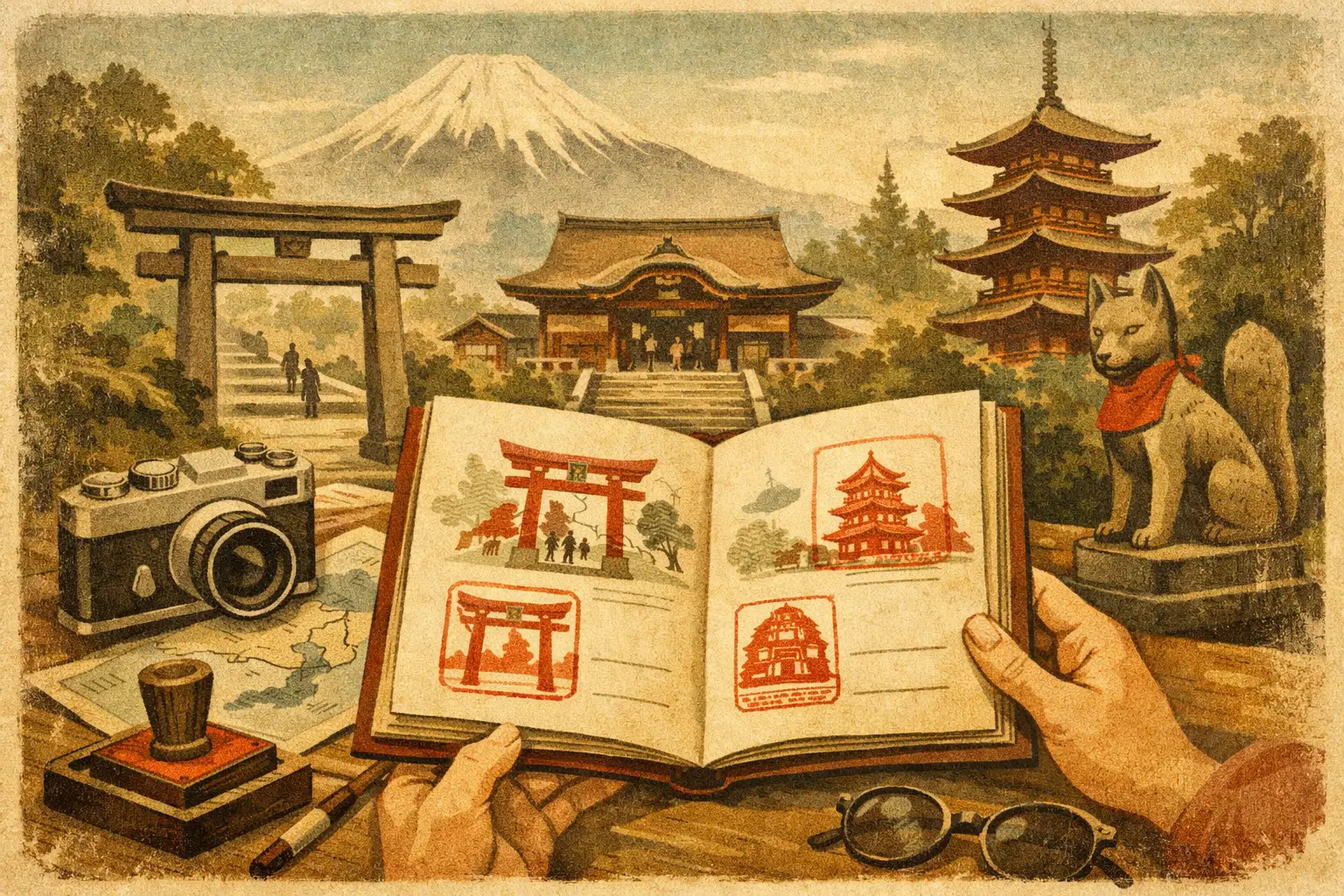
A goshuin page can hold far more than a date and a red seal. It might recall the cedar-lined approach to Meiji Jingu, the sea wind at Itsukushima Shrine, or a quiet local jinja found after getting happily lost on a Kyoto side street. Learning how to plan a shrine stamp collection gives your Japan trip a beautiful thread to follow – one written in bold brushstrokes, vermilion ink, and the individual character of each sacred place.
Known as goshuin, these handwritten seals are treasured by Japan lovers worldwide because no two feel exactly alike. They are part calligraphy, part pilgrimage record, and part personal memory. Planning ahead helps you collect them respectfully without turning a meaningful custom into a rushed checklist.
Start With a Goshuincho, Not a Stack of Paper
A goshuincho is the accordion-fold book made specifically for collecting goshuin. Most are compact enough for a day bag, with thick blank pages that handle ink far better than a notebook. You can buy one at many larger shrines and temples, as well as stationery shops, but purchasing your first book at a shrine makes a wonderful beginning to the story.
Design is a perfectly valid reason to choose one. You may find books decorated with sakura, cranes, torii gates, ukiyoe-inspired waves, seasonal flowers, or traditional textile patterns. Still, consider the practical side too. A standard-sized book is easy to carry, while a larger one gives calligraphers more room to create dramatic writing.
Many travelers keep separate books for shrines and temples. This is not always required, and policies differ by location, but it can make your collection easier to organize and avoids awkward uncertainty at the reception desk. Shrines are Shinto places of worship, often called jinja, while temples are Buddhist places, often called otera. Both may offer goshuin, but their designs, deities, histories, and customs create distinct collections.
How to Plan a Shrine Stamp Collection by Route
The best collection is rarely the biggest. Instead of trying to visit every famous shrine in a city, build a route around places that genuinely interest you. A traveler fascinated by architecture might focus on grand shrine complexes; someone who loves craft may seek shrines known for ema plaques, protective charms, or regional paper traditions. If you are walking part of the Kumano Kodo, goshuin can become a deeply satisfying record of your pilgrimage.
Choose one anchor area per day. In Tokyo, that might mean pairing Meiji Jingu with smaller shrines in the surrounding neighborhoods. In Kyoto, pick an eastern, central, or northern cluster rather than zigzagging across the city. A loose plan leaves room for the unexpected shrine that becomes your favorite.
Before setting out, check each shrine’s likely opening hours and whether its goshuin reception has separate hours. Reception desks often close earlier than the grounds. Some are unavailable during ceremonies, festivals, or busy New Year periods. Others offer only a prepared paper goshuin on certain days rather than writing directly in books.
A simple planning note for each day should include the shrine name, area, expected arrival time, and one nearby stop for food, a garden, or a museum. That is enough structure. Your collection should enrich the trip, not make you race past every mossy stone lantern and quiet corner of wabi sabi.
Famous shrines or local discoveries?
Include a mix. Major sites often have elaborate stamps, special seasonal designs, and knowledgeable staff. They can also have long lines. Smaller neighborhood shrines may have more modest goshuin, but their peaceful setting and local character can make the page especially memorable.
It depends on what you want your book to become. If it is a visual collection, research distinctive designs and limited seasonal stamps. If it is a travel journal in sacred form, prioritize places connected to your itinerary and the moments you want to remember.
Learn the Basic Goshuin Etiquette
A goshuin is not simply a tourist stamp. It is a record connected to worship, and treating the exchange with care is part of the experience. Visit the shrine first, offer a brief prayer if you wish, then go to the office marked goshuin, shamusho, or sometimes juyosho.
At the counter, open your goshuincho to the next blank page and hand it over neatly. A small bow and a friendly “goshuin onegaishimasu” is a lovely, useful phrase. It means, roughly, “A goshuin, please.” Staff may ask you to wait, give you a numbered ticket, or direct you to return after a few minutes.
Fees are commonly around 300 to 500 yen, though special pages and seasonal designs can cost more. Carry plenty of 100-yen coins and small bills. Place the fee in the offering box or tray when one is provided, rather than handing money directly to someone when a tray is clearly intended.
There are a few habits to avoid. Do not demand a stamp when the office is closed or staff are managing a religious event. Do not place food, drinks, or loose souvenirs on the counter. Do not photograph the calligrapher unless you have clear permission. And do not ask for a goshuin only as a stamp for a social media challenge. Respect opens doors that a collector mentality can close.
Make Space for Seasonal and Limited Goshuin
One reason people become joyfully obsessed with goshuin is that shrines change their offerings through the year. Spring may bring cherry blossoms, summer may feature wind chimes or fireworks, autumn can bring maple leaves, and winter designs may mark New Year traditions. Some shrines offer special goshuin for local matsuri, anniversaries, or monthly observances.
These can be stunning, but there is a trade-off. Limited editions create crowds, and some require advance timing or a separate numbered ticket. If one special design matters deeply to you, make it your first stop that day. If not, treat it as a happy bonus. Japan rewards patience, but it also rewards the traveler who notices when a plan is becoming less enjoyable than the place itself.
For special pages issued on separate paper, keep a slim folder in your bag. Do not fold the paper into your book while it is wet. Once home, you can store it safely, mount it with archival corners, or ask a specialist about having it bound. Avoid glue, tape, and anything that could damage the paper or ink over time.
Protect Your Book While You Travel
Goshuin ink can smudge, especially in humid weather. Carry your book in a zip pouch or cloth cover, and let new pages dry before pressing the folds flat. A simple sheet of blotting paper between pages can help, though do not leave it pressed against fresh ink for too long.
Write your own notes elsewhere rather than on the sacred pages. A small travel notebook or phone note can record the shrine name, neighborhood, weather, what you prayed for, and the story behind a particular visit. Months later, these details bring the page back to life.
When you return home, store the goshuincho flat and away from direct sun, moisture, and extreme heat. Resist the urge to pull pages apart for framing. The book itself is the artwork: a chronological record of encounters that gains meaning as it fills.
Let the Collection Follow Your Curiosity
A shrine stamp collection does not need a perfect theme, a famous first page, or a certain number of seals to be worthwhile. Maybe yours begins with a shrine dedicated to safe travel before your first solo Japan trip. Maybe it grows slowly across several visits, from Hokkaido to Kyushu. Maybe one page carries the ache of mono no aware because it marks a place you know you may never see in the same season again.
Carry your goshuincho with care, leave enough room in the itinerary to linger, and let each new page be an invitation to return to Japan with fresh eyes.