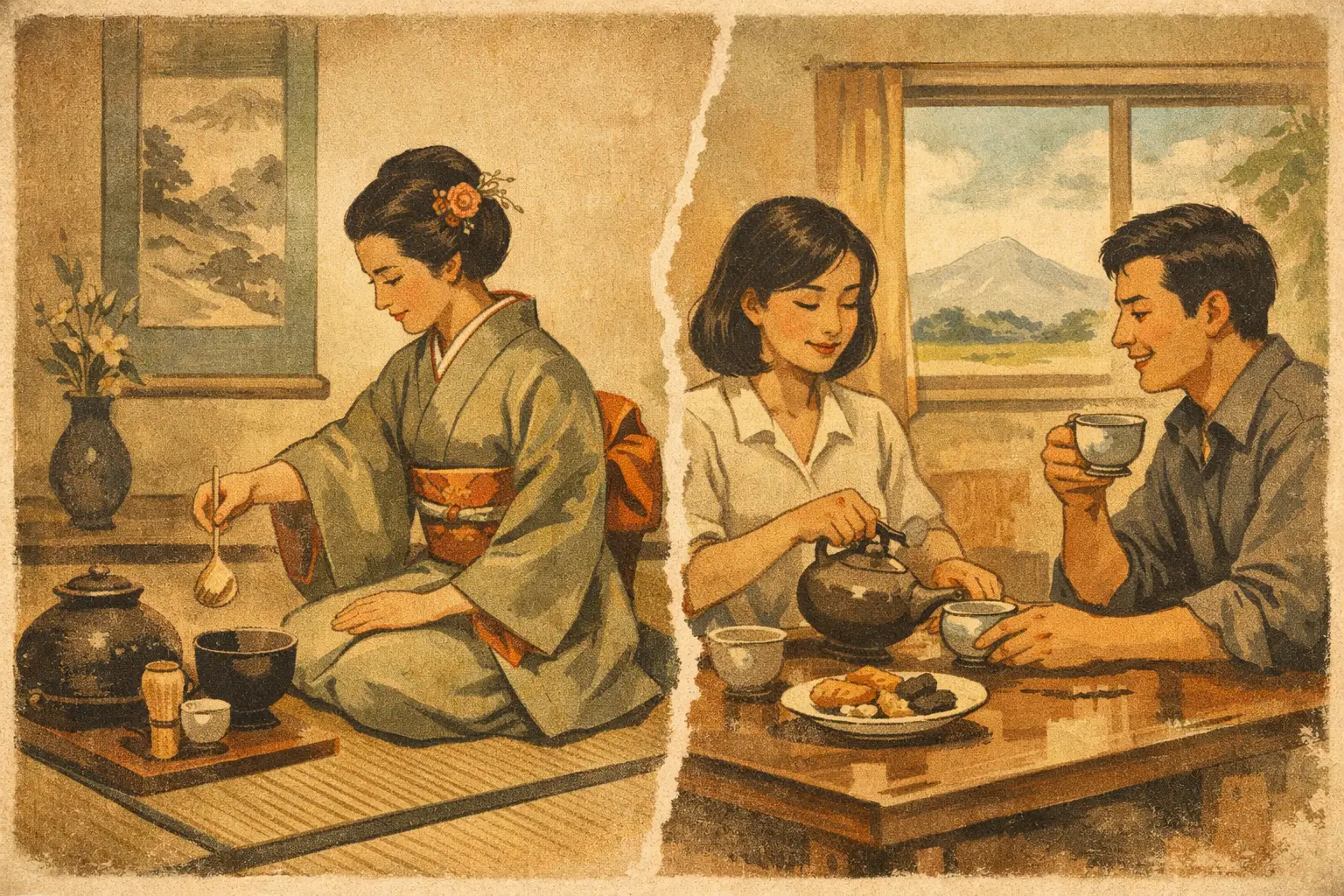
A bamboo ladle touches hot water. A host turns a tea bowl so its most beautiful side faces the guest. Then, a few subway stops away, someone twists open a bottle of cold green tea before catching the train. Tea ceremony vs everyday Japanese tea is not a contest between the formal and the casual. It is a window into two very real, very different ways tea lives in Japan.
For Japan lovers worldwide, understanding that difference makes a visit to a tea house, a ryokan, a neighborhood café, or even a convenience store feel richer. One experience asks you to slow down and notice every gesture. The other simply fits into the rhythm of an ordinary day. Both are deeply Japanese, and both are worth enjoying on their own terms.
Tea Ceremony vs Everyday Japanese Tea: Two Settings, One Culture
The Japanese tea ceremony is commonly called chanoyu, literally “hot water for tea,” though you may also hear sadō or chadō, “the way of tea.” It is a carefully shaped gathering centered on powdered green tea, or matcha. The ceremony is not only about drinking something delicious. It is an encounter with hospitality, seasonal beauty, quiet attention, and human connection.
Everyday Japanese tea has a much broader role. It includes sencha brewed at home, hojicha with a meal, mugicha in the summer, tea served to guests at an office, and bottled green tea picked up at a konbini. It can be refined, fragrant, and made with great care, but it does not require a formal ritual.
That distinction matters because many first-time visitors expect all Japanese tea drinking to look like a tea ceremony. It does not. Most Japanese people do not whisk matcha in a tatami tea room every morning. Daily tea is practical, familiar, and flexible. It belongs beside breakfast, after a meal, during a work break, or while talking with friends.
What Makes a Tea Ceremony Formal?
In chanoyu, the host prepares matcha in front of the guests using a small set of purposeful utensils. A tea bowl, or chawan, holds the tea. A bamboo whisk called a chasen creates the fine foam. The tea scoop is a chashaku. Water is heated in an iron kettle, and the room itself is arranged to guide attention away from distraction.
Nothing is random, but that does not mean the atmosphere must feel stiff. A good tea gathering creates a feeling of welcome. The host considers the season, the weather, the guests, and the occasion. A hanging scroll may carry a simple phrase. A flower arrangement may feature one branch or bloom at its natural stage. Even the choice of bowl can be part of the conversation.
This is where ideas such as wabi-sabi become easier to feel than define. A handmade bowl may be uneven, weathered, or modest in color. Its beauty is not about glossy perfection. It comes from texture, use, age, and the sense that this exact moment will not happen again.
A formal tea ceremony can range from a short experience for visitors to a full gathering that includes a meal and more elaborate procedures. The longer version is a serious commitment of time and attention. If you book one in Japan, do not assume it will be a quick photo stop. The best experiences invite you to be present, not perform for the camera.
Matcha is central, but it is not the whole story
Matcha is finely ground green tea mixed directly into hot water. You consume the leaf itself, which gives matcha its vivid color, fuller body, and distinctive vegetal richness. In a tea ceremony, guests often receive a traditional sweet before the tea. The sweetness balances matcha’s pleasant bitterness.
Many people overseas meet matcha first through lattes, ice cream, cookies, or colorful café drinks. Those can be fun, but ceremonial matcha is usually less sugary and more direct. Its flavor can be grassy, savory, creamy, bitter, or gently sweet, depending on the tea and preparation.
What Does Everyday Japanese Tea Look Like?
At home, sencha is perhaps the tea most people picture: green tea leaves steeped in hot water and poured into small cups. Unlike matcha, the leaves are removed after brewing. The water temperature is often cooler than boiling, especially for high-quality green tea, because very hot water can pull out harsh bitterness.
Hojicha is another everyday favorite. Made from roasted green tea leaves, it has a warm, toasty aroma and a reddish-brown color. Its lower caffeine level makes it a comforting choice later in the day. Genmaicha combines green tea with roasted brown rice, creating a nutty, popcorn-like fragrance that feels wonderfully easygoing.
Then there is mugicha, roasted barley tea. It is especially common in summer, served chilled in homes and restaurants. It is caffeine-free and refreshingly earthy. If a restaurant in Japan brings you tea without asking, it may be green tea, hojicha, or mugicha depending on the place and season.
Bottled tea deserves respect, too. Japan’s convenience stores and vending machines offer an astonishing range, from unsweetened green tea to fragrant jasmine tea and warming milk tea. For many travelers, choosing a bottle after a long temple walk becomes a small everyday ritual of its own. It may not be chanoyu, but it tells a real story about modern Japanese life.
The Biggest Difference Is Attention
The simplest way to understand tea ceremony vs everyday Japanese tea is to think about where attention goes.
In a tea ceremony, attention is the main ingredient. You notice the sound of water, the texture of the bowl, the host’s movements, and the seasonal details of the room. The pace is intentional. Conversation is often gentle and connected to the setting. A sense of mono no aware, the awareness that fleeting moments have emotional weight, can quietly sit beneath the experience.
With daily tea, attention can be light or deep. A family may carefully brew excellent sencha for a guest, discussing its region or harvest. Or someone may drink a cold bottle of tea while rushing between appointments. Neither is wrong. Everyday tea has room for both appreciation and convenience.
This is also why calling one “authentic” and the other “ordinary” misses the point. Chanoyu preserves a cultural art with centuries of history. Daily tea shows how tea remains alive, useful, and loved outside a formal tea room.
How to Be a Good Guest at a Tea Ceremony
You do not need to memorize every rule before attending a visitor-friendly tea ceremony. Hosts understand that international guests are learning. Still, a little preparation shows respect and helps you relax.
Wear clean, modest clothing and avoid heavy perfume, since scent can interfere with the tea and incense. Arrive on time, listen to the host, and keep your phone silent. If you are offered a sweet, eat it before drinking the matcha.
When receiving the bowl, you may see guests turn it slightly before drinking so they do not drink from the bowl’s front, the side meant to be admired. Afterward, looking at the bowl for a moment is a lovely gesture. You are not expected to become an expert overnight. Sincere curiosity matters more than flawless etiquette.
If sitting on tatami is difficult, ask in advance whether chairs are available. Many tea experiences accommodate guests who cannot sit in seiza, the formal kneeling position. It is far better to communicate a physical need than to suffer silently through the gathering.
Where Travelers Can Meet Both Kinds of Tea
A tea ceremony experience can be especially memorable in Kyoto, Uji, Kanazawa, Nara, or a traditional inn. Uji is famous for matcha, while Kyoto offers many opportunities to see tea culture in historic settings. Yet a beautiful tea moment can happen almost anywhere: at a farm stay, a local cultural center, or a small shop where the owner brews tea with care.
For everyday tea, pay attention during meals. Try the tea your restaurant serves rather than automatically ordering soda. Visit a department store food floor and notice the scent of roasted teas. Pick up several unsweetened bottled teas and compare them. At a tea shop, ask for help choosing sencha, hojicha, or genmaicha to bring home.
The best souvenir may be a new habit. Brew hojicha on a rainy afternoon, serve sencha in cups you genuinely love, or make matcha slowly when you need a pause. Tea does not have to become a ceremony every time. But every cup can offer a small invitation to look closer.