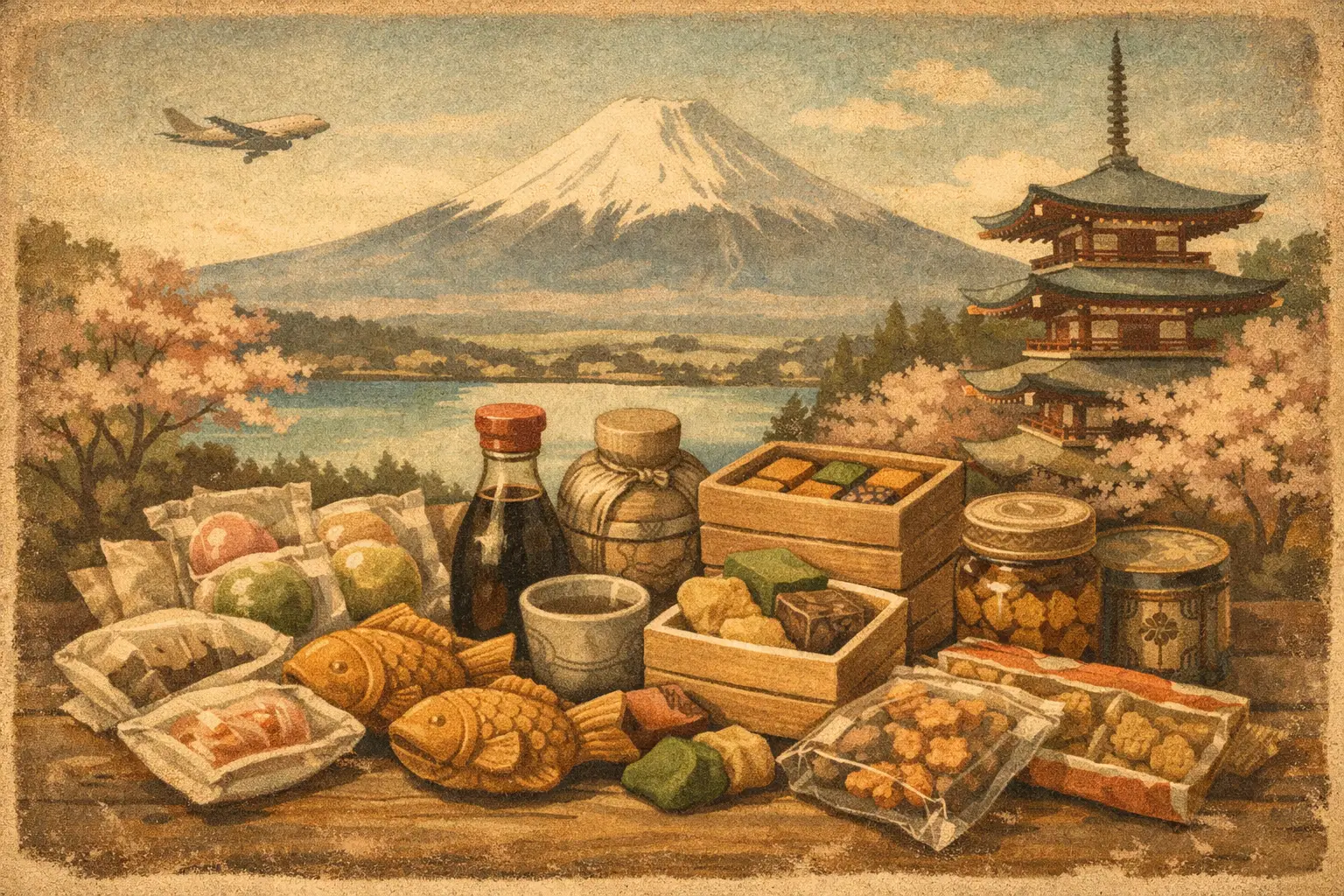
A beautiful furoshiki-wrapped box of wagashi can make a friend pause before they even take a bite. That is the joy of the best Japanese food souvenirs: they carry flavor, place, season, and a little bit of Japanese care home with you. Rather than grabbing the first candy at the airport, look for something that tells a story about the region you visited.
Japan is a country of regional specialties, known as meibutsu. A snack from Hokkaido, a tea from Uji, or a sweet from Kyoto is not just edible luggage. It is a small connection to a market stall, a temple-town walk, or the quiet ritual of afternoon tea. Here are the souvenirs worth saving room for in your suitcase.
What Makes a Japanese Food Souvenir Worth Packing?
The best choice depends on who will receive it and how long it must travel. Individually wrapped snacks are wonderful for offices and large families. Tea, seasonings, and shelf-stable sweets suit the friend who likes to cook. A delicate seasonal confection may be unforgettable, but it is less practical than a box of cookies if you have a long flight and several stops before home.
Check expiration dates before buying, especially with fresh fillings, dairy, or mochi. Also review current U.S. customs rules before departure. Packaged, shelf-stable foods are often the easiest gifts to bring back, while meat products, fresh produce, and certain homemade items can be restricted. Keep items in their original packaging and declare food when required.
12 Best Japanese Food Souvenirs for Japan Lovers
1. Tokyo Banana
Tokyo Banana is a classic for a reason. These soft sponge cakes usually have a banana custard filling and arrive in bright, cheerful packaging, often with limited-edition character designs. They are easy to share, gentle in flavor, and instantly recognizable as a Tokyo gift.
The trade-off is shelf life. Buy them toward the end of your trip and protect the box from being crushed. They are best for people who enjoy light, sweet snacks rather than intense chocolate or fruit flavors.
2. Shiroi Koibito from Hokkaido
Hokkaido’s famous Shiroi Koibito cookies sandwich white chocolate between thin, crisp langue de chat biscuits. They feel refined without being fussy, and their cool-weather, dairy-rich character reflects Hokkaido beautifully.
This is one of the safest crowd-pleasers for coworkers, hosts, and relatives. The cookies are fragile, though, so place the tin or box flat in your carry-on if possible.
3. Kyoto Matcha and Hojicha
A good tin of matcha is much more than green tea powder. In Kyoto, especially around Uji, matcha carries centuries of tea culture and the calm attention of chanoyu, the Japanese tea ceremony. Choose culinary-grade matcha for baking and lattes, or ceremonial-grade matcha for whisking with hot water.
Hojicha is the friendlier option for many first-time tea drinkers. Its roasted, nutty aroma is comforting, low in bitterness, and especially good after a meal. Both pack easily and make a thoughtful gift for someone who appreciates wabi sabi – beauty in modest, everyday rituals.
4. Yuzu Kosho
Do not let the small jar fool you. Yuzu kosho is a bold condiment made with yuzu citrus peel, chili peppers, and salt. It can wake up grilled chicken, noodles, soups, roasted vegetables, and even a simple bowl of rice.
It is a brilliant souvenir for home cooks because a little goes a long way. Look for sealed jars or tubes, and remember that larger containers may need to go in checked luggage because of airport liquid limits.
5. Furikake and Ochazuke Packets
Furikake turns plain rice into something special with ingredients such as sesame seeds, seaweed, bonito flakes, egg, or shiso. Ochazuke packets make an even cozier gift: sprinkle them over rice, pour on hot tea or broth, and you have a simple late-night Japanese comfort meal.
These are light, inexpensive, and easy to fit into spare corners of a suitcase. They also bring a taste of ordinary Japanese home life, which can be every bit as meaningful as a famous boxed sweet.
6. Japanese Curry Roux
Japanese curry is mellow, savory, and deeply comforting. Boxes of curry roux make it easy to recreate the dish at home with onions, carrots, potatoes, and your choice of protein. Regional versions can be fun finds, including apple curry, beef curry, or spicy varieties from places known for local ingredients.
This is not the most glamorous present, but it may become the souvenir your friends actually use most often. Choose a few heat levels if you are gifting it to several households.
7. Kit Kats in Japanese Flavors
Japanese Kit Kats have become a souvenir tradition because the flavor range is playful and often regional. You may find matcha, strawberry, hojicha, sake-inspired, or seasonal varieties. The name also echoes the phrase kitto katsu, meaning something like “you will surely win,” so they are popular good-luck gifts for students.
They are fun, familiar, and easy to hand out. Just avoid leaving chocolate in a hot car or checked suitcase during summer travel.
8. Senbei and Arare Rice Crackers
For the person who prefers savory snacks, bring senbei or arare. These rice crackers range from soy-sauce glazed and smoky to seaweed-covered, peppery, sweet, or wonderfully plain. A beautiful assortment from a traditional shop can feel like an edible version of ukiyoe – colorful, regional, and full of small details.
Choose sturdy packaged varieties for travel. Freshly made crackers from a local market are delicious, but they can lose their crispness sooner than factory-sealed boxes.
9. Wagashi and Yokan
Wagashi are traditional Japanese sweets often served with tea. Fresh namagashi are tiny works of seasonal art, shaped like leaves, flowers, or flowing water. They have a lovely mono no aware quality: their beauty is tied to the fleeting season.
For a practical souvenir, choose yokan instead. This firm, sliceable sweet made from sweet bean paste has a longer shelf life and travels well. Chestnut, green tea, and sweet potato versions are especially welcome gifts for someone curious about traditional Japanese flavors.
10. Karinto and Sweet Potato Snacks
Karinto are crunchy, deep-fried wheat snacks, usually coated in brown sugar. They can be plain and rustic or flavored with black sesame, sweet potato, or vegetables. They are satisfying with coffee or tea and often come in handsome bags and boxes.
Sweet potato snacks are another excellent choice, particularly from regions such as Kagoshima. Look for chips, cakes, or small candies made with satsumaimo. Their earthy sweetness feels distinctly Japanese without being unfamiliar.
11. Miso, Dashi, and Soup Gifts
A small package of quality miso or dashi sachets is a gift with real staying power. Dashi, often made from kombu and bonito, is the quiet foundation behind many Japanese dishes. It adds a savory depth that can transform miso soup, noodles, simmered vegetables, and rice dishes.
If you are buying for a vegetarian, read labels carefully. Many dashi products contain fish. Kombu- or shiitake-based versions are available and make a considerate alternative.
12. Regional Sake-Flavor Sweets and Amazake
Sake-flavored cookies, chocolates, and crackers let you bring home the character of a brewery town without worrying about a heavy glass bottle. They are usually mild and fragrant rather than strongly alcoholic, although labels vary.
Amazake is another appealing option. Despite its name, it is often a sweet fermented rice drink with little or no alcohol, depending on the type. Powdered or shelf-stable versions travel more easily than refrigerated bottles. It is a warm, unusual choice for someone who loves Japanese food traditions beyond the usual snack aisle.
Where to Find the Best Japanese Food Souvenirs
Department store basements, called depachika, are ideal when you want polished presentation and a wide selection. You will find respected confectioners, tea counters, regional specialties, and staff who can help with gift boxes. Train stations and airports are convenient for popular local favorites, particularly when you are short on time.
For something more personal, browse neighborhood shotengai shopping streets, farmers markets, temple-town shops, and regional supermarkets. A package of local tea or handmade crackers bought near the place you explored will mean more than a generic souvenir. If your Japanese is limited, use the dates and ingredient labels as your guide, and do not be shy about asking for osusume – a recommendation.
Pack It Like a Pro
Keep fragile sweets, tea tins, and crackers in your carry-on, surrounded by soft clothing. Put sealed jars, sauces, and larger drink containers in checked luggage inside a zip-top bag. Heat is the enemy of chocolate, so buy it late in the trip and keep it cool whenever possible.
Most of all, buy one souvenir for yourself. Open it a few weeks after you return, make a cup of tea, and let one bite bring back the sound of the station, the scent of a shrine approach, or that perfect afternoon when Japan felt close enough to hold.