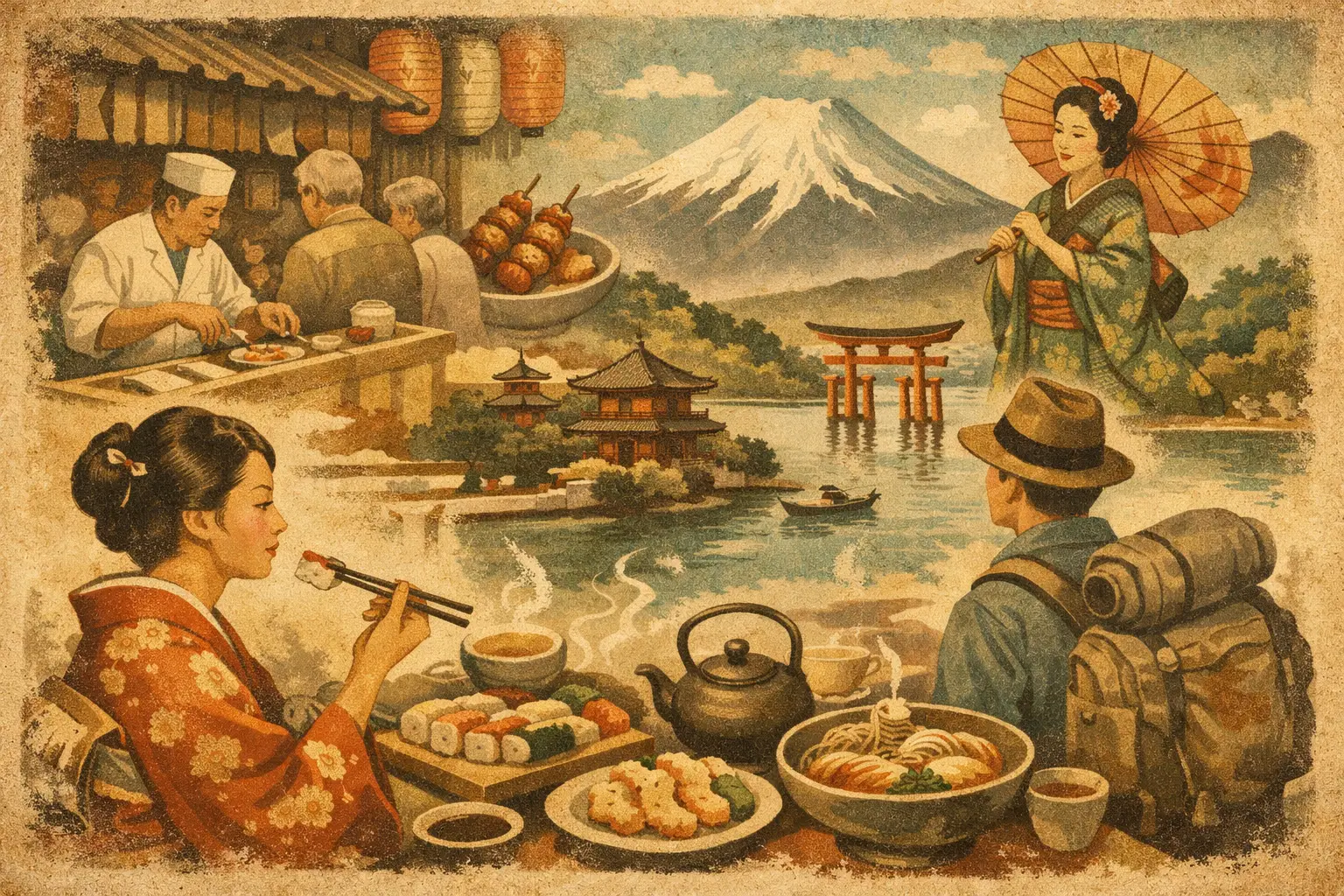
The first time you sit down to a real Japanese meal in Japan, one thing becomes clear fast – food is not treated as a side activity. It is part hospitality, part seasonal art, part daily ritual. This japanese food culture guide is for everyone who loves Japan and wants to understand what is happening beyond sushi menus and ramen headlines.
If you already care about kimono, temples, onsen, crafts, and the quiet beauty of mono no aware, Japanese food will feel familiar in spirit. It carries the same attention to form, season, place, and mood. A bowl, a garnish, the order of dishes, even the way a meal reflects the weather outside – all of it matters.
What a japanese food culture guide should really explain
A good introduction to Japanese food culture is not just a list of dishes. It should explain why meals look the way they do, why certain foods belong to certain seasons, and why presentation is rarely separate from taste.
In Japan, food often reflects a wider cultural instinct toward balance. That can mean balancing colors on a tray, flavors in a meal, or richness with restraint. You see this in everyday lunches and in formal kaiseki alike. Even simple food can carry a kind of wabi sabi – beauty in modesty, irregularity, and quiet detail.
This is also why many visitors are surprised by how much context matters. The same fish can feel different depending on the region, the season, the style of preparation, and the setting. Japanese food culture rewards attention.
Seasonality is not a trend
One of the most important ideas in Japanese cuisine is shun, the notion that ingredients are best at their peak seasonal moment. This is not just a chef’s preference. It shapes home cooking, restaurant menus, sweets, market displays, and even convenience store offerings.
Spring brings bamboo shoots, delicate greens, and sakura-themed sweets. Summer leans toward cooling dishes such as somen, chilled tofu, and eel prepared to fight seasonal fatigue. Fall is famous for mushrooms, chestnuts, sweet potatoes, and sanma. Winter turns toward hot pots, daikon, crab, and warming broths.
For travelers, this means timing affects what you eat as much as where you eat. A meal in Kyoto in November and a meal in Kyoto in May can feel like two different worlds. That is part of the appeal. Food in Japan often carries the feeling of a passing moment, which is where mono no aware enters the picture so naturally.
Everyday meals matter as much as famous dishes
Many visitors arrive with a mental shortlist: sushi, ramen, tempura, maybe wagyu. Those are worth trying, but they are only part of the story. Japanese food culture lives just as strongly in ordinary meals.
A teishoku set meal, for example, can teach you a lot. You may get grilled fish, rice, miso soup, pickles, and a small side dish. Nothing shouts for attention, yet the whole meal feels complete. Rice is not filler. Pickles are not an afterthought. Soup is not just there to warm the table. Each piece supports the others.
The same goes for homemade food. Curry rice, nikujaga, tamagoyaki, onigiri, and miso soup are deeply tied to daily life. Some dishes have foreign roots but became thoroughly Japanese through adaptation. That mix of preservation and reinvention is one reason the food culture feels so alive.
Regional pride is a huge part of the experience
Japan may look compact on a map, but its food culture is intensely regional. Local climate, geography, agriculture, and history all shape what people eat and what they take pride in.
Osaka is often called the nation’s kitchen, with a lively love for street food and casual eating. Kyoto cuisine is more restrained and refined, shaped by court culture, Buddhist traditions, and a sensitivity to season. Hokkaido is famous for seafood, dairy, and hearty cold-weather fare. Fukuoka has a strong ramen identity, while Hiroshima and Osaka still debate whose okonomiyaki style deserves more love.
This local pride matters because food in Japan is often tied to place in a very specific way. Travelers who chase regional specialties usually come away with a much richer understanding of the country than those who stick only to globally famous dishes.
The table has its own etiquette
Part of any useful japanese food culture guide is knowing how to move through a meal respectfully without feeling stiff or nervous. The good news is that Japanese dining etiquette is not about perfection. It is about consideration.
Before eating, many people say itadakimasu, a phrase that expresses gratitude for the meal. Afterward, gochisousama deshita thanks the host, cook, or restaurant for the food. These small phrases carry warmth and awareness.
Chopstick etiquette matters too. Do not stick chopsticks upright into rice, since that resembles a funeral ritual. Do not pass food from chopsticks to chopsticks for the same reason. If serving yourself from shared dishes, many settings provide separate serving utensils, though customs can vary depending on formality.
Slurping noodles is one area where visitors often worry too much. In many contexts, especially with ramen and soba, slurping is normal and can even show enjoyment. But it depends on the setting. A casual noodle shop and a polished kaiseki restaurant do not carry the same expectations.
Why presentation matters so much
In Japanese food culture, the visual side of a meal is not decoration added at the end. It is part of the eating experience from the start. Plate shape, empty space, color contrast, and vessel choice all shape how the food is received.
This is one place where Japanese aesthetics connect strongly with wider cultural interests. If you love ceramics, lacquerware, textiles, flower arranging, or ukiyoe, you will notice similar instincts at the table. Composition matters. Suggestion matters. Restraint matters.
That does not mean every meal is formal or delicate. A sizzling plate of gyoza or a messy street snack can be joyful and direct. But even then, there is often care in how the food is framed, served, and timed.
Tradition and convenience live side by side
One of the most fascinating things about food in Japan is that tradition does not cancel out modern convenience. You can have a beautifully composed seasonal meal one day and a convenience store breakfast the next, and both can tell you something real about contemporary life.
Depachika food halls, train station bento, neighborhood bakeries, basement sweets counters, vending machines, and convenience stores are all part of the food landscape. They are not outside the culture. They are inside it.
This balance can surprise first-time visitors who expect only either ancient culinary tradition or futuristic novelty. Japan often does both at once. A family recipe can exist beside a flawless convenience store egg sandwich without contradiction.
A few trade-offs worth knowing
Not every celebrated food experience will suit every traveler. Some high-end restaurants require reservations, fixed menus, or comfort with chef-led pacing. Casual spots can be more accessible, more affordable, and sometimes more memorable.
Dietary restrictions can also be tricky. Vegetarian and vegan visitors should know that dashi often appears in dishes that seem meat-free. Gluten-free dining takes extra attention because soy sauce and shared cooking surfaces are common. None of this makes eating in Japan impossible. It just means planning helps.
There is also the question of authenticity, which people sometimes treat too rigidly. A tiny local soba shop can feel deeply rooted in place. So can yoshoku, Japanese adaptations of Western-inspired dishes. Purity is not always the right lens. Japanese food culture has always included exchange, adaptation, and regional reinterpretation.
How to enjoy Japanese food more deeply when you travel
The best approach is simple: stay curious and slow down. Try one formal meal if your budget allows, but also eat where office workers eat lunch. Visit a market. Notice tableware. Ask what is seasonal. Pay attention to local specialties instead of hunting only for familiar names.
If you are staying at a ryokan, breakfast can teach you as much as dinner. If you are at a temple lodging, shojin ryori may show you a different side of Japanese cuisine entirely – one shaped by Buddhist practice, mindfulness, and ingredient purity rather than indulgence.
For all Japan lovers worldwide, this is where food becomes more than consumption. It becomes a way to understand rhythm, respect, craft, and community. That is why Japanese meals stay in your memory long after the plates are cleared.
The next time you sit down in Japan, do not just ask whether the food tastes good. Ask what season it belongs to, what region it speaks for, and what kind of care brought it to the table. That is where the real connection starts.