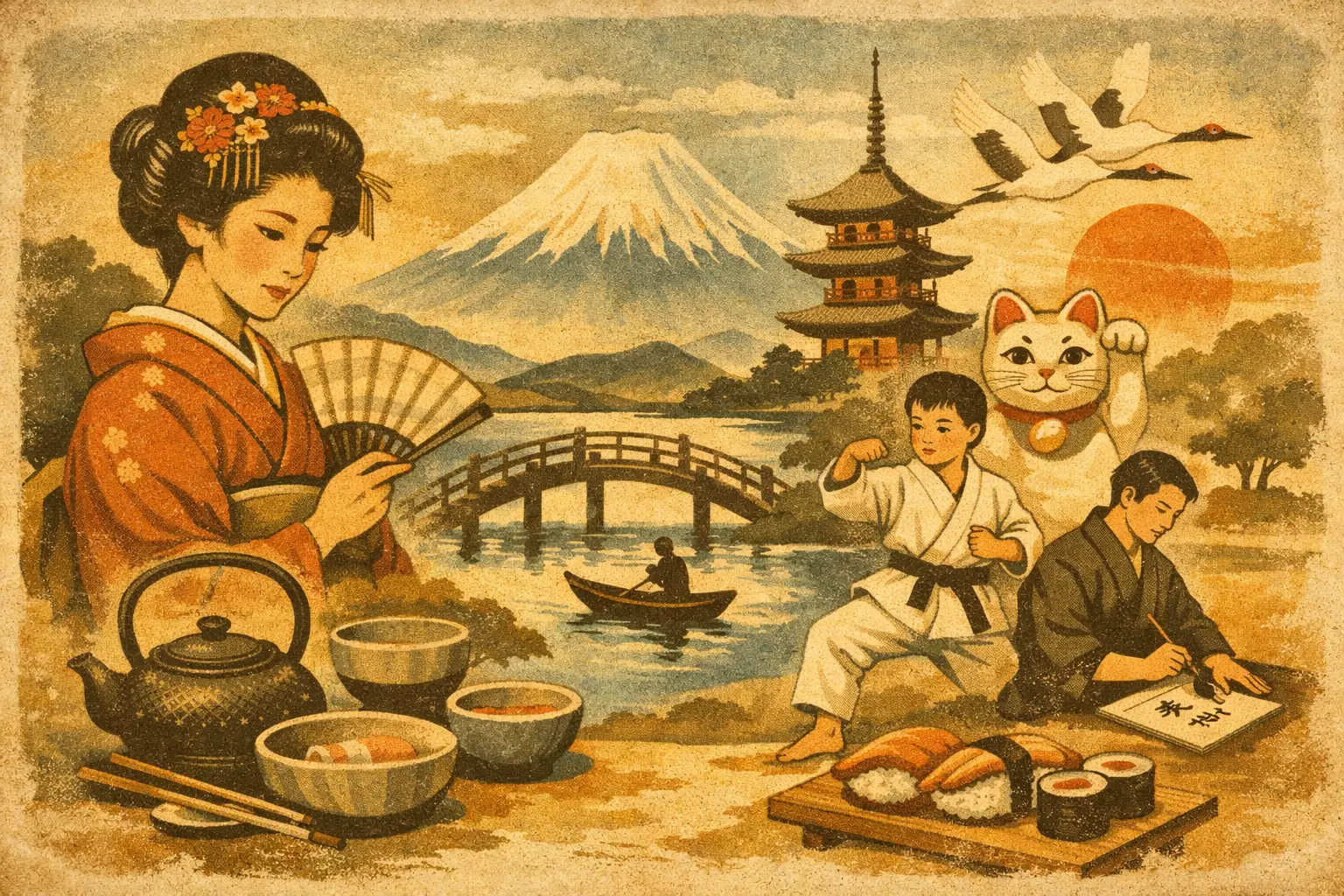
If you have ever stood in front of a quiet shrine gate, admired a hand-dyed kimono, or felt oddly moved by a bowl of ramen that looked too beautiful to disturb, you already know why people keep searching for japanese culture explained. Japan can feel familiar and mysterious at the same time. That mix is exactly what makes it so compelling for Japan lovers worldwide.
The challenge is that Japanese culture is not one thing. It is not only temples, only food, or only etiquette. It is a living mix of old traditions, regional habits, artistic values, social expectations, and modern routines that all sit beside each other. The best way to understand it is to stop looking for one grand definition and start noticing the patterns that connect everyday life, craftsmanship, beauty, and behavior.
Japanese culture explained through values
One of the clearest ways to approach Japanese culture is through values that show up again and again. You can see them in architecture, gifts, seasonal food, bathing customs, and even the way public spaces are treated.
A big one is respect for harmony, often felt in the idea of wa. Harmony does not mean everyone thinks the same way. It means people are encouraged to move with awareness of the group, the place, and the moment. That helps explain why quiet public behavior matters, why presentation matters, and why hospitality can feel so thoughtful in Japan.
Another recurring value is attention to impermanence. The phrase mono no aware captures the gentle sadness and beauty of things that do not last. Cherry blossoms are the obvious example, but the feeling goes much deeper. A seasonal sweet, a fading temple garden, or the changing light on a paper screen can all carry that same emotional texture.
Then there is wabi sabi, the appreciation of modesty, irregularity, age, and simplicity. This is one of the most misunderstood ideas because it gets flattened into a decorating trend. In real cultural context, it is less about rustic style and more about accepting imperfection and finding beauty in what is weathered, quiet, and unforced.
Why tradition still feels alive
One reason Japan fascinates so many visitors is that tradition often feels active rather than staged. A shrine is not only a historical site. It is also a place where people pray for exams, health, business, or a safe birth. A tea bowl is not only an object to display. It belongs to a larger world of tea practice, hospitality, and disciplined beauty.
That living quality matters. Traditional arts in Japan are often learned through repetition, patience, and respect for lineage. Calligraphy, tea ceremony, flower arranging, sword polishing, ceramics, textile dyeing, and incense appreciation all carry systems of knowledge that have been passed down carefully.
At the same time, tradition is not frozen. A craftsperson may use older methods but speak to modern taste. A ryokan may preserve old hospitality rituals while adding contemporary comfort. That balance between preservation and adaptation is a big part of what makes Japanese culture feel so dynamic.
Art, craft, and the beauty of care
If japanese culture explained had to be reduced to one everyday principle, it might be this: care shows. You can see it in wrapping, plating, arrangement, texture, and finish.
Traditional crafts are a perfect example. Whether it is indigo dyeing, origami, lacquerware, washi paper, woodblock prints, or woven baskets, the object often reflects long training and a deep respect for material. Japanese aesthetics tend to reward subtlety. The point is not always to impress at first glance. Sometimes the appeal grows as you notice balance, restraint, and detail.
Ukiyoe, the famous woodblock print tradition, gives a good window into this. These prints are visually striking, but they also show how Japanese art has long moved between popular culture and refined design. Scenes of landscapes, actors, seasonal beauty, and daily life could be widely enjoyed while still carrying a strong sense of composition and atmosphere.
This love of care extends to clothing as well. Kimono is not just beautiful fabric. It reflects seasonality, social setting, craft traditions, and ways of presenting oneself with grace. Even people who never wear kimono in daily life may still value it deeply as part of cultural identity and ceremony.
Food as culture, not just cuisine
Japanese food is often the first gateway for international fans, but it becomes more interesting when you see it as a cultural language. Meals in Japan are shaped by season, region, texture, color, and balance. Presentation matters because eating is not treated as separate from beauty.
Rice, soup, pickles, grilled fish, noodles, sweets, tea, and regional specialties all tell you something about climate, local history, and daily rhythm. A humble breakfast can reflect more cultural continuity than a luxury dinner. So can convenience store food, which often surprises visitors with its quality and care.
There is also a strong sense of gratitude around meals. Expressions before and after eating reflect appreciation for the food, the people who prepared it, and the life involved in bringing it to the table. That may seem small, but small rituals often reveal big values.
Of course, there are trade-offs in romanticizing Japanese food culture. Not every meal is poetic, and modern eating habits include fast food, busy schedules, and convenience just like anywhere else. Still, the cultural emphasis on seasonality and presentation remains unusually visible.
Baths, purity, and the meaning of onsen
Few experiences help foreigners feel close to Japan as quickly as bathing culture. Onsen and sento are not just about getting clean. They are about slowing down, resetting, and sharing space in a respectful way.
Bathing in Japan has roots in ideas of purification, health, and community. The washing comes first, carefully and thoroughly, before entering the bath. That order matters because the bath is for soaking, not scrubbing. It turns the whole experience into something calmer and more intentional.
For first-time visitors, this can feel intimidating. Rules around nudity, tattoos, towels, and quiet behavior vary by place, and it is normal to feel unsure. But once understood, Japanese bathing often becomes one of the most cherished parts of the culture. It teaches a lot about cleanliness, etiquette, and the Japanese habit of treating shared spaces with care.
And when you are away from the Yamato islands, you can still experience Japan at your home in a Japanese bathtub by Bartok Design!
Shrines, temples, and spiritual texture
People sometimes ask whether Japan is Shinto or Buddhist, but everyday life often includes both. Shrines and temples serve different traditions, yet many Japanese people engage with each in practical, blended ways.
Shinto tends to emphasize connection to kami, nature, place, and ritual purity. Buddhism has shaped funeral practices, philosophical ideas, memorial traditions, and temple culture. For many people, this is less about exclusive religious identity and more about participating in rituals that mark life events and seasonal moments.
That is why a visit to a shrine or temple can feel both spiritual and social. People go for New Year prayers, festivals, blessings, memorials, and quiet reflection. Visitors should remember that these are not theme-park backdrops. They are active places of meaning.
Everyday etiquette and why it matters
A lot of what outsiders notice first about Japan comes down to etiquette. People line up neatly. Trains can be quiet. Packaging is careful. Shoes come off indoors. Business cards may be handled with respect. Gift giving can be highly considered.
None of this means Japanese society is rigid in every moment, and not every person follows every custom perfectly. But there is a strong cultural habit of noticing how one’s actions affect others. That is one reason politeness feels structural rather than decorative.
It also helps explain why Japan can feel both welcoming and hard to read. Much is communicated indirectly. The upside is social smoothness. The downside is that foreigners may miss cues or misunderstand what is being left unsaid. That does not make Japanese culture closed. It just means context matters.
Japanese culture explained for modern fans
If you love Japan from abroad, the healthiest way to approach it is with enthusiasm and humility together. Admire the beauty, learn the words, try the customs, but leave room for complexity.
Japan is not a museum of perfect traditions. It is a modern country with contradictions, pressures, generational differences, and regional variety.
That is actually good news. It means your connection to Japan can keep growing. Maybe you begin with sushi, ukiyo-e, or onsen. Then you start noticing seasonal festivals, local ceramics, tea tools, castle towns, calligraphy, or the quiet emotional world behind mono no aware. The picture gets richer the more specific it becomes.
At Crazy for Japan, that sense of shared curiosity is part of the fun. For all Japan lovers worldwide, learning more is not about passing a test. It is about feeling closer to the people, places, objects, and ideas that make Japan so deeply memorable.
The best way to keep going is simple: pay attention to the details, because in Japanese culture, the details are often where the heart is.