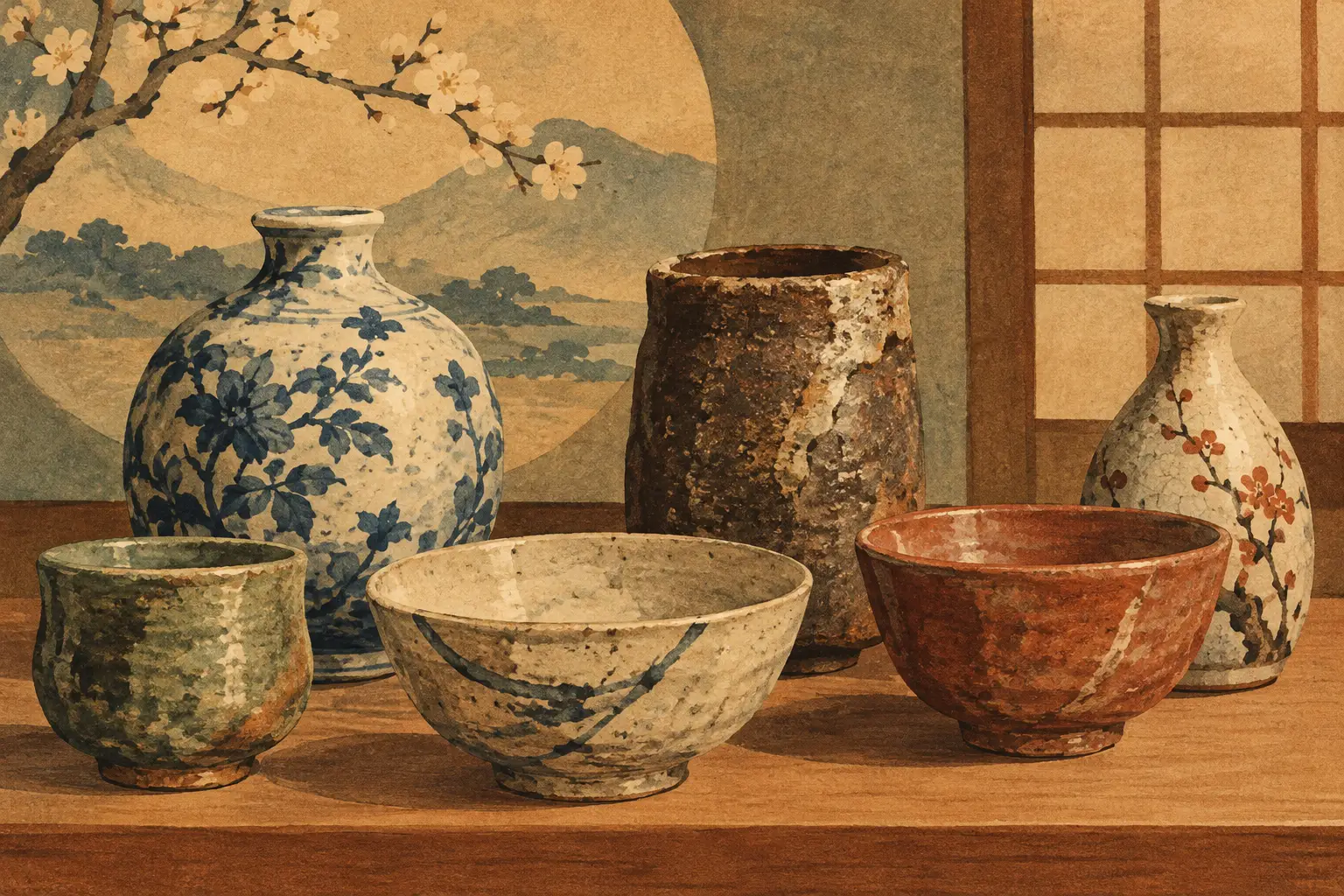
A bowl can change the pace of a meal. Japanese ceramics make that idea easy to understand: the cool curve of a sake cup, the soft texture of a rice bowl, or the irregular rim of a tea cup asks you to slow down and notice what is in your hands. For Japan lovers worldwide, these objects are not simply souvenirs. They are a direct, useful connection to regional history, skilled makers, and the quiet pleasures of daily life.
Unlike factory-perfect dinnerware, many Japanese pieces invite a second look. A glaze may pool darker near the foot. A small pinhole may appear in the surface. The shape might be subtly off-center. These details are often part of the appeal, not flaws to reject. They reflect wabi sabi, an appreciation of beauty that is modest, imperfect, and shaped by time.
Why Japanese Ceramics Feel So Personal
Japan has made pottery for thousands of years, but its ceramic traditions are not one single look. Different regions developed around local clay, kiln technology, trade routes, and food culture. A bold, painted plate from Arita has a very different spirit from the earthy, ash-glazed stoneware of Bizen or Shigaraki.
That regional identity gives each piece a sense of place. You may recognize Karatsu ware by its relaxed brushwork and natural glazes, or Mino ware by its enormous range of forms and finishes. Hagi ware is beloved for its soft, pale surface and the way its glaze can gently change with use. In Japan, this gradual transformation is often welcomed as the vessel becoming more personal to its owner.
There is also a deep link between ceramics and seasonality. Japanese meals often use different dishes for different moments of the year: a cool glassy bowl in summer, warm earthenware in winter, plum blossoms in early spring, and maple leaves in fall. You do not need a cabinet full of seasonal tableware to share that feeling. One thoughtfully chosen bowl can make a simple weeknight meal feel more intentional.
Japanese Ceramics: The Styles You Will Encounter
Knowing a few major styles makes browsing much more fun. It also helps you choose a piece for how you actually live, rather than buying only what photographs well.
Arita and Imari: Bright, Detailed Porcelain
Arita ware comes from Saga Prefecture and is one of Japan’s best-known porcelain traditions. It is usually light, hard, and finely made, often with blue-and-white decoration or colorful overglaze painting in red, green, gold, and other vivid tones. “Imari” commonly refers to styles that were shipped from the nearby port of Imari, especially the richly decorated export porcelain popular from the 17th century onward.
Choose Arita or Imari if you love crisp patterns, floral designs, and pieces that make a table feel celebratory. A small plate works beautifully for sweets, fruit, or a side dish. The trade-off is that highly decorated porcelain can feel formal if your everyday taste is very minimal.
Bizen: Earthy and Fire-Marked
Bizen ware from Okayama is usually unglazed stoneware. Its colors come from iron-rich clay and long kiln firing, producing warm browns, charcoal tones, flashes of red, and ash marks that cannot be duplicated exactly. Some pieces show goma, naturally occurring ash deposits that resemble sesame seeds.
Bizen is for people who want the kiln’s work to remain visible. A Bizen cup can feel wonderfully grounded in the hand, especially with tea, coffee, or sake. Because the surfaces may be textured and unglazed, it is less suited to anyone who wants a uniform, ultra-smooth matching set.
Mino: A Wide World of Everyday Beauty
Mino ware, made largely in Gifu Prefecture, is not a single visual style. It includes famous traditions such as Oribe, with its deep green glazes and lively asymmetry; Shino, known for milky white glaze and warm orange hints; and Ki-Seto, with gentle yellow tones.
Mino is a great place to start because it spans expressive tea bowls, durable plates, ramen bowls, and easygoing cups. An Oribe dish can bring an unexpected burst of green to a table, while a Shino bowl suits a quieter, more rustic setting. These pieces often carry the relaxed energy of a countryside meal rather than a formal banquet.
Hagi: Soft Color, Slow Change
Hagi ware from Yamaguchi Prefecture is closely associated with tea. Its pale pink, cream, gray, and lavender tones are calm but never flat. The porous clay and fine crackle glaze can absorb tiny traces of tea over time, creating nanabake, or “the seven changes,” as the surface develops character.
This is a beautiful idea, but it comes with care considerations. Hagi may need a little more attention than dense porcelain, and staining is part of its nature. If you want a cup that stays visually identical for decades, choose another style. If you enjoy an object that records small moments of use, Hagi has real magic.
Kutani: Color With Confidence
Kutani ware from Ishikawa is known for painterly decoration and strong color. Some pieces feature the classic five Kutani colors: green, yellow, purple, dark blue, and red. Others use gold, landscapes, birds, or bold geometric patterns.
A Kutani plate or cup is an instant focal point, especially in a home where the rest of the table is simple. It also makes a memorable gift for someone who loves Japanese art, ukiyoe, or decorative objects with a strong visual voice.
How to Choose a Piece You Will Actually Use
Start with the ritual, not the label. Ask whether you want a favorite coffee cup, a bowl for rice, a plate for pastries, a vessel for matcha, or a serving dish for meals with friends. The best first piece is often one that can earn its place in your routine.
Pay attention to scale. Japanese bowls and plates may look smaller than standard American dinnerware, because they are often designed for shared meals with several dishes rather than one oversized entrée. A small dish is not necessarily impractical. It may be perfect for pickles, dipping sauce, a handful of nuts, or a square of tamagoyaki.
Then look closely at the foot, the unglazed ring on the bottom. On handmade work, it can reveal the clay body and finishing touch of the maker. Feel the weight in your hand and check how the rim meets your lips. These sensory details matter more than whether a piece matches everything else in your kitchen.
If you are buying handmade ceramics, expect variation. Two cups from the same collection may differ in glaze, size, brushwork, or texture. That is part of their life as handmade objects. If you need a precise set for entertaining, porcelain made in a consistent production line may be the better fit.
Caring for Handmade Pottery at Home
Care instructions depend on the clay and glaze, so follow the maker’s guidance whenever it is available. As a general rule, avoid sudden temperature changes. Do not pour boiling liquid into a cold, delicate vessel or rinse a hot bowl under cold water. Thermal shock can cause cracks.
For porous or crackle-glazed pieces, some collectors rinse the interior with water before serving tea or food to limit staining. Gentle handwashing is the safest habit for special work, especially pieces with gold decoration, rough textures, or fine painted surfaces. Dishwasher and microwave safety are never automatic just because an item is ceramic.
Most of all, do not store the pieces so carefully that they disappear from your life. A tiny chip or change in color can feel disappointing, but Japanese aesthetics also make room for mono no aware, the awareness that beautiful things are temporary. Use the bowl. Let the cup become familiar. Let the plate hold stories from ordinary mornings and long dinners.
A single Japanese ceramic piece can be the start of a collection, but it does not have to be. Choose the one that makes you want to pour the tea, serve the meal, and invite someone to the table.