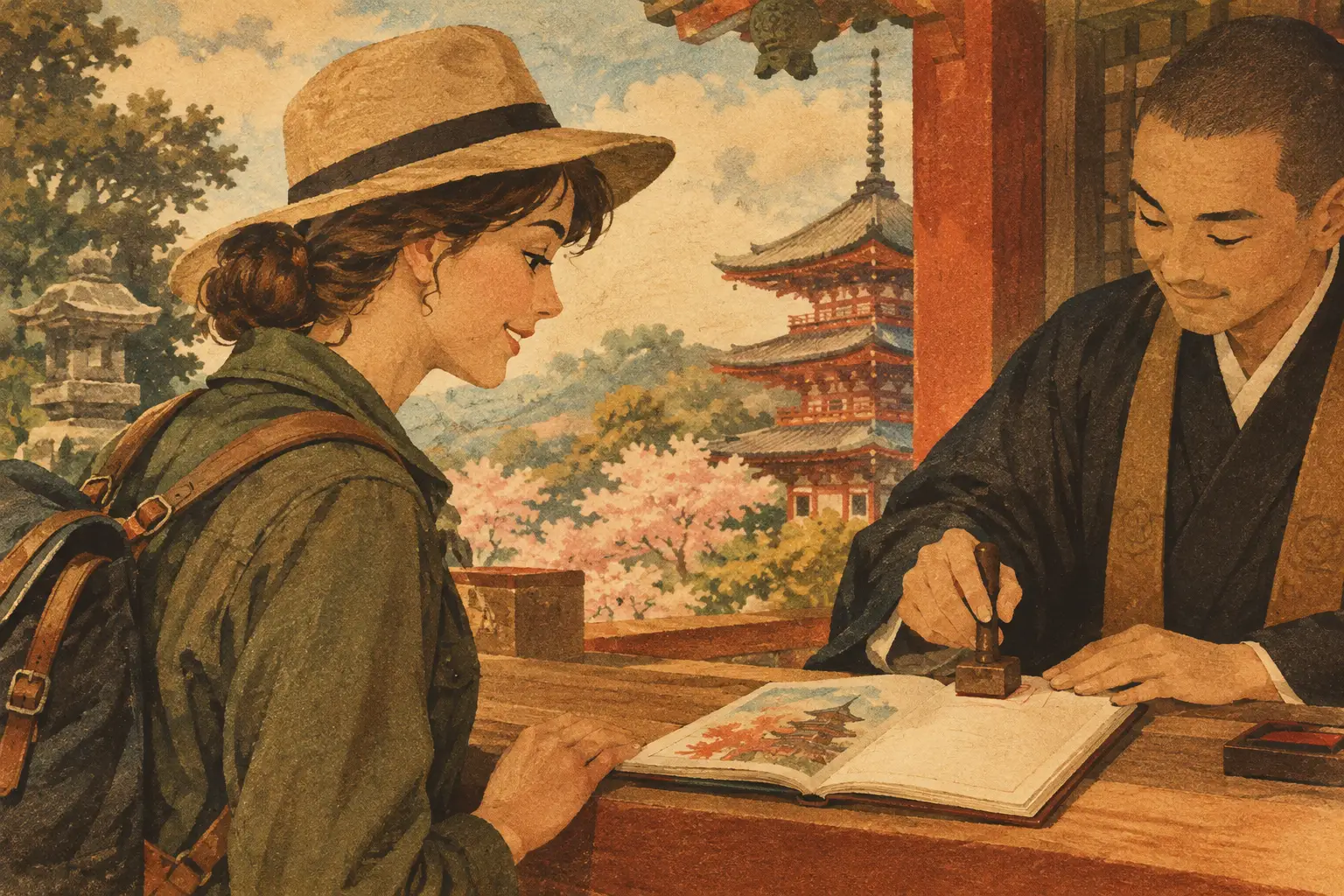
A quiet line forms beside the shrine office. Someone slides a small accordion book across the counter, and moments later it returns carrying bold black calligraphy and a vivid vermilion seal. If you are wondering, can foreigners collect goshuin? The answer is a warm yes. Visitors from anywhere are generally welcome to receive them, as long as they approach the custom with the respect it deserves.
For Japan lovers, a goshuin can become one of the most personal keepsakes from a trip. It is not just a pretty stamp for a travel scrapbook. Each page is connected to a real visit, a moment of prayer or reflection, and a particular sacred place. Treat it that way, and you will be welcomed into a tradition that makes a temple or shrine visit feel far more memorable.
What a Goshuin Really Is
A goshuin is a handwritten or pre-printed sacred seal received at a Buddhist temple or Shinto shrine. The design usually includes the site’s red stamps, the name of the temple or shrine, and calligraphy showing the date of your visit. At some places, a priest, monk, or staff member writes it by hand right in front of you. Watching the brush move across the paper is a small thrill for anyone who loves Japanese calligraphy.
Historically, goshuin were connected with pilgrimage and devotion. They were evidence that a visitor had worshipped at a sacred site. Today, they are also cherished by travelers, collectors, and locals who enjoy visiting different temples and shrines. That modern enthusiasm does not erase the religious meaning. Think of a goshuin as a record of a spiritual visit first and a collectible second.
That perspective matters. Japan has many beautiful traditions built around attentiveness, from tea ceremony to the seasonal feeling of mono no aware. A goshuin asks for that same pause. You do not need to be Buddhist or Shinto, and you do not need to speak fluent Japanese. You simply need to be courteous.
Can Foreigners Collect Goshuin at Temples and Shrines?
Yes, foreigners can collect goshuin at both temples and shrines throughout Japan. There is no nationality requirement, no membership card, and no expectation that you follow a particular religion. Staff at major sightseeing sites are very accustomed to international visitors, while smaller countryside temples may feel more intimate and less set up for English speakers. The etiquette remains the same everywhere.
There are a few exceptions. A site may not offer goshuin every day, the office may be closed, or the person who writes them may be unavailable. During busy festival days, staff may provide a pre-written paper goshuin instead of writing directly in your book. This is still an official goshuin, not a lesser version.
Some sacred places also have rules about which books they will stamp. A few prefer temple goshuin and shrine goshuin to be kept separately, while others accept a mixed book without concern. If you are unsure, show your goshuincho and politely ask. Their decision is the one to follow.
Start With a Goshuincho
The best place to collect goshuin is a goshuincho, a folded, accordion-style stamp book made for this exact purpose. You can buy one at many temples, shrines, museum shops, bookstores, and travel-oriented stores in Japan. Designs range from understated cloth covers to stunning seasonal patterns with cranes, waves, sakura, ukiyo-e-inspired scenes, or gold thread.
Choose a book because you genuinely love it, not because it matches every item on your itinerary. This book may travel with you through Kyoto’s hillside temples, the great shrines of Ise, or quiet stops along the Kumano Kodo. Over time, the cover will become part of the memory too, carrying a little wabi sabi from being handled on real journeys.
Avoid using a standard notebook, passport, ticket booklet, or loose sketchpad unless a location specifically permits it. Goshuin paper and books are designed to hold the ink and preserve the format. A goshuincho also signals that you understand what you are requesting.
If you receive a loose-leaf goshuin, keep it flat and dry until you can place it in your book. Many goshuincho books have blank pages where loose sheets can be attached later, but do not rush to glue them in with anything that may damage the paper.
The Respectful Way to Request One
The order matters: visit the sacred space first, then request your goshuin. At a Shinto shrine, you may bow at the torii gate, cleanse your hands at the temizuya if it is open, offer a quiet prayer at the main hall, and bow again as you leave. At a Buddhist temple, follow the posted guidance, offer incense or a prayer if appropriate, and take time to appreciate the grounds without treating them as a photo set.
Afterward, find the office marked with signs such as goshuin, juyosho, or shakosho. Hand over your closed goshuincho with the cover facing the staff member if you can. Say, “Goshuin onegaishimasu,” which means “A goshuin, please.” A friendly “Konnichiwa” and a small bow are always appreciated.
The fee is usually around 300 to 500 yen, though it can be more at famous locations or for elaborate special editions. Bring small bills and coins. The payment is often described as a donation or offering rather than a purchase, so do not haggle or complain about the amount.
While you wait, stand calmly nearby unless staff direct you elsewhere. Do not lean over the counter to film the writing, touch brushes or seals, or flip through other people’s books. If you would like a photo, ask first. In many places, photography at the counter is not allowed.
Common Mistakes Japan Lovers Can Easily Avoid
The biggest mistake is collecting stamps without actually visiting the worship area. You do not have to perform every ritual perfectly, but skipping straight to the office makes the request feel like buying a souvenir. Take a few minutes to pay your respects first.
Another mistake is treating a goshuin as a station stamp. Japan has wonderful stamp rallies at train stations, castles, museums, and tourist sites, and those are great fun. Goshuin belong in a different category. Keep them out of pages filled with attraction stamps, restaurant stickers, or unrelated travel memorabilia.
It also helps to check opening hours before you go. Many goshuin offices close earlier than the grounds, sometimes around 4:00 or 5:00 p.m. A temple may remain open for evening views while its office is already closed. Rainy days can also affect outdoor offices at smaller sites.
Finally, be patient with special goshuin. Seasonal designs, limited New Year editions, and stamps tied to festivals can attract long lines. Decide whether the wait adds to your experience or whether you would rather enjoy the site at a slower pace. There is no prize for collecting the most pages in one day.
Building a Goshuin Collection With Meaning
The most rewarding collections have a point of view. You might collect goshuin from a Kyoto temple walk, a pilgrimage route, castles with nearby shrines, or places connected to a favorite craft tradition. Someone fascinated by Japanese textiles might seek shrines associated with weaving. A lover of gardens may remember each goshuin alongside the season when they saw maple leaves, irises, or plum blossoms.
Write your own private notes separately: the weather, what you heard, the local sweet you ate afterward, or the feeling of arriving at a mountain temple before the crowds. The goshuin itself should stay untouched, but your journal can hold the wider story. Together, they turn a beautiful object into a living travel record.
For all Japan lovers worldwide, that is the real joy of goshuin. They encourage you to slow down, look beyond the gift shop, and meet sacred places on their own terms. On your next temple or shrine visit, let the ink be the last thing you collect, after the stillness of the place has had a chance to stay with you.