The moment a beautiful tray arrives at a Japanese restaurant, many first-time visitors freeze up. Which dish comes first? What do you do with the hot towel? Are you about to commit a chopstick crime? This washoku etiquette guide is here to replace that anxiety with curiosity. Japanese dining has rules, but it also has warmth. A sincere, observant guest is welcome at the table.
Washoku means traditional Japanese food culture, though in everyday conversation it can describe the familiar style of a Japanese meal: rice, soup, side dishes, seasonal ingredients, and care in presentation. UNESCO recognizes washoku as an important cultural tradition, but you do not need to be at a grand kaiseki dinner to appreciate it. The same spirit can appear in a tiny soba shop, a family-run teishoku restaurant, or a friend’s kitchen.
Start the Meal With Appreciation
Before eating, Japanese diners usually say itadakimasu. The phrase is often translated as “I humbly receive,” but it carries a broader feeling of gratitude: for the ingredients, the people who grew and prepared them, and the life involved in the meal. You do not need perfect pronunciation. Saying it quietly with a small nod or hands together is a lovely gesture.
If you are dining with others, wait until everyone has been served before beginning, especially in a more formal setting. At a busy ramen counter, the rhythm is different. Once your bowl is placed in front of you, it is perfectly normal to begin while it is hot.
An oshibori, the small wet towel offered before a meal, is for cleaning your hands. Use it before you eat, fold it neatly, and place it beside your setting. It is not intended for wiping your face or neck, even on a humid Tokyo afternoon.
Your Washoku Etiquette Guide to Chopsticks
Chopsticks are where visitors tend to worry most, but the essential rules are easy to remember. Hold them confidently, use them gently, and do not treat them like drumsticks, pointers, or skewers.
The biggest no-go is sticking chopsticks upright in a bowl of rice. This resembles a funerary offering and can feel deeply uncomfortable at the table. Also avoid passing food directly from your chopsticks to someone else’s chopsticks. That gesture recalls a funeral ritual involving cremated bones.
When sharing food from a communal plate, use the serving chopsticks if they are provided. If there are none, many restaurants accept the practical approach of turning your own chopsticks around and using the clean upper ends to take food. Still, watch your hosts or fellow diners first. Some casual places simply expect everyone to serve themselves normally.
Do not rub disposable wooden chopsticks together. It can imply that you think the restaurant has given you cheap, splintery utensils. If you need to rest your chopsticks, use the small ceramic holder called a hashioki. Without one, lay them parallel across your bowl or tray rather than crossing them.
There is no need to chase a grain of rice around the bowl for ten minutes. But making a reasonable effort to finish your food shows appreciation. Washoku often reflects mottainai, the feeling that waste is regrettable, especially when a chef has carefully chosen seasonal ingredients.
How to Eat a Traditional Japanese Set Meal
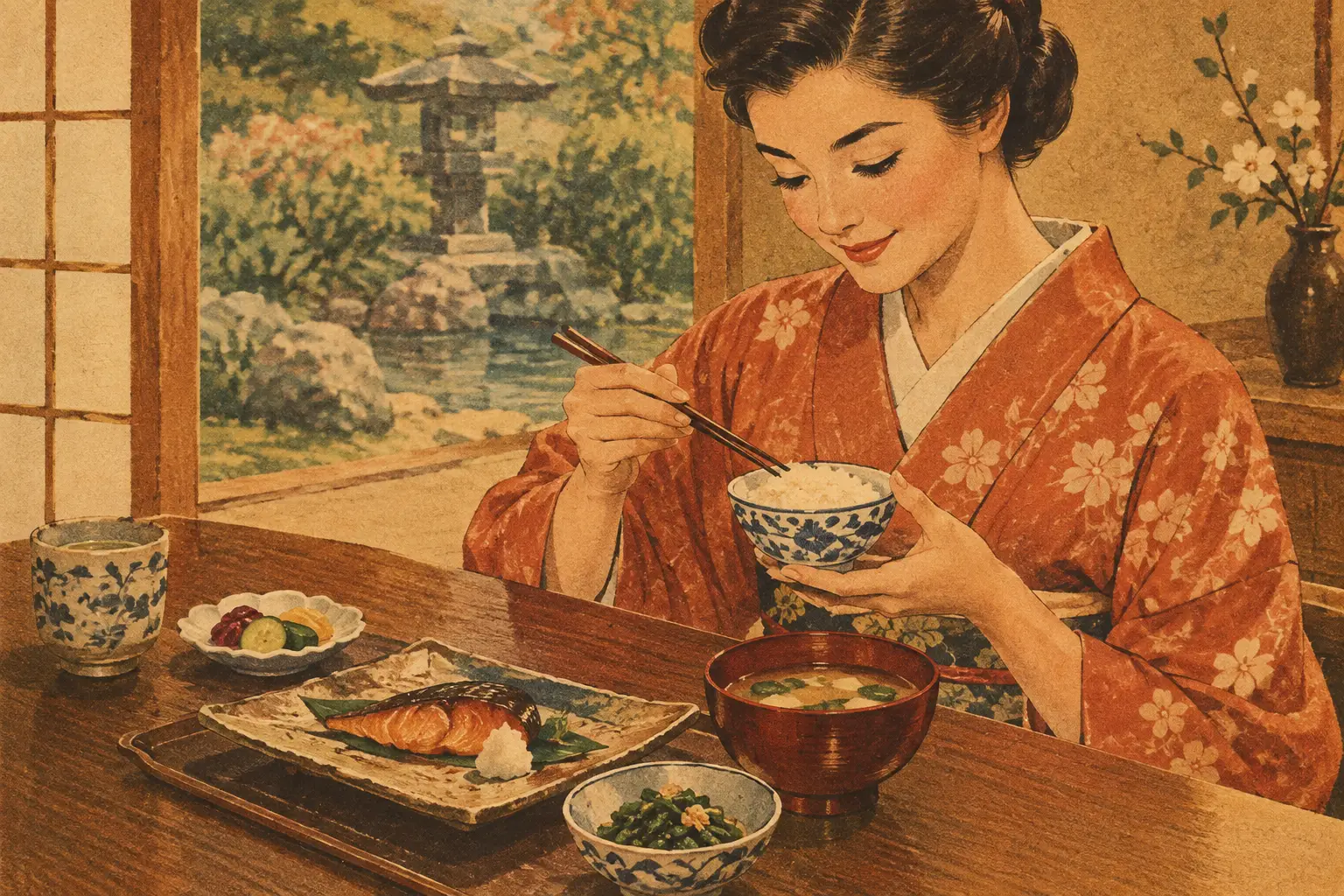
A typical teishoku set meal may include grilled fish or meat, rice, miso soup, pickles, and several small side dishes. Unlike a Western plated meal, you are not expected to finish one item before moving to the next. Take small bites in a natural rotation: a little rice, some fish, a sip of soup, a bite of vegetables. The changing flavors are part of the experience.
You may lift a rice bowl or miso soup bowl close to your mouth. This is not poor manners. It is often the most practical and graceful way to eat. For miso soup, drink from the bowl, then use chopsticks to pick up tofu, seaweed, or vegetables. A spoon is not usually necessary unless one is supplied.
Small dishes generally stay on the table. Larger bowls, especially rice and soup bowls, can be held. If you are unsure, follow the people around you. Japanese etiquette is less about memorizing every object and more about moving with care.
One useful detail: soy sauce is not a universal seasoning to pour over everything. A chef may have already seasoned each dish with precision. Taste first. With sushi, use only a modest amount, and avoid soaking the rice until it falls apart. If you can manage it, touch the fish side lightly to the soy sauce rather than dunking the rice. At a casual conveyor-belt sushi restaurant, nobody expects perfection, but restraint lets the sushi shine.
Slurping, Silence, and Other Things That Surprise Visitors
Yes, you can slurp noodles. Soba, udon, and ramen are commonly eaten with an audible slurp, which helps cool hot noodles and can show that you are enjoying them. You do not have to force a dramatic slurp if it feels unnatural. Eat comfortably, but do not be embarrassed by the sound around you.
Miso soup can be sipped, and drinking the broth from a ramen bowl is normal. Finishing every drop of ramen broth, however, is optional. It can be rich and salty. Enjoy what you want without feeling pressured to prove your devotion.
Conversation at Japanese meals may be lively, especially among friends. Still, there is often a quiet attentiveness to food that visitors notice right away. Pause to look at the colors, the pottery, and the season reflected in the ingredients. That attention is close to mono no aware: an awareness that a moment, and perhaps a particular spring vegetable or autumn mushroom, will not last forever.
Sharing Food and Drinking With Others
At an izakaya, the relaxed Japanese pub-style restaurant, dishes are often ordered for the table. This is one of the happiest ways to eat in Japan. Try a little of many things, from karaage fried chicken to grilled eggplant, sashimi, and seasonal vegetables.
When drinks arrive, wait for the group’s kanpai, meaning “cheers,” before taking the first sip. In a business or formal setting, it is courteous to pour for others before refilling your own glass. Keep an eye on your neighbor’s drink, especially if they are older or hosting. Among close friends, the rule can be far more relaxed, so let the occasion guide you.
If someone pours you beer, sake, or tea, it is polite to lift your glass slightly with both hands or support the bottom with your free hand. You do not need to drink alcohol. A simple “I don’t drink, but kanpai!” is completely fine, and tea or a soft drink can join the toast.
Sake deserves the same patience as food. It may be served warm or chilled depending on its style, and neither choice is automatically more authentic. Sip it. Notice whether it is dry, fruity, earthy, or rice-forward. Washoku is full of wabi-sabi beauty: modest bowls, imperfect handmade glazes, and flavors that do not need to shout.
Restaurant Manners That Make a Real Difference
Japan does not have the same tipping culture as the United States. Do not leave cash on the table as a tip. Excellent service is considered part of the experience, not a performance waiting for a bonus. In rare cases, a service charge may already be included, particularly at higher-end venues.
Be mindful of queues. If there is a line outside a tiny restaurant, join it patiently and avoid blocking the entrance. Many popular places are small, so loud luggage, phone calls, and lingering after you have finished can create real pressure on staff and other guests.
If you have allergies or dietary restrictions, communicate them early and clearly. This is especially important with dashi, a broth often made from fish flakes, which appears in dishes that may look vegetarian. Learn or save a short Japanese explanation before your trip, and understand that a small restaurant may not be able to make substitutions. That is not unfriendliness. It is often a matter of preparation, ingredients, and a kitchen designed around a specific menu.
At the end of the meal, say gochisousama deshita, meaning roughly “thank you for the feast.” It is a gracious way to acknowledge the meal, whether you have enjoyed a quick bowl of curry rice or a carefully paced kaiseki course.
The best thing you can bring to a Japanese table is not flawless technique. It is respect mixed with appetite. Watch, ask kindly when needed, and let yourself enjoy the flavors, the handcrafted ceramics, and the small seasonal details that make washoku feel like a living part of Japan. For all Japan lovers worldwide, that kind of attention turns a meal into a memory.