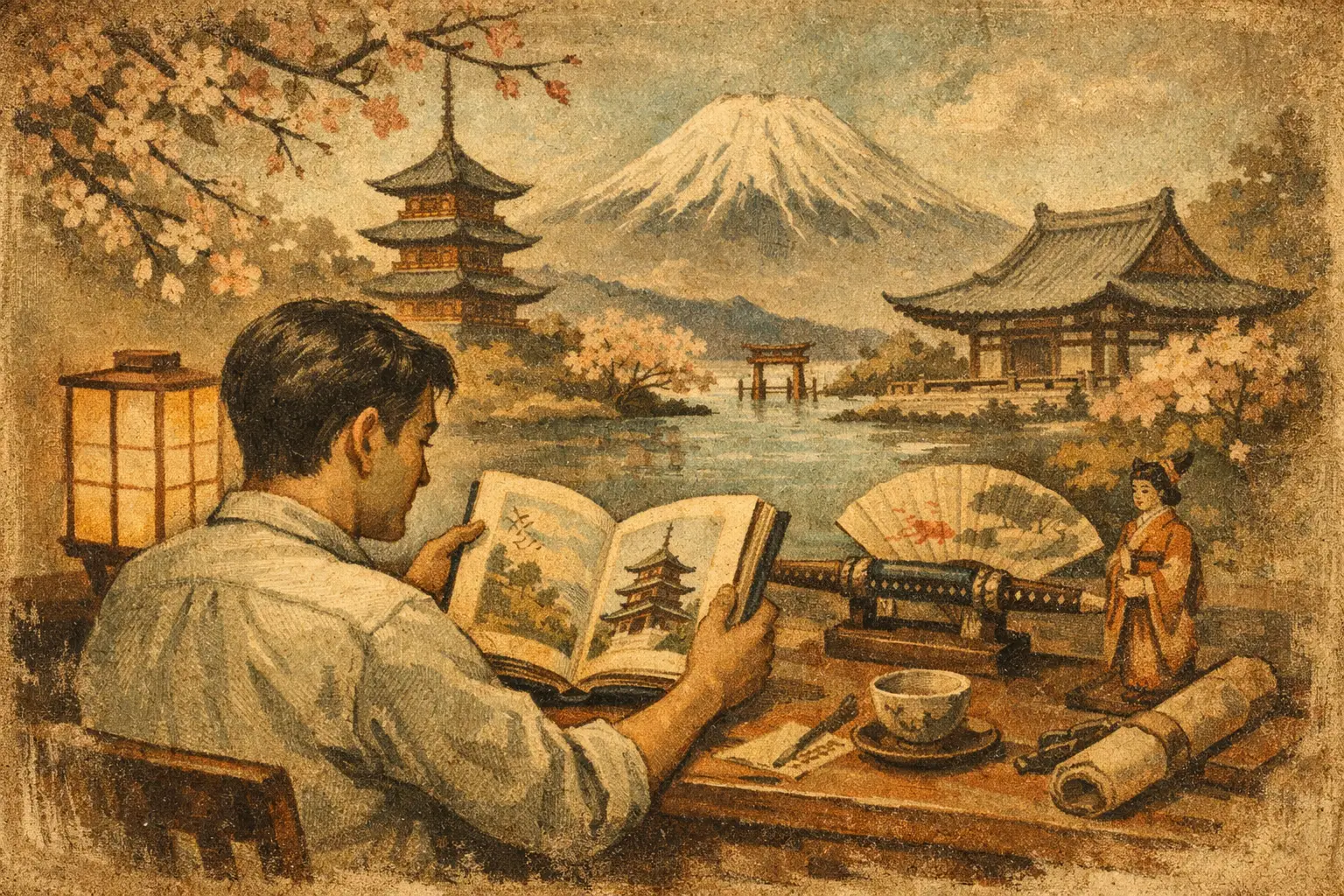
You do not need a university course, a plane ticket, or perfect Japanese to begin. If you are wondering how to start studying Japanese culture, the best first move is smaller and more exciting than most people expect – choose one doorway and walk through it with real attention.
That matters because Japanese culture is not one giant subject you finish. It is a living mix of craft, ritual, food, architecture, etiquette, aesthetics, religion, seasonal customs, and regional identity. If you try to absorb all of it at once, everything starts to blur. If you begin with one area and let it lead you to the next, the whole picture becomes richer, and much more personal.
How to start studying Japanese culture without getting overwhelmed
A lot of beginners make the same mistake. They study broad definitions of “Japanese culture” and end up with a pile of disconnected facts. A better approach is to start with something you already love.
If textiles catch your eye, begin with kimono, sashiko, indigo dyeing, or seasonal motifs. If you are drawn to sacred places, explore Shinto shrines, Buddhist temples, pilgrimage routes, and purification rituals. If food is your entry point, go beyond sushi and look at washoku, tea culture, fermentation, regional dishes, and the etiquette around serving and receiving. This kind of study feels less like homework and more like building a relationship.
There is also a practical reason to narrow your focus. Japanese culture is full of context. A tea bowl is not just a tea bowl. It can reflect wabi sabi, pottery tradition, seasonality, social form, and the history of chanoyu. The more specific your starting point, the easier it is to notice those layers.
Start with living categories, not stereotypes
When people first get interested in Japan, they often run into flattened ideas. Zen means calm minimalism. Geisha means old Kyoto glamour. Samurai means swords and honor. These topics are real, but they are often presented without depth.
Try organizing your learning around living categories instead. Look at everyday life, seasonal customs, traditional arts, spiritual practice, historical change, and regional culture. That framework gives you room to see both beauty and complexity.
For example, Japanese bathing culture is not only about relaxation. Onsen and sento connect to geography, social habits, health, etiquette, and ideas about cleansing. Japanese calligraphy is not just pretty writing. Shodo brings together discipline, breath, rhythm, and a respect for empty space. Even origami, which many people meet as a simple craft, can open a path into ceremonial folding, gift culture, and design sensibility.
This is where ideas like mono no aware become useful. You do not need to treat Japanese terms like trophies. Use them when they help you notice something more clearly. Mono no aware points to the gentle sadness and beauty of impermanence. Once you understand that feeling, cherry blossoms, autumn leaves, old wooden temples, and even certain poems begin to speak differently.
Learn through objects, places, and rituals
One of the best ways to study culture is to follow real things people make, visit, and do. Objects and rituals carry meaning in a way that abstract definitions often cannot.
A kimono can teach you about seasonality, formality, social occasion, craftsmanship, and symbolism. A chochin lantern can lead you into festival culture, local workshops, paper craft, and the atmosphere of temple grounds at dusk. A castle can open questions about feudal power, urban planning, defensive design, and heritage preservation. A shrine visit can introduce torii gates, ema plaques, omamori charms, hand-washing rituals, and the difference between observing and participating.
This kind of learning is especially good for people outside Japan because it gives structure to your curiosity. Instead of reading random articles, you begin tracing connections. One subject naturally leads to another.
Use Japanese aesthetics as a guide, but do not force them everywhere
Many newcomers quickly fall in love with Japanese aesthetic ideas, and for good reason. Wabi sabi, ma, iki, yugen, and mono no aware offer powerful ways to see design, art, and atmosphere. But they are often oversimplified.
Wabi sabi is not just rustic decor. It is tied to imperfection, weathering, modesty, and a certain emotional quiet. Ukiyoe is not only pretty woodblock art for your wall. It belongs to an entire cultural world of urban entertainment, publishing, fashion, theater, and shifting social taste in the Edo period.
So yes, study aesthetic concepts. They are beautiful and helpful. Just let them emerge from examples rather than turning them into catch-all labels. If every handmade cup becomes wabi sabi and every empty corner becomes Zen, your understanding stays shallow.
Read, watch, and listen with a purpose
You do not need an academic reading list, but you do need intention. Pick a theme and follow it across formats.
If you are interested in temples and shrines, read about their history, watch videos that show how people behave there, look at photos of architectural details, and learn the meanings of common objects. If you are interested in food, read about regional cuisine, pay attention to tableware, seasonal ingredients, and the role of presentation. If you are interested in crafts, study the makers as much as the final product.
This is also where a community-first platform like Crazy for Japan can feel useful. When your interests range from calligraphy to onsen to traditional arts, it helps to explore from one place instead of piecing everything together from scattered sources.
One caution: do not confuse consumption with study. Watching ten short clips about Japan can be fun, but it is not the same as learning. Slow down. Take notes. Revisit subjects. Compare what different sources emphasize. Culture becomes clearer when you spend time with it.
If possible, add hands-on experience
Studying culture becomes much more vivid when your hands are involved. Take a calligraphy class. Try a tea workshop. Fold origami with attention rather than rushing to the final shape. Visit a Japanese garden and notice how movement, stone, water, and silence work together.
Even cooking can sharpen your understanding. Making miso soup, pickles, or a seasonal rice dish teaches timing, ingredients, restraint, and the idea that simplicity often depends on technique. You start to see why presentation matters, why bowls and trays matter, why seasonality matters.
If you travel to Japan, hands-on learning becomes even more valuable. Do not try to collect only famous landmarks. Pair major sites with one focused experience – a pottery town, a paper-making workshop, a temple stay, a local matsuri, a bathhouse visit with proper etiquette, or a walk on a historical route such as the Kumano Kodo. Culture often becomes real in the quieter moments between tourist highlights.
How to start studying Japanese culture if you also want historical context
At some point, curiosity leads backward. Why do shrines and temples sometimes sit close together? Why do certain crafts belong to certain regions? Why does the tea ceremony carry such weight? Why does a castle town feel different from a pilgrimage town?
This is where history helps, but you do not need to memorize every period at once. Learn history in relation to your interests. If you love ukiyoe, study the Edo period. If you love castles and swords, look at the Sengoku and early Edo eras. If you are drawn to modern design and daily life, spend time on Meiji modernization and the postwar period.
The trade-off is simple. If you study only the past, Japanese culture can start to feel frozen. If you study only the present, you miss where many customs and forms come from. The sweet spot is movement between the two.
Keep a cultural notebook, not a checklist
A checklist mindset can drain the joy out of learning. Instead of chasing a complete map of Japan, keep a notebook of patterns, questions, and favorite discoveries.
Write down recurring motifs like cranes, waves, pine, bamboo, and plum. Note how seasons appear in food, clothing, decoration, and festivals. Track terms that keep returning. Save questions such as why certain spaces feel sacred, why wrapping matters, or why asymmetry shows up so often in art and design.
This practice helps you build your own way in. Over time, you stop asking only, “What is this?” and start asking, “What does this reveal?” That is when study turns into insight.
Let your interest mature
The best answer to how to start studying Japanese culture is not to start everywhere. Start where your curiosity already has energy, then follow the threads with patience. Some people begin with food and end up fascinated by lacquerware. Some start with kimono and find themselves reading about dye regions, social history, and ceremony. Some fall for temples and discover garden design, incense, and Buddhist art.
That gradual deepening is part of the joy for all Japan lovers worldwide. You do not have to prove expertise right away. You just have to stay attentive enough for one beautiful subject to lead you to the next.