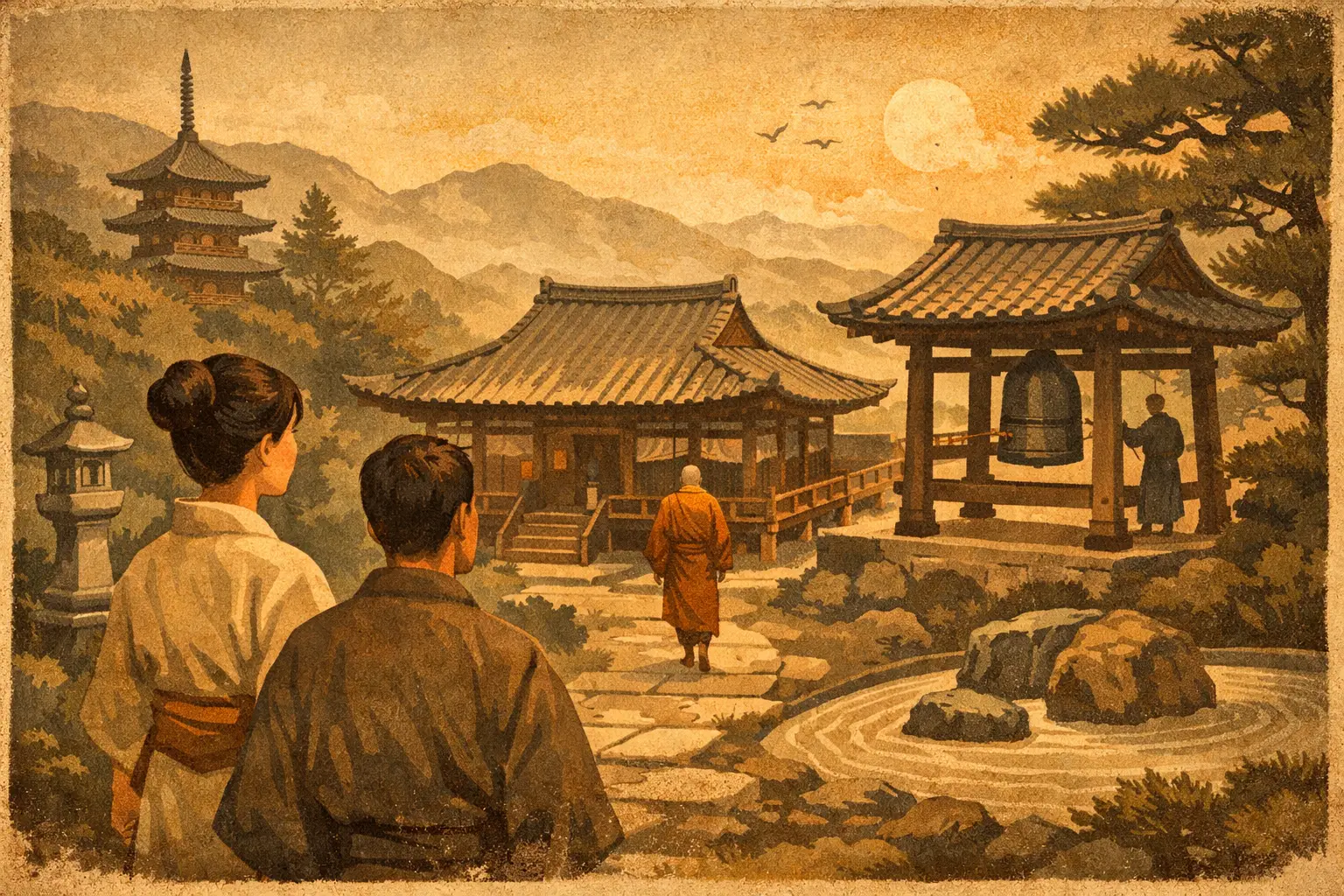
A temple stay can begin before sunrise, when a bell carries through cool mountain air and you follow its sound toward a prayer hall. There may be no sightseeing crowd, no convenience store breakfast, and no need to perform expertise in Buddhism. This temple stay experience guide is for Japan lovers who want to step closer to the daily rhythm of a living temple with curiosity, respect, and an open mind.
Known in Japanese as shukubo, temple lodging is not simply a themed hotel night. You are staying within a religious community or beside an active place of worship. The experience can be peaceful, beautiful, challenging, and deeply personal, especially if your usual Japan trip moves at a faster pace.
What a Temple Stay in Japan Is Really Like
At many shukubo, particularly in temple towns such as Koyasan in Wakayama Prefecture, your room is traditional and spare. Expect tatami mats, sliding doors, floor bedding laid out in the evening, and low tables. Some properties have private bathrooms, while others use shared facilities. The differences are significant, so read the accommodation details carefully before booking.
The atmosphere is often quiet, but it is not designed as luxury silence. You may hear wooden floors creak, temple bells ring, fellow guests moving toward morning service, or monks chanting nearby. That soundscape is part of the stay. It asks you to slow down and notice the ordinary details that can so easily disappear during travel.
A temple stay also comes with trade-offs. If you need a late dinner, a thick hotel mattress, nightlife, or a flexible check-in time, shukubo may feel restrictive. If you are excited by early mornings, vegetarian cooking, historic architecture, gardens, incense, and a more reflective pace, it can become one of the most memorable nights of your trip.
Choosing the Right Temple Stay Experience
Koyasan is the best-known destination for first-time temple-stay guests. Founded as the center of Shingon Buddhism by Kobo Daishi, it has a remarkable concentration of temples that welcome overnight visitors. Its cedar-lined Okunoin cemetery, lantern-lit paths, and mountain setting give the town an atmosphere that feels far removed from Osaka, even though it is reachable in a day.
But Koyasan is not the only option. Pilgrims on the Kumano Kodo can find temple lodging in or near sacred mountain communities. Zen temples in other regions sometimes offer stays that include meditation instruction. A smaller temple outside a major tourism route may feel more intimate, but English support can be limited and booking can require more planning.
When comparing options, focus on the experience rather than the prettiest room photo. Check whether morning prayer is open to guests, whether dinner and breakfast are included, whether there is a curfew, and whether the bath is shared. Also confirm access from the nearest station. Mountain temples can be wonderful, but a late arrival after several train transfers is rarely the peaceful beginning you imagined.
For many travelers, one night is enough to understand the rhythm. Two nights can be better if you want time to walk the grounds, visit nearby halls, or enjoy the place without racing to your next destination. It depends on your travel style. A temple stay works best when you give it some breathing room.
Meals: Shojin Ryori Is Part of the Experience
One of the great pleasures of a shukubo stay is shojin ryori, Buddhist devotional cuisine. It is generally vegetarian and often entirely plant-based, though practices vary by temple. The meal may include sesame tofu, mountain vegetables, simmered seasonal dishes, pickles, rice, soup, and small plates arranged with exceptional care.
Do not arrive expecting a large bowl of ramen or a familiar Japanese restaurant menu. Shojin ryori is often gentle in flavor, but it is not bland. Texture, seasonality, color, and restraint matter. A simple cube of goma dofu, made from sesame and kudzu starch, can be astonishingly rich and smooth.
This is a lovely place to experience wabi-sabi, the beauty found in simplicity, impermanence, and understatement. A meal may feature an ingredient at its seasonal peak, served in a bowl that feels handmade and quietly imperfect. You do not need to know the philosophy to appreciate it. Just eat attentively, and try not to rush through a dish because it looks unfamiliar.
If you have allergies or dietary restrictions, communicate them well in advance. A vegetarian meal is not automatically safe for every allergy, and a temple may not be able to make last-minute substitutions. Bring a small backup snack if you have strict needs, especially in remote areas.
Morning Prayer: Attend as a Respectful Guest
Morning prayer is often the moment travelers remember most. It may begin around 6:00 a.m., sometimes earlier, and guests are usually welcome to sit quietly at the back or along the side of the hall. You may hear sutra chanting, see monks perform rituals, smell incense, and watch the morning light reach the altar.
You are not expected to understand every word or copy every gesture perfectly. Follow staff instructions, observe what others do, and keep your presence modest. Wear clean, comfortable clothing that covers you appropriately. Avoid loud colors if you prefer to blend in, and remove hats before entering sacred spaces.
Photography rules differ widely. Some temples allow photos in outdoor areas but not in halls, while others restrict photography throughout the property. Never assume. Put your phone on silent before prayer, and ask before taking any pictures of monks, rituals, altars, or other guests.
The goal is not to collect a dramatic social media moment. It is to witness a practice that continues whether visitors are present or not. That perspective makes the experience richer and helps protect the dignity of the space.
Temple Stay Etiquette That Makes a Difference
A few considerate habits go a long way. Arrive during the stated check-in window, because temples often have limited staff and an evening schedule. Speak softly in corridors and gardens. Keep shared bathing areas clean, and follow the usual Japanese bathing order: wash your body thoroughly before entering the tub.
Shoes are normally removed indoors, and slippers may be provided. Do not wear toilet slippers outside the restroom. It is a small detail, but one that signals care for shared spaces. Keep your luggage tidy, especially in rooms with tatami, and avoid placing bags where people walk or where bedding will be laid out.
At meals, be on time. Dinner may be served early, and a missed meal can be difficult to replace in a rural temple town. Before eating, a simple “itadakimasu” is welcome if it feels natural. Afterward, “gochisousama deshita” expresses thanks for the meal.
You do not need to be Buddhist to stay at a temple. You do need to be willing to treat the place as more than a backdrop. Curiosity is welcome. Demanding exceptions from religious routines usually is not.
What to Pack for a Shukubo Night
Pack lighter than you might for a city hotel, but include layers. Mountain areas can be cool in the morning and evening, even outside winter. Comfortable socks are useful because shoes come on and off frequently. Bring modest sleepwear, a small flashlight if your phone battery is unreliable, and any toiletries you prefer, although many temples provide basic amenities.
A small day bag is helpful for walking to prayer, exploring the grounds, and carrying a water bottle. If you plan to visit cemeteries, temples, or pilgrimage paths after dark, choose footwear with a solid grip. Koyasan and other sacred mountain areas are magical in mist or rain, but stone paths can become slippery.
Most of all, pack patience. The room may be colder, the schedule earlier, and the Wi-Fi weaker than at a modern hotel. Those are not always flaws. Sometimes they create the space for mono no aware – a gentle awareness that a moment is passing, and that its passing is part of what makes it precious.
Make Space for the Quiet Parts
A temple stay is not a test of spiritual seriousness, nor is it a costume version of Japan. It is an invitation to participate, briefly and respectfully, in a place shaped by ritual, hospitality, and centuries of care.
Come ready to listen: to the bell before dawn, to rain on temple roofs, to the soft movement of a shared hallway, and to your own thoughts when there is finally nowhere urgent to be. For all Japan lovers worldwide, that quiet may be the most meaningful souvenir you bring home.