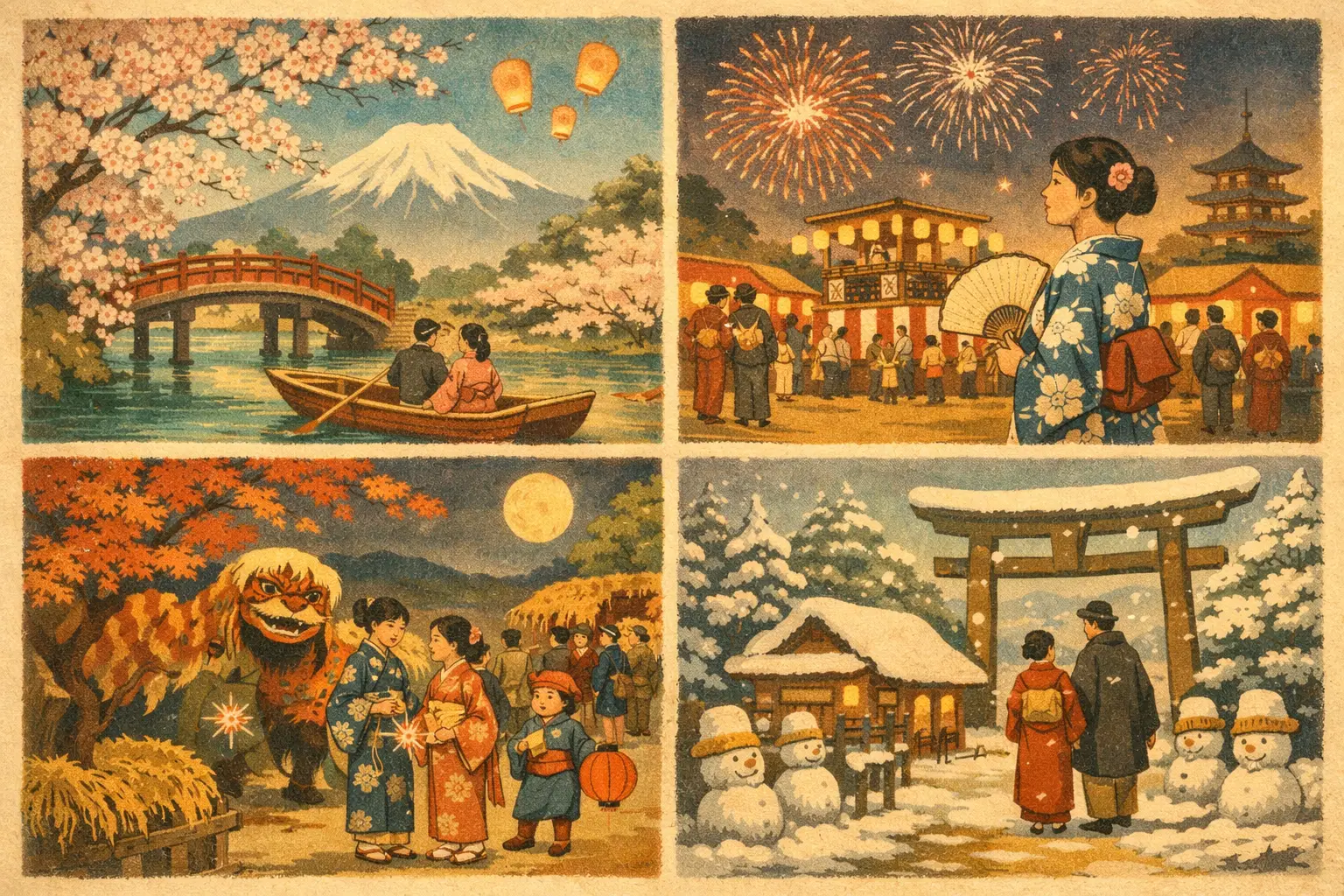
If you have ever timed a Japan trip around cherry blossoms, autumn leaves, or a lantern-lit shrine night, you already know one thing – the season is often the event. A good guide to Japanese seasonal festivals is not just about dates on a calendar. It is about understanding how Japan marks change itself, through food, ritual, music, costume, and local pride.
That is what makes matsuri so exciting for all Japan lovers worldwide. They are not interchangeable tourist attractions. A spring festival in Kyoto feels different from a summer celebration in Aomori or a winter fire event in Nara. Some are deeply sacred, some are joyfully noisy, and many are both at once. The best way to enjoy them is to see the season, the place, and the community as one connected experience.
Why a guide to Japanese seasonal festivals matters
In Japan, the rhythm of the year shapes daily life in a very visible way. Seasonal sweets appear for a few weeks and vanish. Shrine grounds change character with plum blossoms, hydrangeas, maple leaves, or snow. Local festivals often grew from agricultural cycles, Buddhist observances, Shinto rituals, or neighborhood traditions that still carry meaning even when crowds of visitors arrive.
For travelers, this creates a gift and a trade-off. You get atmosphere that cannot be manufactured, but you also have to work around limited dates, larger crowds, and sometimes confusing local customs. A matsuri can be one of the most memorable parts of a trip, but only if you choose the right one for your style. Some visitors want giant floats and taiko drums. Others want candlelight, kimono, or the quiet beauty of mono no aware – that awareness that a beautiful moment is passing even as you experience it.
Spring festivals – blossoms, renewal, and elegance
Spring is the season many first-time visitors imagine, and for good reason. Hanami, or flower viewing, turns parks and riverbanks into social spaces filled with picnic sheets, seasonal snacks, and excited conversations under the sakura. It is less a single official festival than a nationwide seasonal ritual, but it belongs in any guide to Japanese seasonal festivals because it reveals how deeply nature and community are linked.
Spring also brings more formal events. In Kyoto, Aoi Matsuri in May is famous for its Heian-style procession and courtly atmosphere. If your idea of Japan includes layered robes, shrine traditions, and a sense of classical refinement, this is a strong choice. It feels worlds away from the louder summer matsuri.
Then there are local shrine festivals across the country that celebrate planting season and renewal. These can be smaller, less internationally famous, and often more intimate. That can be a real advantage. Instead of fighting for space with thousands of spectators, you may get a closer look at mikoshi, traditional music, and neighborhood participation.
Spring travel, though, takes planning. Cherry blossom timing changes every year, and major cities get crowded fast. If you want atmosphere without the peak pressure, consider late spring festivals after the sakura rush. You still get beauty, but often with a little more breathing room.
Summer festivals – lanterns, fireworks, and full energy
Summer matsuri are what many people picture first when they hear the word festival. Yukata, food stalls, goldfish scooping, taiko, dancing in the street – this is festival Japan at full volume. The humidity can be intense, but so is the atmosphere.
One of the most famous examples is Gion Matsuri in Kyoto, held throughout July. Its towering floats, byobu displays, and historical prestige make it one of the great festival experiences in Japan. But it also attracts huge crowds, so this is a classic case of it depends. If you love big cultural events and do not mind busy streets, it is unforgettable. If you prefer calmer experiences, a smaller regional summer matsuri may suit you better.
Aomori Nebuta Matsuri is another standout, with massive illuminated floats and powerful movement through the city. This festival has a bold visual energy that feels almost theatrical. It is very different from the restrained beauty often associated with wabi sabi, yet it is just as rooted in local identity.
Summer is also the season for Bon festivals and Bon Odori dances, linked to honoring ancestral spirits. These events vary a lot by region. Some are highly community based, with locals dancing in circles around a yagura tower. Visitors are often welcome to join if they are respectful and willing to follow along. That openness is part of the charm. You are not only watching culture. You are stepping into a living tradition.
The practical side matters here. Summer means heat, crowded trains, and sold-out accommodations in popular areas. Bring water, travel light, and expect movement restrictions around major events. If you plan well, the payoff is huge.
Fall festivals – harvest season and dramatic atmosphere
If spring is soft and summer is loud, fall often feels richest. The air cools, shrine paths are lined with red and gold leaves, and harvest-related festivals bring a grounded, thankful energy. For many repeat visitors, autumn is the most satisfying season in Japan.
Jidai Matsuri in Kyoto, held in October, is especially appealing for people who love historical costume and processions. It presents different eras of Japanese history in visual form, almost like a moving gallery. If you are fascinated by kimono, court dress, samurai culture, and the changing aesthetics of the past, this is an excellent fit.
Autumn also includes many shrine festivals that are less globally famous but deeply rewarding. In rural areas and smaller cities, harvest celebrations can feel more local and personal. You may see portable shrines carried through residential streets, hear festival flutes in the distance, and find food stalls serving regional specialties that only appear at this time of year.
This season also pairs especially well with temple visits, craft shopping, and scenic walks. A festival day can easily become a broader cultural experience – perhaps a morning at a shrine, an afternoon enjoying wagashi and tea, and an evening under illuminated maple leaves. It is one of the easiest seasons for building a trip around layered experiences rather than a single headline event.
Winter festivals – snow, fire, and rare beauty
Winter festivals surprise a lot of travelers. People often assume cold weather means a quieter cultural calendar, but Japan in winter has some of its most striking seasonal events.
The Sapporo Snow Festival is the obvious giant, with monumental snow and ice sculptures that draw international attention. It is spectacular and accessible, especially for first-timers. But winter matsuri are not only about snow cities and famous displays.
Across Japan, winter also brings fire festivals, New Year shrine visits, and rituals centered on purification, protection, and endurance. Setsubun events at temples and shrines, usually in early February, are a fun example. Bean-throwing ceremonies may sound playful, but they carry real symbolic meaning about driving away misfortune.
Winter has its own emotional texture. A lantern glowing against snow, steam rising near an onsen town, the crisp sound of shrine bells in cold air – these moments carry a kind of stillness that many travelers remember more vividly than peak-season crowds. If spring expresses mono no aware, winter sometimes offers a sharper sense of quiet clarity.
The main trade-off is weather. Snow can complicate transport, and shorter daylight hours affect your schedule. Still, if you like atmosphere and do not need beach weather, winter festivals can feel wonderfully special.
How to choose the right festival for your trip
The best festival is not always the most famous one. Start with what you actually enjoy. If you love traditional costume, processions, and courtly aesthetics, look at Kyoto in spring or fall. If you want street energy, dancing, and festival food, summer may be your season. If you want dramatic scenery and fewer international crowds, consider winter or regional autumn festivals.
It also helps to think about pace. Some matsuri are all-day events with multiple highlights. Others have one key procession or evening ceremony. That affects where you stay and how flexible your travel plans need to be.
Locality matters too. A festival in a major city is easier to access, but a smaller town event may feel more personal. There is no universal best choice. It depends on whether you want convenience, scale, intimacy, or a little bit of all three.
Festival etiquette that makes the experience better
Respect goes a long way. At shrine and temple festivals, remember that even lively events may include sacred elements. Watch how locals behave before stepping into a photo spot or joining an activity. Do not block pathways, and be careful with flash photography during ceremonies.
If food stalls are part of the event, enjoy them – they are part of the culture, not an extra. Try seasonal specialties, regional sweets, and small dishes you may not find elsewhere. A festival is one of the best places to experience Japanese food as a local pleasure rather than a restaurant checklist.
Clothing depends on season and setting. You do not need to wear yukata or traditional dress, though in some places it can be fun if done thoughtfully. Comfort usually matters more, especially if you will be standing for hours. Good shoes and a little patience will improve your day more than any perfect outfit.
For readers who want one easy starting point, Crazy for Japan is right about the feeling behind it all – this is not just sightseeing, it is a chance to feel closer to the rhythms, beauty, and community spirit that make Japan so loved worldwide.
A great matsuri stays with you because it gives you more than a performance. It gives you a season made visible, and if you catch the right one at the right moment, Japan feels less like a destination and more like a living calendar you are lucky enough to step inside.