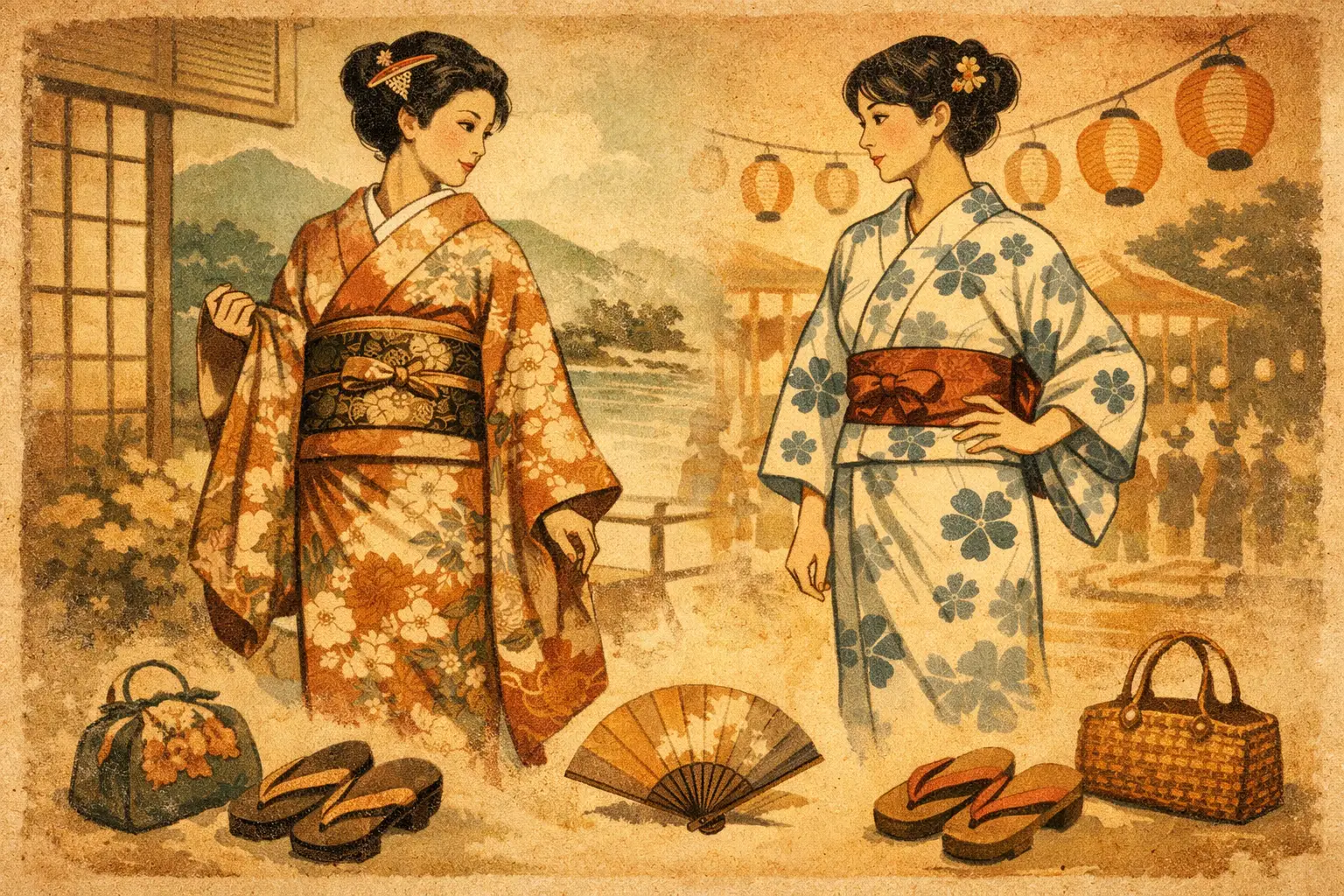
You spot someone in Japan wearing a beautiful robe-like garment and think, that’s a kimono. Sometimes you’re right. Sometimes it’s a yukata. For many Japan lovers worldwide, the kimono vs yukata differences seem small at first glance, but once you know what to look for, the distinction becomes clear and a lot more interesting.
These two garments share a family resemblance, yet they live in very different parts of Japanese life. One can carry deep formality, seasonal symbolism, and ceremonial meaning. The other is lighter, easier, and often tied to summer nights, festival food, and that joyful matsuri feeling. If you love Japanese culture, knowing the difference adds a whole new layer to how you see photos, events, and travel experiences.
Kimono vs yukata differences at a glance
The simplest way to understand kimono vs yukata differences is this: kimono is generally more formal, more structured, and worn in a wider range of settings, while yukata is more casual, lighter, and most strongly associated with summer.
A kimono is usually made from silk or other refined fabrics, often worn with a layered look, a more structured obi, and accessories such as tabi socks and zori or geta. A yukata is typically made from cotton or other breathable materials, usually worn without layers, and often paired with simpler obi styling and wooden geta.
That sounds straightforward, but real life always has a few shades of gray. Modern materials, rental shops, festivals, and fashion trends can blur the line. Even so, fabric, season, occasion, and styling still tell the story.
What a kimono is
Kimono literally means “thing to wear,” but in modern use it refers to a traditional Japanese garment with a long history and many formal variations. There is no single kimono style. A furisode with long sleeves worn by a young unmarried woman is different from a subdued komon for everyday elegance, and both are different again from a wedding kimono.
Kimono culture is full of detail. The motifs may reflect the season. The fabric may suggest status or occasion. The way the collar sits, the type of obi, and even the family crest can matter. This is one reason kimono feels so rich to people who love Japanese aesthetics. It carries that balance of ritual and beauty that feels close to mono no aware – a sensitivity to moment, season, and presence.
Traditionally, kimono can be worn in many contexts, from tea ceremony and shrine visits to graduations, weddings, and formal celebrations. Some are highly ceremonial. Some are relatively casual. But even a casual kimono usually has more structure and styling rules than a yukata.
What a yukata is
A yukata is a casual cotton robe that developed from garments associated with bathing. Over time, it became a familiar part of summer culture in Japan. Today, many people connect yukata with fireworks festivals, summer matsuri, ryokan stays, and onsen towns.
If you have ever stayed at a traditional inn and found a neatly folded robe in your room, that may have been a yukata. In that setting, the garment feels relaxed and practical. At a summer festival, it becomes festive and stylish without losing that easy charm.
Yukata has a lighter, more playful energy. It is often bright, seasonal, and youthful, though plenty of elegant adult styles exist too. Compared with kimono, it asks less from the wearer. That accessibility is part of its appeal, especially for travelers and first-time dressers.
Fabric is one of the biggest differences
If you are trying to tell them apart in person, fabric is often your best clue. Kimono fabrics are usually more luxurious or structured. Silk is the classic image, but wool, linen, and synthetic blends also exist. Depending on the garment, the material may have a subtle sheen, intricate weave, or painted design.
Yukata is usually made from cotton, and that matters because cotton breathes well in hot weather. It also gives yukata its casual feel. You can often see the difference before you even touch it. Yukata tends to look lighter, flatter, and less layered.
Modern versions complicate things a bit. Some budget kimono use synthetic fabric, and some yukata are made in softer or more polished blends. But in general, if the garment looks airy and summer-ready, there is a good chance it is a yukata.
Season and climate matter
Another easy way to understand kimono vs yukata differences is to think about weather. Yukata belongs most naturally to summer. It is the garment of warm evenings, festival lanterns, river breezes, and fireworks overhead. It feels right in the same emotional world as ukiyoe summer prints – lively, fleeting, and full of atmosphere.
Kimono can be worn across the year, with seasonal adjustments in fabric, lining, color, and motif. There are lined kimono for cooler months and unlined styles for warmer periods. Seasonal awareness runs deep in Japanese dress culture, and kimono reflects that beautifully.
This is where appreciation goes beyond fashion. Japanese aesthetics often honor timing as much as appearance. Wearing a plum blossom motif too late in spring, or a maple pattern too early in autumn, can feel slightly off to people who care about traditional cues. That sensitivity has a touch of wabi sabi in it – beauty shaped by season, context, and restraint.
Formality changes everything
Formality is probably the most important practical difference. Kimono covers a wide formality range, but many kimono are meant for occasions where appearance follows established custom. Weddings, Coming of Age Day, graduation ceremonies, tea gatherings, and formal visits may call for a particular kind of kimono.
Yukata is almost always casual. You wear it to enjoy yourself, not to meet strict dress expectations. Festivals, ryokan, neighborhood events, and relaxed summer outings are its natural home.
This matters for travelers. If you attend a summer fireworks event, a yukata is usually perfect. If you are going to a wedding in Japan, a yukata would generally be too casual. When in doubt, think of yukata as festive casual and kimono as a category that can move from refined everyday wear to full ceremony.
Layers, collars, and accessories
Kimono usually involves more components. Depending on formality and style, you may have an undergarment layer, padding or ties for shaping, a decorative obi arrangement, tabi socks, and zori sandals. The silhouette is more deliberate, and getting dressed correctly can take skill.
Yukata is simpler. It is typically worn over basic underclothes, tied with a lighter obi, and paired with geta. Tabi socks are often skipped, especially in casual summer settings. The overall look is less built and more breezy.
The collar also gives clues. Kimono styling often creates a more controlled neckline, sometimes with visible inner layers. Yukata usually looks cleaner and less layered. To a beginner, these details can seem subtle. Once you have seen both a few times, they become much easier to spot.
Patterns and visual mood
Kimono patterns can range from understated to breathtakingly elaborate. Some are hand-painted, embroidered, or woven with remarkable detail. The design may carry family, regional, or seasonal meaning.
Yukata patterns are often bolder and easier to read from a distance. Florals, fireworks, dragonflies, flowing water, and geometric motifs are common. The feeling is often cheerful and open rather than ceremonial.
That does not mean yukata is less beautiful. Far from it. A well-chosen yukata has its own kind of brilliance – simple, immediate, and full of summer energy. Kimono tends to invite closer reading. Yukata tends to charm instantly.
Which one should you wear?
If you are visiting Japan and want an authentic but approachable experience, yukata is often the easier choice. It is comfortable, seasonally appropriate in summer, and commonly available at festivals, onsen towns, and ryokan. It also feels less intimidating for beginners.
If your interest is deeper cultural appreciation, or you are attending a formal event, kimono may be the right path. Renting one can be a beautiful experience, especially in historic districts or for tea ceremony-related outings. Just be prepared – kimono is heavier, less forgiving in hot weather, and more complex to wear.
It really depends on what you want from the moment. Do you want relaxed participation or ceremonial elegance? Summer ease or structured beauty? Neither is better. They simply speak different dialects of Japanese style.
A quick note on wearing them correctly
One detail matters for both kimono and yukata: the left side is wrapped over the right. The reverse is used for dressing the deceased, so getting this right is essential.
Beyond that, do not panic about perfection if you are new to it. Respect matters more than pretending to be an expert. If you are learning, renting, or attending a cultural event, a little humility goes a long way. Most people appreciate sincere interest.
For all Japan lovers worldwide, this is part of the fun. The more you learn, the more details begin to glow – fabric, season, mood, occasion, silhouette. Kimono and yukata are not just clothes. They are ways of reading Japanese culture in motion, and once you see the difference, every summer festival, temple town stroll, and ryokan evening feels a little richer.