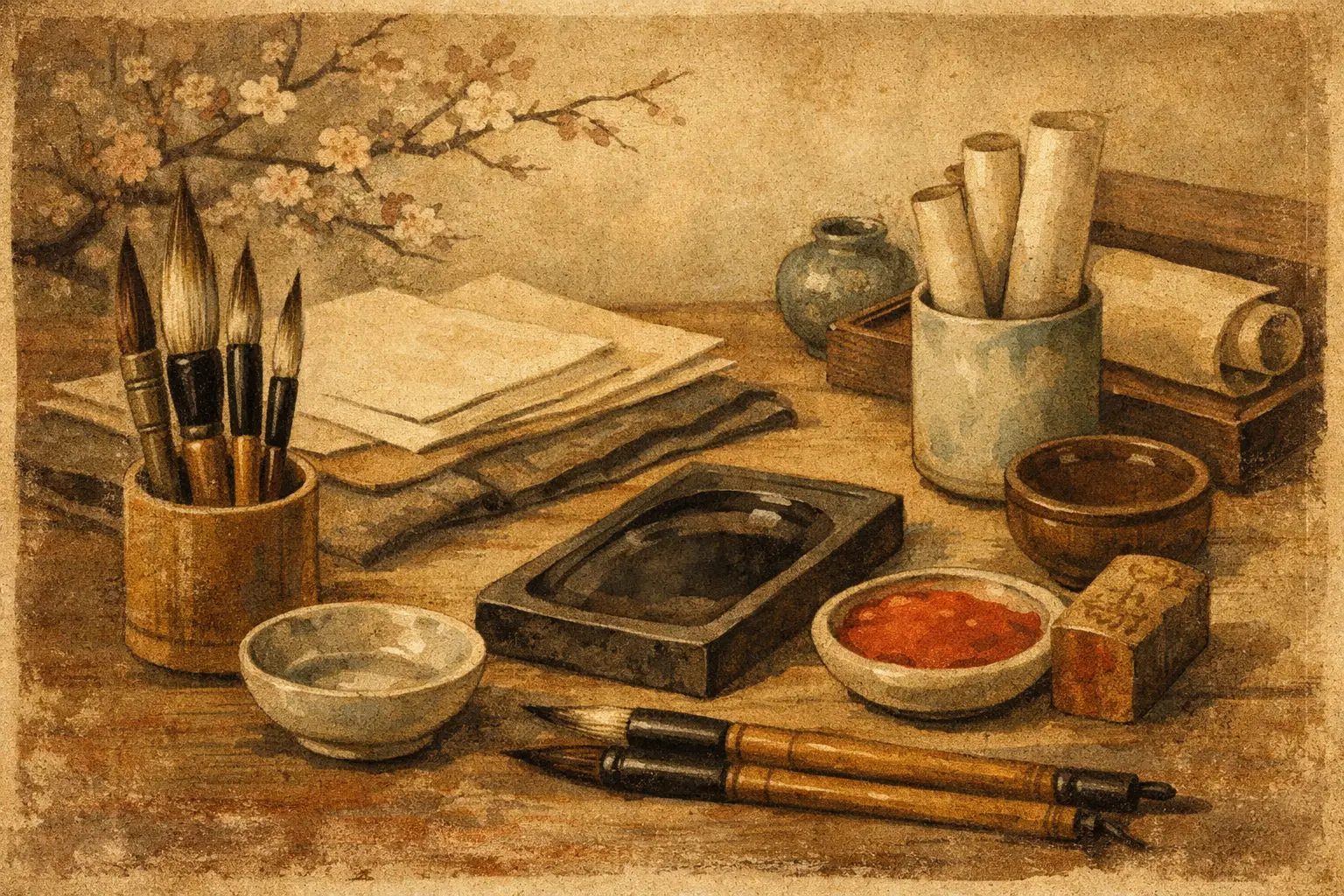
Buying your first shodo set can feel strangely emotional. One brush looks elegant but costs three times more than the rest, the paper names all sound similar, and suddenly you are wondering whether the ink stick is a beautiful tradition or just one more thing to get wrong. That is exactly why a Japanese calligraphy supplies guide helps. The right tools do not make your handwriting beautiful overnight, but they do make practice feel more natural, more grounded, and much closer to the spirit of shodo.
For many Japan lovers, calligraphy is not only about writing characters neatly. It is about rhythm, breath, and attention. You feel that quiet pull of wabi sabi in a slightly uneven stroke, or even a touch of mono no aware in how one line fades at the end. Good supplies support that experience. Bad ones can make the whole thing feel stiff, scratchy, and frustrating.
What matters most in a Japanese calligraphy supplies guide
If you are just getting started, the main supplies are simple: brush, ink, paper, inkstone or liquid ink container, and a felt mat. You may also want a paperweight and a small water dropper, but those are secondary. The key is understanding which items shape your experience the most.
The brush and paper matter first. If either one is poor quality, your lines will fight you. Ink matters too, but beginners can often start with decent bottled ink before investing in grinding an ink stick. That is one of those areas where tradition and practicality are not always the same thing.
A lot depends on your goal. If you want a calm home practice inspired by Japanese aesthetics, you may enjoy the full ritual of preparing sumi ink on a suzuri inkstone. If you mainly want to learn character balance and brush control, bottled ink is faster, cleaner, and less intimidating. Neither choice is wrong.
The brush is the heart of shodo
In any Japanese calligraphy supplies guide, the brush deserves the most attention because it changes everything. In Japanese, a calligraphy brush is a fude. You will see brushes labeled for small, medium, or large characters, and sometimes for kaisho, gyosho, or sosho styles. Beginners do best with a medium brush that holds a fair amount of ink and comes to a reliable point.
Soft brushes can create beautifully expressive lines, but they are harder to control. Very stiff brushes are easier for neat forms, yet they can feel less fluid. A blended brush often gives beginners the best balance. You want enough spring to guide the stroke and enough softness to avoid harsh, dry lines.
Cheap beginner brushes are common in starter kits, and some are perfectly usable. Others shed badly, split at the tip, or refuse to hold ink. If your budget allows only one upgrade, make it the brush. That one decision can save weeks of wondering whether the problem is your technique or your tools.
Brush size also depends on practice space. If you are writing on standard practice sheets at a desk, a medium brush is usually right. Larger brushes are exciting, but they need more arm movement, more paper, and a bit more confidence.
Ink: bottled convenience or traditional sumi
Japanese calligraphy ink usually comes in two forms. Bottled liquid ink is the easy option. Sumi ink sticks are the traditional option, ground with water on an inkstone. Both can produce beautiful results, but they create different moods.
Bottled ink is ideal if you are learning regularly and want to sit down and practice without a setup ritual. It is consistent, dependable, and beginner-friendly. For many international learners, it is the smartest place to start.
An ink stick, though, offers a different pleasure. Grinding sumi is part preparation, part meditation. The scent, the sound, the slow darkening of the water – it pulls you into the moment. If your interest in Japanese culture includes tea ceremony, incense, ceramics, or other traditional arts, you may love this side of calligraphy.
The trade-off is time and technique. Poor grinding or the wrong water ratio can give inconsistent results. So if you are choosing with your head, bottled ink wins for ease. If you are choosing with your heart, sumi may be worth it.
Paper can make beginners feel better fast
Paper is one of the most overlooked parts of a Japanese calligraphy supplies guide. Many beginners assume paper is just paper. It is not. Calligraphy paper absorbs ink differently, affects brush drag, and changes how clean or feathery your lines appear.
Practice paper is usually thinner and more affordable. It is great for repetition, especially when you are filling pages with the same kanji or kana. Higher-grade paper often has better absorbency and a more pleasing surface, but it is not always the best choice for someone still learning pressure control.
If paper is too absorbent, your lines can spread and blur. If it is too resistant, your brush may skate over the surface and feel awkward. A middle-ground practice paper is usually best. This is especially true if you are working on regular script and trying to learn stroke endings clearly.
Some learners love gridded practice sheets because they help with spacing and proportion. Others prefer blank paper because it feels freer and closer to real shodo. It depends on whether structure motivates you or makes you tense.
The supporting tools that are actually useful
A suzuri inkstone is essential if you use an ink stick, but not necessary if you use bottled ink. If you do buy one, look for a practical, durable stone rather than something purely decorative. Beautiful tools matter, yes, but they should still work.
A shitajiki felt mat goes under the paper and makes a bigger difference than most people expect. It protects the surface below, softens the writing feel, and helps the brush move with control. Without it, the whole setup can feel slippery and noisy.
Bunchin paperweights hold the sheet in place. They are not glamorous, but they are genuinely helpful, especially if your paper is light. A water dropper is useful for traditional ink grinding and for adjusting ink concentration. None of these need to be luxury purchases.
If you are building a first kit, practicality beats collecting. There is plenty of time later to choose the inkstone with the carved design or the brush rest that looks perfect beside your tokonoma-inspired shelf.
Should you buy a starter set?
Starter sets are tempting because they gather everything in one place, and for many people they are a good entry point. If the set includes a decent medium brush, bottled ink or a usable inkstone, a felt mat, and practice paper, it can be a smart buy.
The problem is that some sets look authentic but cut corners on the items that matter most. A beautiful box does not guarantee a good brush. If you buy a set, think of it as a foundation, not a final answer. Many calligraphy lovers eventually replace the brush first, then upgrade paper, then experiment with better ink.
That gradual approach is actually very Japanese in spirit. You do not need a museum-level setup on day one. You need tools that invite you back to the table tomorrow.
A Japanese calligraphy supplies guide for different goals
If your goal is casual cultural exploration, keep it simple. Get a reliable medium brush, bottled ink, a felt mat, and affordable practice paper. This setup gives you the feel of shodo without too much friction.
If your goal is serious study, invest more carefully in brush quality and paper variety. Test different absorbencies and brush stiffness levels. At that stage, your preferences begin to matter as much as general advice.
If your goal is display work or gifting, aesthetics matter more. You may want better paper, richer sumi, and tools that feel meaningful in the hand. That is where shodo shifts from practice to art object, and the emotional side of the supplies becomes part of the appeal.
For collectors and Japan enthusiasts, there is also joy in the objects themselves. A brush wrapped in bamboo, a carved inkstone, the black sheen of sumi – these things connect calligraphy to the wider world of Japanese craftsmanship, not unlike ceramics, ukiyoe prints, or handmade washi.
Common mistakes when buying supplies
The biggest mistake is overbuying too early. A giant set with multiple brushes and specialty papers sounds exciting, but it can leave you confused about what is working. Start with fewer, better basics.
Another mistake is choosing supplies only for appearance. Japanese calligraphy tools can be beautiful, and that beauty is part of the attraction. Still, the brush has to perform. If it looks elegant but cannot keep a point, it will spend more time being admired than used.
One more thing to watch is mismatch. A tiny brush with highly absorbent paper and thick ink can be frustrating. Supplies work as a system. When one element is off, the whole experience changes.
For all Japan lovers worldwide, that is part of the fun too. Shodo is not only about the finished character. It is about learning how tools, motion, and attention come together on the page. Start with respect for the tradition, make room for trial and error, and let your kit grow with your practice.