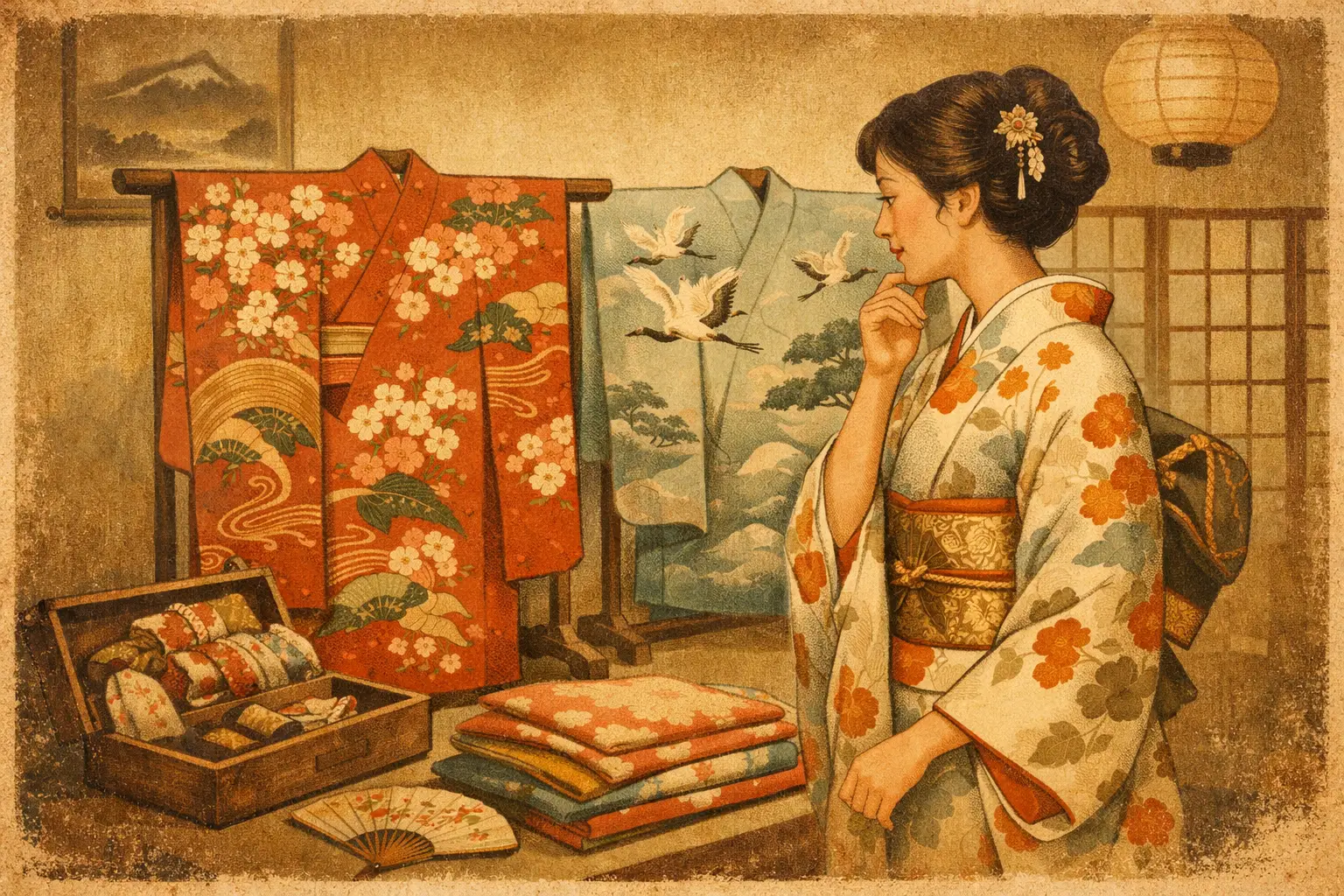
Buying a kimono can feel magical right up until you realize how many pieces are labeled “traditional” when they are really costume wear, tourist replicas, or modern fashion inspired by the real thing. If you have been wondering how to choose authentic kimono without getting lost in jargon or overpaying, the good news is that you do not need to become a museum curator. You just need to know what to look for, what questions to ask, and where authenticity actually lives.
For many Japan lovers worldwide, kimono is not just clothing. It carries season, occasion, craftsmanship, and a kind of quiet feeling that gets close to mono no aware – that awareness of beauty made deeper because it does not last forever. A genuine kimono often shows that feeling in the fabric, the dye, and even a bit of age. That is why choosing one well is part shopping, part cultural appreciation.
What authentic kimono really means
Before talking about fabric and stitching, it helps to clear up one big misconception. “Authentic” does not always mean antique, wildly expensive, or made for formal ceremonies only. An authentic kimono is, at heart, a real Japanese garment made within the tradition of kimono construction and use.
That can include vintage everyday kimono, formal silk pieces, hand-dyed garments, and even some newer kimono made by Japanese artisans. It does not include bathrobes with random prints, polyester costumes made for festivals abroad, or mass-produced garments using kimono-like shapes but ignoring traditional structure.
This matters because a kimono can be both modern and authentic, or old and not especially valuable. Age alone does not decide everything. Craft, construction, materials, and context matter more.
How to choose authentic kimono by starting with the fabric
If you only remember one thing, remember this: fabric tells the truth faster than labels do.
Traditional kimono were most often made of silk, especially for formal wear. Silk has depth rather than shine alone. It catches light softly, and the surface usually feels alive in the hand. Good silk does not feel plastic or slippery in a synthetic way. It has a gentle weight and a subtle irregularity that often signals real weaving.
Cotton kimono also exist, especially yukata, which are casual summer garments. Hemp and wool appear too, depending on season and use. Polyester is where things get tricky. There are authentic modern kimono made in synthetic fabric for affordability and easy care, especially for casual use. So polyester does not automatically mean fake. But if a seller presents a flashy polyester robe as an heirloom-level traditional kimono, that is where your alarm bells should ring.
When photos are all you have, zoom in on texture. Real kimono fabric usually has more nuance than costume fabric. You may notice woven patterns hidden in the base cloth, not just printed designs on top. That kind of detail is often a strong sign you are looking at something made with real intention.
Construction matters more than most buyers expect
A real kimono has a very specific structure. It is made from narrow bolts of fabric called tanmono and sewn in straight lines. Because of that, authentic kimono have a distinct silhouette and internal logic. They are not cut like Western dresses or coats.
Look for long, straight panels and relatively simple seams. The sleeves, body, and collar should feel balanced and deliberate rather than improvised. If the garment has curved tailoring, heavily shaped waist seams, zippers, or obvious modern alterations built into the original design, it is probably not a traditional kimono.
Lining can also reveal quality. Many formal kimono are lined, while some casual or summer pieces are not. Interior finishing should feel neat, even when the garment is old. Hand stitching is common in vintage examples and can be a beautiful clue that a piece was made properly.
That said, signs of repair are not a bad thing. In fact, careful mending can be part of the charm. There is a little wabi sabi in that – beauty that comes from use, care, and time.
Pattern, season, and occasion give useful clues
One of the joys of kimono is that design is rarely random. Motifs often reflect season, symbolism, or formality. Cherry blossoms, maple leaves, cranes, pine, bamboo, plum, waves, fans, and carts all carry cultural meaning.
If a garment has a loud “Japan-style” print with geisha faces, dragons, and torii gates all thrown together without restraint, it may be made for export fantasy rather than actual kimono wear. Authentic kimono designs usually feel more focused. Even bold patterns tend to have rhythm and restraint.
Season also matters. Some motifs are worn slightly ahead of the actual season. Cherry blossoms appear before peak spring, for example. Summer garments may use lighter colors or breezier imagery. That sensitivity is part of what makes kimono so moving. It reflects a Japanese aesthetic worldview shaped by transience, nature, and occasion.
Formality matters too. A plain black tomesode with family crests is very different from a bright furisode with long swinging sleeves. If a seller does not know the type of kimono at all, be cautious. They do not need to know every historical nuance, but they should at least understand whether the piece is casual, semi-formal, or formal.
How to spot quality in dyeing and decoration
Some of the most authentic and beautiful kimono are works of textile art. Yuzen dyeing, shibori, embroidery, gold accents, and woven designs can all appear, but quality varies wildly.
Hand-dyed decoration often has softness at the edges and a sense of depth that printing cannot quite fake. Embroidery should feel integrated into the garment, not stiff and decorative in a costume-like way. Shibori, with its tiny resisted dots and textures, takes immense labor and is often a strong signal of craftsmanship.
Machine printing is not inherently bad. Plenty of real kimono, especially more accessible or everyday ones, used practical production methods. The question is whether the garment was made within the kimono tradition or merely styled to resemble it.
If a piece looks overly shiny, overly perfect, and oddly loud without any visual depth, it may be modern costume wear. Authentic kimono, even colorful ones, usually have a composure to them.
Vintage, antique, or new – each has trade-offs
Many international buyers assume antique means best. Not always.
Vintage kimono can offer incredible craftsmanship for less money than a newly made artisanal piece. You may find hand sewing, older silk, and beautiful techniques at surprisingly fair prices. But vintage also brings wear, stains, weakened fibers, and sizing challenges. Antique kimono can be breathtaking, though sometimes too fragile to wear regularly.
New kimono from skilled makers can be wonderfully authentic and easier to care for, but often cost much more. Casual modern kimono may also be more practical if you actually want to wear them instead of display them.
So the right choice depends on your goal. If you want a collectible with history, vintage may be ideal. If you want something wearable for cultural events, tea gatherings, or photography, condition may matter more than age. If you want to start your collection, a good everyday kimono can teach you more than one expensive formal piece that never leaves storage.
Ask better questions before you buy
If you are shopping online or from a dealer, a few simple questions can save you from a disappointing purchase. Ask what fabric it is made from, whether it is lined, whether there are stains or repairs, and whether the piece is vintage or newly made. Ask for close photos of the collar, sleeves, lining, and any family crests.
You can also ask whether it is a kimono, yukata, haori, or another garment entirely. Sellers who deal in authentic Japanese clothing should answer clearly. If they avoid specifics and keep repeating words like “traditional style” or “geisha robe,” that is a sign to step back.
Measurements matter too. Kimono sizing is different from Western sizing, and many vintage pieces are shorter or narrower than modern buyers expect. A beautiful authentic kimono that does not suit your intended use may still be worth owning, but it is better to know before buying.
How to choose authentic kimono without chasing perfection
There is no single checklist that works every time because kimono lives at the meeting point of craft, era, purpose, and personal taste. Some authentic pieces are understated. Others are theatrical. Some have minor flaws that make them more human. Others are pristine but simple.
The smartest approach is to look for honesty. Honest materials. Honest construction. Honest descriptions from the seller. When those line up, you are usually in good territory.
And trust your eye as it develops. The more real examples you study, the easier it becomes to tell when a piece has soul. You start noticing the fall of silk, the quiet geometry of the seams, the seasonal poetry in the motif. That is when kimono stops being a souvenir category and becomes what it really is – a living form of Japanese culture.
If you are building your connection to Japan one meaningful object at a time, choose the kimono that makes you want to learn more, care for it properly, and wear or display it with respect. That is where authenticity becomes personal.