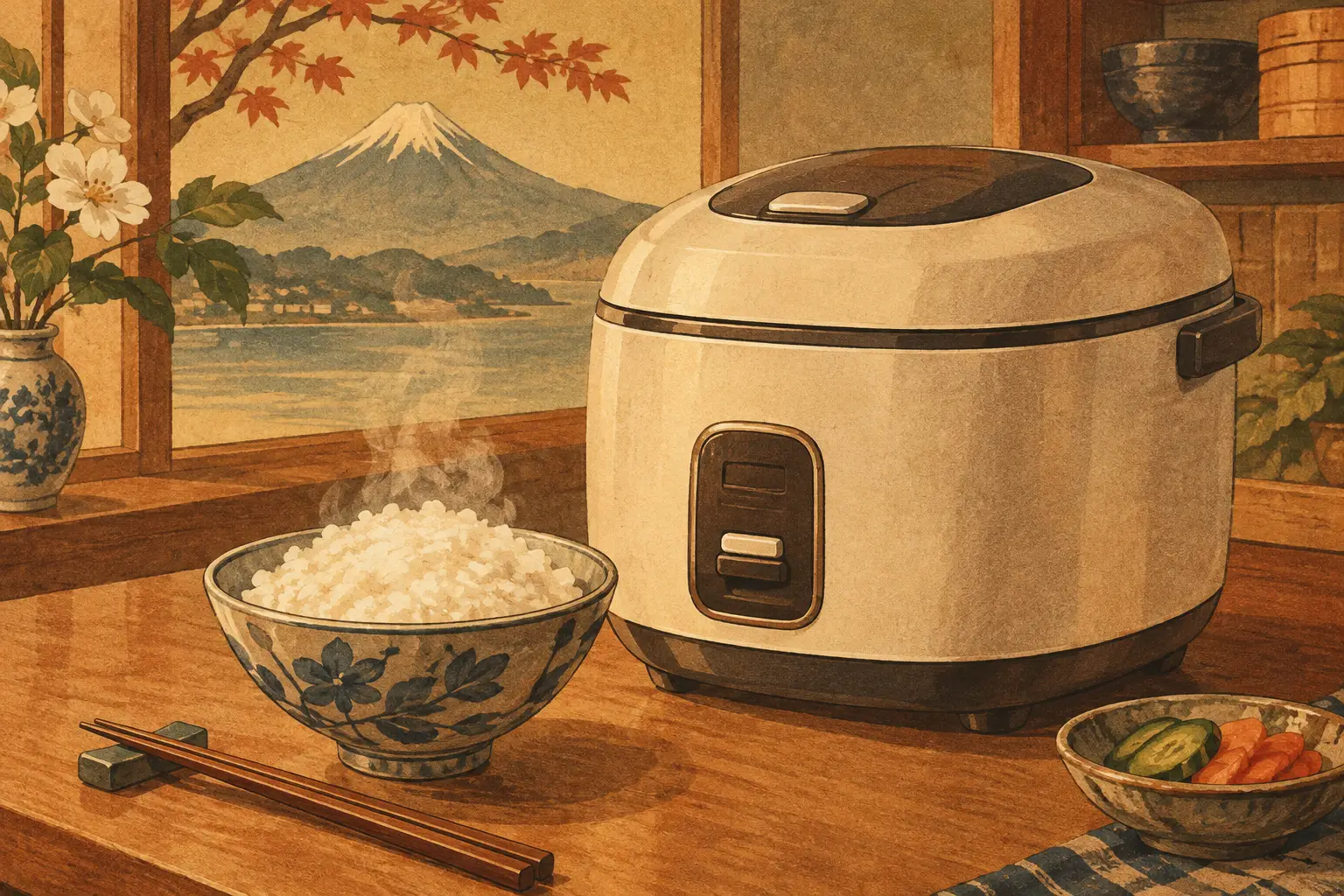
A bowl of freshly cooked Japanese short-grain rice should have a gentle sheen, separate yet tender grains, and just enough stickiness to lift easily with chopsticks. That sounds simple, but anyone who has tried to recreate a memorable meal from Japan knows rice can be surprisingly unforgiving. This Japanese rice cooker review looks at why dedicated Japanese machines have earned such loyalty, and whether one belongs in your own kitchen.
For Japan lovers worldwide, a rice cooker is not just another countertop appliance. It is one of the quiet tools behind onigiri packed for a train ride, curry rice on a rainy evening, salmon breakfast sets, and the comforting steam that rises from a home-cooked bowl of gohan. The best models bring that feeling closer, even if your kitchen is thousands of miles from Tokyo, Kyoto, or Hokkaido.
What Makes a Japanese Rice Cooker Different?
The short answer is control. A basic rice cooker heats the pot until the water is absorbed, then switches to warm. A Japanese rice cooker usually pays closer attention to temperature, timing, and moisture throughout the cooking cycle. Many use fuzzy logic, which adjusts heat according to the rice, water level, and conditions inside the pot. Some higher-end versions use induction heating to warm the inner pot more evenly.
That does not mean every Japanese model is automatically necessary or that a simple cooker cannot make a good meal. It means the better machines are designed around a cultural truth: rice is not a side thought. It is the center of the table.
This care shows up in useful settings. You may find options for white rice, sushi rice, mixed rice, porridge, brown rice, sweet rice, and quick-cook cycles. The names can differ by brand, but the point is consistent. Japanese short-grain rice and American long-grain rice do not need identical treatment, and a cooker that recognizes the difference gives you a better chance of getting the texture you wanted.
Japanese Rice Cooker Review: The Real Benefits
The clearest benefit is consistency. Measure rice and water carefully, use the correct setting, and you can expect a reliable result without hovering over the stove. For busy households, that alone can justify the purchase. Rice can be ready when the rest of dinner is finished, rather than becoming one more pan to watch.
The second benefit is texture. Quality Japanese cookers tend to produce rice that is evenly hydrated from the center of each grain outward. You are less likely to get a dry layer on top, a soggy patch at the bottom, or scorched rice clinging to the pot. With Japanese short-grain rice, the result is especially noticeable: plump grains with a soft chew and a delicate sweetness.
There is also the keep-warm function, which deserves more respect than it gets. A good machine holds rice at a suitable temperature for hours without turning it into a crusty, dry disappointment. This is helpful if people in your home eat at different times, or if you want a second bowl later for ochazuke, fried rice, or a late-night snack with furikake.
Finally, there is the small ritual. Rinsing rice until the water runs mostly clear, leveling it in the pot, and hearing the cooker signal that dinner is ready can make an ordinary weeknight feel more intentional. It is not quite wabi sabi, but there is beauty in a humble everyday object doing its job well.
The Features That Matter Most
A dazzling control panel is not the same as a better cooker. When comparing Japanese rice cookers, focus first on the inner pot, heating method, capacity, and settings you will actually use.
Inner pot and heating method
Look for a sturdy nonstick inner pot with clear measurement lines. Heavier pots generally retain and distribute heat better, although they also raise the price. Standard electric heating is perfectly suitable for many homes. Induction heating can deliver more precise, even results, but it is a premium feature and may be overkill if you cook rice only once or twice a month.
Some models advertise clay, ceramic, copper, or multi-layer pot construction. These can contribute to excellent cooking, but do not choose based on material alone. A well-designed midrange cooker with a dependable lid seal and sensible programs is often a smarter buy than a feature-packed machine you barely understand.
Capacity is more important than it sounds
Rice-cooker capacity is commonly listed in cups, but those are usually small Japanese rice cups, about 180 milliliters, not a standard US measuring cup. A 3-cup model is lovely for one or two people and takes up less counter space. A 5.5-cup model is the versatile choice for many households. Larger sizes make sense for families, meal prep, dinner parties, or anyone who wants extra rice for bento lunches.
Do not buy oversized just because it seems safer. Many cookers perform best when they are not making a tiny amount at the very bottom of a large pot. Think honestly about your usual meals, not the one big gathering you host each year.
Settings worth having
For most Japan-focused home cooks, white rice, quick cook, mixed rice, brown rice, porridge, and a dependable keep-warm setting are enough. A timer is also genuinely useful. Set it before work and come home to rice ready for donburi, Japanese curry, or grilled fish.
Special modes for sushi rice, GABA brown rice, rinse-free rice, or texture preferences are welcome bonuses if you will use them. If you mostly make steamed white rice, however, do not let an enormous menu of programs distract you from build quality and ease of cleaning.
Where Japanese Cookers Have Trade-Offs
The main drawback is price. Japanese brands are often more expensive than entry-level cookers, especially models with induction heating or advanced pressure technology. For someone who eats rice a few times a year, that expense may be hard to defend.
They can also be slower. A standard cycle may take 45 minutes to more than an hour, because the cooker includes soaking and steaming phases designed to improve the finished rice. Quick settings solve the timing issue when needed, but they may not produce the same polished texture. If dinner must be on the table in 20 minutes every night, plan accordingly.
Counter space is another consideration. These are not tiny gadgets, and their rounded shapes can be awkward to store. Some models also have a removable inner lid, steam vent, and other parts that need regular washing. That maintenance is easy, but it is still maintenance.
And one honest reminder: even a superb cooker cannot rescue old rice or careless measurements. Buy fresh rice from a source you trust, store it well, rinse it, and follow the pot’s markings rather than guessing. The machine does the technical work, but the ingredients still matter.
Who Should Buy One?
A Japanese rice cooker is a strong choice for people who cook rice at least weekly, love Japanese meals, or want dependable results for onigiri, sushi bowls, and simple rice-centered dinners. It is also a wonderful gift for someone building a more thoughtful Japanese kitchen, alongside a donabe, good chopsticks, or a favorite yunomi cup.
If you are a student in a small apartment, a compact model can make home cooking feel far more possible. If you host friends for Japanese curry nights or cook family-style meals, a larger model with a good keep-warm function will earn its counter space quickly.
On the other hand, a basic cooker may be plenty if rice is only an occasional side dish. There is no cultural prize for buying the most expensive appliance. The best choice is the one that encourages you to cook, share, and enjoy the food.
Our Verdict
This Japanese rice cooker review comes down to a simple judgment: the investment makes sense when rice is part of your regular life, not just an ingredient you keep in the pantry. The better texture, flexible settings, and reliable warm holding are meaningful improvements, especially with Japanese short-grain rice.
Choose a capacity that fits your household, prioritize a well-made inner pot and easy cleaning, and resist paying for specialized modes you will never touch. Then let the cooker do what it does best. A warm bowl of rice can turn miso soup, pickles, grilled vegetables, or leftover fish into a meal with real comfort and a little touch of home.