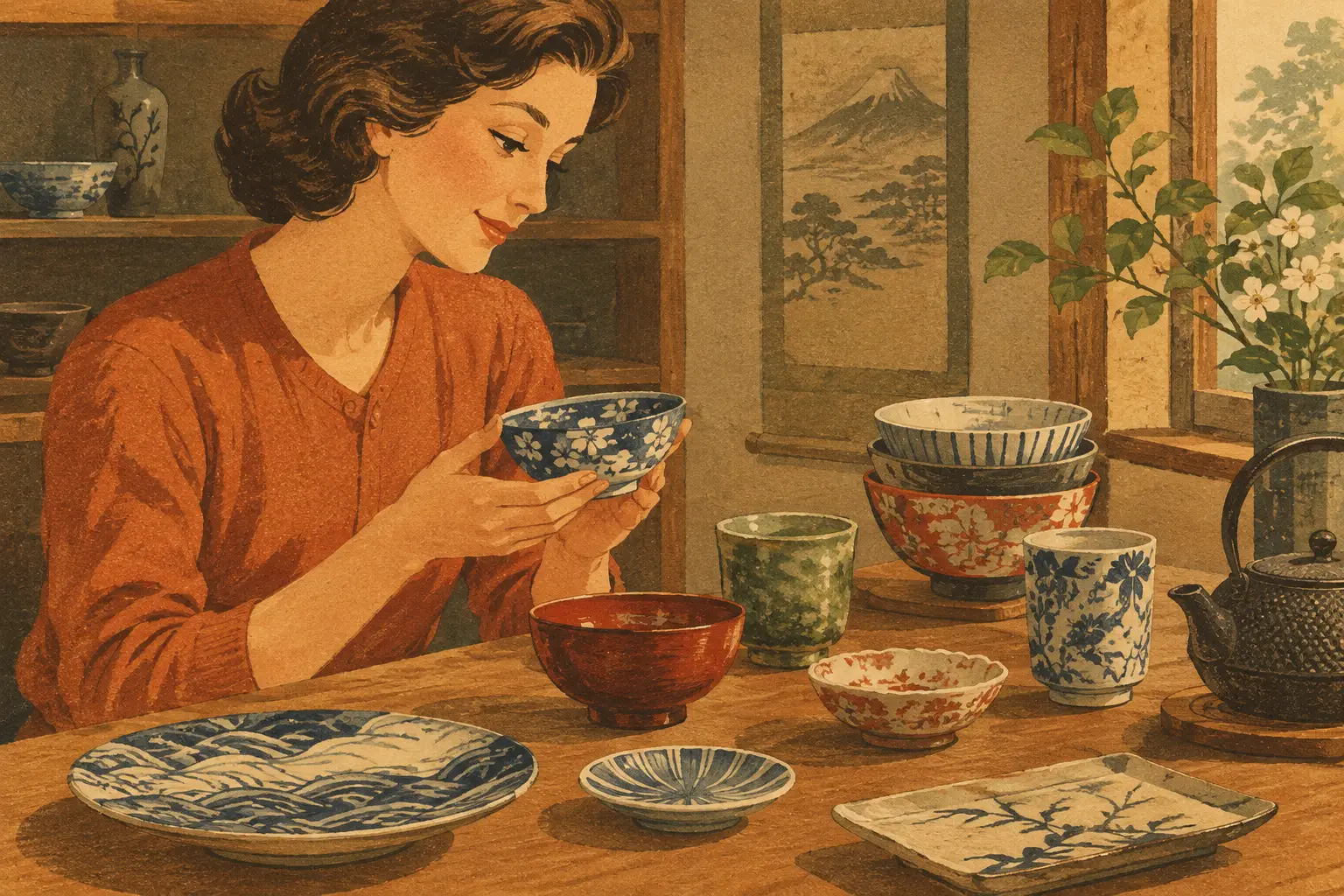
A bowl of miso soup rarely arrives alone in Japan. It sits beside rice in its own vessel, perhaps a small dish of pickles, a plate for grilled fish, and chopsticks resting neatly nearby. Learning how to choose japanese tableware means learning to notice those small relationships. The goal is not to recreate a formal Kyoto restaurant at every meal. It is to make your table feel more intentional, more seasonal, and more connected to the food you love.
Japanese tableware is wonderfully easy to collect because it does not need to match perfectly. A handmade ceramic bowl can sit beside a crisp white porcelain plate. A deep blue kutani-style dish can make simple sliced fruit look special. The pleasure is in the combination, including the quiet imperfections that reflect wabi-sabi – an appreciation of beauty that is humble, irregular, and lived with.
Start With the Meals You Actually Make
Before choosing patterns or chasing a particular regional style, think about what you serve most often. If you cook rice, noodles, curry, grilled salmon, or Japanese breakfast at home, begin with pieces that will earn a place on the table every week.
A practical first set usually includes rice bowls, soup bowls, small side dishes, medium plates, and chopsticks. These categories cover much more than Japanese food. A rice bowl can hold oatmeal, cereal, ice cream, or a late-night serving of popcorn. A small kobachi-style bowl is perfect for olives, nuts, berries, yogurt, sauces, or a little dessert.
Japanese dining often presents food in separate portions rather than piled onto one large plate. That does not mean you need dozens of dishes. It simply means a few smaller pieces can make an everyday meal feel considered. A weeknight meal of roasted vegetables, rice, and chicken changes character when each element has its own place.
Choose Japanese Tableware by Material
Material affects appearance, weight, price, durability, and how a piece feels in your hands. There is no single best choice. The right material depends on whether you want easy everyday use, a handmade feel, or a special piece for guests.
Ceramic: Warm, varied, and easy to love
Ceramic stoneware and earthenware are often the best starting point for new collectors. They have presence. Their glazes can be glossy, matte, speckled, crackled, or softly uneven, and they suit food with rich colors such as green vegetables, red tuna, golden tempura, and white rice.
Handmade ceramic pieces may have slight variations in rim shape, glaze, or size. That is part of their charm, not a flaw. A thick, earthy bowl is especially good for donburi, ramen, stew, or generous portions of rice. Just check care instructions carefully. Some handmade ceramics are not dishwasher or microwave safe, and a crazed glaze may stain if it is not properly sealed.
Porcelain: Light, crisp, and versatile
Porcelain is fired at a higher temperature and is usually smoother, lighter, and less porous than stoneware. It works beautifully for everyday meals and has a clean look that lets food stand out. White porcelain is a smart foundation because it mixes with almost anything, while blue-and-white designs can bring a classic Japanese feeling without overwhelming the table.
Arita and Imari-inspired porcelain often features refined painted decoration, from simple indigo lines to detailed flowers and landscapes. Choose it if you enjoy a polished look or want tableware that can move easily from casual lunch to a dinner party.
Lacquerware: Special, light, and not for everything
Japanese lacquerware, often called urushi, is strikingly light in the hand and traditionally used for soup bowls, trays, and serving pieces. Its deep black, vermilion, or decorated surface creates a wonderful contrast with pale foods such as tofu, rice, and clear soup.
Real lacquerware needs gentler treatment than ceramic or porcelain. Avoid microwaves, dishwashers, and abrasive scrubbers. If that sounds like too much for daily use, reserve lacquerware for holiday meals, tea, or moments when you want the table to slow down a little.
Glass and wood: Useful accents for warmer months
Japanese glassware is lovely for chilled soba, fruit, sweets, or cold tea, especially in summer. Wood trays and wooden bowls add warmth, but they need handwashing and regular care. These materials are best used as accents unless you already enjoy maintaining them.
Let Shape Do Some of the Work
Japanese tableware is designed with purpose. A shallow plate shows off grilled fish or tempura. A deeper plate contains broth, curry, or saucy dishes. A wide bowl gives ramen room for toppings, while a smaller, rounded bowl makes rice feel comforting and easy to hold.
When shopping, hold a bowl if possible. A good rice bowl should feel balanced in one hand, with a rim comfortable enough to bring close while eating. For American-style meals, medium Japanese plates are often more useful than oversized dinner plates. Their smaller scale encourages a composed meal with a few side dishes rather than one enormous serving.
Also consider the rim. A broad rim frames food like a small stage. A darker rim can make pale food glow, while a pale plate can highlight colorful sushi, salads, and vegetables. This is one reason Japanese food presentation feels so alive: the vessel is part of the composition.
Build a Collection That Mixes, Not Matches
Matching sets are convenient, but Japanese table settings often feel more personal when pieces are coordinated rather than identical. Try choosing one unifying element, such as a shared color family, natural textures, or a repeating accent of indigo. Then allow differences in shape and finish.
For example, pair creamy white bowls with a charcoal plate, a small indigo dish, and natural wood chopsticks. Or build around muted earth tones – rust, moss, sand, and soft gray – for an autumn table. The contrast should feel deliberate, not chaotic.
Seasonality is a joyful guide. In spring, light colors, blossoms, and fresh greens feel right. Summer invites clear glass and cool blues. Autumn welcomes warm glazes and leaf motifs. Winter is a wonderful time for heavier ceramics, deep reds, and dark lacquer. You do not need separate collections for every season. Even one seasonal plate or small dish can shift the mood.
This sensitivity to passing seasons connects to mono no aware, the gentle awareness that things are beautiful partly because they do not last. A cherry blossom dish in April or a maple-leaf bowl in October can make an ordinary dinner feel briefly tied to a particular moment.
Pay Attention to Craft, Origin, and Decoration
Japanese tableware ranges from factory-made pieces to work by individual potters. Neither is automatically better. Factory-made porcelain can be durable, affordable, and consistent, which is ideal for daily use. Studio pottery offers individuality and a closer connection to the maker, but may cost more and require extra care.
If a piece is described by a regional tradition, treat that as an invitation to learn its visual language rather than a rule you must follow. Mino ware is known for its broad variety of glazes and forms. Kutani ware is often colorful and decorative. Arita ware is celebrated for porcelain and painted designs. Mashiko pottery tends toward earthy, handmade character. Knowing these names can help you shop with confidence, but buy what you genuinely want to use.
Decorated pieces deserve breathing room. If you choose a detailed ukiyoe-inspired plate or a vividly painted bowl, let it be the visual focus. Pair it with simpler pieces so the table feels collected, not crowded.
Check Size, Care, and Everyday Reality
A beautiful dish that does not fit your cabinet, dishwasher, or usual portion sizes may become a frustrating purchase. Measure your shelves before buying stacks of bowls. Think about whether your household uses a microwave. Consider who will wash up after a dinner party.
For a first collection, choose mostly dishwasher-safe pieces and add delicate items gradually. Look for a stable foot ring on bowls and plates, smooth glaze on surfaces meant for food, and no sharp or uncomfortable edges. If you are buying vintage tableware, inspect it closely for chips, cracks, crazing, and worn decoration. Older pieces can be wonderful, but they may be better for display or dry foods than everyday use.
One helpful rule: buy fewer pieces than you think you need, then live with them. You will quickly discover whether you reach for shallow plates, small bowls, or generous noodle bowls most often. Let your collection grow around those habits.
Choose Pieces That Invite You to Set the Table
The best Japanese tableware is not the most expensive, rarest, or most formal. It is the bowl you reach for when you make rice after a long day, the little dish that turns store-bought pickles into a proper side, and the plate that makes friends pause before taking the first bite.
Choose with your hands, your kitchen, and your favorite meals in mind. A table set with care does not need to be perfect. It only needs to make you glad you sat down.