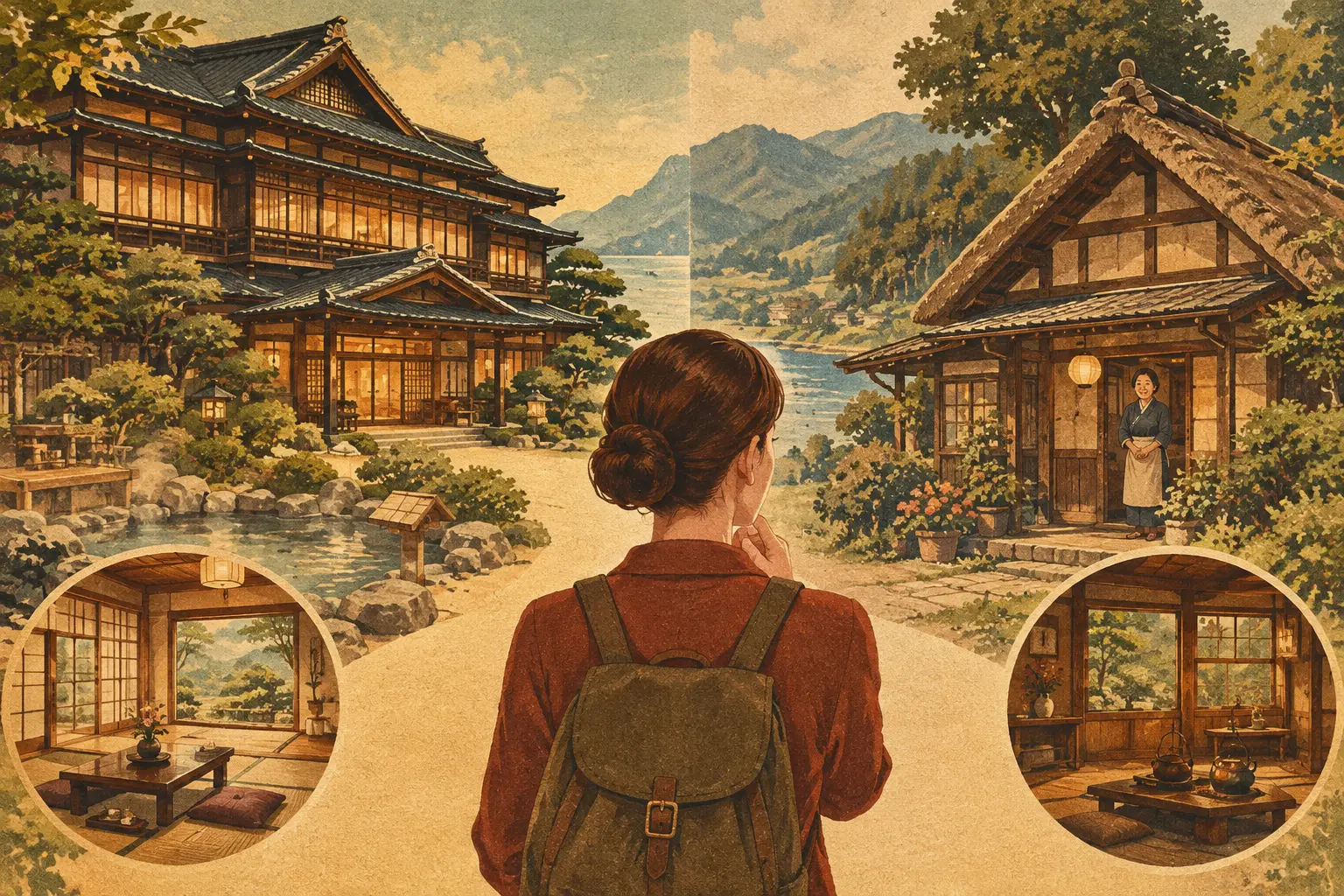
A place to sleep in Japan can become one of the memories you carry home most vividly: the sound of slippers on tatami, a steaming bowl placed before you at dinner, the quiet ritual of soaking in an onsen. This ryokan minshuku comparison is for travelers who want more than a standard hotel room and are deciding how close they want to get to everyday Japanese hospitality.
Both options can be deeply personal, welcoming, and rooted in place. But they are not interchangeable. A ryokan often feels like a carefully composed traditional experience, while a minshuku can feel like being welcomed into the rhythm of a family home. Choosing well means thinking beyond price and asking what kind of Japan you hope to meet.
Ryokan vs. Minshuku: The Essential Difference
A ryokan is a traditional Japanese inn. Some are modest and historic, while others are highly polished properties with private outdoor baths, attentive room service, seasonal kaiseki dinners, and immaculate tatami rooms. The shared idea is hospitality, or omotenashi: care shown through timing, detail, and anticipation rather than a lot of fuss.
At a ryokan, your room may be transformed while you eat dinner. The staff lays out your futon, sets tea and sweets on a low table, and may serve a multi-course meal in your room or a private dining space. The experience is deliberate. You are there not only to rest, but to slow down and notice the season, the ingredients, the craftsmanship of the dishes, and the view beyond the shoji screens.
A minshuku is usually a smaller, family-run guesthouse. Think of it as Japan’s homegrown answer to a bed-and-breakfast, though the atmosphere varies widely. Some minshuku are simple village houses with a few guest rooms. Others are long-established lodgings in coastal towns, ski areas, farming communities, or pilgrimage routes.
The host family may prepare dinner, recommend a local walking trail, or simply greet you warmly and let you come and go. A minshuku is usually less formal than a ryokan, with fewer services and less ceremony. That is often exactly its appeal.
Ryokan Minshuku Comparison: Atmosphere and Service
If you love intentional details, a ryokan is likely your match. It is the place to wear a yukata after bathing, sip green tea while rain falls over a garden, and enjoy a meal where even the plate reflects the time of year. There is a little wabi-sabi in a well-aged wooden hallway and a little theater in a beautifully arranged dinner tray.
Service at a ryokan can feel wonderfully attentive, but it also comes with a gentle structure. Dinner may begin at a set time. Check-in can be earlier than at a city hotel. Staff may explain bathing rules, meal arrangements, and when your futon will be prepared. For many Japan lovers, these rituals are the whole point. For travelers who prefer spontaneous schedules, they can feel restrictive.
A minshuku tends to be more relaxed and more conversational. You may eat at a shared table beside other travelers, hear stories from the owner, or receive advice that never appears in a guidebook. The building may be older, the furnishings more practical, and the English less certain. A translation app, a few Japanese greetings, and a sense of good humor go a long way.
Do not assume that minshuku means rustic in a negative sense. A spotless room, homemade miso soup, and a host who knows the local coast or mountains by heart can offer a kind of warmth no luxury property can manufacture. Still, comfort levels vary more from one minshuku to another than they do among established ryokan.
Meals: Kaiseki Elegance or Home-Style Generosity?
Food is one of the clearest dividing lines. Ryokan meals are often a destination in themselves. A dinner may include sashimi, grilled river fish, local wagyu, simmered vegetables, pickles, rice, soup, and a seasonal dessert. At higher-end properties, this becomes kaiseki, a sequence of small courses with careful attention to flavor, texture, color, and pottery.
This is ideal if you see Japanese food as part of the cultural journey. A ryokan dinner can introduce you to regional ingredients you would never think to order in a restaurant. It can also be a challenge for picky eaters, vegans, or anyone with serious allergies. Tell the property about dietary needs when booking, not when you arrive. Some can accommodate you; some cannot.
Minshuku meals are often simpler and more home-style. In a fishing town, that could mean an abundant seafood dinner. In the mountains, it may mean vegetables, tofu, miso soup, and local game. Portions can be generous, presentation can be charmingly unpretentious, and the cooking may reveal more about daily regional life than formal cuisine does.
If you want freedom to explore local restaurants, choose a room-only plan or breakfast-only plan. Many smaller lodgings have limited dining flexibility, especially outside larger cities.
Baths, Bathrooms, and the Comfort Question
For onsen fans, a ryokan is often the dream choice. Many are built around natural hot springs and offer indoor baths, open-air rotenburo, private reservable baths, or even a bath attached to your room. The chance to soak beneath cedar trees or mountain stars is hard to beat.
A minshuku may have a small shared bath, and some have no hot spring water at all. In rural areas, it might be a simple family-style bath used in time slots. Private bathrooms are also less common in both traditional ryokan and minshuku than in Western-style hotels, though this is changing.
Before booking, check four practical details: whether the bathroom is private, whether bathing facilities are shared, whether tattoos are accepted, and whether the property has a private bath option. Rules around tattoos differ widely. A private bath can make the experience easier for couples, families, shy bathers, and visitors with tattoos.
Price: What Are You Actually Paying For?
Ryokan prices usually include more than a room. A stay may cover dinner, breakfast, service, bath access, and the setting itself. A beautiful onsen ryokan can be expensive, particularly on weekends, during cherry blossom season, autumn foliage season, and Japanese holidays. Yet a one-night splurge can be more meaningful than several nights in a generic room.
Minshuku are typically more budget-friendly, especially when traveling through smaller towns. They can be an excellent choice for hikers, cyclists, beachgoers, and anyone spending several nights in one region. Lower cost does not automatically mean low quality. It usually means fewer staff, simpler rooms, and less elaborate service.
The best value depends on your trip. Spend on a ryokan when the lodging itself is a major experience: an onsen town, a scenic lake, a mountain valley, or a special anniversary night. Choose a minshuku when the destination, host connection, or local landscape is the main event.
Which One Works Best for Your Japan Trip?
Choose a ryokan if you want a polished traditional stay, an exceptional bath, a full Japanese dinner, and time to linger. It is especially rewarding for first-time visitors who want one concentrated experience of tatami, yukata, seasonal food, and omotenashi.
Choose a minshuku if you want a more informal local base, lower costs, and the chance for genuine human connection. It suits travelers walking historic routes, visiting small fishing villages, skiing, or spending time where Japan feels less curated and more lived-in.
For a trip with both cities and countryside, consider mixing the two. Book a practical hotel in Tokyo or Osaka, then reserve one ryokan night in Hakone, Kinosaki, Beppu, or another onsen area. Add a minshuku when you head toward a quieter region, perhaps near the Kumano Kodo or a rural coastline. That combination gives you ceremony, comfort, and a closer glimpse of ordinary local life.
A Few Etiquette Notes That Make a Big Difference
Traditional lodging is welcoming, but small acts of consideration matter. Remove shoes where requested, keep your voice low in hallways, and follow the bathing instructions before entering a shared tub. Shower and rinse first, then soak. Do not bring towels into the bathwater.
Arrive close to your stated check-in time, particularly when dinner is included. The kitchen and staff are planning around you. If you are delayed, contact the property as early as possible. At a minshuku, this consideration feels especially personal because the owner may be cooking your meal and preparing your room themselves.
You do not need perfect Japanese. A friendly konnichiwa, arigato gozaimasu, and willingness to follow the house rules communicate plenty. The goal is not to perform Japan perfectly. It is to receive hospitality with the same care with which it is offered.
The best choice is the one that fits the story you want your trip to tell. Leave room for one night when you slow down, soak, eat what the region offers, and let the quiet details of a Japanese stay become part of your own memory.