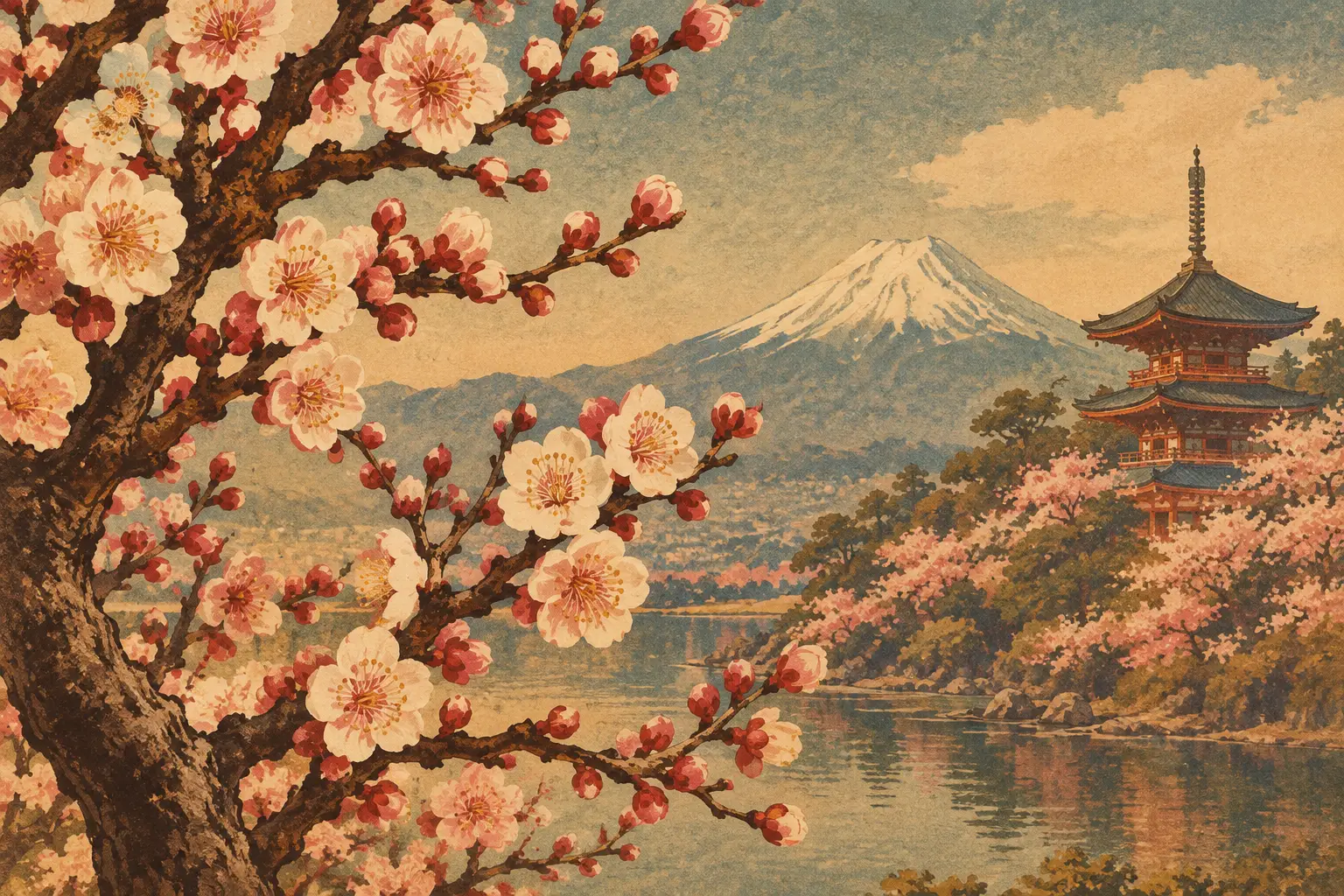
The answer to when do Japanese plum blossoms bloom is one of Japan’s best reasons to visit before cherry blossom season begins. Ume, or Japanese plum blossoms, open while winter still has a grip on the air. You may see bare branches, wool coats, and suddenly, clouds of white, blush pink, and deep crimson flowers carrying a sweet perfume through a shrine garden.
For Japan lovers worldwide, ume season feels like a quieter, more intimate invitation. Sakura gets the enormous crowds and global headlines, but plum blossoms reward travelers who come early, linger longer, and notice the small seasonal details that make Japan so memorable.
When Do Japanese Plum Blossoms Bloom?
Japanese plum blossoms usually bloom from late January through March, with the exact timing shaped by region, elevation, variety, and that year’s winter weather. In the warm south, blossoms can appear as early as January. In Tokyo, Kyoto, Osaka, and much of central Japan, the most reliable viewing period is generally February into early March. Farther north, ume may not reach its best until April or even early May.
The Japanese name for these blossoms is ume. The tree is Prunus mume, a close relative of apricots and peaches, rather than the European-style plums many American visitors picture. Its flowers often bloom directly from the branch with little or no stem, creating a dense, almost sculptural look. Some varieties bloom in crisp white; others range from pale shell pink to rich magenta.
Unlike cherry blossom forecasts, which receive intense national attention, ume timing can be more flexible. A cold spell may delay the flowers, while a mild winter can bring them forward. If your trip has only a few possible dates, aim for mid-February in central Japan. It gives you a strong chance of finding gardens with a good mix of early, middle, and late-blooming varieties.
A Regional Guide to Ume Season
Japan stretches a long way from subtropical islands to snowy northern landscapes, so there is no single national bloom date. Think of ume season as a wave traveling north.
Okinawa and Kyushu: January to February
In Okinawa, the mild climate can bring early blossoms from January. Kyushu also gets a head start, with many plum gardens looking their best from late January into February. This is a wonderful time for travelers who want a winter Japan itinerary with hot springs, regional food, and flower viewing in one trip.
Fukuoka and nearby areas can be especially appealing because the weather is usually gentler than in Tokyo, though it is still wise to pack layers and rain protection. The contrast between a cool morning and flowering branches makes an onsen stop feel even more rewarding.
Tokyo and the Kanto Region: February to Early March
Tokyo’s ume season generally peaks in February. One of the pleasures of seeing plum blossoms in the capital is that you do not need to leave the city for a meaningful seasonal experience. Historic gardens, temple grounds, and larger parks often plant several varieties, extending the display beyond one short peak week.
The wider Kanto region offers a deeper ume adventure. Mito, northeast of Tokyo, is famous for its large plum groves and has long been associated with the flower. Plan for late February to mid-March, but treat the date as a guide rather than a guarantee. A garden full of buds can still be beautiful, especially on a clear, cold day.
Kyoto, Osaka, and Kansai: Mid-February to Mid-March
Kyoto’s temple gardens give ume an especially poetic setting. A red or white blossom against dark wood, stone lanterns, moss, and tiled roofs captures the quiet beauty of wabi-sabi. Ume is less about the huge canopy effect of cherry trees and more about looking closely at a single branch, its curling trunk, and its brave flowers appearing before spring has fully arrived.
In Kyoto and Osaka, expect many gardens to bloom from mid-February into March. Some places hold ume matsuri, or plum festivals, during this period. These events may include food stalls, local crafts, and seasonal sweets, but the atmosphere is commonly calmer than the peak sakura season.
Central Japan and the Japanese Alps: February to April
In central Japan, timing depends heavily on elevation. Lower, warmer cities may follow the Tokyo-Kyoto pattern, while mountain towns and cooler inland valleys bloom later. If you are combining a plum garden with castle visits, pottery towns, or a ryokan stay, build a few flexible days into the itinerary.
This is also a great region for photographers and art lovers. The strong lines of an ume branch have inspired centuries of Japanese painting and ukiyo-e. Look for the visual contrast between early flowers and winter landscapes: mist, dark pines, old gates, and perhaps the last patches of snow.
Tohoku and Hokkaido: April to May
Northern Japan brings the latest ume season. In parts of Tohoku, blossoms may arrive in April, while Hokkaido can see them from late April into May. This overlap can be useful for travelers who miss the early-season bloom farther south but still want a floral Japan journey.
Keep in mind that northern destinations are often better known for later sakura viewing. If plum blossoms are your priority, check what each garden actually grows before setting your heart on a particular destination.
How to Plan a Plum Blossom Visit
The biggest mistake is treating ume like a one-day spectacle. Plum gardens often plant early, midseason, and late varieties, so a festival can run for weeks even though individual trees bloom at different times. Going slightly before or after the advertised peak can mean fewer people and plenty to see.
Before you travel, look for recent updates from the specific garden, shrine, temple, or park you hope to visit. Photos posted within the previous few days are more useful than a general bloom calendar. Look for wording such as “five percent open,” “best viewing,” or “falling blossoms.” A tree at 50 percent bloom can be spectacular; it depends on the variety and the shape of the garden.
Dress for winter, not for the spring you are hoping will arrive. February in Tokyo, Kyoto, and Osaka can be chilly, windy, and wet. Comfortable shoes matter too, since major gardens may have gravel paths, slopes, and long walks between stations and entrances. Carrying a small thermos or picking up a warm canned coffee afterward is part of the experience.
If you want photographs, arrive near opening time on a weekday. Morning light brings out the texture of petals and old bark, and a quieter garden makes it easier to enjoy the fragrance. Do not pull branches closer, step into planted areas, or use a tripod where it is prohibited. The best images often come from patient observation rather than chasing the most dramatic angle.
Ume Is More Than a Warm-Up for Sakura
It is tempting to call ume the preview before cherry blossoms, but that misses the point. In Japanese poetry and seasonal culture, plum blossoms carry their own identity. They suggest endurance, renewal, elegance, and the first signs that winter will not last forever. Their fragrance is a defining feature, more noticeable than the scent of most cherry blossoms.
Ume also appears at the table. The fruit is harvested much later than the flowers and used for umeshu, a sweet plum liqueur, and umeboshi, intensely salty and sour pickled plums. Seeing the blossoms in late winter adds another layer of meaning when you encounter these flavors in an onigiri, bento, or home-style Japanese meal.
There is a lovely sense of mono no aware here: an awareness that a beautiful moment is brief precisely because it will change. Ume arrives early, when the world still looks muted. The flowers do not need a perfect spring day to make an impression. They bloom anyway.
For a more personal Japan trip, give yourself one unhurried morning in an ume garden. Stand beneath the branches, breathe in the light fragrance, and let the season set the pace before the crowds of sakura arrive.