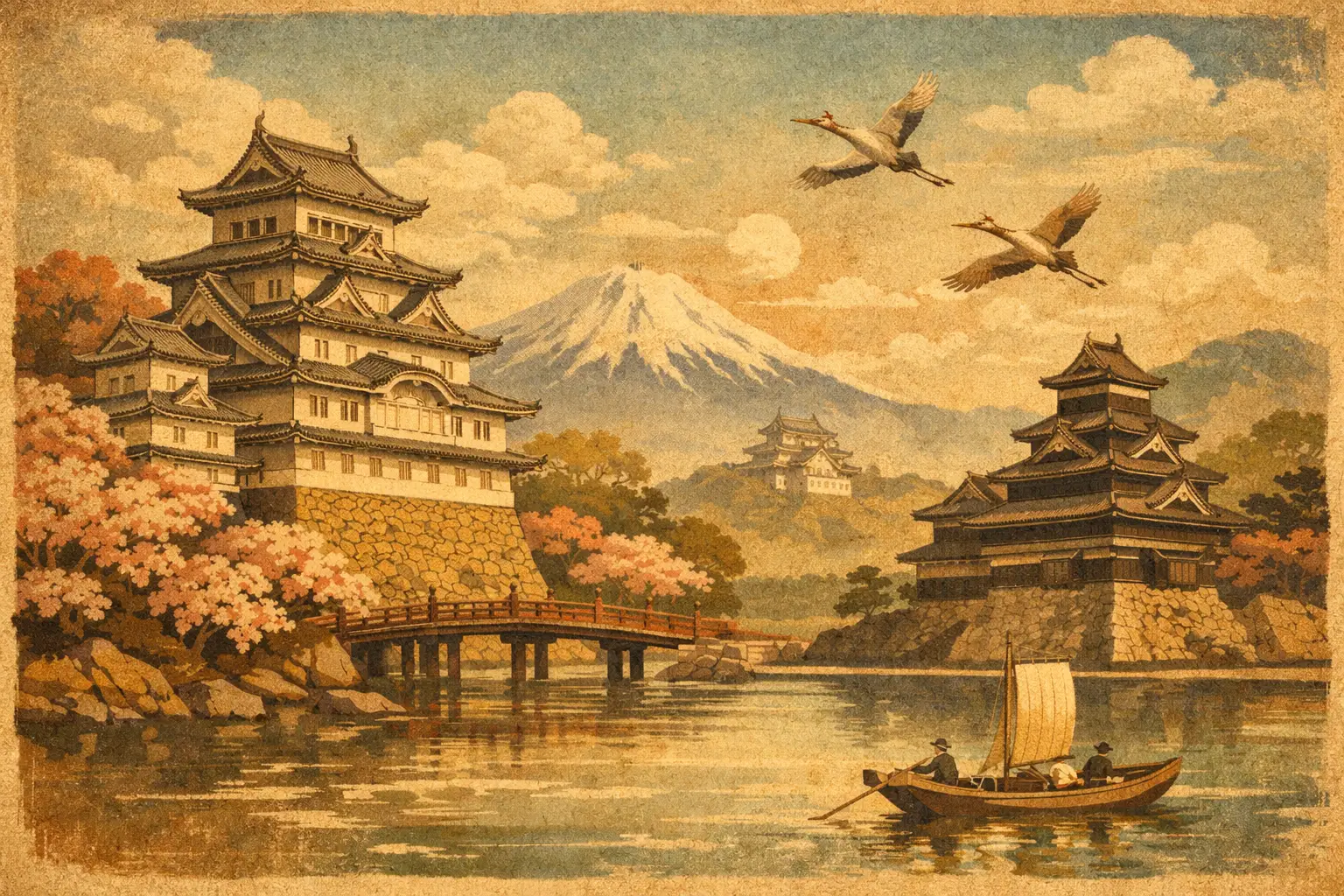
A white keep rising over cherry blossoms, a black fortress catching the last orange light of sunset, stone walls that still feel built for war rather than postcards – famous Japanese castles have a way of making history feel close enough to touch. If you love Japan not just as a destination but as a living culture, castles are one of the fastest ways to feel that connection.
They are not all the same, and that is part of the fun. Some feel elegant and almost theatrical. Others feel severe, practical, and quietly intimidating. A few are original survivors from centuries ago, while others are careful reconstructions that still carry real emotional weight. If you are planning a trip, building your dream itinerary, or simply deepening your appreciation from abroad, these are the castles that deserve your attention.
Why famous Japanese castles matter
Japanese castles are much more than military buildings with pretty roofs. They sit at the meeting point of architecture, regional identity, feudal politics, and seasonal beauty. You can admire the sweep of a tiled roof, the geometry of stone ramparts, or the defensive logic of twisting approach paths designed to confuse attackers.
At the same time, castles are deeply tied to feeling. In spring, sakura around the grounds can create that unmistakable mono no aware, the bittersweet awareness that beauty peaks and passes quickly. In winter, snow on white plaster walls brings a kind of wabi sabi calm, where age, weather, and silence become part of the experience. That mix of strategy and emotion is one reason castle visits stay with people.
It also helps to know one key trade-off. Not every “famous” castle is original. Fires, war, earthquakes, and modernization destroyed many historic keeps. Some sites now feature concrete reconstructions, and opinions differ on them. Purists may prefer original timber structures, but reconstructions can still teach a lot and make the scale of castle culture easier to grasp.
10 famous Japanese castles to know
Himeji Castle
If there is one castle that belongs on almost every list, it is Himeji. Often called the White Heron Castle, it is famous for its brilliant white exterior and remarkably preserved complex. This is not just a single photogenic keep. It is an entire defensive environment, with gates, baileys, and routes designed to slow invaders.
What makes Himeji special is that it feels complete. You can sense both grace and calculation in the layout. For many visitors, this is the castle that defines what they imagined Japanese castles would look like before they ever stepped onto Japanese soil.
Matsumoto Castle
Matsumoto is a favorite for people who love stronger contrasts and a more dramatic mood. Its black exterior gives it the nickname Crow Castle, and with the Japanese Alps nearby, the setting feels striking in every season. Reflections in the moat make it one of the most memorable castle views in the country.
Unlike some grand hilltop sites, Matsumoto sits on flat land, which changes the atmosphere. It feels closer to daily life, almost as if the old fortress and the modern city are still in conversation.
Kumamoto Castle
Kumamoto Castle is one of Japan’s great power statements. Even after suffering serious earthquake damage in 2016, it remains one of the most important castle sites in the country. Its scale, steep stone walls, and bold design show just how formidable a major feudal stronghold could be.
This is also a place where restoration becomes part of the story. Visiting Kumamoto is not only about admiring the past. It is about witnessing how cultural heritage is protected, repaired, and reintroduced to future generations.
Osaka Castle
Osaka Castle is one of the most recognizable landmarks in Japan, especially for first-time visitors. The current main tower is a reconstruction, so if your priority is untouched original woodwork, this may not be your top pick. But if you want a castle with enormous historical presence and easy access in a major city, Osaka delivers.
Toyotomi Hideyoshi’s legacy looms large here, and the grounds have a grand public energy. During cherry blossom season, the castle park becomes especially lively, mixing history with the joy of hanami.
Nagoya Castle
Nagoya Castle is closely tied to the Tokugawa family and has long been known for the golden shachihoko ornaments on its roof. Like Osaka, much of what visitors see today reflects reconstruction, and parts of the site continue to evolve. Still, it holds a central place in discussions of Japan’s major castles.
What stands out here is symbolism. Nagoya Castle feels less like an isolated monument and more like a statement about political authority, urban prestige, and the visual language of samurai-era power.
Inuyama Castle
Inuyama is a gem for people who care about authenticity. Its keep is one of the oldest surviving in Japan, and that changes the experience immediately. Wooden interiors, steep stairs, and the feeling of age under your feet create a stronger sense of contact with the past than many reconstructed sites can offer.
It is also smaller and more intimate than the biggest names, which many travelers actually prefer. Instead of spectacle alone, Inuyama gives you atmosphere.
Hikone Castle
Hikone often gets less international attention than Himeji or Osaka, but it is one of the best castles to visit if you want historical depth without overwhelming crowds. It is one of the few castles with an original keep, and its gardens and surrounding grounds are beautifully composed.
There is a refined quality to Hikone. It does not shout for attention. It rewards slow looking, the kind of visit where you notice textures, proportions, and the quiet elegance that sits close to ukiyoe-like scenes of seasonal life.
Matsue Castle
Matsue Castle has a dark wooden exterior and a serious, grounded presence. It is one of the precious original castles still standing, and that alone makes it worth knowing. The surrounding city also adds to its appeal, with waterways, old neighborhoods, and a more relaxed rhythm than Japan’s biggest urban centers.
For travelers who want history without the rush of a mega-destination, Matsue can feel especially rewarding. It has character, and it wears that character honestly.
Hirosaki Castle
Hirosaki is best known internationally for cherry blossoms, and yes, the spring scenery is extraordinary. But the castle’s appeal goes beyond sakura. Located in Aomori, it brings a northern regional flavor that many visitors miss when they stick only to Tokyo, Kyoto, and Osaka.
The keep itself is relatively small, yet the overall grounds are rich with atmosphere. If your Japan interests include seasonal beauty, local identity, and a slightly different map of the country, Hirosaki belongs on your list.
Kochi Castle
Kochi Castle deserves more love than it gets. It is one of the rare castles where the original keep and the original main palace buildings both survive, which is a major gift to history fans. That combination helps you imagine not just battle and defense, but administration and daily life.
It also feels less polished for mass tourism than some bigger names, and that can be a strength. There is a directness to Kochi, a sense that the place still belongs first to its region and only then to the national tourism spotlight.
How to choose which famous Japanese castles to visit
If this list makes you want to see all ten, you are not alone. But real trips involve time, train routes, weather, and energy. A good way to choose is to decide what matters most to you.
If you want the iconic first castle, go with Himeji. If you care about original surviving structures, prioritize Inuyama, Hikone, Matsue, or Kochi. If you want a castle in a major city with easy transport and a famous skyline view, Osaka makes sense. If cherry blossoms are part of your dream, Hirosaki and Himeji are especially appealing.
There is also the question of reconstruction versus originality. Some travelers feel disappointed when they discover a castle keep has elevators or museum-style interiors. Others are perfectly happy because the site still communicates history, scale, and beauty. Neither reaction is wrong. It depends on whether your ideal visit is architectural authenticity, visual impact, or a mix of both.
What makes a castle visit feel special
A castle visit is rarely just about the keep. Pay attention to the stone walls, moats, gates, and the surrounding town. Notice how the approach unfolds. Many Japanese castles were designed to shape movement and perception, not simply to sit as isolated towers.
Season matters too. Spring gets the most attention, but fresh green landscapes in early summer, crisp skies in fall, and snow in winter can all transform the mood. Morning visits often feel calmer, while late afternoon can bring softer light and fewer crowds.
And if you really love Japanese culture, take a wider lens. Castles connect naturally with tea culture, local craft traditions, regional cuisine, and shrine or temple visits nearby. One of the best parts of following castle routes through Japan is that they rarely stay just about castles.
For all Japan lovers worldwide, that is part of the magic. A great castle does not only show you a building. It opens a door into place, memory, and the many versions of Japan waiting beyond the main gate.