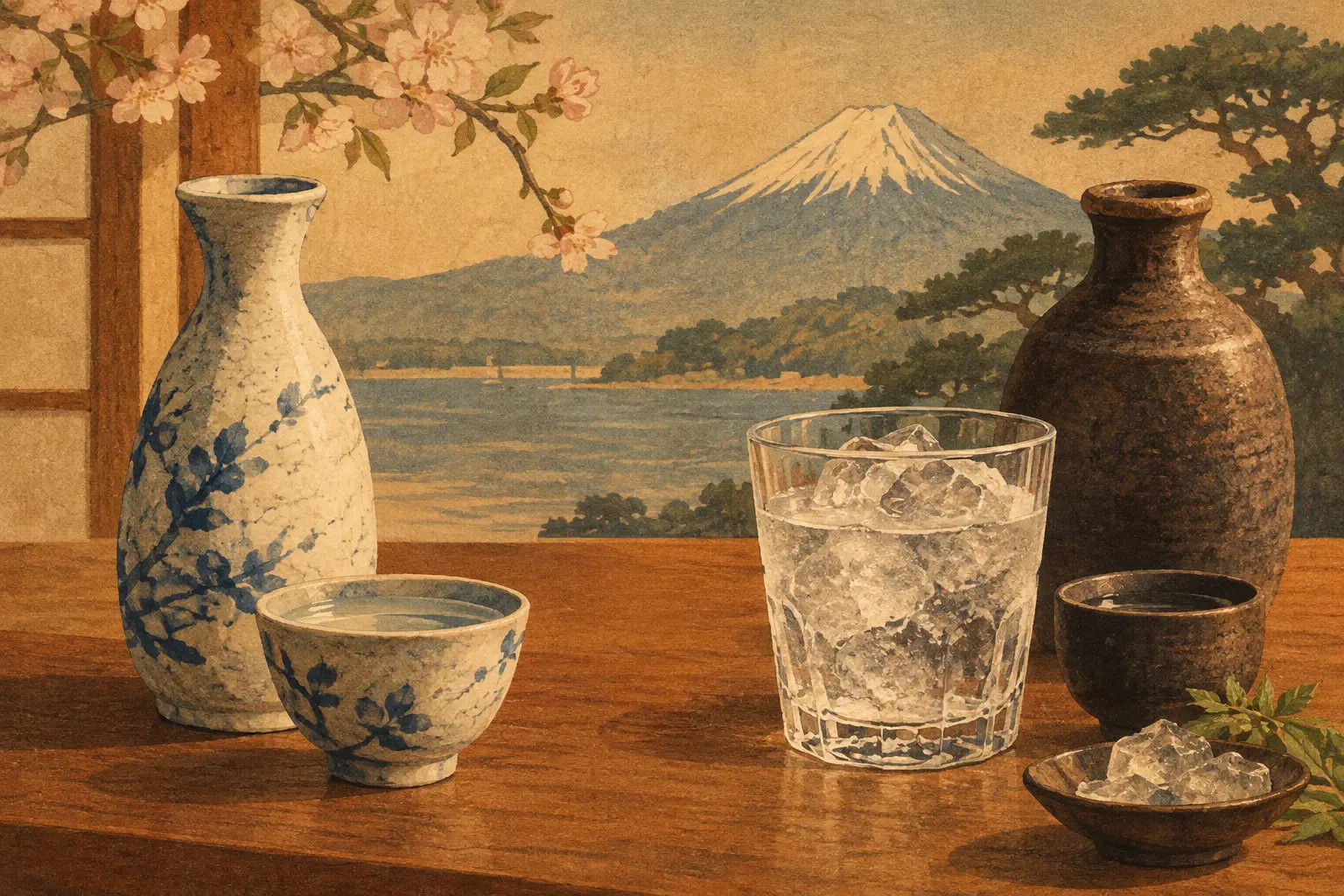
At a Tokyo izakaya, the menu may list sake beside shochu, yet these are not two names for the same drink. Sake shochu is a search phrase many Japan lovers use when they are starting out, but sake and shochu are separate Japanese alcohol traditions with different ingredients, production methods, strengths, and personalities. Knowing the difference makes a meal in Japan, or a visit to a Japanese restaurant at home, much more fun.
Both belong at the table, both reflect regional craft, and both reward curiosity. One can feel graceful and rice-centered; the other can be earthy, crisp, or boldly aromatic. Think less about choosing the “right” one and more about matching the drink to the moment, the food, and your own taste.
Sake Shochu: The Essential Difference
The quickest distinction is this: sake is brewed, while shochu is distilled. Sake is made through fermentation, in a process that turns rice starch into fermentable sugar and then into alcohol. It is often called Japanese rice wine in the United States, which is a useful shortcut, though the brewing process has more in common with beer than grape wine.
Shochu begins with fermentation too, but it goes through distillation afterward. That concentrates the alcohol and changes the flavor structure. Most sake falls around 13 to 16 percent alcohol by volume. Shochu commonly sits near 20 to 25 percent, although some varieties are stronger.
That difference affects how each drink behaves at the table. Sake is usually poured into a small cup or glass and enjoyed in a wine-like way. Shochu is often lengthened with water, ice, hot water, soda, or tea. You can sip it straight, but it is built to be flexible.
What Sake Tastes Like
Good sake can be clean and light, softly sweet, savory, fruity, nutty, dry, or full of umami. Rice, water, yeast, and koji all shape the final result. Koji is a cultivated mold that helps convert rice starch into sugar, and it is one of the quiet heroes of Japanese food culture. It also appears in miso, soy sauce, and many shochu styles.
A fragrant ginjo sake might remind you of melon, pear, apple, or white flowers. A richer junmai can bring cereal, mushroom, steamed rice, and a gentle lactic tang. Neither style is automatically better. The best choice depends on what you are eating and whether you enjoy delicate perfume or deeper, more savory flavors.
Temperature matters more than many first-time drinkers expect. A chilled, aromatic sake can feel bright and polished with sashimi. A fuller sake served gently warm can open up with grilled fish, yakitori, or a winter nabe hot pot. Do not assume warm sake means low quality. Heating can be a deliberate, delicious serving choice.
A simple way to order sake
If you feel overwhelmed by labels, start with the mood you want. Ask for something dry and crisp with raw seafood, or something rounded and savory with grilled dishes. If you like aromatic white wines, try a chilled ginjo or daiginjo style. If you enjoy fuller, food-friendly drinks, a junmai may be your happy place.
Sake also carries a lovely sense of mono no aware, the appreciation of a fleeting moment. A seasonal sake, a small ceramic guinomi cup, and the first bite of spring vegetables can turn a simple dinner into a memory.
What Shochu Tastes Like
Shochu offers a wider range of base ingredients than sake. Rice shochu, called kome shochu, can be soft and lightly floral. Barley shochu, or mugi shochu, is often toasty, nutty, and easygoing. Sweet potato shochu, imo shochu, can be rich, earthy, and unmistakably expressive. Brown sugar shochu, kokuto shochu, tends toward a gentle sweetness without tasting like a sugary liqueur.
There are also shochu made from buckwheat, chestnut, and other local ingredients. This is where regional Japan appears in the glass. A potato shochu from Kagoshima may have a totally different character from a clean rice shochu from Kumamoto.
Many bottles labeled honkaku shochu are single-distilled, meaning more aroma and character from their base ingredient remain. Multiple-distilled shochu is generally lighter and more neutral. Neither is a bad option, but they serve different drinkers. Choose honkaku shochu when you want to taste the ingredient and the maker’s style; choose a lighter type when you want an easy highball or cocktail base.
The best ways to drink shochu
Shochu gives you room to experiment. On the rocks is a good choice for a fragrant, characterful pour. Mixed with cold water, known as mizuwari, it becomes mellow and refreshing. Mixed with hot water, oyuwari, it can release aroma and soften the alcohol, especially with potato shochu on a cool evening.
A shochu soda highball is one of the easiest entry points, particularly with fried foods, yakitori, or salty snacks. In Japan, you may also see chu-hai, a shochu highball often mixed with sparkling water and citrus. Be aware that canned chu-hai can range from light and refreshing to surprisingly strong, so check the alcohol percentage rather than guessing.
Sake or Shochu With Japanese Food?
There is no strict rule, and Japanese dining is more relaxed than old-fashioned etiquette guides can make it sound. Still, pairing can reveal why these drinks have lasted for centuries.
Sake often shines with dishes that have subtle texture and umami: sashimi, sushi, tofu, steamed egg custard, grilled fish, and delicately seasoned vegetables. Its acidity and savory quality can meet dashi-based dishes beautifully. For richer flavors, a warm junmai can stand up to soy-braised pork, mushrooms, or miso.
Shochu is especially good with food that has char, salt, fat, or spice. Try barley shochu with chicken skewers, rice shochu with karaage, and potato shochu with grilled pork belly or hearty regional dishes. A soda-based shochu drink can cut through fried food in the same satisfying way a crisp beer can.
If you are eating at an izakaya with friends, consider ordering both. Begin with a chilled sake alongside lighter plates, then shift to shochu as the grilled dishes arrive. It is not a formal ritual, just a very enjoyable way to taste Japan’s range.
A Few Ordering Tips for First-Timers
Japanese drink menus can seem intimidating because the vocabulary is unfamiliar, not because the choices are inaccessible. For sake, look for the serving size before you order. A small carafe is often called an ichigo, while a larger one may be called a nigogo. Restaurants vary, so simply asking for a small bottle or a glass is completely fine.
For shochu, choose your mixer and serving style. Saying “on the rocks,” “with soda,” or “with hot water” is enough. If you are unsure which base ingredient to choose, barley is often the gentlest starting point, while sweet potato is a great choice for adventurous drinkers who want something distinctly Japanese.
One useful caution: sake and shochu are not interchangeable in cocktails or recipes. Their alcohol level and flavor impact differ dramatically. Replacing sake with shochu can make a marinade far too strong, while replacing shochu with sake may leave a drink watery. Use each for what it is.
Bring Curiosity, Not Rules
Sake and shochu are living parts of Japanese culture, not museum pieces. They connect rural ingredients, skilled fermentation, ceramics, seasonal meals, and late-night conversations at tiny neighborhood counters. That is wabi sabi in a glass: character over perfection, warmth over showing off.
The next time a menu offers both, choose the one that sounds right for your meal, then try the other on your next visit. Every pour is a small invitation to notice another part of Japan.