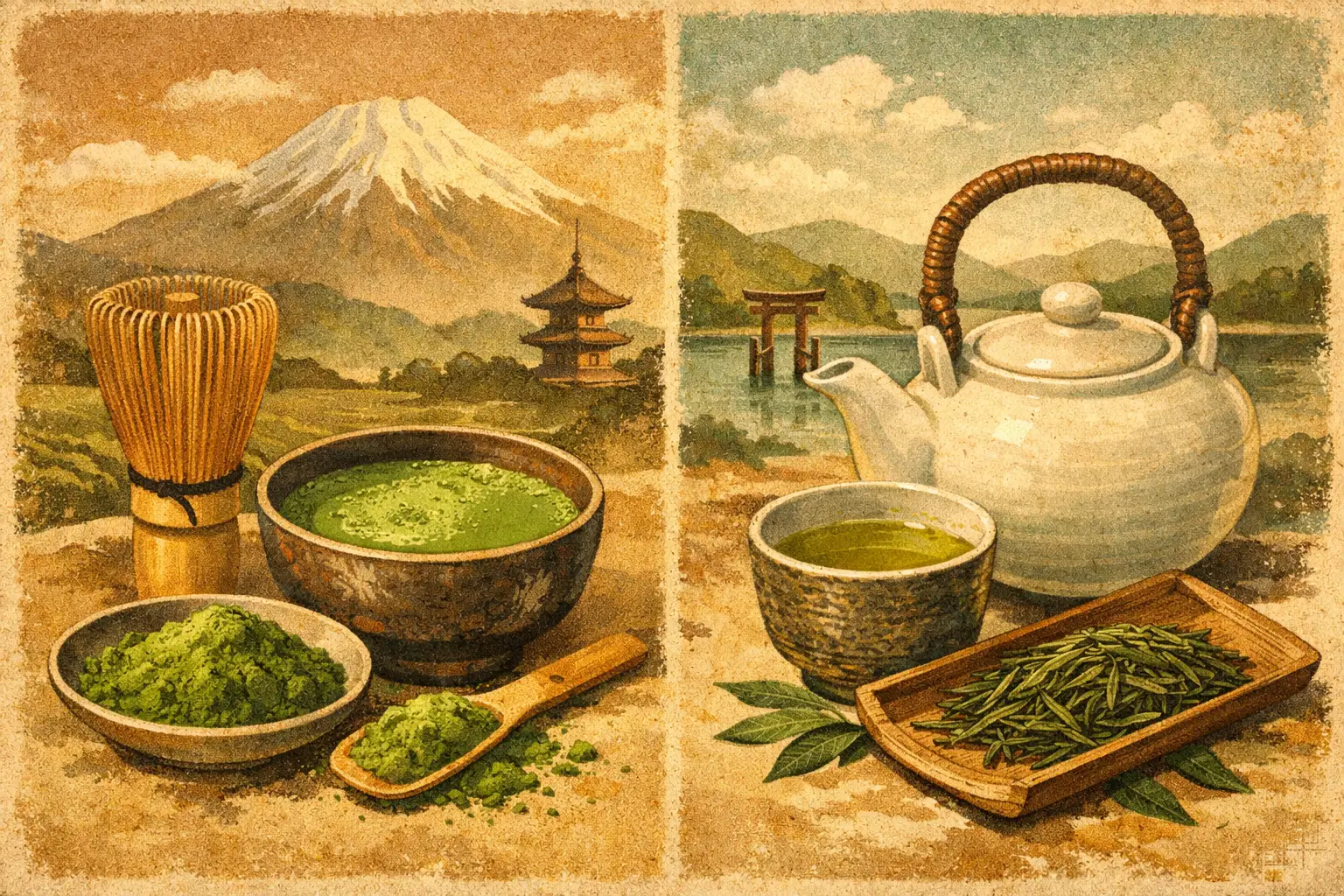
A tea counter in Japan can present a wonderfully difficult choice: a bright bowl of whisked matcha or a clear cup of fragrant sencha. In the matcha vs sencha tea conversation, neither is simply “better.” They are two distinct ways to enjoy the same beloved plant, each with its own farming story, flavor, ritual, and place in daily Japanese life.
For Japan lovers worldwide, learning the difference makes a trip to a tea shop, a Kyoto cafe, or even your own morning routine feel more connected. One cup invites you to slow down and notice every movement. The other is an everyday pleasure, poured from a small kyusu teapot and shared without fuss.
Matcha vs Sencha Tea: The Essential Difference
Both matcha and sencha come from Camellia sinensis, the tea plant used for green, black, oolong, and white tea. Their difference begins before the leaves are picked.
Matcha is made from tencha, a tea grown under shade for several weeks before harvest. Farmers traditionally cover the plants to limit sunlight, encouraging the leaves to develop more chlorophyll and amino acids. After harvesting, the leaves are steamed, dried, and stripped of stems and veins. The remaining leaf material is slowly ground into a fine, vivid-green powder.
Sencha is usually grown in full sun. Its leaves are steamed soon after picking to stop oxidation, then rolled and dried into the slender, needle-like leaves many people recognize as Japanese green tea. You steep the leaves in water and drink the infusion, leaving the leaves behind.
That practical distinction changes almost everything. With matcha, you consume the whole powdered leaf. With sencha, you drink what the leaves release into the water. Matcha can feel concentrated and creamy; sencha is lighter, clearer, and more refreshingly aromatic.
Flavor: Creamy Umami or Fresh Green Brightness?
Good matcha has a rich, savory character called umami, balanced by sweetness, gentle bitterness, and a grassy freshness. Its texture is a major part of the experience. Whisked properly, it becomes soft and slightly foamy, with a fullness that feels closer to a small meal than an ordinary cup of tea.
The flavor can vary dramatically by grade and freshness. Ceremonial-style matcha is generally intended for drinking with water and should taste rounded rather than harsh. Culinary matcha is often more assertive, which can work beautifully in lattes, sweets, noodles, or baking. “Culinary” does not automatically mean poor quality, but it is not always the matcha you want for a quiet bowl on its own.
Sencha offers a different kind of green. A well-made cup may be vegetal, oceanic, sweet, grassy, or lightly nutty, with a clean, drying finish. Some sencha has a deep steamed flavor, while lighter-steamed styles can be more delicate and leaf-like. It is a tea for noticing season, water, and temperature. A spring sencha can feel especially alive, carrying a little mono no aware – the awareness that a fleeting moment is worth savoring.
If you dislike bitterness, do not write off either tea too quickly. Matcha can become bitter when made with boiling water or when too much powder is used. Sencha turns sharp when steeped too hot or too long. Technique matters as much as the tea itself.
How Matcha and Sencha Are Prepared
Matcha calls for a small ritual, but it does not need to be intimidating. Sift about 1 to 2 teaspoons of powder into a warm bowl, add a small amount of hot water that has cooled below boiling, then whisk briskly in a quick W-shaped motion with a bamboo chasen. The goal is a smooth suspension with fine foam, not a perfectly dramatic layer of bubbles.
Traditionally, matcha is served with a wagashi, a Japanese sweet. The pairing is purposeful: a bite of sweetness lets you better appreciate matcha’s savory, bittersweet edge. There is a quiet wabi sabi pleasure in this preparation. A handmade bowl, an imperfect swirl of foam, and a few unhurried minutes are enough.
Sencha is simpler for everyday drinking, though it rewards attention. Put loose leaves into a kyusu or small teapot, then pour in water that has cooled to roughly 160 to 175°F. Steep for around 45 seconds to a minute for the first infusion, depending on the leaf and your preference. Pour the tea evenly into cups so each person gets a balanced brew.
A kyusu with a side handle is especially satisfying to use, but any small teapot with a fine strainer can work. Do not be surprised if quality sencha gives you two or three enjoyable infusions. Later steeps often become softer and sweeter. That makes sencha a lovely tea for conversation, reading, or the kind of long afternoon when you want a small connection to Japan without turning the moment into a formal ceremony.
Caffeine and Wellness: What Changes When You Drink the Leaf?
Matcha often delivers more caffeine per typical serving than sencha because you consume the entire leaf powder. However, the exact amount depends on the portion size, cultivar, growing conditions, and preparation. A strong bowl of matcha can feel more energizing than a cup of sencha, while a lightly prepared matcha latte may not.
Both teas naturally contain L-theanine, an amino acid associated with tea’s calm, focused character. Many drinkers find that matcha provides a steadier-feeling lift than coffee, but individual responses vary. If you are caffeine-sensitive, start with a smaller serving, drink it earlier in the day, and avoid treating green tea as a guaranteed gentle option.
It is tempting to reduce matcha vs sencha tea to a health contest. Both are green teas with beneficial plant compounds, and both can be a pleasurable part of a balanced routine. Yet tea is not a magic fix, and more is not always better. The best choice is the one you will prepare well, enjoy consistently, and drink in a way that suits your body.
When to Choose Matcha
Reach for matcha when you want a more intentional experience or a stronger tea presence. It suits a slow weekend morning, a Japanese-inspired breakfast, or an afternoon when you would rather make one focused drink than refill a cup several times. It is also the natural choice for making matcha lattes, ice cream, cookies, and other recipes where tea needs to hold its own beside milk or sugar.
Matcha is also a wonderful entry point into chanoyu, the Japanese way of tea. You do not need a full tea ceremony room to respect the spirit of it. Warming the bowl, choosing a favorite chawan, and whisking with care can turn an ordinary kitchen into a small moment of attention.
Still, matcha asks for freshness. Once opened, it is best kept tightly sealed away from heat, light, and odors, ideally used within a reasonable time while its color and aroma are vibrant. Buying a huge tin just because it seems economical can be disappointing if it fades before you finish it.
When to Choose Sencha
Choose sencha when you want a daily Japanese green tea that feels fresh rather than heavy. It is excellent after a meal, with a light snack, or alongside simple Japanese foods such as onigiri, grilled fish, or rice crackers. Its clean character can reset your palate without taking over the table.
Sencha also makes sense for people who enjoy adjusting a brew. A cooler first steep can bring out sweetness and umami; slightly warmer water can emphasize briskness. The same leaves can reveal different sides over multiple infusions. That small process is part of the fun, especially for travelers who miss the calm hospitality of a Japanese ryokan breakfast.
For cold tea, sencha is a standout. Steeping the leaves slowly in cool water produces a mellow, sweet, low-bitterness drink that is perfect for warm weather. Matcha can be served iced too, but it remains a fuller, cloudier beverage. Again, it depends on whether you want refreshment or intensity.
A Small Tea Ritual Worth Keeping
You do not have to choose a permanent winner. Keep matcha for days when you want color, ceremony, and a vivid burst of umami. Keep sencha for the gentle rhythm of steep, pour, sip, and steep again. Together, they show two beautiful sides of Japanese tea culture: one concentrated and expressive, the other humble, fragrant, and endlessly companionable.
The next time you make a cup, give it the attention you might give a favorite temple garden or a carefully folded origami crane. Notice the color, the steam, and the first taste. That is where a simple Japanese tea ritual starts to feel like your own.