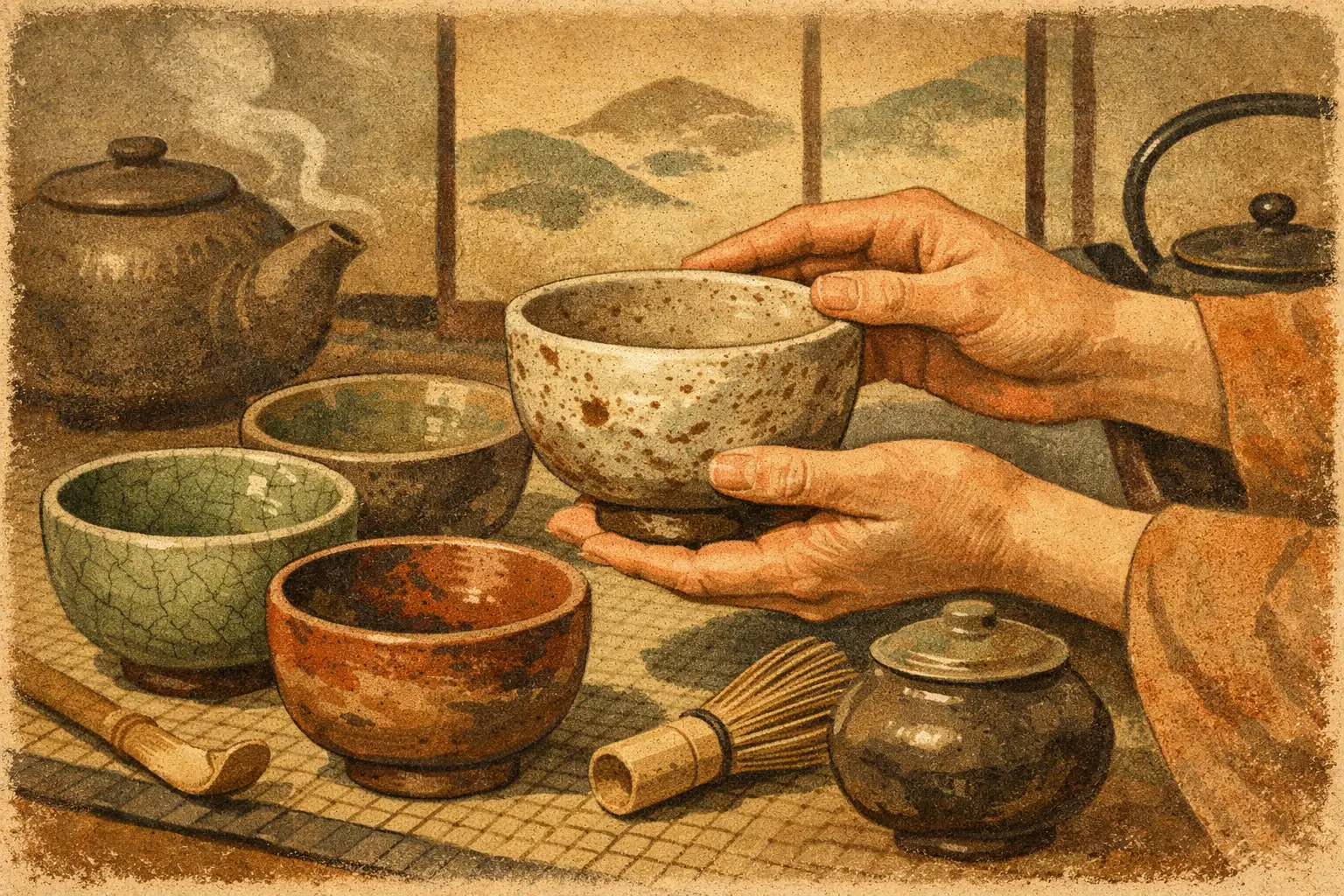
A tea ceremony bowl is not just something you drink from. In the quiet moment before matcha reaches your lips, the bowl gives you a landscape to hold: the warmth of clay, a flowing glaze, an uneven rim made by a real hand. Learning how to choose a tea ceremony bowl means choosing an experience, not chasing one supposedly perfect piece.
For Japan lovers worldwide, a chawan can be a beautiful way to bring the feeling of a Kyoto teahouse into an ordinary morning at home. The right one does not need to be antique, expensive, or reserved for formal tea. It simply needs to invite you to make tea again.
Start With the Kind of Tea Moment You Want
Before comparing glazes or pottery regions, ask where this bowl will live in your life. Are you building a small matcha ritual before work? Practicing Japanese tea ceremony with a teacher? Looking for a meaningful souvenir after a Japan trip? These are different needs, and they can lead to different bowls.
A formal tea gathering, or chaji, carries seasonal conventions and an awareness of the host’s choices. At home, you have much more freedom. A bowl that may not suit a strict winter gathering can still be a wonderful everyday companion for whisking matcha on your kitchen counter.
If you are buying your first chawan, choose usability over rarity. You want a bowl that feels good in both hands, gives your chasen enough room to move, and makes you smile when you take it from the shelf. A dramatic collector’s piece can come later.
How to Choose a Tea Ceremony Bowl by Shape
Shape affects both the practical act of whisking tea and the atmosphere of the bowl. Pick up a chawan if you can, or study photos closely from several angles. The bowl should be wide enough for a bamboo whisk to work without constantly striking the sides.
A relatively wide, open bowl is often associated with warmer months. Its broad surface lets the tea cool more quickly and creates an airy, refreshing feeling. A deeper, more enclosed bowl retains warmth, making it especially welcome in cooler weather. This seasonal sensitivity is a lovely part of tea culture, but it is a guide rather than a rule you must obey.
Notice the rim, called the kuchizukuri. A smooth, even rim can feel refined and calm. A subtly undulating rim may feel more natural and expressive, with a touch of wabi-sabi – beauty that includes irregularity, age, and imperfection. Neither is automatically better. The question is whether it feels pleasant against your mouth.
Also look at the foot ring, or kodai, on the underside. Tea practitioners often turn the bowl in their hands and appreciate this small, usually unglazed area. A clearly defined kodai gives the bowl visual balance and tells you something about how the potter shaped it. It should sit securely on a table without wobbling.
Let the Clay and Glaze Set the Mood
The personality of a chawan often begins with its clay. Stoneware with visible iron specks, coarse texture, or natural ash marks can feel earthy and grounded. A smoother, paler clay may feel quieter and more delicate. Because matcha is a vivid green, it looks especially striking against warm neutrals, deep black, creamy white, and many soft natural tones.
Raku ware is one famous choice for tea bowls. Often hand-formed rather than thrown, it has a soft-looking surface and an intimate, handmade presence. Black Raku can make bright green matcha appear almost luminous, while red Raku brings a warmer, gentler feeling. It is strongly connected with tea culture, but it is not the only authentic choice.
Hagi ware is loved for its milky glazes, soft blushes of color, and subtle crazing. Over time, tea can gently alter the fine crackle in a Hagi bowl, creating what enthusiasts sometimes call its “seven transformations.” Karatsu ware tends toward a rustic, confident look, while Shino can be creamy, thickly glazed, and full of movement. Oribe pieces often introduce energetic green glaze and bold asymmetry.
You do not need to memorize pottery names to choose well. Let them be invitations to notice what you respond to. Some people are drawn to a quiet gray bowl that suggests a misty mountain path. Others want an exuberant green Oribe chawan that feels like a brushstroke from ukiyo-e. Your eye is part of the ceremony too.
Look for the Front of the Bowl
Many tea bowls have a front, called the shomen. It may be indicated by the most beautiful section of glaze, a painted motif, a deliberate indentation, or simply the side the potter considered most expressive. During a tea gathering, the guest turns the bowl slightly before drinking so as not to drink from its front.
For a home tea ritual, this is a graceful custom to try, not a stressful test. Finding the shomen encourages you to slow down and look closely. You may see a tiny pool of blue glaze, a brush-painted grass motif, or a kiln mark that you had missed at first glance.
A bowl without an obvious front is also completely valid. Some contemporary chawans are designed to reveal something different from every angle. That changing view can bring a little mono no aware to your tea break: an awareness that each moment, season, and bowl of tea passes quickly.
Check the Weight, Balance, and Comfort
A chawan should feel substantial enough to hold hot tea safely, but not so heavy that you avoid using it. This is especially relevant when shopping online, where a bowl can look small in a photograph but arrive surprisingly large or weighty. Check the listed diameter, height, and capacity whenever they are available.
For most people, a bowl around 4.5 to 5 inches across is comfortable for usucha, the lighter style of whisked matcha. But hand size matters. If your hands are smaller, a slightly narrower bowl may feel more secure. If you like making a fuller serving or whisking vigorously, a broader interior can be easier to use.
Run a finger carefully around the rim when you are able. Minor texture is part of handmade pottery, but sharp chips, unstable cracks, or rough spots that make drinking uncomfortable are not romantic signs of character. A handmade bowl can be irregular and still be thoughtfully finished.
New, Vintage, or Antique: Choose With Care
A newly made chawan is often the best place to begin. Contemporary potters create exceptional bowls, and buying new lets you use your piece without worrying as much about hidden damage or fragile old repairs. It also connects you to a living craft tradition rather than treating Japanese pottery as something frozen in the past.
Vintage and antique bowls can be deeply moving, especially when they show gentle wear from years of use. Still, inspect them carefully. Hairline cracks can leak or worsen with hot water. Old repairs may be beautiful, particularly kintsugi repairs made with lacquer and gold, but they require informed care. Not every repaired bowl is suitable for regular use.
If a listing calls a bowl antique, ask for clear images of the interior, rim, foot, and any damage. Be cautious with vague descriptions and unusually low prices for supposedly rare pieces. A good chawan does not need a famous name or a dramatic story to be meaningful.
Care for Your Chawan Like a Favorite Object
Most tea bowls prefer gentle treatment. Rinse with warm water after use, wash softly if needed, and dry thoroughly before storing. Avoid sudden temperature changes, such as pouring boiling water into a bowl straight from a cold cabinet. Unless the maker specifically says otherwise, skip the dishwasher and microwave.
Some unglazed or crazed surfaces may slowly take on color from tea. This is often part of the charm, especially with certain Hagi-style pieces, but it depends on the clay and glaze. If you want a bowl that stays visually unchanged, choose one with a more durable, fully glazed interior.
The best rule is wonderfully simple: use the bowl. A chawan displayed forever behind glass cannot show you the warmth of its clay or the way its glaze changes when wet. Make matcha, turn it in your hands, and let it become part of your own Japan-inspired rituals. The bowl that keeps calling you back is the one you chose well.