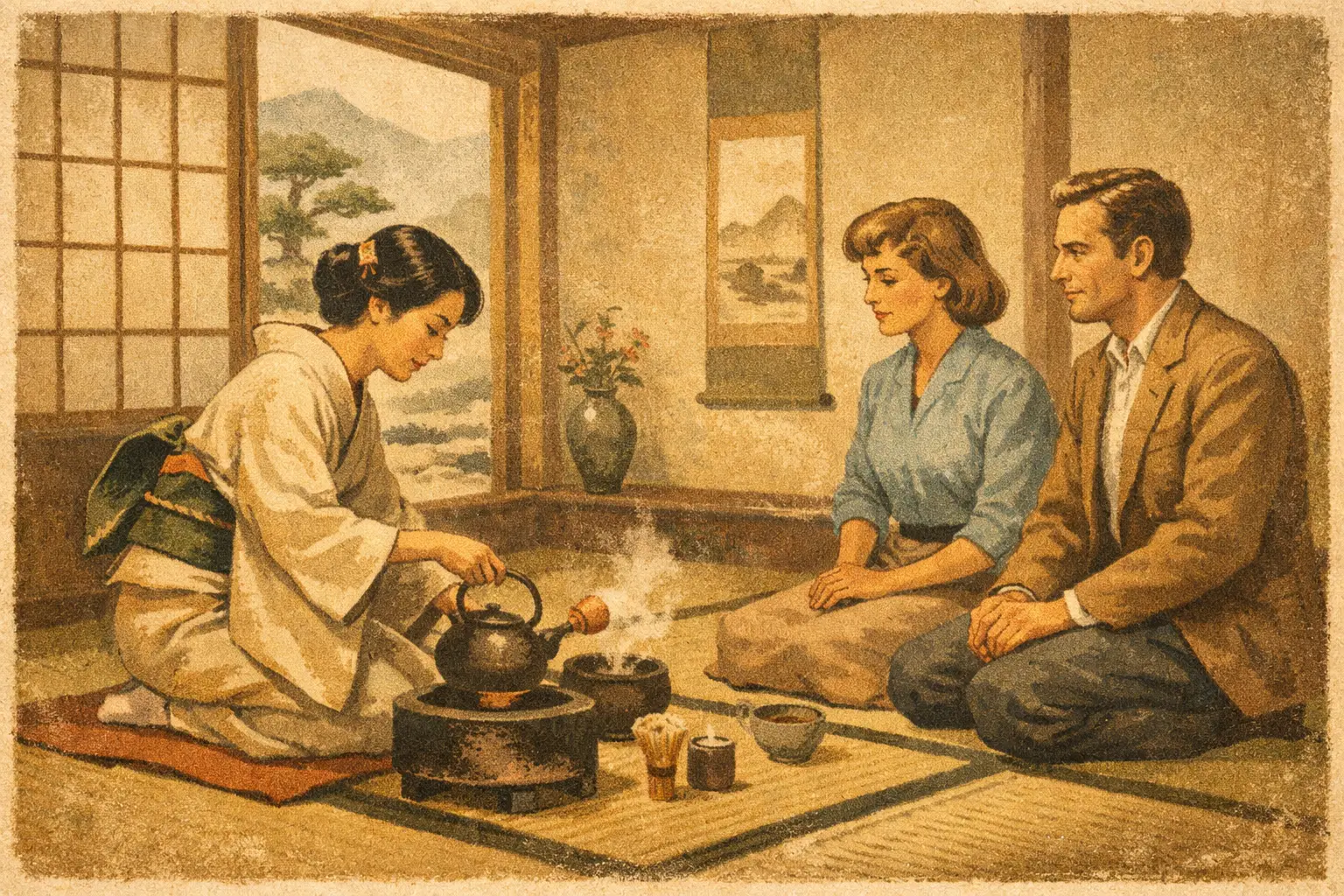
A tea room can be smaller than your hotel room, yet it holds an entire way of seeing. You remove your shoes, bow through a low entrance, notice a single flower in a bamboo vase, and suddenly the rush of train schedules and sightseeing lists falls away. So, can foreigners attend a tea ceremony in Japan? Absolutely. Visitors are welcome at many tea experiences, and you do not need to speak Japanese or arrive with years of etiquette training.
What you do need is a little curiosity, a willingness to follow the host, and respect for an art built around attention. For Japan lovers worldwide, joining a tea ceremony can be one of the most personal ways to meet Japanese culture. It is not about checking off a famous activity. It is about sharing a carefully prepared moment with another person.
Can Foreigners Attend a Tea Ceremony?
Yes. In Kyoto, Tokyo, Kanazawa, Uji, Osaka, and other destinations, tea schools, cultural centers, gardens, hotels, and independent hosts offer sessions designed for international guests. Some provide an English explanation throughout. Others are conducted mostly in Japanese but use clear demonstrations, printed instructions, or a bilingual guide.
The key distinction is between a visitor experience and a formal tea gathering. A tourist-friendly session usually lasts 30 to 90 minutes and introduces the main movements, the sweets, and a bowl of matcha. You may be invited to whisk your own tea. A formal gathering, called chaji, can last several hours and follows a much deeper seasonal structure, often including a meal. These are less commonly open to casual walk-in visitors, though serious students may attend through a teacher or invitation.
Neither option is fake simply because one is accessible. A good introductory ceremony can be a genuine encounter with chado, also called sado, the Way of Tea. The host has still chosen the utensils, scroll, flowers, sweets, charcoal arrangement, and atmosphere with care. The scale is different, but the spirit can be very real.
What a Tea Ceremony Actually Is
The familiar image is matcha being whisked in a ceramic bowl, but the tea itself is only one part of the experience. Chado brings together architecture, calligraphy, ceramics, incense, gardening, seasonal sweets, and hospitality. Every object has a role, yet nothing should feel showy.
This is where ideas such as wabi sabi become easier to feel than to define. A bowl may be slightly uneven, its glaze quietly textured rather than glossy and perfect. A rustic tea room may use plain wood and soft natural light. The beauty lies in restraint, age, imperfection, and the way ordinary materials become meaningful through close attention.
You may also hear the phrase ichi-go ichi-e, often translated as one time, one meeting. It recognizes that this exact gathering will never happen again. The weather, the guests, the season, and even the sound of water in the kettle belong only to this moment. That feeling can surprise travelers who expected a cultural demonstration and instead find a small pocket of mono no aware, the awareness that fleeting things matter.
Where Visitors Can Join a Ceremony
Kyoto is the easiest place to find an experience, particularly around Gion, Higashiyama, Arashiyama, and Uji. Uji is especially exciting for matcha fans because of its long association with high-quality green tea. Tokyo offers more choices than many visitors expect, from formal rooms in gardens and museums to small workshops tucked into older neighborhoods.
Kanazawa is another excellent choice. Its preserved districts, renowned crafts, and strong tea traditions make it a natural stop for anyone who loves lacquerware, kutani ceramics, or gold leaf. Smaller cities can offer memorable experiences too, often with fewer crowds and a more relaxed pace.
When choosing a session, read the description closely. Look for the length, language support, group size, whether you will sit on tatami, and whether the experience includes a kimono rental. A kimono can make beautiful photos, but it is not required for a tea ceremony. In fact, wearing your own comfortable, tidy clothes lets you focus more easily on sitting and listening.
A tiny group in a traditional tea room often feels more intimate, while a larger session may be better for families or travelers on a tight schedule. Neither is automatically better. Choose the one that matches the kind of memory you want to make.
What to Wear and How to Prepare
Clean, modest clothing is ideal. Avoid strong perfume, since scent can interfere with the incense, tea, and sweets. Wear socks without holes because shoes usually come off before entering the tea room. If you are visiting in summer, a light layer can help because you may be sitting indoors for a while without much airflow.
Traditional seating is seiza, kneeling with the legs folded under the body. It can be difficult for many people, including Japanese guests. Do not suffer silently if kneeling hurts. In most visitor sessions, it is perfectly acceptable to sit cross-legged, with legs tucked to one side, or on a chair if one is available. Mention mobility needs when you book whenever possible.
Arrive a little early, silence your phone, and use the restroom first. Tea gatherings are deliberately unhurried, and stepping out in the middle can be disruptive. If you have allergies or dietary restrictions, ask in advance about the wagashi sweet. Many are made from beans, rice flour, sugar, and seasonal ingredients, but recipes vary.
Simple Etiquette That Goes a Long Way
You will not be expected to know every rule. Your host knows you are learning, and a warm, attentive guest is far more welcome than someone anxiously trying to perform perfection. Watch first, then copy the gestures you are shown.
Before drinking, you may be asked to turn the bowl slightly so you do not drink from its front, the most beautiful side facing you. Take a few sips, finish the tea, and admire the bowl before returning it. If you are given a sweet, eat it before drinking the matcha. The sweetness prepares your palate for matcha’s pleasant bitterness.
Bow when the host bows to you, but do not worry about measuring the angle. Speak quietly, and ask questions at an appropriate pause. Good questions might be about the tea bowl’s maker, the seasonal sweet, the meaning of the hanging scroll, or why a particular flower was chosen. These details are not decoration. They are part of the conversation.
Photography rules vary. Some hosts welcome photos before and after the preparation but ask guests not to photograph during the ceremony. Others allow pictures throughout. Always ask before taking a photo, especially in a small private tea room. The best souvenir may be the image you keep without a camera in your hand.
A Few Myths to Leave Behind
You do not have to be Japanese, wealthy, fluent, or an expert in etiquette to participate. You also do not have to love bitter tea. Matcha can be intense if you usually drink sweet coffee, but tasting it within the ceremony is different from ordering a matcha latte. Give it a fair try, then enjoy the experience for everything around the bowl.
It is also a myth that ceremony means stiffness. There is formality, yes, but there can be warmth, humor, and lively conversation too. The purpose is not to make guests feel tested. It is to create thoughtful hospitality through shared rules that let everyone slow down.
If Japanese traditional culture already calls to you, make room for tea during your trip. After temples, markets, castle walks, and packed city streets, an hour with matcha can reset your senses. Sit where you are invited, accept the bowl with both hands, and let the quiet do some of the traveling.