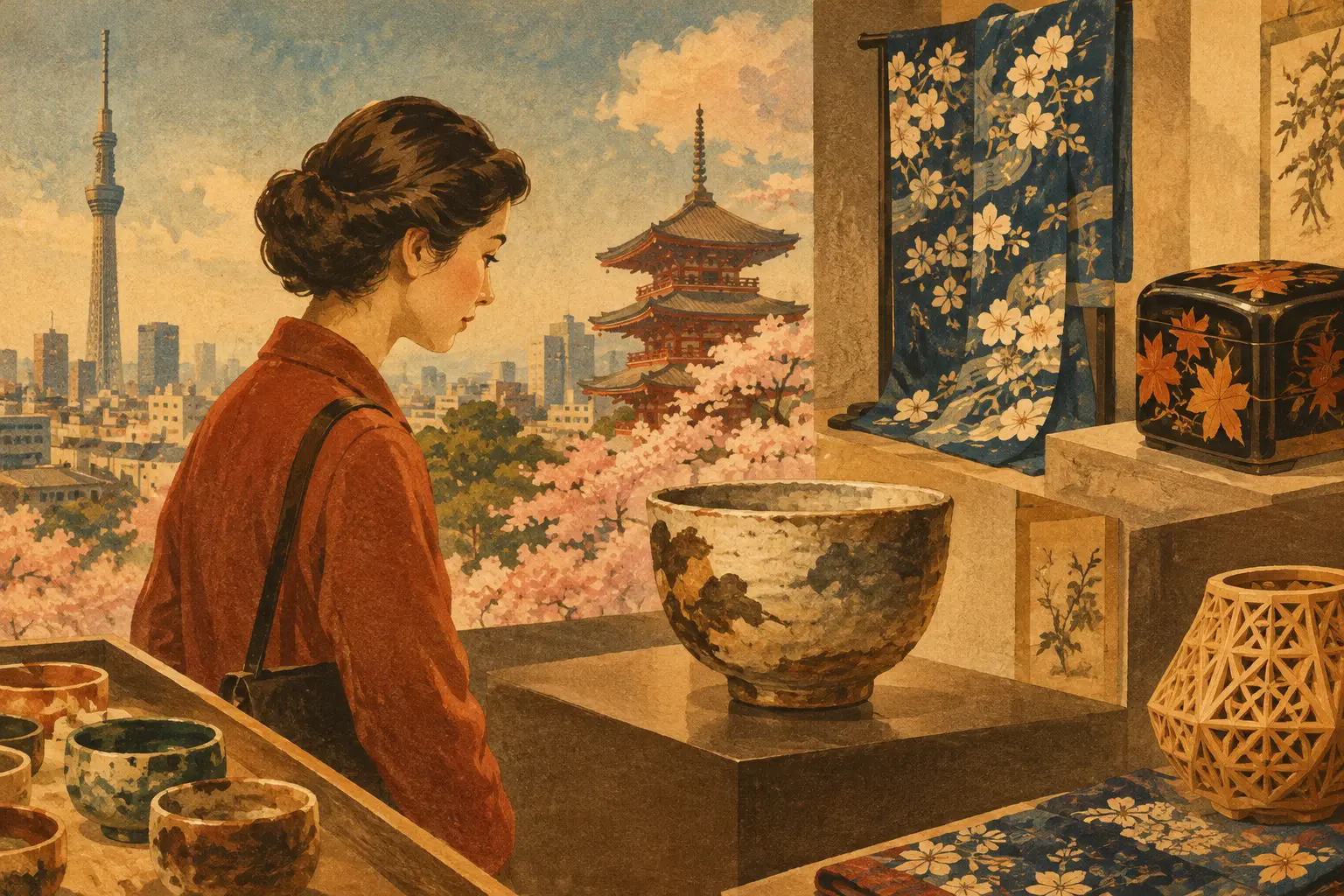
A hand-thrown tea bowl can say more about Japan than a dozen souvenir-shop shelves. The glaze, the slightly uneven rim, the weight in your palm – these are the details that bring wabi-sabi from an idea into real life. Tokyo craft museums are where Japan lovers can get close to those details, from Edo-period techniques to objects made by living artisans.
This is not a checklist for rushing through Tokyo. These are places to slow down, look carefully, and notice the work behind a sheet of washi, a sword blade, a lacquer bowl, or a woodblock print. A few are dedicated craft museums; others are art institutions with collections that make much more sense when you are curious about how things were made.
How to Choose Tokyo Craft Museums for Your Trip
Tokyo is huge, and its craft story is scattered across distinct neighborhoods. Trying to see every museum in one day can turn a wonderful cultural outing into a train-map endurance event. Instead, choose two or three places that match the Japan you already love.
For mingei, or Japanese folk craft, head toward Komaba. For swords and Edo traditions, pair Ryogoku with Asakusa. If paper, prints, and refined design are your thing, Nihonbashi, Bunkyo, and Ueno make a satisfying route. Exhibition schedules, opening days, and workshops can change, so always confirm current details before setting out.
1. Japan Folk Crafts Museum: The Heart of Mingei
The Japan Folk Crafts Museum, or Nihon Mingeikan, is the essential stop for anyone who has wondered why humble everyday objects can feel so powerful. Founded by philosopher and collector Yanagi Soetsu, the museum grew from the mingei movement, which celebrated the beauty of functional objects made by unknown or ordinary craftspeople.
Inside, you may encounter Korean ceramics, Japanese textiles, baskets, woodwork, lacquerware, and pottery. The point is not that every piece is flawless in a polished luxury sense. It is that use, material, and handwork create their own beauty. This is wabi-sabi with substance: an old storage jar, a thickly woven cloth, a bowl meant to be used rather than locked away.
The building itself adds to the experience. In quiet Komaba, it feels removed from Tokyo’s louder rhythms. Give yourself time here, and do not try to photograph every object with your eyes. Let a few pieces stay with you.
2. Edo Taito Traditional Crafts Museum: Edo Skills Up Close
Near Asakusa, the Edo Taito Traditional Crafts Museum is a compact, energetic introduction to the crafts that shaped daily life in old Tokyo. Taito City has long been associated with skilled makers, and the displays spotlight techniques that remain alive rather than frozen behind glass.
Look for items such as Edo kiriko cut glass, Edo kimekomi dolls, hand-painted fans, metalwork, textiles, and decorative paper goods. The museum is especially good for travelers who want names for the objects they keep noticing in Japan. Once you recognize a technique, you begin spotting it in department stores, temple-area shops, and restaurant interiors all over the city.
Because it is close to Senso-ji, this is an easy cultural addition to an Asakusa day. Visit the temple early, then trade the crowds for a closer look at the hands and skills that built Edo’s visual world.
3. The Japanese Sword Museum: Steel as Art
A Japanese sword is not simply a weapon. At the Japanese Sword Museum in Ryogoku, the process behind the blade becomes impossible to ignore: forging, folding, heat treatment, polishing, fittings, scabbards, and the quiet judgment required to see each detail.
Even visitors who are not martial arts fans often find the craftsmanship astonishing. Look at the hamon, the visible temper pattern along the blade, and notice how the fittings transform a sword into a complete work of art. Tsuba handguards can carry landscapes, plants, animals, and seasonal motifs in tiny carved or inlaid scenes.
This museum rewards patience. The lighting and presentation encourage close observation, and exhibitions rotate. If you are drawn to the precision and history of nihonto, plan more than a quick stop. Ryogoku also makes a natural pairing with sumo culture and the old-town atmosphere along the Sumida River.
4. Tokyo National Museum: Japan’s Material History
Tokyo National Museum in Ueno is much larger than a craft museum, and that is exactly why it belongs on this list. Its Japanese galleries offer a sweeping view of ceramics, lacquer, textiles, calligraphy, Buddhist sculpture, armor, and sword fittings across centuries.
The trade-off is scale. You cannot absorb it all in an afternoon, and you should not try. Choose one or two themes before you enter. A ceramics-focused visit can reveal changing tastes in form and glaze. A visit centered on tea objects can make chanoyu feel less abstract. The textile displays may be especially meaningful for kimono lovers interested in pattern, weave, and seasonal symbolism.
This is also a fine place to experience mono no aware, the awareness that beautiful things are fleeting. Fragile screens, faded robes, and delicate seasonal images remind us that preservation is part of how craft survives.
5. Nezu Museum: Tea Ware, Lacquer, and Quiet Looking
Nezu Museum is a beautiful choice when you want refined Japanese art without the intensity of a giant national collection. Its changing exhibitions often feature tea utensils, ceramics, lacquerware, bamboo objects, calligraphy, and painting. The objects are presented with a sense of space that invites slower looking.
Tea culture is especially useful as a lens here. A tea scoop, water jar, or small tea bowl may seem modest, but each holds choices about texture, season, history, and mood. This is where the difference between expensive and meaningful becomes clear. The most memorable object may be the one with the roughest surface or the least obvious decoration.
The garden is part of the visit, not an afterthought. Leave time to walk through it after the galleries. Nature, seasonality, and crafted objects speak to each other in a way that feels deeply Japanese.
6. Seiko Museum Ginza: Precision Made Visible
Craft does not only mean pottery and paper. At Seiko Museum Ginza, clocks and watches show another side of Japanese making: precision, engineering, design, and the human desire to measure time.
For travelers interested in tools, mechanisms, and small-scale perfection, this museum is a pleasure. You can trace the development of timekeeping while appreciating the detail in dials, cases, movements, and decorative design. It offers a useful contrast to the earthier beauty of mingei. Both are craft, but they ask different things of the maker and the viewer.
Ginza’s polished setting may feel far from a rural pottery town, yet that contrast is part of Tokyo’s appeal. Japan’s craft traditions include both a handmade clay bowl and a finely calibrated watch.
7. Printing Museum, Tokyo: From Woodblocks to Modern Print
The Printing Museum in the Bunkyo area is a smart stop for anyone who loves ukiyo-e, Japanese books, typography, or paper. It places Japanese printing traditions alongside broader global developments, helping visitors see how images and ideas traveled before screens took over everyday life.
Woodblock prints are often admired for their bold colors and famous scenes, but the printing process is a collaboration of artist, block carver, printer, and publisher. That shared labor matters. A print is not only an image by Hokusai or Hiroshige; it is evidence of many specialized hands working together.
This museum can be particularly rewarding if you have already seen ukiyo-e in an art museum and want more context about the making behind the image.
Two Craft Stops Worth Adding
Not every memorable craft destination needs to be a formal museum. In Nihonbashi, Ozu Washi is a wonderful place to encounter washi, Japan’s traditional paper. Its history, paper displays, and hands-on opportunities can make a sheet of paper feel newly miraculous. Washi has been used for writing, lanterns, screens, packaging, and art, yet its strength and softness are best understood in person.
Traditional Crafts Aoyama Square is another valuable stop, especially if you want to see work by contemporary makers and understand what is still being produced across Japan. It is more gallery and showcase than museum, but that is the point. Craft is not only heritage. It is a living practice, and seeing current pieces can help you shop more thoughtfully later in your trip.
Make Room for the Object That Stops You
The best museum plan leaves space for surprise. Maybe it is a bamboo basket you cannot stop studying, a sword fitting no bigger than your hand, or a tea bowl whose imperfect glaze feels completely right. When that happens, stay with it for another minute. Tokyo’s crafts are not asking you to see everything. They are asking you to notice how much care can live inside one object.