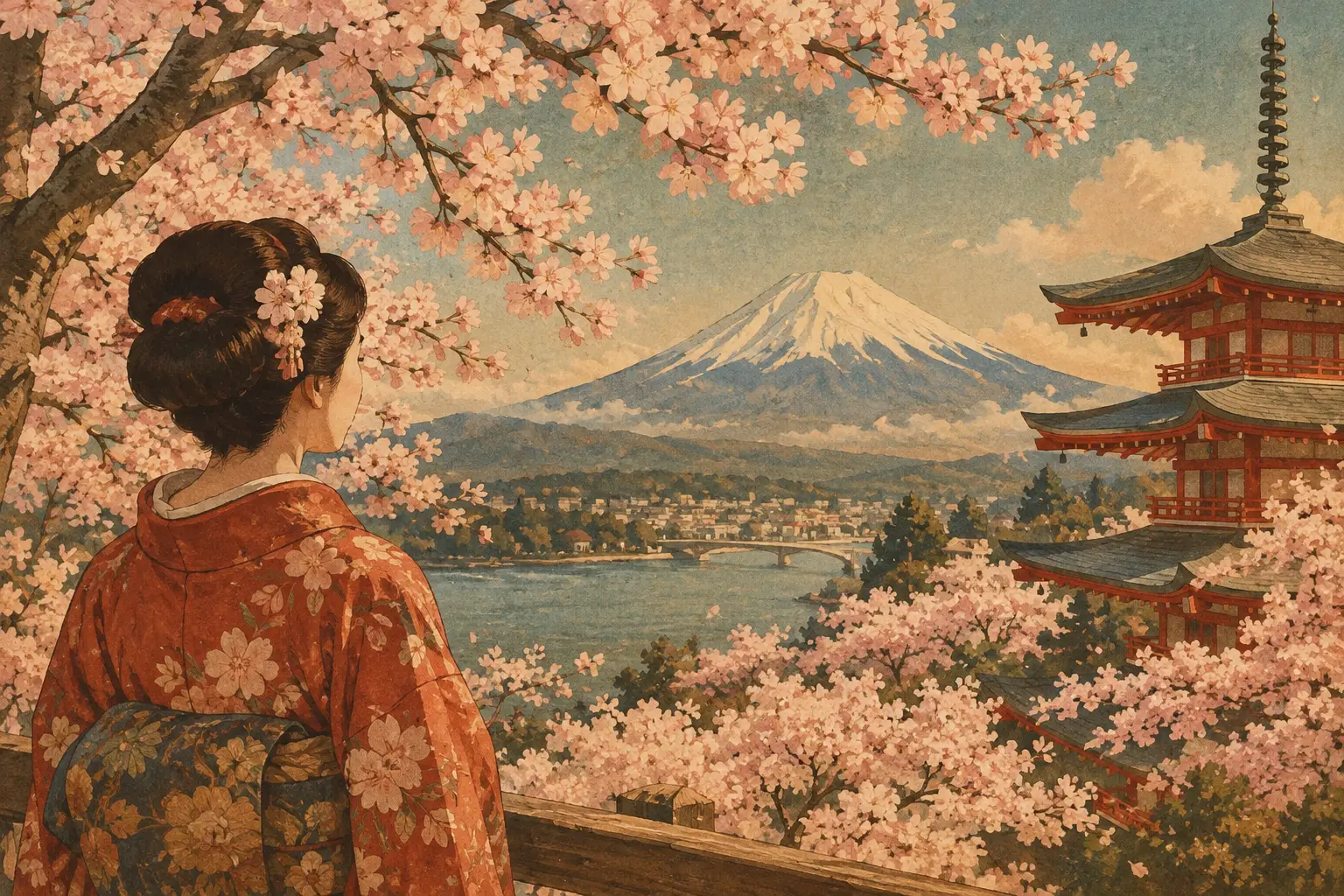
A sakura trip can be magical, but it is not a reservation you can make with total certainty. When are cherry blossoms in Japan? For much of the country, the first blooms arrive between late March and early April, yet Japan stretches far enough north and south that the season can run from January into May. For all Japan lovers worldwide, that range is good news: there is more than one way to meet the blossoms.
Cherry blossom season is called sakura season, but locals also speak of hanami – flower viewing. That phrase matters. The goal is not simply to photograph pink trees, although you absolutely should bring your camera. Hanami is about sitting beneath the branches, sharing food, walking slowly through a park or temple grounds, and noticing how quickly a beautiful moment changes. It is a living expression of mono no aware, the gentle awareness that nothing lovely lasts forever.
When Are Cherry Blossoms in Japan by Region?
The famous Tokyo and Kyoto season generally peaks in late March or early April. In an average year, flowers begin opening around the third or fourth week of March, then reach mankai, or full bloom, about a week later. The petals usually remain at their best for only four to seven days after that, depending on rain, wind, and temperature.
That short peak is why travelers sometimes feel nervous about timing. But a Japan itinerary does not have to depend on one exact day. Plan around a viewing window, not a single forecast date, and choose places with plenty to offer beyond their trees: a castle town, an onsen area, a temple district, or a food market.
Southern Japan blooms first
In Okinawa, the early-blooming kanhizakura can appear from January through February. These blossoms are a deeper pink than the pale Somei Yoshino trees most visitors picture. Okinawa is not the classic Kyoto postcard experience, but it is a wonderful choice for travelers escaping winter and looking for a less crowded sakura season.
Kyushu, including Fukuoka, Kumamoto, and Kagoshima, commonly sees blooms from mid- to late March. Western Honshu cities such as Hiroshima and Okayama often follow around the same period. These areas can be smart alternatives when Tokyo and Kyoto hotel prices climb sharply.
Tokyo, Kyoto, Osaka, and the classic route
For first-time visitors, late March through early April remains the best target for central Japan. Tokyo’s parks, Kyoto’s temple approaches, and Osaka’s castle grounds all become busy with hanami gatherings. The atmosphere is joyful, social, and very Japanese, especially in the evening when some sites illuminate the branches for yozakura, or night cherry blossom viewing.
The trade-off is crowds. Kyoto’s most famous lanes and temple gates can feel packed during peak bloom, and the most popular parks fill early. Go at opening time, choose a weekday if possible, or explore a neighborhood garden rather than chasing the same famous view as everyone else.
Northern Japan extends the season
If your travel dates are in mid-April, look north. Sendai often blooms later than Tokyo, while Aomori and Hirosaki can be excellent from late April into early May. Hokkaido is the grand finale, with Sapporo and Hakodate commonly reaching their season around late April or early May.
Northern sakura trips have a different mood. The air is cooler, spring arrives more slowly, and castle moats, mountain scenery, and historic grounds can make the wait feel worthwhile. Hirosaki is especially beloved for its blossom-filled park and castle setting, where fallen petals sometimes drift across the water like a pink carpet.
Why Sakura Dates Change Every Year
Cherry trees respond to winter cold and spring warmth. A mild late winter and a warm early spring can push the season forward. A cold spell can hold it back. Rain or strong wind after full bloom can shorten the best viewing period quickly.
Japan’s cherry blossom forecasts are closely watched for this reason. Each spring, weather agencies and travel media publish predicted opening and full-bloom dates for major cities. Treat these forecasts as useful guidance, not a promise. They become more reliable as your travel dates get closer, but nature still gets the final say.
Also, know which trees a forecast refers to. The standard forecast usually follows Somei Yoshino, Japan’s most widespread cherry variety. Other varieties bloom earlier or later. Kawazu-zakura, for example, often flowers in February, while yaezakura, the fluffy double-petaled variety, can extend the season into mid- or late April in central Japan. A flexible traveler can use these varieties to find color even after the main rush has passed.
How to Plan a Hanami Trip Without Overplanning It
The strongest approach is to build a spring itinerary that works in several bloom scenarios. If you have one week in Japan at the end of March, combine cities that are close enough to adjust between them. Tokyo, Hakone, Kyoto, and Osaka give you many gardens, riversides, and historic sites without requiring a long domestic flight.
If your dates are fixed for April 20 or later, consider Tohoku or Hokkaido rather than trying to force a Tokyo sakura trip after the petals have fallen. You may still find late-blooming trees in central Japan, but traveling north usually gives you a much better chance of seeing the full seasonal spectacle.
Book lodging early if you are traveling during the classic late-March to early-April peak. This is one of Japan’s most popular travel periods, and availability in Kyoto can tighten months ahead. At the same time, avoid building every day around one famous blossom spot. Leave an open morning or afternoon for a forecast-based detour.
A practical plan can include one major destination, one quieter local walk, and one rainy-day cultural experience. If rain arrives, a pottery workshop, a visit to a museum of ukiyo-e prints, a tea experience, or time in an onsen can make the day feel full rather than disappointing. Wabi sabi has a place in spring travel too: misty petals and wet stone paths can be as memorable as blue skies.
Make Hanami Feel Respectful, Not Rushed
Hanami parks can look festive, with families, coworkers, students, and friends sharing picnics under the trees. Join the spirit, but follow the unspoken rules. Never pull branches or shake a tree to make petals fall. Keep paths clear, take your trash with you when bins are limited, and use only designated picnic areas. In crowded sites, do not spread a large blanket where it blocks others from enjoying the view.
Food is part of the pleasure. Look for sakura mochi, a pink rice cake often wrapped in a salted cherry leaf, or seasonal bento boxes at department store food halls and train stations. A warm drink and a simple snack beside a riverside row of trees can feel more special than an expensive restaurant reservation.
For photographs, step back from the tree rather than stepping into planted beds. Early morning offers calmer paths and gentler light. At night, yozakura can be spectacular, but remember that illumination schedules vary by location and may end before the petals do.
The Best Question Is Not Only “When?”
The best sakura trip begins when you ask what kind of spring memory you want. Do you want the electric energy of Tokyo during full bloom, a temple walk in Kyoto at dawn, a castle framed by petals in Hirosaki, or February’s deep-pink blossoms in Okinawa? Each choice has a different calendar, crowd level, and feeling.
Keep your schedule flexible, watch the forecast as departure approaches, and give yourself permission to enjoy Japan even if the blossoms are a little early or late. A few petals floating down during a quiet walk can be enough. That fleeting moment is exactly what hanami is meant to teach us to notice.