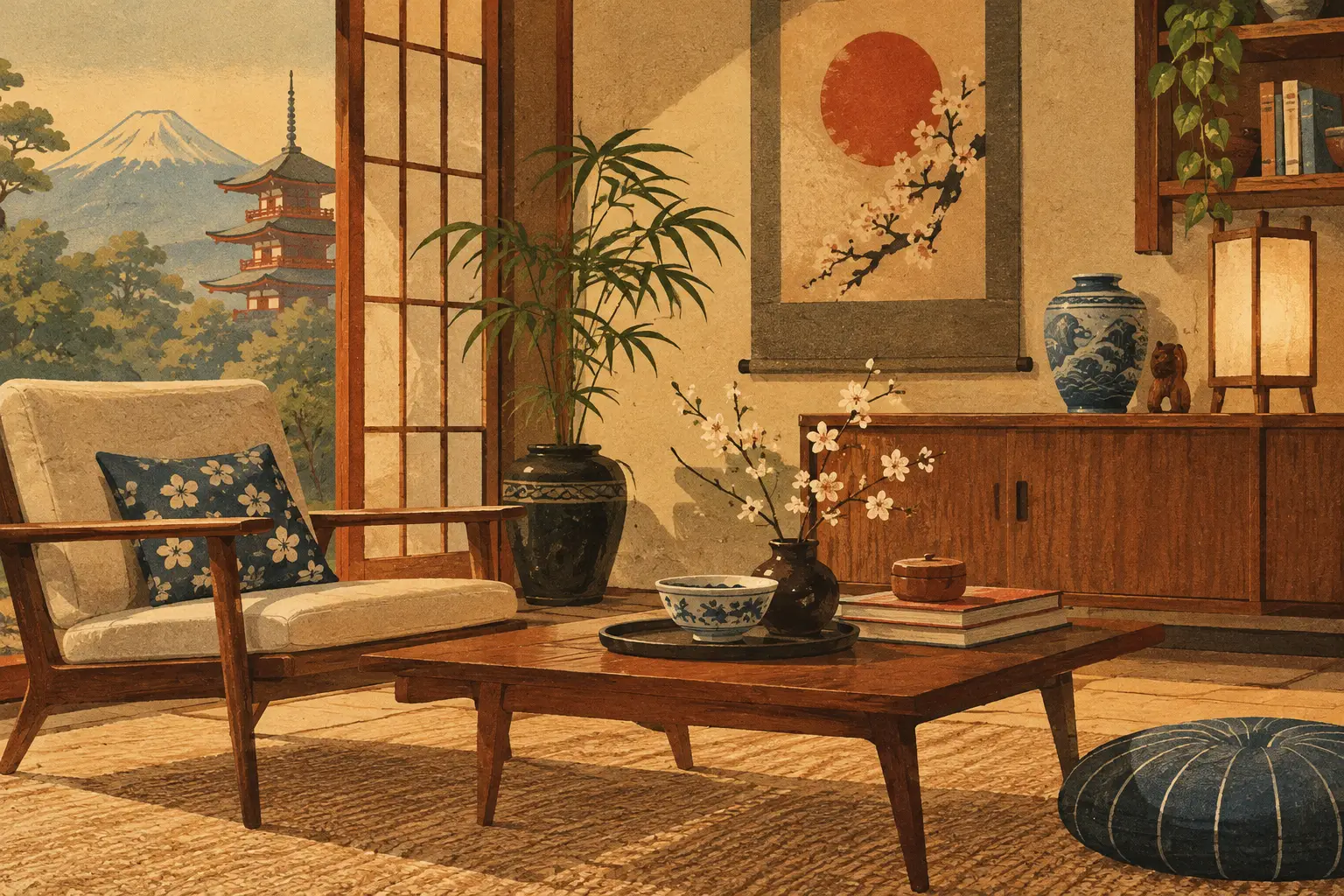
A home can hold memories of Japan long before your next trip: the soft clack of a tea bowl on a tray, light passing through a shoji-style screen, an indigo cloth that makes an ordinary wall feel considered. The best Japan inspired home decor is not about turning every room into a souvenir shop. It is about choosing a few pieces with real character and giving them room to breathe.
For all Japan lovers worldwide, that is the fun part. You can build a space that nods to a ryokan, a Kyoto craft shop, or the peaceful order of a temple garden while still looking like your own home. Start with what genuinely moves you, whether that is ukiyo-e, handmade ceramics, Japanese bathing rituals, or the quiet beauty of wabi sabi.
What Makes Japan-Inspired Decor Feel Right
Japanese interiors are often associated with minimalism, but minimal does not have to mean empty or cold. A more useful idea is intention. Objects earn their place through utility, craft, memory, or visual calm. A worn wooden tray, a single branch in a vase, and a favorite tea cup can say more than a shelf crowded with matching decor.
This is where wabi sabi helps. The phrase is often simplified as finding beauty in imperfection, but at home it can be wonderfully practical: choose natural materials, welcome small variations, and do not panic when something looks handmade rather than factory-perfect. Mono no aware, an awareness of life’s passing moments, can also guide a room. A seasonal print, a bowl of late-summer pears, or branches gathered in autumn makes the space feel lived in.
Authenticity matters, too. A Japanese-inspired room does not need to copy a traditional Japanese home, especially when the layout, climate, and daily habits are different. Instead, learn what an object is, how it is used, and where it comes from. A noren is a fabric doorway curtain with a real purpose. A chabudai is a low table designed around floor sitting. Knowing that context makes your choices more meaningful.
12 Best Japan Inspired Home Decor Ideas
1. Start with an indigo textile
Indigo, or aizome, brings depth without demanding attention. Look for a table runner, cushion cover, wall textile, or furoshiki wrapping cloth in indigo patterns. Traditional motifs such as seigaiha waves, asanoha hemp leaves, and simple sashiko-style stitching work especially well with wood, linen, cream, and charcoal.
A textile is an easy first choice for renters and cautious decorators. It adds Japanese character without asking you to redesign the room.
2. Hang a noren at a doorway
A noren gives an open doorway a sense of transition. Traditionally seen at shop entrances, homes, and restaurants, it can separate a kitchen from a dining area, soften a laundry-room entrance, or add privacy to a studio corner.
Choose a design you would enjoy seeing every day. A bold kanji print can be striking, but make sure you understand the meaning before putting it on display. Abstract patterns, seasonal plants, and traditional geometric designs are often easier to live with for the long term.
3. Bring in shoji-style filtered light
The magic of shoji is not just its grid pattern. It is the gentle, diffused light. A full shoji screen may not suit every American home, but a folding room divider, paper lantern floor lamp, or wood-and-washi pendant can create a similar atmosphere.
Be realistic about materials. Delicate paper screens are beautiful but may not be ideal around playful cats, toddlers, or a busy hallway. A wood-framed lamp with durable paper or fabric is usually the more practical choice.
4. Choose ceramics with a handmade finish
A yunomi tea cup, rice bowl, small plate, or textured vase brings Japanese craft into daily life. The most rewarding pieces are the ones you use, not the ones you are afraid to touch. Look for uneven glazes, earthy clay, or a shape that sits beautifully in your hands.
One special bowl on an open shelf can have more impact than a whole collection of generic “Asian-style” dishes. If you collect several pieces, let them vary. A home with personality is better than a color-coordinated display with no story.
5. Create a tea corner you will actually use
You do not need a formal tea room to enjoy a small tea ritual. Set aside a tray with a kettle, loose-leaf tea, two or three cups, and perhaps a tea caddy. Matcha tools are lovely if you drink matcha regularly, but sencha, hojicha, and genmaicha deserve their own ritual too.
Keep this area simple and functional. The goal is not to recreate chanoyu, the highly formal Japanese tea ceremony, without study. It is to make a daily pause feel special.
6. Display ukiyo-e with care
Ukiyo-e prints can add color, movement, and history to a room. Hokusai’s dramatic waves and Hiroshige’s rain-soaked landscapes are familiar favorites, but quieter botanical, bird, and kabuki prints can be just as captivating.
Avoid scattering tiny prints across every wall. Give one or two works a proper frame and some visual space. For a calmer look, choose natural wood frames and off-white mats rather than glossy black frames.
7. Add a low table for gathering
A low table can shift the mood of a living room instantly. It invites snacks, board games, tea, calligraphy practice, and unhurried conversation. You do not have to sit on the floor full-time, either. Place a low table near regular seating, or use it as a coffee table with floor cushions brought out when friends visit.
Comfort is the trade-off. Traditional floor sitting can be wonderful for a short meal and hard on knees for an entire evening. Make your version fit your body and your home.
8. Use tatami-inspired texture, not necessarily tatami
Tatami mats have a particular construction and scent, and authentic versions require care. In humid areas, poorly maintained tatami can be difficult to keep fresh. Instead of installing wall-to-wall mats on a whim, try a woven natural-fiber rug, a rush-grass accent mat, or a designated floor-seating corner.
The key is the grounded texture. Pair it with a few cushions and low lighting, and even a small apartment corner can feel like a place to exhale.
9. Let a single ikebana-style arrangement lead
Ikebana is an art with many schools and deep discipline, so it is best not to label every vase of flowers ikebana. But you can take inspiration from its attention to line, negative space, and seasonal materials.
Try one branch, a few stems, or a single flower in a low, simple vase. Notice the direction of each piece and leave open space around it. This approach is more forgiving than it sounds, and it often looks better than an overstuffed bouquet.
10. Make room for kintsugi values
Kintsugi refers to the Japanese art of repairing broken ceramics with lacquer and metallic powder. Genuine kintsugi repair is skilled work, not simply painting gold lines across a crack. Still, the philosophy behind it can change how you decorate.
Keep a repaired object if it remains safe and useful. Choose furnishings with patina. Let the small marks of real life exist. This is a welcome antidote to homes that look untouched because nobody feels comfortable using them.
11. Build a thoughtful genkan-inspired entry
In Japan, the genkan is the entry area where shoes come off before stepping into the home. You may not be able to recreate the raised floor arrangement, but you can borrow the ritual. Add a neat shoe rack, a bench, a small tray for keys, and perhaps a seasonal flower or print.
This is one of the best Japan inspired home decor ideas because it changes daily behavior as well as appearance. A calmer entry makes coming home feel different.
12. Include one object with a personal Japan story
The strongest rooms are not built from trends. They are built from attachment. Display the tenugui you bought near a shrine town, the small daruma that reminds you of a goal, a chochin lantern from a craft workshop, or a calligraphy piece you made in class.
If you have not traveled to Japan yet, choose an item from an independent maker or a traditional craft you have taken time to understand. The story you learn becomes part of the decor.
How to Keep the Look Personal, Not Themed
The easiest mistake is trying to make every object announce “Japan.” Let Japanese elements meet the things already in your life: a family photo, books you reread, a chair you love, a plant that has survived three moves. A room gains warmth from contrast.
Choose a limited palette, especially if you are adding patterns. Natural wood, warm white, charcoal, clay, indigo, and muted green make an adaptable base. Then introduce brighter red, persimmon orange, or lacquer black in small amounts if you want more energy.
Most of all, leave some empty space. In Japanese aesthetics, the pause between objects can be as expressive as the objects themselves. Give your favorite cup, print, or textile the chance to be noticed. Your home does not need to look like anyone else’s vision of Japan. It only needs to make your connection to Japan feel present every time you walk through the door.