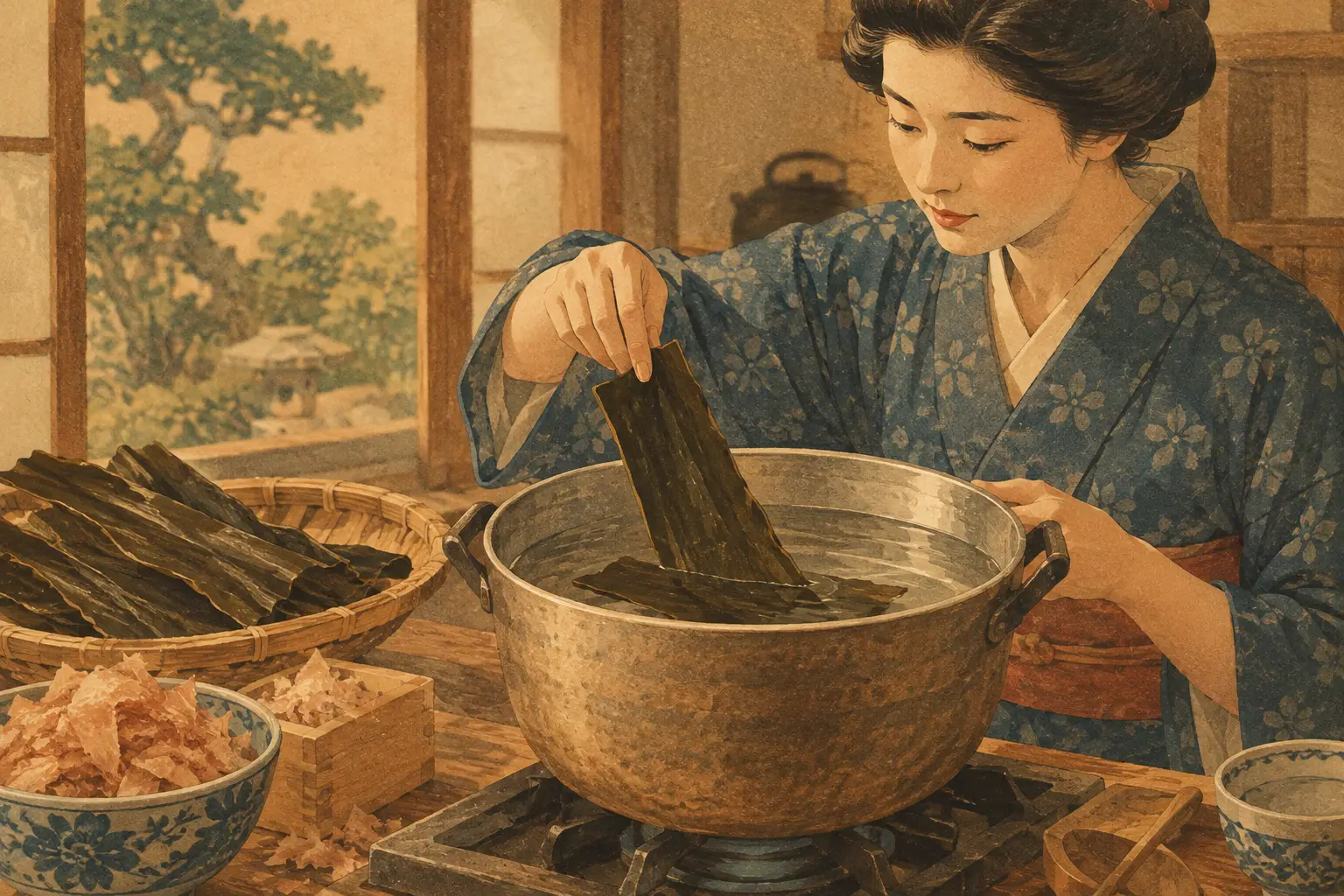
A pot of miso soup can taste perfectly good without homemade stock. But make it with kombu dashi and something changes: the flavor becomes rounder, calmer, and somehow more complete. Making dashi from kombu is one of the most approachable ways to bring a real Japanese kitchen ritual into your home. It asks for very little effort, yet teaches a beautiful lesson about Japanese food: quiet ingredients deserve your attention.
Kombu dashi is not meant to taste loud. It does not announce itself the way garlic, chile, or a dark roasted broth might. Its gift is umami, the savory depth that supports everything around it. Think of it as the steady foundation beneath a bowl of udon, a clear soup, chawanmushi, or nimono, the gently simmered dishes that make Japanese home cooking feel so comforting.
What Kombu Is and Why It Makes Dashi
Kombu is an edible kelp, dried into broad, dark sheets. It is harvested mainly in the cool waters around Hokkaido and is a cornerstone of washoku, traditional Japanese cooking. Once dried, it is remarkably shelf-stable, which means you can keep it in your pantry and be close to a deeply satisfying soup at any time.
Its culinary power comes from glutamic acid, a naturally occurring source of umami. In 1908, Japanese scientist Kikunae Ikeda identified glutamate as the compound behind this savory sensation. You do not need a food-science lesson to enjoy it, though. Steep kombu in water and you will taste the difference: the water gains a delicate body, a faint marine aroma, and a clean savory finish.
There are many kinds of kombu, and you do not need to hunt down the rarest package to make good dashi. Hidaka kombu is often recommended for everyday cooking because it gives up flavor readily. Rishiri kombu tends to create an especially clear, refined broth, while ma-kombu is prized for its full, elegant umami. Use what you can find, preferably thick sheets that look dry and nearly black with a dusty white bloom.
That white powder is not dirt. It is full of flavor, so do not rinse it away. If the sheet has visible grit or debris, wipe it gently with a dry cloth or barely damp paper towel.
Making Dashi From Kombu: The Gentle Method
For a basic batch, use about 20 grams of kombu, roughly a large hand-sized piece, for 1 quart of water. You can use a kitchen scale if you have one, but this is forgiving cooking. A slightly smaller piece makes a lighter dashi; a larger one gives a more noticeable savory base.
Start by placing the kombu in a pot or covered container with cool water. Let it steep for at least 30 minutes. If you can plan ahead, refrigerate it for 6 to 12 hours, or overnight. This cold-steeped version, called mizudashi, has an especially clean flavor and is ideal for delicate dishes where you want the dashi to stay in the background.
When you are ready to cook, place the pot over low to medium-low heat. Warm the water slowly. Watch for tiny bubbles collecting around the edge of the pot, usually after 10 to 15 minutes depending on your stove and starting water temperature. Before the water reaches a full boil, remove the kombu.
That final step matters. Boiling kombu can make the broth cloudy, overly seaweedy, and sometimes slippery in texture. The goal is not to punish the kelp into giving everything it has. It is to coax out its best flavor. There is a little wabi sabi in that restraint: allowing an ingredient to remain itself rather than forcing it past its finest point.
Your kombu dashi is now ready to use. If you are not cooking immediately, cool it promptly and refrigerate it in a sealed container for up to three days. You can also freeze it in small portions for quick weeknight meals.
A faster same-day option
No overnight steeping? Put the kombu in cool water and let it sit for 20 to 30 minutes, then heat it slowly as described above. The result will still be lovely. The cold infusion adds nuance, but homemade dashi does not need to become a perfection test. Japanese cooking has room for care and practicality in the same pot.
How to Use Your Kombu Dashi
The clearest way to appreciate fresh kombu dashi is in a simple soup. Add a little miso, soft tofu, and sliced scallion, and you have a bowl that feels far more special than the ingredient list suggests. Use a mild white miso if you want the kombu to shine, or a darker red miso when you want a bolder, saltier finish.
It is also excellent for udon or soba broth. Season it with soy sauce, mirin, and a pinch of salt, tasting as you go. Dashi is subtle, so heavy-handed seasoning can erase the work you just did. For a vegetarian noodle bowl, add shiitake mushrooms, which bring their own deep umami and pair naturally with kombu.
Kombu dashi belongs in dishes that seem simple on paper: rice porridge, simmered daikon, steamed egg custard, vegetable soups, and lightly seasoned rice. It can also improve a non-Japanese meal. Replace water with dashi when cooking rice for a savory grain bowl, or use it as the liquid in a gentle bean or vegetable soup. The flavor will not make the dish taste obviously Japanese, but it will give it a pleasing depth.
Should You Add Bonito Flakes?
Kombu dashi is completely satisfying on its own, especially for vegetarian and vegan cooking. In fact, it is the foundation of shojin ryori, the Buddhist temple cuisine known for thoughtful, plant-based dishes. If you avoid fish, kombu plus dried shiitake makes an outstanding all-plant dashi.
For the classic everyday flavor associated with many Japanese restaurants and homes, kombu is often paired with katsuobushi, dried bonito flakes. After removing the kombu from the hot water, bring the liquid just to a boil, turn off the heat, add bonito flakes, and let them sink for a minute or two. Strain without pressing the flakes. This creates awase dashi, a blended stock with more aroma and a deeper savory character.
Neither approach is more authentic than the other in every situation. It depends on the dish and who is eating. Kombu-only dashi is clean and composed. Kombu and bonito dashi is fuller and more familiar in many soups. Kombu with shiitake is richly savory and entirely plant-based. Your kitchen, your bowl, your choice.
Common Mistakes That Are Easy to Fix
The most common mistake is boiling the kombu hard. If that happens once, do not throw everything out. Strain it, taste it, and use it in a strongly flavored dish such as miso soup or a noodle broth. Next time, remove the kombu earlier.
Another mistake is expecting dashi to taste like a finished soup. It should taste mild on its own. If you are used to boxed chicken stock, its restraint may surprise you. Dashi is designed to carry other ingredients, not overpower them.
Finally, do not discard the used kombu if it still looks substantial. Slice it thinly and simmer it with soy sauce, a little sugar, and sesame seeds for a simple tsukudani-style side dish. It is a satisfying way to honor the ingredient and avoid waste.
Making kombu dashi can become one of those small kitchen habits that makes home feel more connected to Japan. Put a sheet of kelp in water before bed, and by morning you have the beginning of something warm, nourishing, and quietly extraordinary. Share a bowl with someone who loves Japan as much as you do, and let that first sip do the talking.