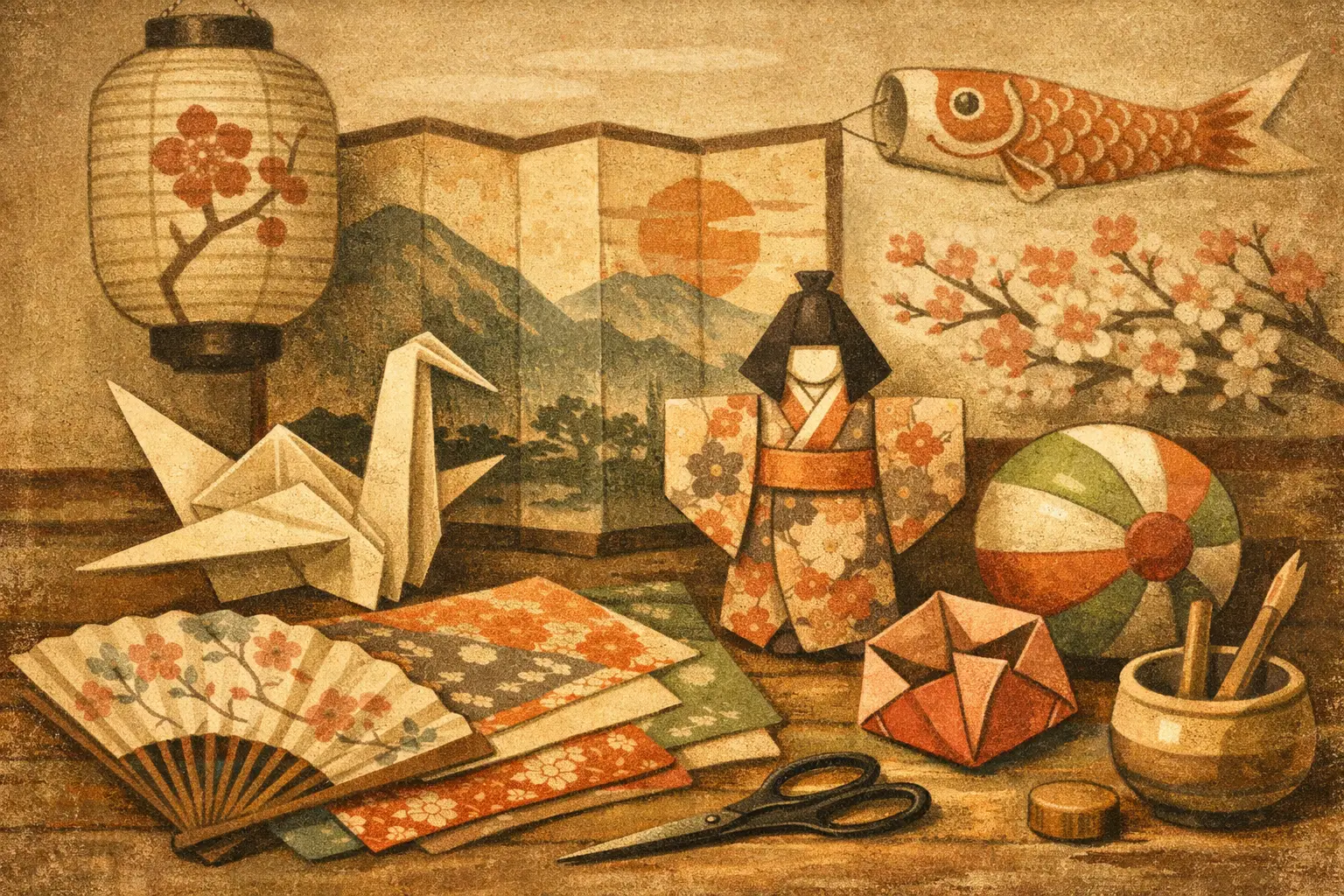
A single square of paper can become a crane, a tiny box for tea sweets, a window decoration, or a landscape built from torn fibers. That sense of possibility is why a guide to Japanese paper crafts is such a rewarding place to begin for Japan lovers worldwide. These crafts ask for attention more than expensive equipment, and each one offers a small, hands-on connection to Japanese ideas of care, seasonality, and beauty.
Paper has never been merely a disposable material in Japan. It can carry a gift, mark a celebration, filter light through a shoji screen, or preserve an image for generations. Start simply, stay curious, and let the paper teach you what it wants to do.
Why Japanese Paper Crafts Feel Different
Japanese paper crafts are often associated with origami, but that is only one branch of a much wider creative tradition. Folding, cutting, tearing, layering, printing, wrapping, and knotting all have their own visual language. Some projects are crisp and geometric. Others celebrate uneven edges, soft fibers, and the accidental beauty of a hand-torn shape.
A useful idea to carry into your first projects is wabi sabi: an appreciation for the modest, imperfect, and handmade. Your folds may not be perfectly symmetrical at first. A torn-paper cloud may be more irregular than you planned. That is not a failure. It can be part of what makes the piece feel alive.
There is also mono no aware, a gentle awareness that things are fleeting. Japanese paper art often leans into the seasons: plum blossoms in late winter, fresh green leaves in spring, cicadas and fireworks in summer, maple leaves in fall, and snow scenes in winter. Making a small paper decoration for the moment you are living in is a lovely way to bring that feeling home.
A Guide to Japanese Paper Crafts: Know Your Materials
The paper you choose changes almost everything. A bright, glossy sheet from a general craft store can be perfect for a bold decoration, while handmade paper may resist sharp creases but shine in collage or lantern work. There is no single “correct” paper. Match the material to the project.
Washi: Strong, Soft, and Full of Character
Washi is traditional Japanese paper, made from long plant fibers such as kozo, mitsumata, or gampi. Those fibers give it surprising strength for its weight. Good washi can be thin enough to glow when held to the light, yet durable enough to handle repeated folding or layering.
For a beginner, washi is wonderful for greeting cards, book covers, collage, gift wrapping, and simple paper lanterns. Very textured handmade washi can be less suitable for detailed origami because the folds may not stay sharply defined. If you want to fold a crane or modular star, choose a thinner, smoother sheet.
Chiyogami and Yuzen Paper
Chiyogami is decorative Japanese paper, usually printed with repeating patterns. You may see florals, waves, cranes, fans, or stylized seasonal motifs. Yuzen-style paper often has a richer, more textile-like look inspired by kimono dyeing and pattern design.
These papers are ideal when you want a project to feel unmistakably Japanese without adding complicated techniques. Turn one sheet into a set of small folded boxes, cover a journal, or make gift tags. Because many patterns have a direction, pause before cutting: decide which way you want flowers, birds, or waves to face on the finished piece.
Origami Paper and Everyday Alternatives
Origami paper, called kami, is usually thin, square, and colored or patterned on one side. It is the easiest choice for basic folds. Do not feel limited to official origami packs, though. Old maps, plain wrapping paper, pages from a damaged calendar, and clean brown paper can all become practice material.
Avoid paper that is too thick for small models. It creates bulky corners and makes precise finishing difficult. On the other hand, very thin paper can tear if you are still learning to make firm creases. Medium-weight kami is the forgiving middle ground.
Start With Four Crafts, Not Forty
It is tempting to collect tutorials and never make anything. Instead, choose one project from each of these approaches. You will quickly learn whether you love exact folds, graphic cuts, loose collage, or decorative construction.
- Origami uses folding to create forms without glue or cutting. Begin with a crane, masu box, jumping frog, or simple flower.
- Kirigami combines folding and cutting. Snowflakes are familiar, but try sakura blossoms, maple leaves, or a pop-up card with a torii gate silhouette.
- Chigiri-e is torn-paper collage. Build a moonlit mountain scene, koi pond, or autumn branch by tearing washi into layered shapes.
- Paper decor and wrapping includes gift envelopes, garlands, mini lantern shades, and noshi-inspired gift accents. These projects are especially satisfying when you want to use patterned paper right away.
The trade-off is simple: origami rewards precision, while chigiri-e offers more freedom. Kirigami gives quick visual drama but requires careful cutting. Decorative paper projects are the easiest to personalize and share.
How to Make Your First Origami Piece Better
The classic paper crane is worth learning, not because you must fold it perfectly, but because it teaches core habits you will use in hundreds of models. Its association with wishes, peace, and the thousand-crane tradition gives the finished object emotional weight too.
Begin with a six-inch square of kami. Work on a hard, clean surface and line up edges before pressing a crease. Use your fingernail, a ruler edge, or a bone folder to sharpen each fold. The most common beginner mistake is rushing the early bases. If the first folds are off by even a little, the error grows as the model gets smaller.
Do not aggressively flatten the paper at every stage. Some models need open, flexible layers before the final shaping. And if your crane is slightly lopsided, keep it. Write the date on the underside of one wing. Six months from now, folding another crane will show you exactly how far your hands have come.
Try Chigiri-e for a More Relaxed First Project
Chigiri-e is a wonderful answer for anyone who loves Japanese prints, landscapes, and ukiyo-e color but does not enjoy exact geometry. Rather than cutting shapes, you tear paper by hand. The torn edge reveals fibers and creates a soft outline that printed images cannot quite reproduce.
Choose a simple subject with three layers: background, middle distance, and foreground. A Mount Fuji scene works beautifully. Use pale blue-gray paper for the sky, a softer distant blue for the mountain, and dark paper for pine branches or a shoreline. Glue the largest background shapes first, then work forward.
Use a glue stick sparingly or apply white glue with a small brush. Too much adhesive can wrinkle thin paper and dull its texture. Tear slowly and pull toward yourself for more control. If a shape looks wrong, turn it around. An accidental edge may become a wave, a cloud, or the curve of a hill.
Make a Japanese-Inspired Paper Gift Set
Paper crafts become more meaningful when they enter everyday rituals. Instead of making objects only to store in a drawer, create a small gift set for a friend who shares your love of Japan. Fold a masu box from sturdy patterned paper, add a handwritten note, and wrap the package with a narrow paper band.
For a seasonal touch, choose motifs thoughtfully. Cherry blossoms suit spring gatherings, indigo waves feel fresh in summer, red maple patterns bring fall warmth, and pine or crane designs fit New Year celebrations. You do not need to copy a formal Japanese gift-wrapping custom to make something respectful. A simple, carefully made package is already an expression of hospitality.
If you add mizuhiki-style paper cords or knots, treat them as decoration unless you understand the occasion-specific meanings behind traditional mizuhiki. Some knot forms are tied to particular ceremonies, including weddings and condolences. This is a good example of where admiration should come with a little cultural homework.
Practice With Respect, Not Perfection
Japanese craft traditions are living practices, not just attractive aesthetics. Learn the names of the techniques you use, credit an artist or teacher when sharing a pattern, and avoid presenting a Japanese-inspired project as a traditional object if you have changed it significantly. Those small choices show real appreciation.
At the same time, do not become so worried about getting everything wrong that you never begin. Craft is learned through repetition. Fold a dozen cranes. Tear an entire sheet into color tests. Make a lantern shade that leans a little. The pleasure is in noticing how paper responds to your hands.
Set aside one evening with a cup of tea, one beautiful sheet of paper, and a project small enough to finish. When you see that first crane, collage, or patterned box on your desk, Japan will feel a little closer – made by your own hands.