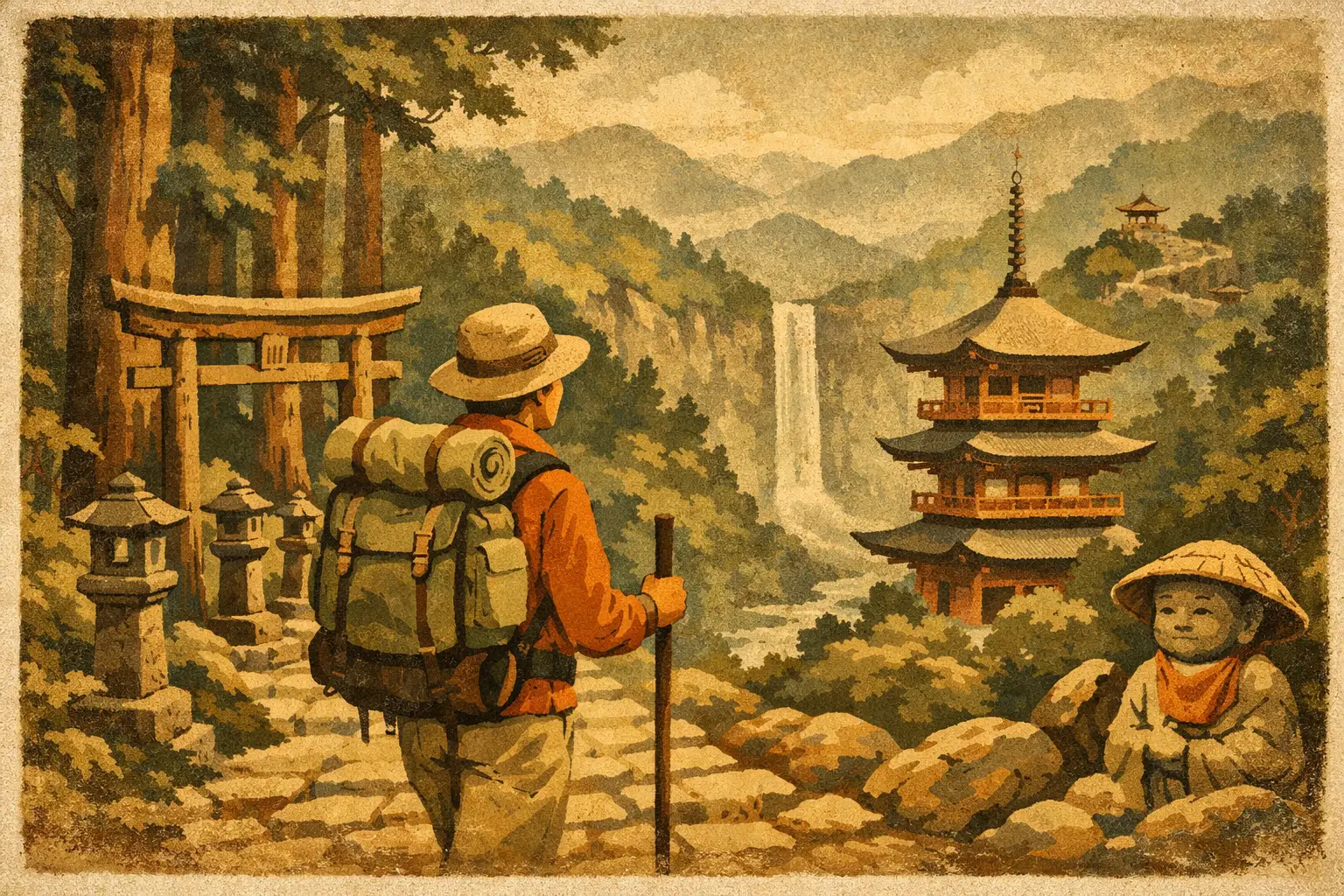
The first surprise of a Kumano Kodo first time experience is how quickly Japan feels far away from its familiar images. There are no neon crossings or packed train platforms on the old Nakahechi route. Instead, you step beneath cedar trees, hear water moving somewhere below the trail, and pass small stone statues softened by moss. This is Japan at walking pace: quiet, demanding, deeply spiritual, and full of the beautiful imperfection known as wabi-sabi.
For Japan lovers who want more than a quick shrine visit, the Kumano Kodo is a chance to enter a living tradition. The pilgrimage paths on the Kii Peninsula have carried emperors, aristocrats, farmers, and modern hikers toward the sacred Kumano region for more than a thousand years. You do not need to be religious, super fit, or an expert trekker to walk here. You do need to arrive with realistic expectations, good planning, and room in your schedule for weather, tired legs, and unexpected moments of wonder.
Choose the Nakahechi Route for Your First Walk
The Kumano Kodo is not one single trail. It is a network of pilgrimage routes, and that matters when planning. For a first visit, the Nakahechi route is usually the most approachable choice. It begins near Tanabe on the west coast of the Kii Peninsula and follows an inland mountain route toward Kumano Hongu Taisha.
This is the route many visitors picture when they imagine the Kumano Kodo: forest paths, oji shrine markers, old villages, steep stone sections, and traditional inns with hot baths waiting at the end of the day. A common plan is to walk from Takijiri-oji to Hongu over two to four days, depending on your fitness and where you stay.
The trade-off is simple. A faster itinerary gives you a stronger physical challenge and less time to linger. A slower one gives you time for a morning onsen, a peaceful lunch in a village, or a detour to a small shrine you might otherwise pass without noticing. For most first-timers, slower is better. This is not a trail to race.
If you love the idea of completing a historic pilgrimage but worry about long mountain days, consider mixing walking with local buses. There is no prize for walking every mile. The meaningful part is showing up with attention and respect.
What the Trail Actually Feels Like
Photos can make the Kumano Kodo look like a gentle woodland stroll. Some sections are gentle, but the route regularly climbs and descends. Roots, wet stones, uneven steps, mud, and humidity can make a moderate distance feel much longer than the same mileage at home.
A first day can be emotionally intense in the best way. At Takijiri-oji, the traditional trailhead, you may feel a little self-conscious in your hiking clothes, checking your map and wondering whether you belong. Then the path starts climbing almost immediately, and the question disappears. Your job becomes wonderfully basic: breathe, step, drink water, notice where you place your feet.
That rhythm is part of the pilgrimage. The forest does not perform for you. It asks you to slow down enough to see it. A faded wooden sign, a tiny Jizo statue, a rice field below the ridge, or a bell outside a village temple can create a feeling close to mono no aware, the awareness that beauty becomes more powerful because it cannot be held.
Expect solitude, but not total isolation. You may encounter Japanese walkers, international pilgrims, local residents, and fellow travelers at inns. A friendly konnichiwa goes a long way. Still, there will be stretches when the only sounds are insects, rain, and your own footsteps.
Plan Lodging Before You Plan Your Daily Mileage
Your accommodations shape the whole journey. The villages along the route have limited rooms, especially in popular spring and fall periods. Book early if you want a traditional minshuku or ryokan with dinner and breakfast included.
A night in a family-run inn is often one of the most memorable parts of the trip. After hiking all day, changing into the provided yukata, soaking in an onsen, and sitting down to a carefully prepared meal feels less like a hotel stay and more like being welcomed into the rhythm of rural Japan. Meals may include local vegetables, grilled fish, simmered dishes, rice, miso soup, and seasonal specialties. Let the hosts know well ahead of time about dietary restrictions, but understand that highly specific needs can be difficult in small mountain kitchens.
Some lodgings have private baths, while others use shared bathing areas. If this is your first Japanese bath experience, remember the basic rule: wash thoroughly before entering the tub, and do not bring your towel into the water. The bath is for soaking, not scrubbing. It can feel unfamiliar at first, but after a rainy hiking day, it may become your favorite ritual of the trip.
Lodging locations should determine your walking stages. Do not assume you can simply stop whenever you are tired. Between villages, services can be sparse, and a late arrival may mean missing dinner. Check distances, elevation, and meal times carefully before committing to each day.
Pack for Rain, Hills, and Shrine Visits
The Kii Peninsula is lush for a reason. Rain is part of the Kumano landscape, and it can arrive even when the forecast looks encouraging. Waterproof layers are not optional. A proper rain jacket, backpack cover, and shoes with reliable grip will make a huge difference.
Bring a refillable water bottle, snacks, blister care, sunscreen, insect repellent, and a small towel. Hiking poles are useful for steep descents, especially if your knees tend to complain. Keep your daypack light, though. Every extra item becomes noticeable on an uphill section.
Footwear depends on your preferences and the season. Trail runners can work well in dry conditions if they have strong tread, while waterproof hiking shoes offer more protection in wet weather. Brand-new boots are a bad idea. Wear in whatever you choose before arriving in Japan.
You do not need special pilgrimage clothing, but dress modestly when entering shrines and inns. Comfortable, clean layers are ideal. Carry a little cash too. Mountain villages may not offer the card convenience you expect in Tokyo, and vending machines or small shops can be lifesavers between meals.
Shrine Etiquette Makes the Experience Richer
The Kumano Kodo is not an outdoor attraction built around shrines. The shrines are the heart of the route. Approaching them with a few simple customs helps you connect more deeply with the place.
At a torii gate, pause briefly and avoid walking directly through the center, which is traditionally reserved for the kami, or sacred spirits. At a water basin, rinse your hands and mouth in the usual respectful manner if you know how, but do not stress about perfect choreography. Quiet attention matters more than performing etiquette.
When you reach Kumano Hongu Taisha, give yourself time. Many walkers arrive tired, happy, and ready to take a quick photo before catching a bus. Stay a little longer. Notice the enormous trees, the deep colors of the shrine buildings, and the shift in atmosphere after days on the path. If your schedule allows, continue to Kumano Nachi Taisha, with its famous waterfall, and Kumano Hayatama Taisha in Shingu. Together, these form the Kumano Sanzan, the three grand shrines of Kumano.
You may see pilgrims collecting stamps at oji sites and shrines. This can be a fun personal record, but do not let stamp collecting turn the walk into a scavenger hunt. Some places will move you more than others. Let that happen.
Give Yourself Permission to Change the Plan
A great Kumano Kodo first-time experience is rarely a perfectly executed itinerary. Rain may make the trail slower. A sore ankle may call for a bus ride. An innkeeper may recommend an alternate section, or a fellow traveler may tell you about a small detour worth taking. Flexibility is not failure here. It is good trail sense.
Spring and fall are popular because temperatures are often more comfortable, but they also bring crowds and lodging pressure. Summer offers rich green forests and powerful cicada soundtrack, along with heat, humidity, and heavier rain. Winter can be peaceful, but daylight is shorter and cold or icy conditions are possible at higher elevations. The best season depends on whether you value stable hiking weather, solitude, or dramatic seasonal scenery.
Before you leave, do the practical work: confirm transportation, reserve rooms, download maps for offline use, check current trail conditions, and tell someone your day plan. Then allow the mountains to take over a little.
When you finally arrive at Hongu, resist the urge to immediately turn the moment into proof that you finished something. Sit down, drink water, look at the trees, and let the tiredness settle. The Kumano Kodo has a way of leaving you with more than photos: a memory of moving through Japan slowly enough to feel it looking back.