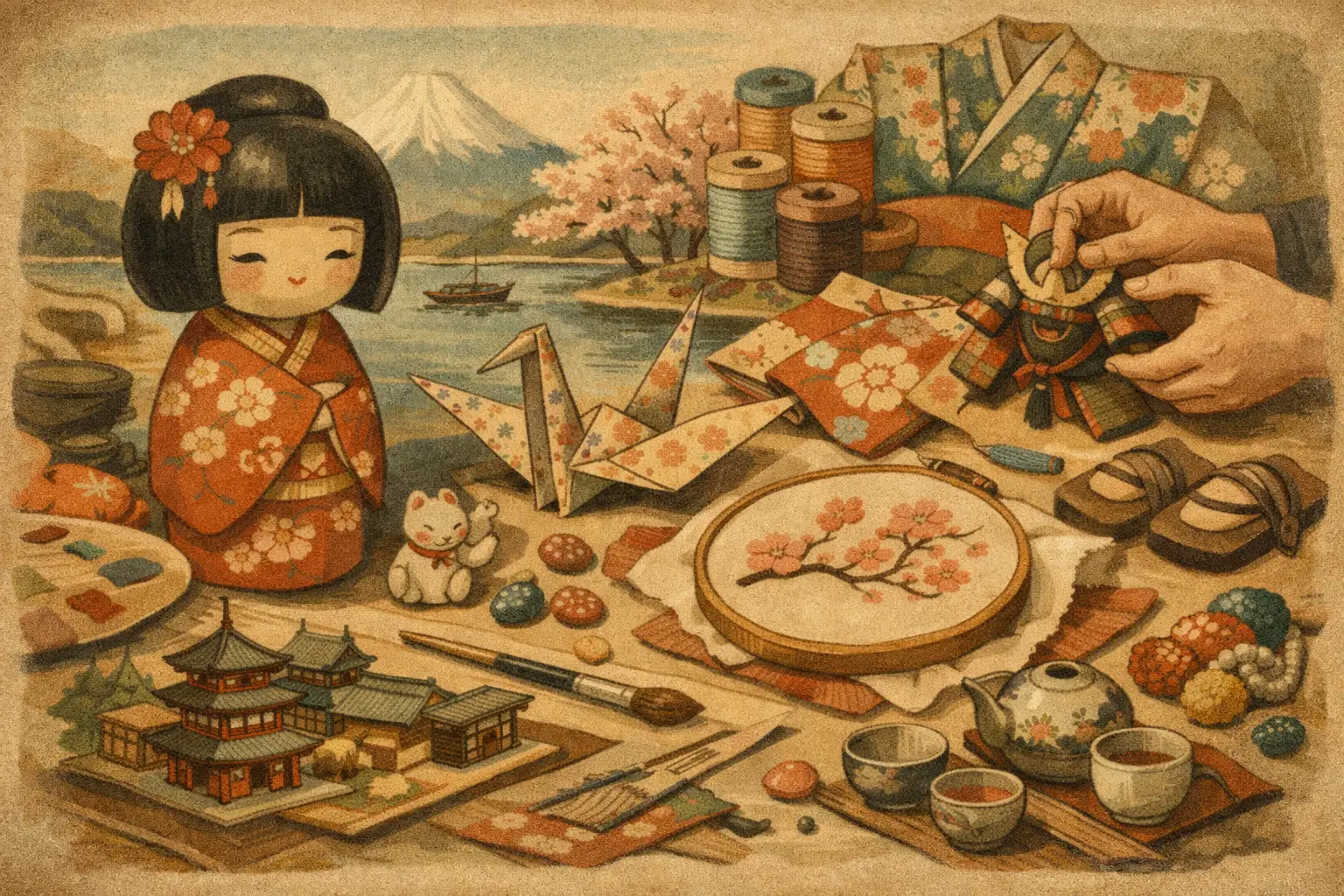
A good Japanese craft kit does more than fill an afternoon. It puts a small, tactile piece of Japan in your hands: the steady rhythm of a sashiko stitch, the brush pressure behind a single kana character, the quiet patience of folding one clean origami crane. The best japanese craft kits are not necessarily the biggest boxes or the ones with the most supplies. They are the kits that make the process feel meaningful, approachable, and connected to the tradition behind it.
For Japan lovers worldwide, making something yourself can be a wonderful counterpoint to collecting. You learn why a pattern repeats, why a material matters, and why imperfection can be part of the beauty. That is wabi sabi in practice.
What Makes a Japanese Craft Kit Worth Buying?
Before choosing a project, look beyond the photo on the package. A strong kit includes instructions that a beginner can follow, enough quality materials to complete the stated project, and a design that respects the character of the craft. A translation or bilingual guide is especially useful when the kit is produced in Japan, although diagrams can carry a surprising amount of the teaching.
Also consider whether you want a single finished object or a skill you can keep practicing. A kintsugi-style repair kit may help you mend one cherished cup. A shodo calligraphy set can become a lasting ritual, with new characters and brushwork to explore every week. Neither is better. It depends on whether you want a memorable project, a new habit, or a handmade gift.
Authenticity is worth seeking, but it does not mean every supply must be imported from Japan. A thoughtfully designed beginner kit that explains the tradition can be more rewarding than an all-Japanese kit with unclear instructions. Look for makers who name the technique, describe its regional or historical roots when relevant, and avoid treating Japanese motifs as random decoration.
12 Best Japanese Craft Kits to Try at Home
These are the most rewarding categories to look for, from low-pressure paper projects to crafts that ask for a little more time and attention.
- Traditional origami kits are ideal for nearly everyone. Choose one with square washi-style papers, clear diagrams, and models at several difficulty levels. Start with cranes, boxes, and seasonal flowers, then enjoy the precision that comes from making the same form twice.
- Sashiko embroidery kits bring the appeal of Japanese mending and geometric stitching to fabric. Beginner versions usually include pre-printed cloth, thread, a needle, and a simple pattern. Coasters, pouches, and small panels are less intimidating than a full garment project and still show off the beautiful running stitch.
- Kintsugi-style repair kits are especially meaningful for people who have a chipped teacup or favorite bowl. Traditional kintsugi uses lacquer and precious-metal powder and requires specialized knowledge. Many home kits use modern, food-safe or decorative alternatives instead, so read the safety notes carefully and do not assume a repaired item is safe for eating or drinking unless the manufacturer clearly says so.
- Japanese calligraphy kits, often called shodo sets, offer a powerful change of pace. A basic set may include a fude brush, sumi ink, inkstone, hanshi paper, and a paperweight. Beginners can begin with simple kanji such as 山 (mountain) or 川 (river), but the real lesson is control: posture, breath, ink, and the changing width of one line.
- Temari ball kits are a joyful choice for anyone drawn to color and pattern. Temari began as hand-stitched thread balls and developed into intricate decorative art. A starter kit often provides a wrapped base, embroidery thread, pins, and a guide for one geometric motif. The work is repetitive in the best way, and the finished ball looks wonderful in a bowl or hanging near a window.
- Kumihimo braiding kits make cords using a round foam disk or a traditional-style marudai loom. The result can become a bracelet, keychain, bookmark, or an obijime-inspired accessory. It is easy to pick up, satisfying to repeat, and a great craft for a relaxed evening with friends.
- Mizuhiki knot kits introduce the decorative paper cords used on Japanese gift envelopes and celebratory wrapping. Learn a plum knot, a butterfly knot, or a simple loop, then turn it into a card decoration or gift tag. This is a small craft with a big cultural payoff, especially if you love the care Japan brings to presentation.
- Washi paper-making kits are messier than origami but wonderfully hands-on. Some beginner sets let you make small sheets with pressed leaves, flower petals, or fibers. The results are naturally irregular, which is part of their charm. Use your finished paper for notes, bookmarks, or a framed piece of handmade art.
- Ukiyo-e woodblock print kits are a smart pick for art lovers who want to understand how layered Japanese prints are built. Simplified kits may use soft carving blocks or pre-carved stamps rather than professional woodblocks. They still reveal the magic of registering colors one layer at a time, a process that makes every print feel slightly different.
- Japanese indigo dye kits can create hand-dyed napkins, scarves, or wall hangings with shibori-style resist patterns. Indigo has a rich place in Japanese textile traditions, but dye projects require planning: protect your workspace, wear gloves, and make sure ventilation is adequate. The deep blue results are worth the setup.
- Chiyogami paper craft kits use richly patterned papers for boxes, ornaments, cards, and small decorative objects. They are beginner-friendly but do not have to look childish. Select a kit with traditional motifs such as seigaiha waves, asanoha hemp leaves, or sakura blossoms, and you will have something handsome enough to display.
- Japanese miniature garden or bonsai-inspired kits suit makers who want a long-term relationship with their project. Some kits focus on arranging sand, stones, moss, and tiny structures, while others provide seeds or training materials for a living plant. A living bonsai is not a quick craft and should never be treated as a disposable novelty. But a small dry garden can bring a calm, contemplative corner to a desk or shelf.
Choosing the Right Kit for Your Skill Level
If you are new to handcrafts, begin with origami, mizuhiki, chiyogami, or kumihimo. These projects offer quick wins without demanding expensive tools or lots of setup. Sashiko is also beginner-friendly, though it rewards patience more than speed.
Choose calligraphy, temari, woodblock printing, or indigo dyeing when you enjoy learning through repetition. Your first attempt may not match the package image, and that is completely fine. Japanese craft traditions often value practice, observation, and gradual improvement over instant perfection.
For a more personal project, choose kintsugi-style repair. There is something moving about giving a damaged object a second life rather than hiding it away. The repaired line becomes part of its story, a small expression of mono no aware, the sensitivity to the passing and changing nature of things.
A Few Practical Details Before You Start
Read the materials list before ordering, particularly for dyes, adhesives, inks, and carving tools. Some kits require household basics such as scissors, a ruler, a needle threader, disposable gloves, or a protected work surface. Internationally produced kits may use metric measurements, but that is rarely a problem if the instructions include templates.
Set aside more time than the package promises for your first project. Crafting is more enjoyable when you are not watching the clock. Put on a Japanese jazz playlist, make a cup of genmaicha, and let the work unfold at its own pace. If you make a mistake, keep going. A crooked stitch or slightly uneven fold is evidence that your hands were there.
Make the Kit Part of Your Japan Life
The most memorable kits create a bridge between making and learning. While you stitch sashiko, look at the patterns found on workwear and household textiles. While practicing shodo, learn the meaning and stroke order of the character you write. While folding paper, think about how a simple square can become an animal, vessel, or flower with no cutting at all.
That curiosity is what turns a craft box into a cultural experience. Choose one project that genuinely calls to you, clear a small space on the table, and let your hands bring a little piece of Japan into your everyday life.