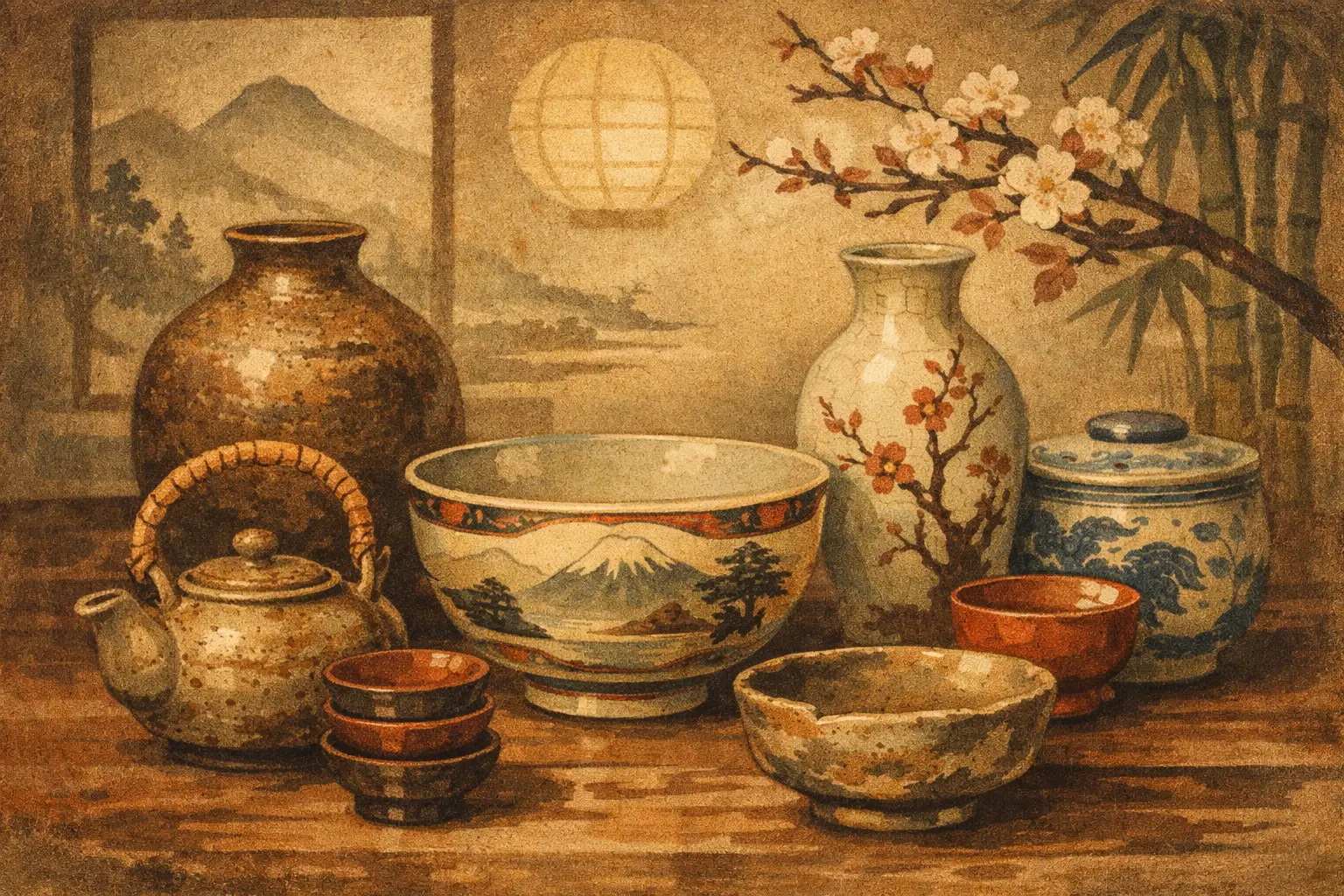
A tea bowl can tell you where it came from before anyone reads the label. The clay feels heavier or lighter in the hand, the glaze pools in a certain way, and the surface carries that hard-to-define mood that so many Japan lovers recognize instantly. If you have ever looked at a shelf of ceramics and thought, I need a japanese pottery styles guide that makes this easier, you are in the right place.
Japanese pottery is not one single look. It is a world of regional kilns, local clay, firing methods, and aesthetic ideas shaped over centuries. Some pieces feel rustic and grounded in wabi sabi. Others are bright, refined, and almost painterly. Knowing the main styles does not turn every shopper into an appraiser, but it does make browsing, collecting, and visiting pottery towns far more rewarding.
A japanese pottery styles guide starts with region
One of the most helpful things to understand is that Japanese pottery styles are often tied to place. A ware is not just a design trend. It usually reflects a local history, a nearby clay source, and a workshop tradition passed through generations.
That is why names like Bizen, Shigaraki, Arita, and Mashiko matter so much. They are not random labels. They point to specific regions with distinct identities. Once you start seeing pottery through that regional lens, the differences begin to make sense much faster.
There is also a useful trade-off to keep in mind. The more famous a style is, the easier it is to find examples inspired by it rather than made in the original area. That is not automatically bad. Many beautiful pieces are made outside historic centers. But if authenticity of origin matters to you, it helps to ask where a piece was produced, not just what style it resembles.
The classic styles most people encounter first
Bizen ware
Bizen-yaki is one of Japan’s oldest pottery traditions, and it is often the style that surprises new collectors. There is usually no glossy glaze at all. Instead, the surface color comes from the firing itself – earth reds, smoky browns, ash effects, and occasional flashes where straw or placement in the kiln changed the outcome.
Bizen feels honest and elemental. If you like ceramics that look almost weathered by nature, this style has that mono no aware quality, a sense of time passing through the object. The trade-off is simple: if you prefer crisp decoration or polished surfaces, Bizen can feel too severe at first.
Shigaraki ware
Shigaraki-yaki is another beloved rustic style, known for warm orange-brown clay, natural ash glaze, and a rough texture that often includes tiny stones. Tea ware, flower vessels, and tanuki figures all appear in this tradition, though serious collectors often focus on functional vessels.
Shigaraki has a relaxed presence that works beautifully in homes that favor natural materials. It is rustic, but not careless. The best pieces look spontaneous while being very intentionally made.
Raku ware
Raku is deeply associated with the tea ceremony. Hand-shaped rather than wheel-thrown in many cases, Raku tea bowls tend to feel intimate, soft, and direct. Black Raku and red Raku are especially well known.
Raku is less about symmetry and more about encounter. You hold it, turn it, and notice subtle distortions and texture shifts. If you love tea culture and the aesthetics of wabi sabi, Raku can be hard to resist. But it is not the best example if you want to understand all Japanese pottery, because its tea-centered purpose makes it a category of its own.
Arita ware
Arita-yaki often introduces people to the porcelain side of Japanese ceramics. Originating in Kyushu, it is known for fine white porcelain and painted decoration, especially in blue and white or richly colored overglaze designs.
This is a very different mood from Bizen or Shigaraki. Arita can feel refined, elegant, and more formal. Many international collectors first encounter Arita through tableware, and for good reason – it is durable, versatile, and visually striking.
Kutani ware
Kutani-yaki is famous for bold overglaze enamel decoration, often using rich greens, yellows, reds, blues, and purples. If rustic tea bowls are not your thing, Kutani may be the style that wins you over.
It has energy. Some pieces are densely painted, almost like ceramic ukiyoe in spirit, while others are more restrained. Because the style can be highly decorative, quality varies a lot. The difference between a refined Kutani piece and one that feels merely busy is worth learning over time.
Styles that reward a closer look
Mashiko ware
Mashiko-yaki became especially well known in the modern folk craft movement. It often features practical forms, warm glazes, and a handmade feeling that suits everyday use. Many people love it because it bridges tradition and daily life so naturally.
Mashiko is a great entry point if you want pottery you can actually live with, not just display. Mugs, plates, and bowls in this style tend to feel grounded and usable. That approachable spirit is part of the appeal.
Karatsu ware
Karatsu-yaki is understated in a way that ceramic fans often adore. You will see brushed designs, soft glazes, and forms that do not beg for attention. But spend time with a good Karatsu piece, and it reveals itself slowly.
This is one of those styles where subtlety is the whole point. It may not stop casual shoppers in their tracks, yet collectors and tea lovers often return to it again and again.
Hagi ware
Hagi-yaki is especially valued for tea bowls and its soft, absorbent clay body. The glaze often develops fine crackling, and with use the piece can change over time as tea stains gently enter the surface. That aging process is part of the charm.
If you love objects that evolve with use, Hagi offers a very Japanese kind of beauty. The bowl you buy today may not look exactly the same after years of tea. For some people that is magic. For others, especially those who want a pristine finish, it can feel high maintenance.
Pottery versus porcelain in a japanese pottery styles guide
This distinction matters more than many beginners expect. In simple terms, pottery uses earthenware or stoneware clays and often feels warmer, softer, and more grounded. Porcelain is fired from refined clay at higher temperatures and usually looks whiter, denser, and more delicate in appearance.
Japanese ceramics include both, and neither is automatically better. If you are drawn to tea culture, tactile surfaces, and rustic kilns, pottery styles like Bizen, Shigaraki, Hagi, and Karatsu may speak to you more strongly. If you prefer detailed painting, crisp edges, and elegant table settings, porcelain traditions like Arita may feel like home.
It depends on how you want to experience the object. Some pieces ask to be admired across the room. Others ask to be held.
How to recognize a style without memorizing everything
Start with three questions. First, what does the clay body look like? Dark, light, coarse, smooth, reddish, buff, or white? Second, what is happening on the surface? Is there glaze, painted decoration, ash effect, crackling, or no glaze at all? Third, what is the emotional impression? Rustic, quiet, formal, vivid, tea-centered, or everyday?
That last question may sound less technical, but it helps. Japanese craft traditions are not just visual categories. They carry aesthetic moods. A rough Shigaraki flower vase, a calm Karatsu bowl, and a brightly painted Kutani plate all communicate different values and settings.
Marks on the base can help, but they are not a shortcut to certainty. Studio marks, kiln marks, and handwritten boxes can be useful if you already know what you are looking at. If not, they can create false confidence. It is often better to train your eye first and use marks as supporting evidence.
Buying with heart and a little caution
If you are shopping online, ask for multiple photos, including the base, side profile, and close-ups of texture. Japanese pottery rarely reveals itself in one front-facing image. Weight, scale, and the way a glaze breaks over an edge matter a lot.
If you are buying in person, hold the piece if allowed. Japanese ceramics are deeply tactile. The foot ring, lip, balance, and warmth of the clay all tell part of the story. A cup may look beautiful and still feel wrong in the hand.
It also helps to decide whether you are collecting by region, use, or emotion. Some people focus on tea bowls. Others love only mingei-style everyday wares. Others simply buy pieces that create that quiet click of recognition. There is room for all of that. For all Japan lovers worldwide, the best collection is not the most expensive one. It is the one that keeps your connection to Japan alive in ordinary moments.
Why these styles matter beyond the shelf
Japanese pottery is one of the easiest ways to feel Japanese aesthetics in daily life. Not as theory, but as use. A plate changes how you notice food. A tea cup changes the pace of a morning. A flower vase changes what kind of branch you bother bringing indoors.
That is why learning styles is worth your time. Not to impress anyone with labels, but to get closer to the worlds these objects come from – kiln towns, tea rooms, workshops, and family traditions shaped by fire and patience.
The next time a bowl or cup stops you cold, trust that instinct first, then look closer. The style name matters, but the real pleasure begins when you can feel why it does.