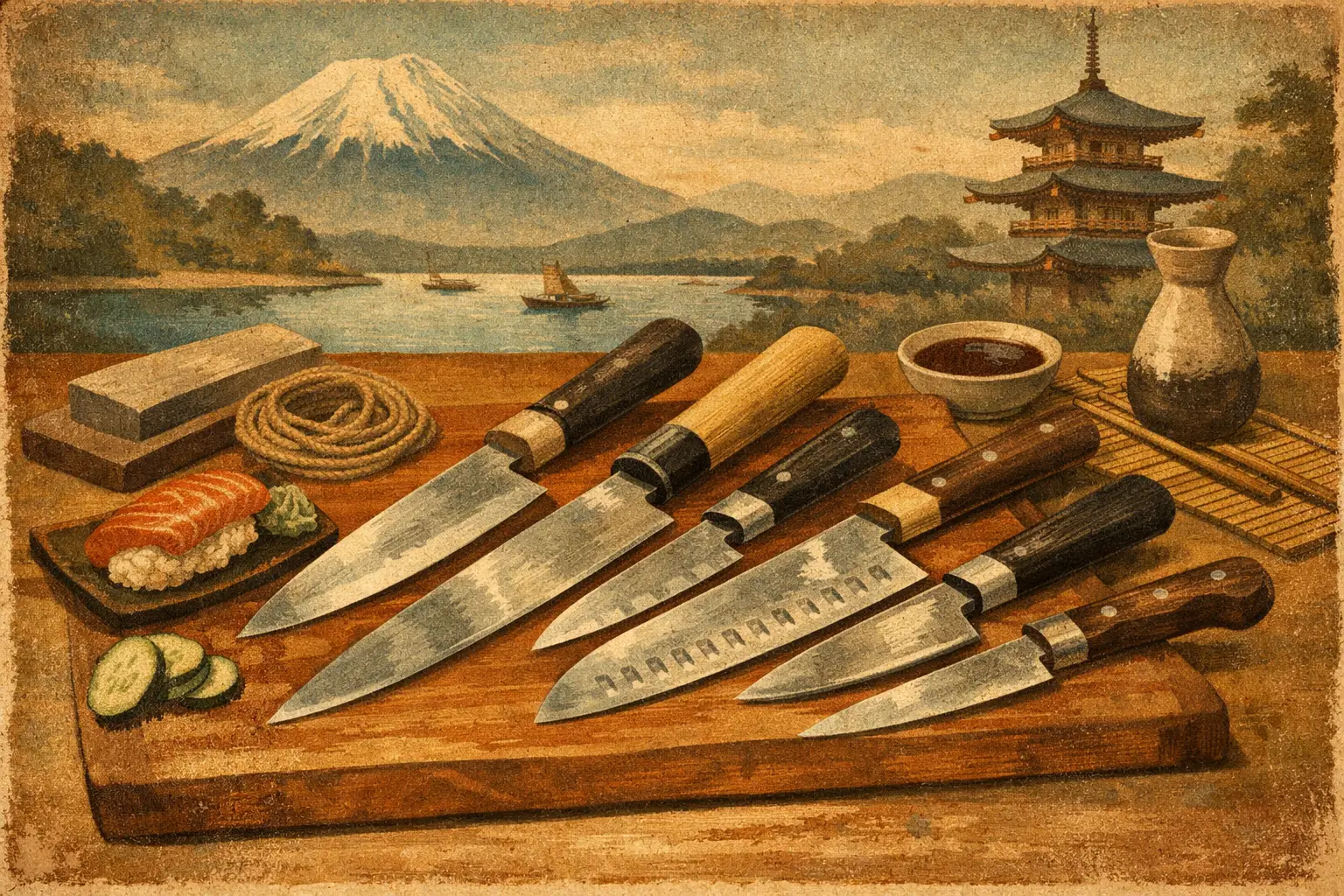
A beautiful box of knives can make any Japan lover pause for a second. The polished blade, the warm wood handle, the promise of better cooking – it all feels a little bit like bringing a piece of Japanese craft into your kitchen. But a smart Japanese knife set review has to look past the first impression. Some sets are genuinely excellent. Others are mostly packaging, marketing, and one or two useful blades surrounded by pieces you may barely touch.
If you love Japanese food culture, this is where things get interesting. Japanese knives are not just kitchen tools. They reflect values that show up all across Japanese craftsmanship – precision, restraint, and a kind of quiet beauty that feels close to wabi sabi. The best sets are practical, yes, but they also carry that sense of care that makes everyday cooking feel more intentional.
Japanese knife set review: what actually matters
The first thing to know is that buying a set is not always the best move. In Japan, many serious home cooks and professionals build a collection one knife at a time. That is partly because each knife has a specific role, and partly because quality can vary a lot inside a boxed set. One excellent gyuto paired with a mediocre bread knife and weak shears is not automatically a better purchase than two outstanding knives bought separately.
Still, a set can make sense. If you are moving beyond basic department-store knives, want a cohesive look, or are setting up a new kitchen, a Japanese set can be a satisfying entry point. The key is knowing what you are paying for.
Blade steel comes first. Many Japanese-style knives use harder steel than typical Western knives. That means they can hold a razor-sharp edge longer, which is a dream for slicing vegetables, fish, and boneless meats. The trade-off is that harder steel can be more brittle. If you twist the blade, hack through bones, or toss it into a sink, you can chip it. That does not make it worse. It just means it asks for a little respect.
Handle style matters too. Traditional wa handles are lighter and often made from magnolia, walnut, or pakkawood. They shift the balance slightly forward, which many people love for precise slicing. Western-style handles feel more familiar for many American cooks and can make the transition easier. Neither is objectively better. It depends on how you cook and what feels natural in your hand.
Then there is the actual mix of knives in the set. This is where many buyers get distracted by quantity. A five-piece set sounds generous, but if it includes a utility knife, carving fork, honing rod, and kitchen shears, you may still be missing the two blades you will use most. For most home kitchens, the real stars are usually a chef-style knife such as a gyuto or santoku, plus a small petty knife. Everything else should earn its place.
Which knives in a Japanese set are truly useful?
For most people, a good Japanese knife set starts with one of two foundation knives. A gyuto is the Japanese answer to the chef’s knife. It is versatile, elegant, and especially good if you want one blade for meat, herbs, onions, and general prep. A santoku is shorter and flatter, with a shape many home cooks find comfortable right away. If your cooking leans toward vegetables, fish, and everyday chopping, a santoku often feels intuitive.
A petty knife is the next blade that pulls its weight. Think of it as the knife you reach for when trimming strawberries, slicing garlic, segmenting citrus, or doing the kind of small work that feels clumsy with a larger blade. After that, the value of the set depends on your habits. If you bake a lot, a bread knife is genuinely useful. If you break down large cuts of meat, a slicer may matter. If not, extra pieces can become drawer decoration.
This is why a careful Japanese knife set review should ask one simple question: will you use these knives every week? If the answer is no, the set may be padded more for display than for cooking.
The appeal and the catch of Japanese knife sets
What makes these sets so attractive is not hard to understand. They often look stunning. Hammered finishes, layered Damascus patterns, pale wood handles, and refined packaging speak directly to anyone who loves Japanese aesthetics. There is a little mono no aware in that appeal too – the pleasure of ordinary moments made more vivid by attention and beauty. Chopping scallions for miso soup somehow feels different with a tool that has real presence.
But the catch is that appearance can distract from performance. Some budget brands use flashy etched patterns that mimic high-end craftsmanship without delivering the steel quality, edge retention, or balance you would expect. You are not wrong to care about beauty. In Japanese craft, beauty and utility often belong together. You just do not want the first one to substitute for the second.
Another catch is maintenance. Many Japanese knives should not go into the dishwasher, should not sit wet on the counter, and benefit from proper sharpening rather than rough treatment with a cheap pull-through sharpener. If that sounds annoying, be honest with yourself before buying. A knife that demands more care can be deeply rewarding, but only if you are willing to meet it halfway.
How to judge a set before you buy
Start with the steel listing. If the brand is vague, that is a warning sign. Reputable makers usually tell you whether the blade uses VG-10, AUS-10, SG2, high-carbon steel, or another specific material. You do not need to memorize every steel type, but you do want transparency.
Next, look closely at what is included. A three-knife set with a gyuto, petty, and bread knife may serve a home cook better than a seven-piece block packed with filler. Also pay attention to whether the set includes a storage block, saya covers, or nothing at all. A magnetic strip or blade guard may suit your kitchen better than a bulky countertop block.
Brand history is worth a glance too. Some respected Japanese knife brands have roots in places like Seki or Sakai, regions known for blade-making traditions. Others are Japanese-inspired brands made for export. That does not automatically make them bad. It simply means authenticity and manufacturing origin are not always the same thing. If your love of Japan includes an appreciation for regional craft traditions, this distinction may matter quite a bit.
Price tells part of the story, but not all of it. Very cheap sets are rarely great, especially if they promise a lot of pieces and dramatic finishes. On the other hand, a high price does not guarantee that every included knife is worth owning. Mid-range sets can be the sweet spot for enthusiastic home cooks who want a real upgrade without stepping fully into collector territory.
Who should buy a set and who should not
If you are furnishing a first serious kitchen, a set can be a practical and joyful buy. It gives you a matched group of tools and creates a feeling of intention right away. It can also make a great gift for someone who loves Japanese cuisine, hosts dinner parties, or wants to cook more at home.
If you already know your cooking style, though, buying individual knives is often smarter. Maybe you want a laser-thin vegetable knife and do not care about a bread knife. Maybe you prefer one excellent santoku and a simple paring knife. In that case, a set can feel restrictive.
Collectors and design lovers sit in an interesting middle ground. For them, a set may offer something beyond pure utility. It can express a connection to Japanese craftsmanship in the same way a tea bowl, calligraphy brush, or ukiyoe print does. That is valid. Just make sure the romance matches the reality of your kitchen.
Our honest take on the Japanese knife set review question
If you are asking whether Japanese knife sets are worth it, the honest answer is yes, sometimes. The best ones combine performance, thoughtful curation, and the kind of understated beauty that makes cooking feel richer. The worst ones lean heavily on looks, include too many unnecessary pieces, and ask you to pay for a fantasy rather than a tool.
For most home cooks, the sweet spot is a small set with two or three truly useful knives, clear information about the steel, and a handle style that fits your grip. If a set tries too hard to impress with quantity, dramatic patterns, or gift-box theatrics, step back. Good Japanese design usually does not need to shout.
That is part of why these knives resonate with so many of us who love Japan. They bring craft into daily life. They turn prep work into something more attentive, more tactile, more satisfying. And when you find the right one, or the right set, dinner on a Tuesday night feels a little closer to the Japan you have been longing to know better. At Crazy for Japan, that kind of everyday connection is always worth paying attention to.