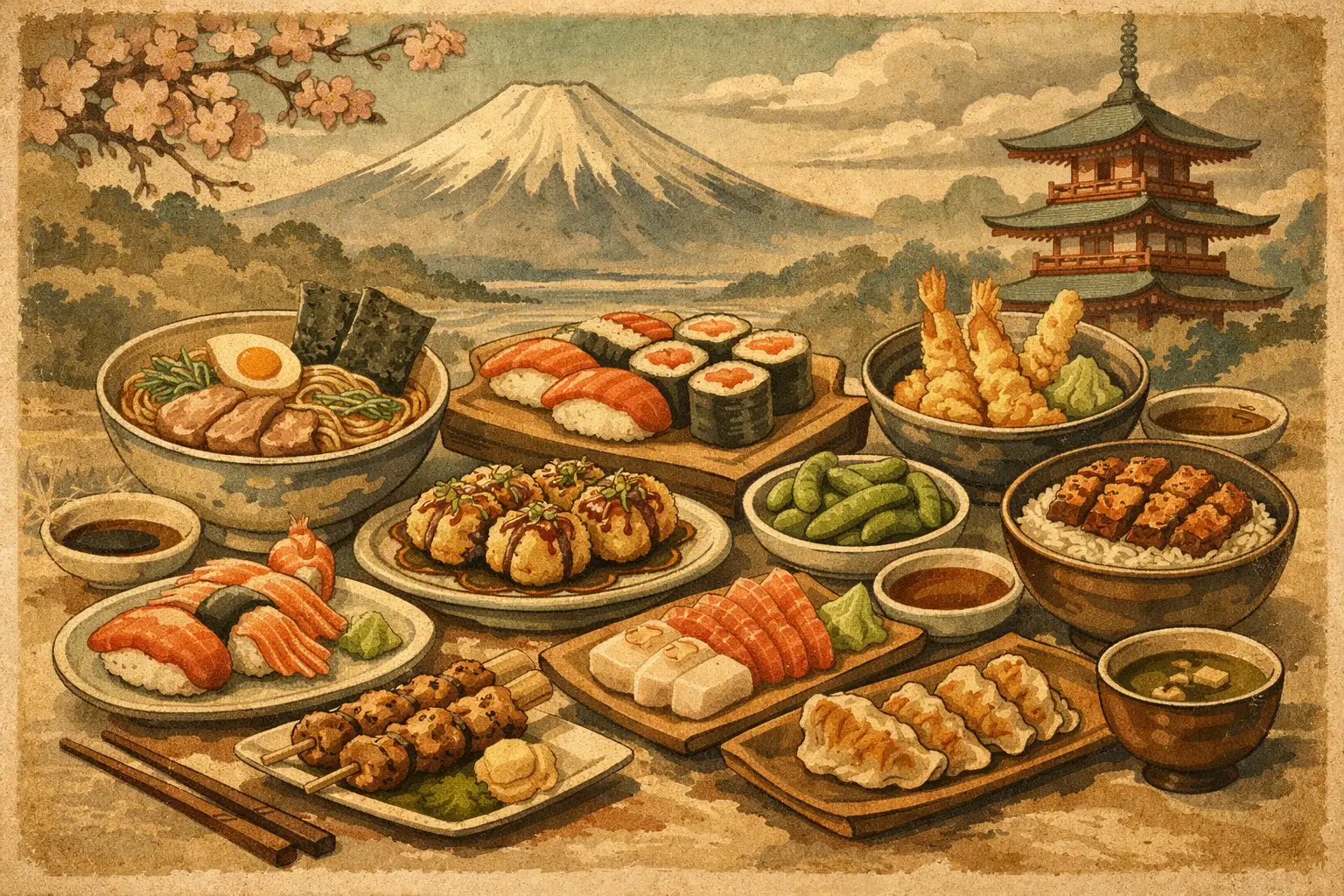
A first trip to Japan, or even your first serious visit to a Japanese restaurant, can turn into a happy kind of overload fast. The world of top japanese foods to try is much bigger than sushi and ramen, and that is exactly what makes it so exciting for all Japan lovers worldwide. Some dishes feel elegant and seasonal, some are built for street-side comfort, and some carry that quiet wabi sabi beauty that makes simple ingredients feel unforgettable.
Why the top Japanese foods to try go far beyond sushi
If you love Japanese culture, food is one of the most direct ways to feel its rhythm. You can see the respect for seasonality, the care for texture, and that subtle sense of mono no aware in a meal that changes with the time of year. Even a humble bowl of soup or a grilled skewer can tell you something about place, craft, and everyday life.
That said, Japanese food is not one single style. Tokyo alone can give you polished tasting menus, old-school noodle counters, neighborhood izakaya snacks, and temple-inspired vegetarian cooking. So instead of chasing only the most famous dishes, it helps to know which foods are iconic, which ones are beginner-friendly, and which ones depend on your own taste.
15 top Japanese foods to try
Sushi
Yes, sushi belongs on the list, but not because it is the obvious answer. Great sushi is all about balance – rice temperature, knife work, freshness, and restraint. If you are new to it, start with tuna, salmon, shrimp, or tamago, the slightly sweet Japanese omelet often served as nigiri.
There is also a useful distinction here. Conveyor-belt sushi can be fun, affordable, and surprisingly decent, while a small specialist counter can feel almost ceremonial. Both are worth trying because they show different sides of Japanese dining culture.
Ramen
Ramen is the dish many travelers end up craving twice in one day. The broth is the heart of it, and styles vary a lot: shoyu is soy sauce-based, miso is deeper and richer, shio is lighter and salt-based, and tonkotsu has that famously creamy pork-bone intensity.
If you do not usually like heavy soups, tonkotsu may feel like a lot. In that case, start with shoyu or shio. The joy of ramen is not just the noodles. It is the whole bowl – broth, sliced pork, bamboo shoots, soft egg, scallions, and aroma hitting you before the first bite.
Tempura
Tempura can surprise people who think fried food always has to feel greasy. Good tempura is crisp, airy, and delicate, with seafood or vegetables barely hidden under a light batter. Shrimp is the classic choice, but sweet potato, lotus root, mushroom, and eggplant are all worth your attention.
This is a dish where quality really shows. In a strong tempura restaurant, each piece arrives at the right moment, almost like a performance. At a casual spot, it is still deeply satisfying and often more affordable.
Okonomiyaki
Okonomiyaki is one of the great comfort foods of Japan. Often described as a savory pancake, it is usually made with cabbage, batter, and fillings such as pork, squid, or shrimp, then topped with sauce, mayo, seaweed, and bonito flakes that seem to dance from the heat.
Osaka and Hiroshima are especially known for it, but their styles differ. Osaka mixes ingredients into the batter, while Hiroshima layers them and often includes noodles. Neither is better. It depends whether you want something fluffy and unified or more structured and hearty.
Takoyaki
Takoyaki are round grilled batter balls filled with octopus, usually served hot enough to test your patience. They are topped in a similar way to okonomiyaki, with sauce, mayo, bonito flakes, and aonori. Street food energy is part of the charm here.
If you are hesitant about octopus, takoyaki is still worth trying. The texture is soft and custardy inside, with just a bit of chew from the filling. It is one of those snacks that feels festive from the first bite.
Soba
Soba deserves more attention than it gets outside Japan. These buckwheat noodles have a nutty flavor and a clean, understated character. You can eat them hot in broth or cold with a dipping sauce, and the experience changes completely depending on the season.
Cold soba in summer has a refreshing simplicity that feels very Japanese. It is not flashy, and that is the point. This is a great dish for travelers who appreciate subtle flavor over richness.
Udon
If soba is refined and lean, udon is generous and comforting. The noodles are thick, chewy, and satisfying, and they work beautifully in a range of broths. Kitsune udon with sweet fried tofu is especially popular, while tempura udon gives you a nice contrast of soft and crisp.
Udon is one of the safest choices for first-timers because it is easy to enjoy immediately. It is also a good dish to try in colder weather, when a steaming bowl feels almost restorative.
Tonkatsu
Tonkatsu is breaded, deep-fried pork cutlet, usually served sliced with shredded cabbage, rice, miso soup, and a savory-sweet sauce. It is straightforward, filling, and extremely lovable. If you like schnitzel or cutlets in general, this will probably be an instant favorite.
The trade-off is that tonkatsu is less delicate than some other Japanese dishes. But that is part of its appeal. It shows how Japanese cooking can also be direct, hearty, and satisfying without losing attention to detail.
Yakitori
Yakitori is grilled chicken on skewers, often seasoned simply with salt or glazed with tare sauce. What makes it special is the range. You can try thigh meat, chicken skin, meatballs, liver, or scallions paired with chicken in one sitting.
This is classic izakaya food – casual, social, and ideal for sharing. If you want a more local, evening-in-Japan feeling, yakitori is one of the best places to start.
Unagi
Unagi, or freshwater eel, is rich, tender, and usually grilled with a glossy sweet-savory sauce. It is often served over rice as unadon or in a lacquered box as unaju. The flavor is deeper than many people expect and a little luxurious.
It is not the cheapest dish, and not everyone loves eel on the first try. Still, if you want to branch out from the usual tourist picks, unagi is memorable and deeply rooted in Japanese food culture.
Curry rice
Japanese curry surprises many visitors because it is so homey. It is thicker, milder, and sweeter than many Indian or Thai curries, usually served with rice and sometimes topped with tonkatsu. It feels like comfort food made for rainy days and quick lunches.
Do not skip it because it seems too ordinary. Part of understanding Japanese food means recognizing what people actually eat regularly, not just what appears in travel photos.
Onigiri
Onigiri are rice balls or rice triangles filled with ingredients like salmon, tuna mayo, pickled plum, or kombu. They are wrapped in seaweed and sold everywhere from convenience stores to specialty shops. Simple? Yes. Boring? Never.
A good onigiri shows how much care Japan gives to everyday food. It is portable, practical, and often much better than people expect. For budget-conscious travelers, it is also one of the easiest wins.
Gyoza
Gyoza are Japanese pan-fried dumplings, usually filled with pork and vegetables. The bottoms are crisp, the tops stay soft, and the filling is juicy and savory. They are often served as a side with ramen, but they can easily steal the spotlight.
If you already love dumplings, gyoza will feel familiar. The Japanese version is usually lighter and more garlic-forward than some people expect, which makes them especially hard to stop eating.
Kaiseki
For a more refined side of the top Japanese foods to try, kaiseki is worth knowing about. This is a traditional multi-course meal built around seasonality, presentation, and progression. You are not ordering one famous dish here. You are experiencing a philosophy.
Kaiseki can be expensive and not always the best fit if you just want a big, casual meal. But for travelers drawn to tea ceremony, ceramics, gardens, or traditional inns, it can feel like the culinary version of ukiyoe – carefully composed, deeply atmospheric, and impossible to rush.
Wagashi
End with wagashi, traditional Japanese sweets often made from ingredients like sweet bean paste, rice flour, and agar. They are more subtle than many Western desserts and often shaped around the seasons – blossoms in spring, maple leaves in fall, snow-like forms in winter.
This is where Japanese aesthetics really come through. Wagashi are not always love-at-first-bite for people expecting intense sweetness, but paired with green tea, they make perfect sense. They invite you to slow down a little.
How to choose what to try first
If you want the safest starting point, go with ramen, tempura, tonkatsu, or gyoza. They are approachable, satisfying, and easy to appreciate right away. If you are more curious about traditional culture, try soba, kaiseki, wagashi, or unagi, where seasonality and presentation matter just as much as flavor.
It also depends on where you are eating. A train station meal, a department store food hall, a shrine-town soba shop, and a specialist sushi counter all tell different stories. That is part of the fun. Japanese food is not only about famous dishes. It is about context, place, and the small details that make each meal feel connected to daily life.
If you are building your own food wish list, let it be a mix of the iconic and the ordinary. The bowl of noodles you grab on a cold night and the carefully shaped sweet you eat with tea can both stay with you for years, and that is a pretty wonderful way to get closer to Japan.