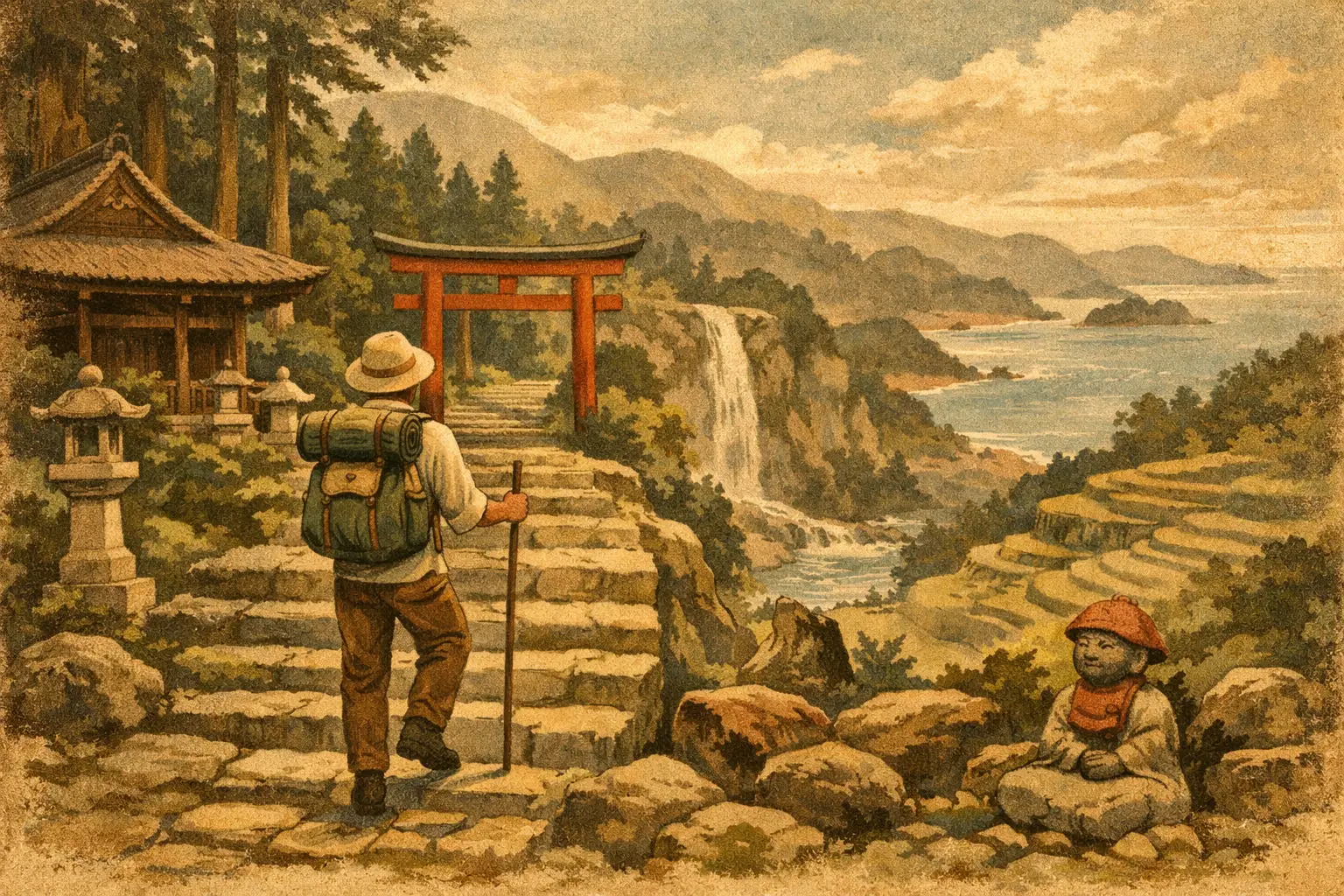
If you are staring at maps of the Kii Peninsula and wondering how people actually turn this sacred trail into a manageable trip, this kumano kodo itinerary example is for you. The Kumano Kodo is not just a hike you check off a list. It is a pilgrimage route with cedar forests, village stays, old shrines, stone paths, and that quiet feeling of mono no aware that shows up when mist hangs over the mountains.
A lot of sample plans online are either too rushed or too vague. They tell you where to start and finish, but not how the walking feels, when the climbs get real, or why one overnight stop makes more sense than another. So let’s keep this practical and honest. This is a strong first-timer itinerary for the Nakahechi route, the most popular section for international travelers who want culture, scenery, and a realistic walking schedule.
A realistic kumano kodo itinerary example
This version covers 3 days and 2 nights on the trail, usually starting from Takijiri-oji and finishing at Kumano Hongu Taisha. For many travelers, that is the sweet spot. You get the pilgrimage atmosphere without turning the trip into an endurance contest.
You can stretch it into 4 days if you want more breathing room, especially if you love photography, shrine visits, or slow travel. That extra time lets the route feel more wabi sabi – less about ticking stops, more about appreciating the weathered stone markers, tiny bus stops, and family-run minshuku that make the Kumano Kodo unforgettable.
Day 1: Takijiri-oji to Chikatsuyu
Day one is often the wake-up call. Takijiri-oji is considered a traditional entrance to the sacred mountains, and the trail does not ease you in gently. The early climb is steep enough that many people question their footwear choices within the first hour.
That said, it is a beautiful start. You move quickly from road access into a world of trees, old pilgrimage markers, and mountain silence. If you are arriving from Osaka, Kyoto, or Kii-Tanabe the same morning, be realistic about your energy. Jet lag plus a steep first ascent is not the best combo.
Ending in Chikatsuyu makes sense because it breaks the route at a comfortable point for most walkers. It is a small rural settlement, not a flashy destination, and that is exactly the charm. Staying in a minshuku here gives you one of the best parts of the Kumano Kodo experience – a home-style Japanese dinner, a bath, and a sense that the trail is as much about hospitality as it is about walking.
Expect this day to feel moderately hard if you are active, and quite hard if you are not used to hills. The terrain is not technical in a mountaineering sense, but there are roots, uneven stone, and repeated up-and-down sections. Trekking poles help more than many first-timers expect.
Day 2: Chikatsuyu to Yunomine Onsen or Kawayu Onsen
This is the longest and most varied day in the itinerary. You pass more forested sections, small hamlets, and viewpoints that make you understand why this route has held spiritual meaning for centuries. There is a rhythm to it – climb, descend, village, forest again – and by this point many travelers settle into the mental pace of pilgrimage.
If you can, aim to finish at Yunomine Onsen. This is one of the most special overnight stops on the route. Yunomine is an old hot spring settlement deeply tied to Kumano pilgrimage history, and soaking there after a long day on the trail feels almost ceremonial. It is one of those rare travel moments where the practical and the poetic line up perfectly.
Kawayu Onsen is also a good option if availability is tight. It is especially appealing if you want a river setting and a slightly different onsen atmosphere. The trade-off is that Yunomine often feels more closely woven into the pilgrim story, while Kawayu may feel a bit easier and more open depending on where you stay.
This second day is where pacing matters most. Some walkers move comfortably through it, while others find it draining, especially in heat or rain. If you know you prefer gentler days, this is the section where upgrading to a 4-day itinerary becomes a smart choice rather than a cautious one.
Why this kumano kodo itinerary example works for first-timers
The main reason is balance. It gives you the emotional heart of the route without stacking too much mileage into each day. That matters because the Kumano Kodo is not a hike where speed improves the experience. In fact, rushing can flatten it.
This route also lines up well with the kind of travel many Japan lovers worldwide actually want. You are not just moving through nature. You are staying in local inns, eating regional food, bathing in onsen, and stepping into a spiritual landscape shaped by centuries of belief. It feels connected to the deeper Japan so many of us come looking for, far beyond the neon postcard version.
Another practical advantage is luggage transfer. Many travelers send their larger bags ahead and walk with only a daypack. That one choice can completely change how enjoyable the trail feels. The climbs are still climbs, but they feel far less punishing when you are not carrying your whole Japan wardrobe on your back.
Day 3: Yunomine Onsen or Kawayu Onsen to Kumano Hongu Taisha
The final day is shorter and more flexible, which is exactly what you want after a big middle day. From Yunomine, many travelers walk to Kumano Hongu Taisha and then continue by bus or on foot depending on their schedule and energy.
Kumano Hongu Taisha is one of the three grand shrines of Kumano, and reaching it on foot gives the arrival weight. This is where the route stops being abstract and becomes personal. Even if you are not religious, there is something moving about approaching a place people have journeyed toward for so long.
Take your time here. Don’t rush through the shrine precinct and immediately think about your next train. Walk slowly, notice the cedar setting, and let the experience land. For many travelers, this is the point where the whole route clicks into place.
If you have extra time, the large torii at Oyunohara adds another layer to the visit. It is not a hard addition, and it rounds out the ending beautifully.
What to know before you follow this itinerary
Season matters a lot. Spring and fall are the most comfortable for many travelers, with milder temperatures and better walking conditions. Summer can be very humid, and winter brings a different kind of beauty but shorter daylight and colder nights. Rain is part of the Kii Peninsula mood, so waterproof layers are not optional.
Accommodation should be booked early, especially during peak travel periods. The trail infrastructure is good, but it is not unlimited. This is not the kind of destination where you want to improvise every night on the fly.
Fitness also matters, but maybe not in the way people assume. You do not need to be an elite hiker. You do need to be comfortable walking several hours on hills with uneven footing. If you can handle long urban sightseeing days, that helps, but mountain fatigue is different from city fatigue.
It is also worth deciding what kind of Kumano Kodo trip you want. Some people want the spiritual side, some want the nature, and some want the blend of pilgrimage and ryokan comfort. None of these are wrong, but the right itinerary depends on which version of the experience you care about most.
Is 3 days enough?
Yes, for many travelers it is enough. It gives you a meaningful section of the Nakahechi route and a strong arrival at Kumano Hongu Taisha. No, it is not enough if your goal is a fully unhurried pilgrimage with long pauses, side visits, and lots of time at each shrine.
That is the trade-off. A 3-day plan is efficient and satisfying, but it does not leave much margin for late starts, extended breaks, or tired legs. A 4-day version feels more spacious and can be a better fit if this trip is one of your major Japan highlights.
There is no prize for making the route harder than it needs to be. One of the most Japanese lessons the Kumano Kodo offers is that the experience deepens when you stop trying to optimize every minute.
For travelers who love shrines, traditional inns, hot springs, and the quieter textures of Japan, this route is something special. It is not flashy. It does not shout for attention. It stays with you the way a good ink painting or an old ukiyoe print stays with you – simple at first glance, then richer the longer you sit with it.
If you use this itinerary, leave room for the small moments: steam rising in an onsen town, a handmade meal after a wet walk, the hush of cedar woods before another climb. That is where the Kumano Kodo becomes more than a route on a map.