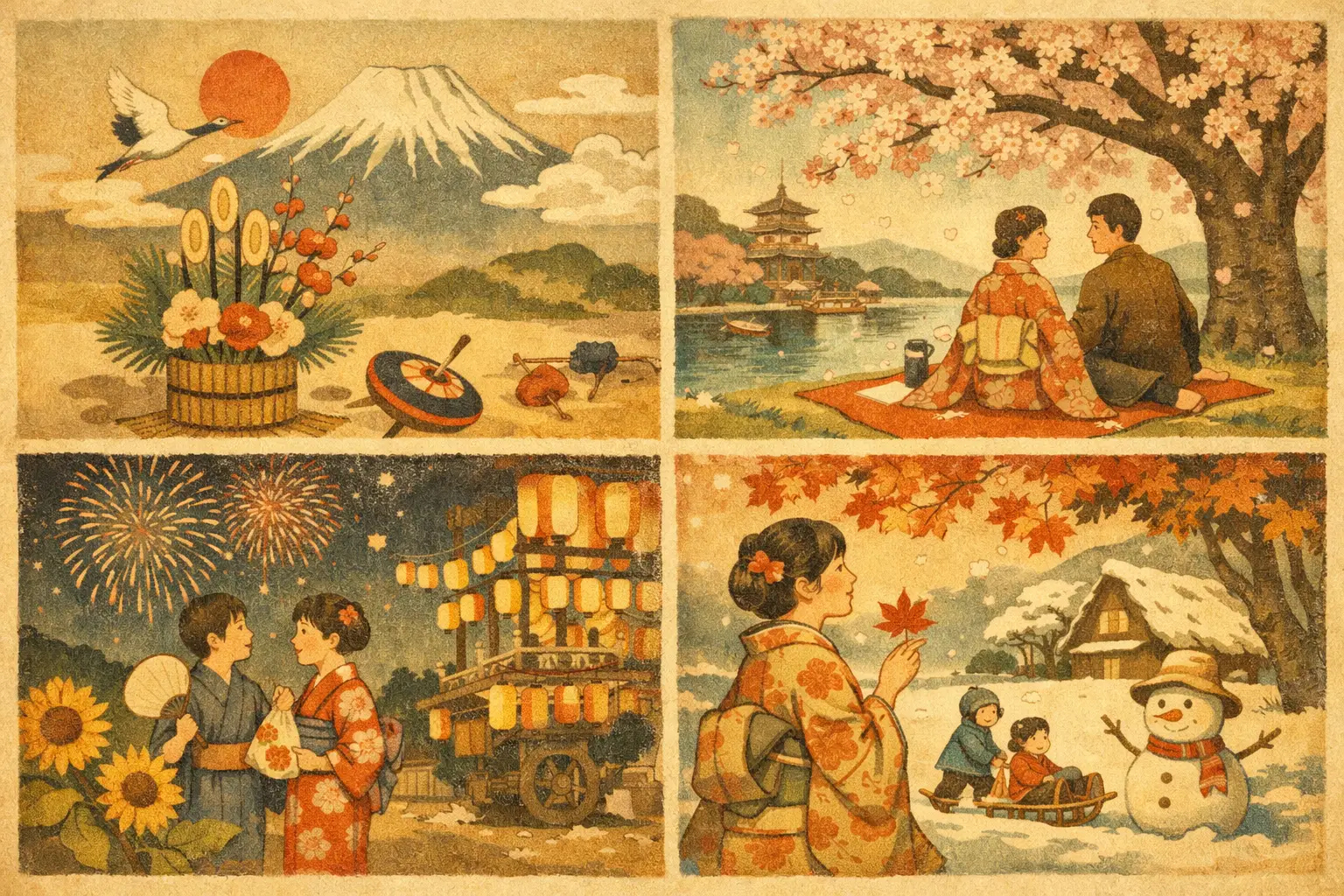
If you love Japan, one of the fastest ways to understand it more deeply is not by memorizing dates or dynasties. It is by following the rhythm of the year. A good 日本の季節行事一覧 is more than a calendar – it is a map of how Japan feels in spring, moves in summer, settles in fall, and grows quiet in winter. For all Japan lovers worldwide, this is where travel, food, shrines, flowers, and everyday beauty all meet.
What makes Japan’s seasonal events so memorable is that they are not all grand festivals. Some are huge and spectacular. Others are small, local, and almost intimate, like placing seasonal decorations at home or eating a certain dish on a certain day. That blend is part of the charm. You see public celebration and private custom living side by side, which says a lot about Japanese culture itself.
日本の季節行事一覧を知ると旅が変わる
Many visitors plan around cherry blossoms, autumn leaves, or a famous matsuri, and that makes sense. But Japan’s seasonal year has much more texture than a few headline events. When you know what happens month by month, you start noticing the layers – why a shrine is crowded, why certain sweets appear in shop windows, why a neighborhood hangs decorations, or why a riverbank suddenly fills with lanterns.
This also helps with expectations. Some events are nationwide, but many vary by region, temple, shrine, school, or household. A custom that feels universal in Kyoto may look different in Hokkaido or Okinawa. That is not inconsistency. That is local identity, and it is one reason Japan rewards repeat visits.
Spring seasonal events in Japan
Spring in Japan is not just sakura season. It is a stretch of time filled with renewal, school beginnings, and family milestones. The emotional tone often carries a sense of mono no aware – beauty made stronger because it does not last.
Hinamatsuri in March
Hinamatsuri, or Girls’ Day, is celebrated on March 3. Families with daughters display ornamental hina dolls that represent the imperial court. The displays can be simple or elaborate, and they often become treasured family objects passed down through generations.
For travelers, this is a beautiful season to visit historic houses, museums, and craft-focused displays because you may see traditional doll arrangements that connect aesthetics, seasonal symbolism, and domestic ritual. It is a quieter event than a street festival, but it reveals a lot about Japanese ideas of care, elegance, and family continuity.
Hanami and cherry blossom season
Cherry blossom viewing is the spring event that most international fans already know, and yes, it deserves the attention. Hanami is not just about flowers. It is about gathering under a brief, fragile bloom and enjoying the moment fully.
What surprises first-time visitors is how varied hanami can be. In some places it feels festive and social, with food stalls and crowded parks. In others it is reflective, almost wabi sabi in mood, especially around temple grounds or older gardens. If you are planning a trip, timing matters a lot, and bloom dates shift by region and weather. That uncertainty is part of the experience.
Kodomo no Hi in May
Celebrated on May 5, Kodomo no Hi, or Children’s Day, is marked by koinobori, the carp streamers that wave in the wind. They are cheerful, graphic, and instantly recognizable. You will often see them over rivers, outside homes, and at public sites.
This event is easy to love because it is visual and joyful, but it also carries older values around growth, resilience, and family hopes for children. If you enjoy Japanese design, this is one of those moments when everyday streets suddenly look like moving art.
Summer seasonal events in Japan
Summer is where the Japanese seasonal calendar turns outward. Streets fill up, yukata appear, fireworks boom over rivers, and communities gather after dark. This is festival season in the strongest sense.
Tanabata in July
Tanabata, the Star Festival, usually takes place in July, though some regions celebrate in August. It comes from the legend of two celestial lovers who meet once a year across the Milky Way. People write wishes on colorful strips of paper called tanzaku and hang them on bamboo branches.
For visitors, Tanabata is one of the most approachable seasonal events because the act of writing a wish feels universal. In some cities the decorations are modest. In others, especially major festival locations, they become large and theatrical. It can feel romantic, playful, or spiritual depending on where you are.
Obon in August
Obon is one of the most meaningful summer observances. It is a period for honoring ancestral spirits, often involving visits to family graves, offerings, lanterns, and community dances known as bon odori. If you are interested in temples, family customs, and the deeper emotional currents of Japanese culture, Obon matters.
This is also a good example of why seasonal events in Japan cannot be reduced to tourism snapshots. For some people, Obon is festive. For others, it is a time of return and remembrance. If you encounter it as a traveler, a respectful attitude goes a long way.
Summer fireworks and matsuri
Hanabi taikai, or fireworks festivals, are a huge part of summer. So are local matsuri with mikoshi processions, taiko drumming, and rows of food stalls. This is the Japan many fans dream about – lantern light, festival games, grilled snacks, and shrines alive after sunset.
Still, it depends on what kind of experience you want. Famous events can be thrilling but crowded. Smaller town festivals may offer a more personal atmosphere. If you love craft, costume, and local community energy, summer is hard to beat.
Fall seasonal events in Japan
Fall in Japan feels richer and more grounded. The heat drops, harvest themes return, and seasonal appreciation shifts from blossoms to leaves, moonlight, and food. If spring is fleeting and emotional, fall is often deeper and more contemplative.
Tsukimi and moon viewing
Tsukimi, or moon viewing, celebrates the autumn moon. Traditional decorations may include pampas grass and offerings such as dumplings. The visual language is simple and elegant, with a quiet seasonal awareness that many Japan lovers find deeply appealing.
This is one of those customs that may not always appear as a large public event, but it shows up in sweets, restaurant menus, and temple settings. It rewards slow attention. You begin to notice how Japan marks a season not only with spectacle, but with subtle references across daily life.
Autumn leaves and cultural outings
While not a single holiday, momiji season functions almost like one. People travel to gardens, temple complexes, mountain paths, and old castle towns to see the changing leaves. The appeal is obvious, but the atmosphere differs from spring blossom crowds. Fall leaf viewing often feels calmer and more reflective.
If you enjoy traditional architecture, tea culture, or historic districts, this season pairs especially well with them. Red maple leaves against dark wood, stone paths, and temple roofs create scenes that feel almost like ukiyoe come to life.
Shichi-Go-San in November
Shichi-Go-San celebrates children at the ages of seven, five, and three. Families visit shrines, often with children dressed in kimono or formal wear, to pray for health and growth. For international visitors, this can be one of the most charming sights of fall.
It is worth remembering, though, that this is a family milestone, not a performance for tourists. Watching respectfully lets you appreciate how seasonal observances in Japan often bring together clothing, ritual, photography, and intergenerational memory.
Winter seasonal events in Japan
Winter turns the calendar toward purification, year-end customs, and fresh beginnings. This is the season of crisp air, shrine visits, and foods tied to warmth and celebration.
New Year traditions
New Year is one of Japan’s biggest seasonal periods, far beyond a single midnight countdown. Preparations include cleaning, special decorations, and holiday foods. Then comes hatsumode, the first shrine or temple visit of the year, when people pray for good fortune.
For travelers, this can be exciting and a little tricky. Some businesses close, and transport hubs can be busy. But if you want to see Japanese seasonal culture in a concentrated form, New Year is unforgettable. Ritual, family, food, and spiritual practice all come together.
Setsubun in February
Setsubun marks the transition into spring according to the old calendar and is best known for bean-throwing rituals meant to drive away evil and invite good fortune. You may hear the phrase Oni wa soto, fuku wa uchi – demons out, good fortune in.
This event has a playful side, especially in schools and households, but it is also rooted in ideas of cleansing and seasonal change. It shows how Japan often frames the turning of the year not only as celebration, but as renewal through symbolic action.
How to use a 日本の季節行事一覧
If you are planning a trip, use a seasonal events list as a way to shape where and when you go, not just what you see. A temple town during Obon feels different from that same town in winter. Kyoto in peak autumn is different from Kyoto during Setsubun. The right timing can turn a good itinerary into a memorable one.
If you are not traveling yet, a 日本の季節行事一覧 still brings Japan closer. You can follow seasonal foods, watch for craft traditions, learn the meaning of decorations, or build your own annual rhythm around Japanese culture from abroad. That is one reason communities like Crazy for Japan resonate so much. They make cultural connection feel active, not distant.
The best way to approach Japan’s seasonal events is with curiosity rather than checklist thinking. Some moments will be famous and photogenic. Others will be brief, local, and easy to miss. Often, the smaller moments stay with you longer – a shrine visit in cold air, a row of koinobori over water, moon-viewing sweets in a shop window, the feeling that the season has quietly changed.