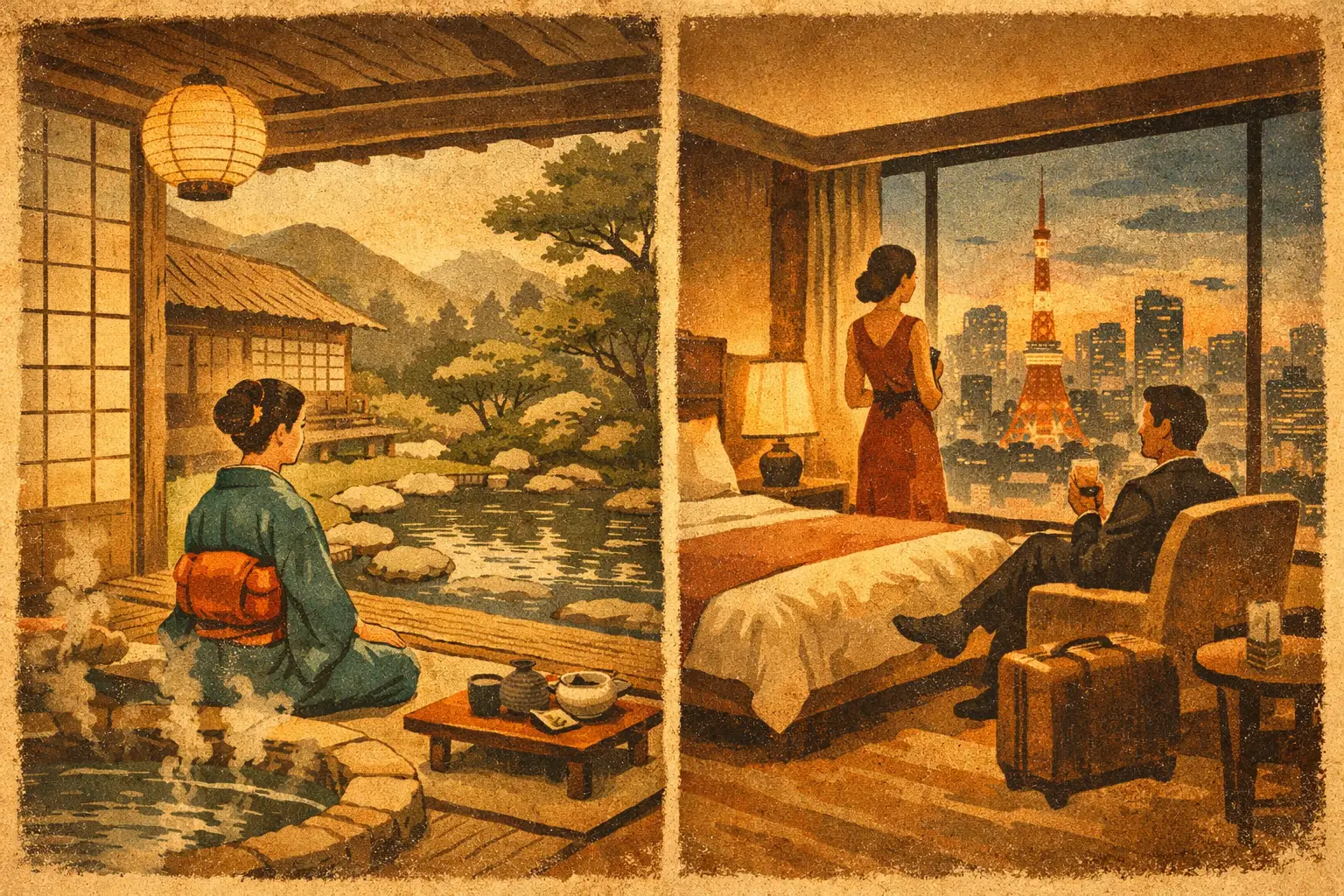
The moment you slide off your shoes at the entrance, hear the soft shuffle of tabi on tatami, and spot a yukata folded in your room, the whole ryokan stay vs hotel stay question stops being theoretical. It becomes personal. In Japan, where even small details carry feeling, your accommodation is not just where you sleep. It shapes how you experience the country.
For many travelers, a hotel is the familiar choice – easy check-in, reliable beds, and a base for busy sightseeing. A ryokan, though, offers something closer to atmosphere as hospitality. It can feel intimate, ritualized, and deeply tied to Japanese ideas of omotenashi, or wholehearted care for the guest. Neither is automatically better. It depends on what kind of trip you want, how comfortable you are with local customs, and whether you want your stay to be part of the cultural experience or mostly a place to recharge.
Ryokan stay vs hotel stay: what changes most?
The biggest difference is not just design. It is rhythm.
A hotel usually lets you come and go with very little friction. You wake up when you want, skip breakfast if you want, return late, and treat the room as your private launch point for the day. That flexibility is a huge advantage if your plan includes packed city schedules, shopping, museums, train connections, or nightlife.
A ryokan often asks you to slow down. Check-in may happen earlier, dinner may be served at a set time, and the room itself can shift function across the day. In some ryokan, the same tatami room that serves tea in the afternoon becomes your sleeping space once futons are laid out in the evening. That transition is part of the charm. It creates a sense of occasion that many travelers remember more vividly than a standard hotel room.
This is where mono no aware quietly enters the picture – the appreciation of fleeting moments. A ryokan is often less about efficiency and more about noticing textures, timing, and mood.
What a ryokan gives you that a hotel usually does not
The appeal of a ryokan is not luxury in the usual Western sense. Some are very high-end, of course, but even modest ryokan can feel special because they are built around experience rather than just convenience.
Traditional rooms with tatami flooring, shoji screens, low tables, and futons create an entirely different way of inhabiting space. You sit lower, move differently, and become more aware of quiet. There is often an understated wabi sabi beauty to the room – natural materials, soft wear, and the kind of elegance that does not need to announce itself.
Meals are another major difference. Many ryokan stays include kaiseki-style dinner and Japanese breakfast, and this can be one of the best reasons to book one. Instead of rushing out to find a restaurant, you are served seasonal dishes that reflect local ingredients and regional identity. If you are staying in an onsen town or countryside area, the meal may be one of the most memorable parts of the trip.
Then there is the bath. Not every ryokan has an onsen, but many do, and access to communal bathing changes the mood of the stay. After a day of walking, soaking in mineral water before dinner can make the whole evening feel beautifully complete. For travelers who already love Japanese bathing culture, this alone can tip the choice.
Where hotels win without much debate
Hotels make travel easier, especially in cities.
If you are staying in Tokyo, Osaka, Kyoto, or Yokohama and plan to spend most of your time outside the room, a hotel is often the smarter choice. You usually get better access to stations, easier luggage handling, more late-night flexibility, and fewer expectations around timing. Business hotels in Japan can also be impressively efficient, clean, and affordable, while upscale hotels add comfort without requiring cultural adjustment.
There is also the matter of beds. Some travelers love futons on tatami. Others discover after one night that they miss a Western mattress very much. Hotels are more predictable if sleep quality is your top priority.
Bathrooms matter too. In a hotel, your private bath and toilet are standard. In a ryokan, especially a traditional or budget one, bathrooms may be shared. For some travelers that is no problem. For others, it is a dealbreaker.
If you are traveling with lots of shopping bags, big suitcases, or a fast-moving itinerary, hotels usually feel more practical. That does not make them less meaningful. Japan does hotels exceptionally well.
Ryokan stay vs hotel stay for first-time visitors
First-time visitors often assume they should pick one and ignore the other. That is usually the wrong move.
If this is your first trip to Japan, the sweet spot is often a mix. Spend most nights in hotels for convenience, especially in major cities, then book one or two nights in a ryokan somewhere that suits the experience – Hakone, Kinosaki Onsen, Nikko, Takayama, or a quieter rural area. That way, you get both the practical side of travel and the cultural depth of a traditional stay.
A ryokan can feel magical, but it can also feel confusing if you arrive expecting hotel norms. Shoes come off right away. Dinner times can be fixed. Staff may enter the room to serve food or prepare bedding. The atmosphere is more personal and sometimes less private by Western standards. Going in with the right mindset helps a lot.
Think of it this way. A hotel supports your itinerary. A ryokan is part of the itinerary.
Price, value, and the question people get wrong
At first glance, ryokan often seem expensive. And yes, they can be. But comparing the price of a ryokan directly to a basic hotel room is not always fair.
Many ryokan rates include dinner and breakfast, and those meals may be substantial, beautifully prepared, and regionally distinctive. If there is also access to an onsen, a scenic location, and personalized service, the value picture changes. You are not just paying for a bed. You are paying for a whole curated evening and morning.
Hotels vary more widely. Budget business hotels can be excellent deals, while luxury city hotels may cost as much as or more than a ryokan without offering the same cultural experience. So the real comparison is not simply price per night. It is what kind of memory you want to buy.
Still, if your budget is tight and food flexibility matters, hotels usually give you more control.
Etiquette and comfort level
This is where honesty matters. A ryokan asks for a little participation.
You may need to follow bathing rules carefully, wear provided slippers in the right places, avoid bringing luggage wheels onto tatami, and show up for meals on time. None of this is difficult, but it does ask for attention and respect. For many Japan lovers worldwide, that is part of the appeal. It feels like stepping into lived culture instead of just observing it.
But if the idea of shared baths makes you anxious, or if highly structured hospitality feels stressful rather than relaxing, a hotel may suit you better. Travel should expand you, yes, but it should also let you rest.
Some travelers worry they will make mistakes in a ryokan. You might, a little. That is okay. Staff are usually very gracious, and many ryokan that welcome international guests explain the basics clearly. Curiosity and politeness go a long way.
Which one fits your kind of Japan trip?
If your dream trip centers on onsen, mountain views, seasonal cuisine, temple towns, quiet evenings, and the emotional texture of traditional Japan, book a ryokan. It connects beautifully with the side of Japan that many people fall in love with through tea, calligraphy, gardens, and old wooden streets.
If your trip is about urban energy, early trains, neighborhood food hunts, museums, vintage shops, and staying out until the last subway, choose a hotel. It supports momentum.
And if you love both sides of Japan, which many of us do, combine them. A few nights of neon and convenience, then one slow evening in a tatami room with a multi-course meal and a soak before bed. That contrast is part of what makes Japan so unforgettable.
At Crazy for Japan, that balance feels especially true. Japan is not one mood. It is the polished efficiency of a city hotel and the hush of a ryokan corridor after dinner.
The best choice is the one that matches the feeling you want to carry home. If you want ease, range, and a familiar base, a hotel will serve you well. If you want to feel Japan a little more closely – not just see it – a ryokan can stay with you long after the trip ends.