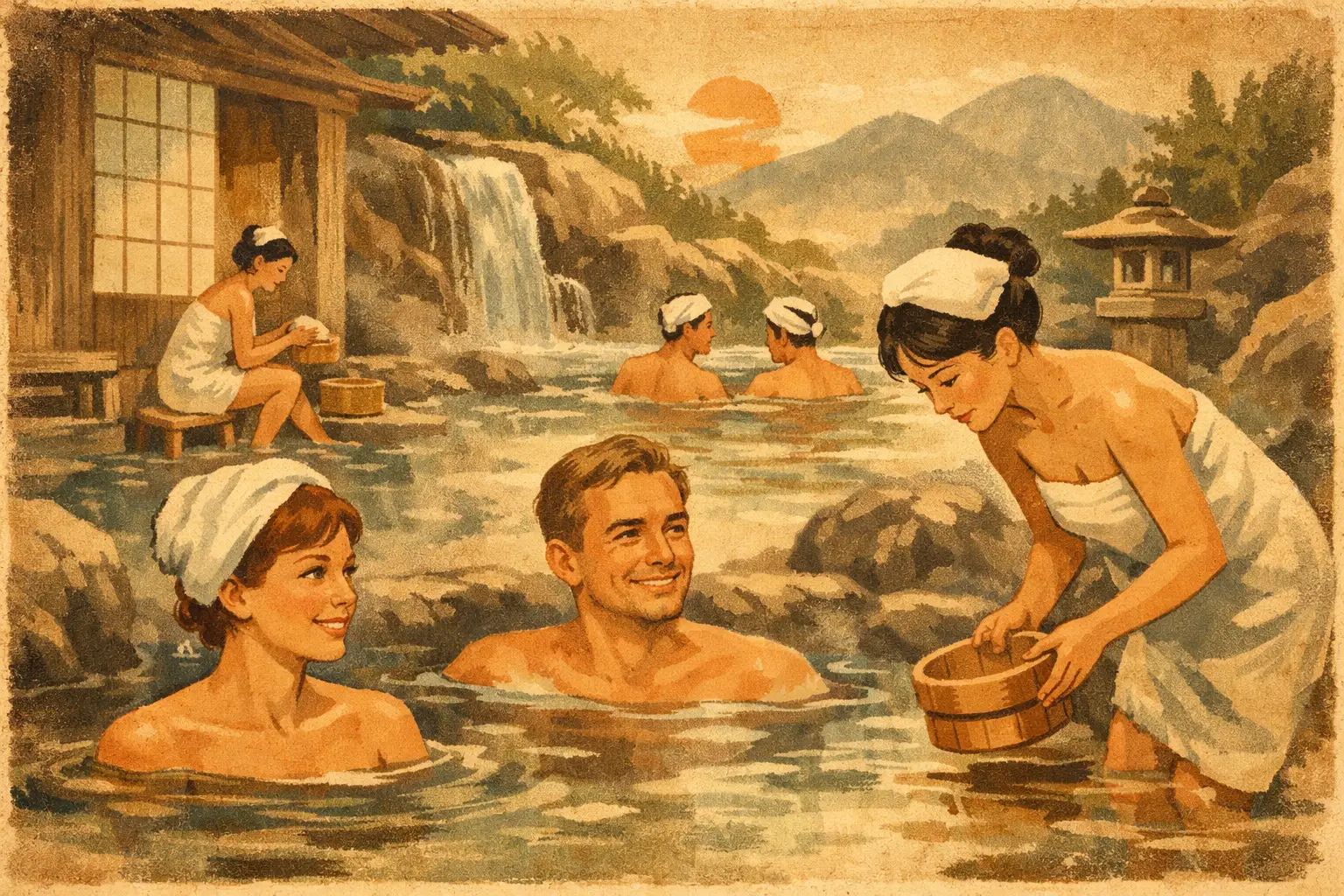
You finally make it to a real Japanese onsen, step into the changing room, and then it hits you – where do the shoes go, what do you do with the tiny towel, and is everyone really bathing naked? If you have ever felt excited and mildly terrified at the same time, you are not alone. Onsen etiquette for foreigners can feel intimidating at first, but once you understand the rhythm, it becomes one of the most relaxing and memorable parts of a trip to Japan.
For many Japan lovers, an onsen is not just a hot bath. It is a cultural experience shaped by quiet respect, shared space, and a kind of everyday wabi sabi – simple, restorative, and deeply human. You do not need perfect Japanese or years of travel experience to enjoy it. You just need to know the basics, and a few details that are easy to miss if you grew up with very different bathing customs.
Why onsen etiquette matters
An onsen is built around communal comfort. The rules are not there to make visitors feel unwelcome. They exist so everyone can relax, keep the water clean, and enjoy the atmosphere without stress. Once that clicks, the customs make a lot more sense.
This is also why onsen etiquette for foreigners is less about memorizing rigid rules and more about understanding the spirit behind them. Think consideration over performance. If other guests can see that you are trying to be respectful, that goes a long way.
Before you enter the bath
The first step usually happens before you even see the water. At many onsen, you remove your outdoor shoes at the entrance and switch into slippers or go in socks or bare feet, depending on the facility. If there are lockers or shoe cubbies, use them. Staff may explain the process, and signage is often clear even if you do not read much Japanese.
Then you head to the changing room. Most traditional onsen are separated by gender, often marked with blue for men and red for women, though it is still smart to check the kanji or ask if you are unsure. Some places offer private baths, called kashikiri, or family baths, which are especially helpful if you are nervous, traveling as a couple, or have tattoos and want a simpler experience.
In the changing room, you undress completely. At most onsen, swimsuits are not allowed. That surprises many first-time visitors, but in Japan, the absence of clothing is simply part of the bathing custom, not something awkward or provocative. You can carry a small modesty towel, but that towel does not go into the bath water.
The most important rule: wash first
If there is one thing to remember, it is this: you do not get into the onsen without washing your body first. This is the foundation of the whole experience.
Before entering the shared bath, sit at one of the washing stations and clean yourself thoroughly. These stations usually have a stool, a hand shower, buckets, soap, shampoo, and conditioner. Rinse, wash, and rinse again. Take your time. Tie up long hair so it does not touch the water.
This part can feel surprisingly calm once you settle in. It is not a rushed pre-shower. It is part of the bathing ritual itself. The bath is for soaking after you are clean.
What to do in the bath itself
Once you are clean, you can step into the bath slowly. Onsen water is often quite hot, so there is no prize for jumping in dramatically. Ease in and let your body adjust.
Keep your small towel out of the water. Many people fold it and place it on their head or leave it on the side of the bath. This detail is easy to miss, but it is one of the clearest signals that you understand the custom.
The atmosphere is usually quiet. You do not need complete silence, but think soft voices, short conversations, and a general sense of calm. This is not the place for splashing, loud storytelling, or phone checking. In fact, phones and cameras are generally not allowed in bathing areas for obvious privacy reasons.
You may see different pools with different temperatures, mineral content, or views. Some baths are indoors, some are rotenburo, open-air baths, and some are attached to ryokan inns. It depends on the onsen. A rustic mountain rotenburo can feel almost mono no aware in the best way – steam drifting into cold air, rocks dark with moisture, a moment that feels fleeting and unforgettable.
Common questions foreigners worry about
Are tattoos allowed?
This one depends. Some onsen still restrict tattoos because of their historical association with organized crime in Japan. Others are more flexible than they used to be, especially in tourist-friendly areas. Some allow small tattoos if covered with a patch, while others permit them outright.
It is always worth checking the policy before you go. If a bath does not allow tattoos, do not argue with staff. Just choose another option. Private baths, tattoo-friendly onsen, and ryokan with in-room bathing are all great alternatives.
Can couples bathe together?
Usually not in standard public baths, since most are separated by gender. If bathing together matters to you, book a private bath. This is common, easy to arrange in many places, and often a wonderful way to enjoy the experience without worrying about unfamiliar rules.
Do you have to stay in for a long time?
Not at all. A short soak is completely fine, especially if the water is very hot. Many people soak, step out, cool down, and then return later. Listen to your body. Onsen is about restoration, not endurance.
Small mistakes that can make a big difference
A lot of onsen etiquette for foreigners comes down to avoiding a few common slipups. Do not rinse yourself in a way that splashes nearby people at the washing station. Do not wring your towel into the bath. Do not swim, dunk your head, or let your hair float in the water.
It is also best not to wear strong perfume before entering, since shared bathing spaces are close and sensory. If you are bringing children, be sure they can follow the calm atmosphere expected in the bath. Some onsen are family-friendly, while others are better suited to adults seeking quiet.
After soaking, some people do a light rinse, while others do not, especially if they want to leave the mineral water on their skin. This can vary by place and personal preference. If the facility has a sauna or cold plunge, watch how others use it before jumping in. The details are not always identical from one onsen to another.
After the bath
When you leave the bathing area, dry off lightly before stepping back into the changing room. This is another small but important courtesy. Use your towel to remove excess water so the floor and benches stay clean and comfortable for everyone.
After changing, many people rehydrate, rest, or enjoy a drink of milk, tea, or water in the lounge area. If you are staying at a ryokan, this is often the perfect moment to slow down in your yukata and just enjoy the post-bath feeling. Warm skin, lighter muscles, quieter mind – that is part of the magic.
How to feel confident your first time
The easiest way to handle first-time nerves is to remember that you are not expected to perform Japanese-ness perfectly. You are expected to be respectful. There is a difference.
Watch what others do. Move calmly. Read the signs. If you are unsure, ask staff a simple question. In many onsen, especially those used to international guests, people will appreciate the effort and help you along. Most awkward moments are brief, and after five or ten minutes, the whole process starts to feel surprisingly natural.
For all Japan lovers worldwide, this is one of those experiences that shifts from intimidating to cherished very quickly. The first onsen can feel like learning a code. The second feels soothing. By the third, you may start wondering how any trip to Japan is complete without it.
If you go with curiosity, humility, and clean skin, you are already most of the way there – and that is more than enough to enjoy the water.