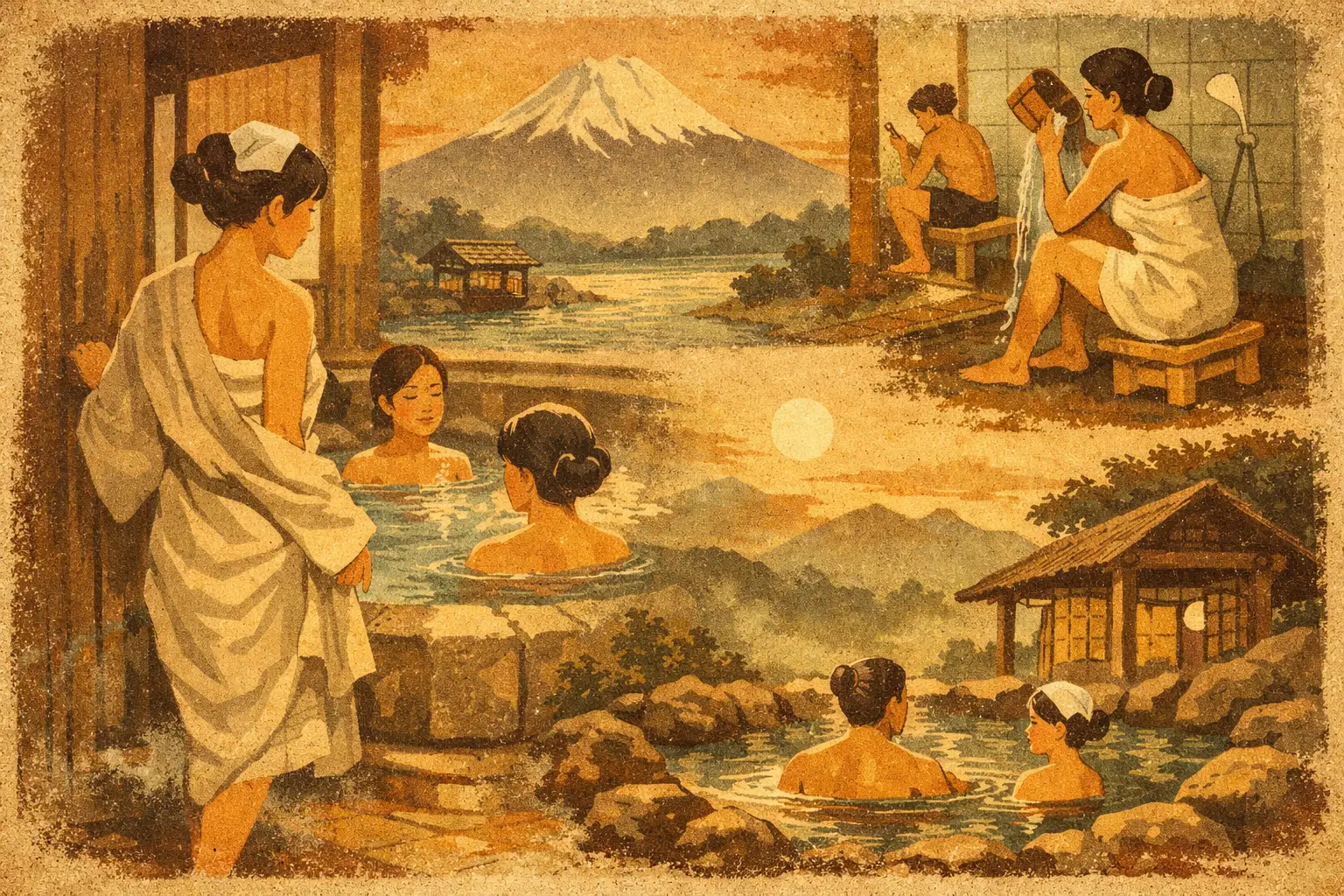
Step into a Japanese bathhouse for the first time and one thing becomes clear fast – this is not about getting clean in a hurry. Japanese bathing culture treats the bath as a space for quiet, reset, and respect. Whether you are curious about a steamy mountain onsen, a neighborhood sento, or the deep evening soak in an ordinary home, bathing in Japan carries a meaning that goes far beyond soap and hot water.
That difference is part of what makes it so fascinating for Japan lovers worldwide. A bath in Japan can feel social without being loud, deeply traditional without being frozen in the past, and luxurious without needing to be expensive. It sits somewhere between daily habit, wellness ritual, and cultural etiquette, with a touch of wabi sabi in the way simple heat, water, wood, and stone create a complete experience.
What Japanese bathing culture really means
At its core, Japanese bathing culture separates washing from soaking. In many Western homes, the tub and the shower overlap in purpose. In Japan, the order matters. You wash your body thoroughly first, then enter the bath clean. The hot water is for relaxing, warming up, and restoring yourself, not for rinsing off the day.
That one distinction explains a lot. It shapes public bath etiquette, home bathroom design, and the feeling of the whole experience. The bath becomes shared space in some settings and reflective space in others. It is practical, but it is also emotional. There is even a kind of mono no aware in it – an appreciation for a fleeting moment of warmth, steam, and silence at the end of the day.
For many people in Japan, bathing is woven into daily life from childhood. Children learn the routine early. Adults keep it as a source of comfort. Travelers often encounter it through onsen, but the roots go much deeper than tourism.
Onsen, sento, and the home bath
If you love Japanese culture, it helps to know the three main bathing settings because each reveals a different side of the tradition.
Onsen are built around hot springs
Onsen are baths fed by natural hot spring water, often rich in minerals. They are famous for dramatic settings – snowy mountains, cedar-lined outdoor pools, coastal views, hidden inns. That image is real, but the real charm is not just the scenery. It is the feeling of entering water that has come from the earth itself.
People visit onsen for relaxation, travel, seasonal beauty, and in some cases for the perceived benefits of the minerals. Different springs are known for different qualities. Some waters are milky, some clear, some sulfuric, some slightly reddish with iron. The atmosphere can range from rustic to refined.
Sento are neighborhood bathhouses
Sento are public bathhouses that use heated tap water rather than natural hot spring water. They were especially important when many homes did not have their own baths, and they still matter as local community spaces. In a sento, the appeal is often less about luxury and more about rhythm, routine, and neighborhood life.
Some sento are beautifully old-school, with tiled murals, high ceilings, and a Showa-era charm. Others have modern updates like saunas, cold baths, or electric baths. If onsen often represent travel and escape, sento represent everyday belonging.
Home baths keep the culture alive every day
The home bath might be the least photographed part of Japanese bathing culture, but it is one of the most important. In many households, family members wash first and then take turns soaking in the same tub water. That may sound surprising to outsiders, but it makes sense once you understand the clean-then-soak rule.
The bath at home is often deep rather than long, made for immersion. It is a daily reset button. Especially in colder months, it becomes part of how people wind down, warm the body, and mark the transition from work to rest.
Etiquette matters more than luxury
One reason bathing in Japan feels distinctive is that etiquette is not an optional extra. It is the thing that allows everyone to share the space comfortably.
Before entering the bath, you wash thoroughly at the shower station. You sit on a small stool, rinse carefully, and make sure no soap or shampoo enters the bath itself. In communal baths, towels stay out of the water. Noise is usually kept low. Phones are generally not part of the experience. The goal is consideration.
For first-time visitors, this can feel intimidating, but it is actually pretty logical. Once you understand the rhythm, the rules support relaxation instead of limiting it. Nobody is asking for perfect performance. They are asking you to respect the shared environment.
There are also some it-depends details. Tattoos, for example, are still restricted in some bathhouses because of older associations with organized crime, though policies are changing in more tourist-friendly places. Some baths welcome tattoo covers, some allow tattoos freely, and some still say no. Private baths can be a good option if you are unsure.
Why bathing became so central in Japan
Japan’s geography helps explain a lot. The country is volcanically active, which means abundant hot springs. That natural gift made communal bathing easier to develop and sustain. But geography alone is not the whole story.
Bathing also connects to ideas of purity, seasonality, and social order that show up across Japanese culture. You can see echoes of this in shrine purification rituals, in the care given to changing seasons, and in the attention to space and behavior. A bath is not a religious act in most daily contexts, but the cultural respect for cleansing and preparation is still there.
Then there is the simple reality of urban life. Shared spaces in Japan often work well because etiquette is taken seriously. Public bathing became one more place where that social awareness mattered. You do your part so the experience stays pleasant for everyone.
The sensory side of Japanese bathing culture
A great bath in Japan is about more than heat. It is about atmosphere. Steam softens the room. Wood, stone, and tile shape the sound. Water echoes differently indoors and outdoors. In rotenburo, the open-air baths attached to many onsen, you might sit in hot water while cool air touches your face. In autumn, leaves drift. In winter, snow gathers on rocks. In spring, the timing of blossoms can turn a simple soak into something unforgettable.
This is one reason so many travelers fall in love with the experience. It feels designed, but not in a flashy way. More often it reflects understated beauty, a little like ukiyoe scenes translated into water and weather. The best baths do not overload your senses. They edit them.
What first-time visitors should expect
If you want to try an onsen or sento in Japan, go in with curiosity rather than anxiety. Most places follow a similar basic flow. You remove your shoes, check in, use the changing area, wash first, then soak. Afterward, many people cool down slowly and rehydrate rather than rushing straight out.
The biggest adjustment for many foreign visitors is nudity in gender-separated baths. For some people, that feels natural after a few minutes. For others, it never becomes fully comfortable. Both reactions are normal. If you are hesitant, look for a private bath, a reservable family bath, or accommodations with in-room bathing options.
Water temperature can also surprise people. Japanese baths are often quite hot by American standards. If you are sensitive to heat, ease in slowly and do not stay too long at first. The goal is comfort, not endurance.
More than wellness, less than a trend
It is easy to frame Japanese bathing as a self-care trend, but that misses the point a little. Yes, it is calming. Yes, it can feel healing. But its real power comes from consistency and cultural depth. This is not a once-a-month spa idea. It is a lived habit.
That is why japanese bathing culture continues to resonate with so many people outside Japan too. It offers something many of us are missing – a repeatable ritual that slows the day down and gives ordinary life a little more shape. Not every part translates perfectly across countries or homes, and not everyone will have access to an onsen or a deep soaking tub. Still, the underlying lesson travels well: clean first, pause second, and let the bath be more than a task.
For all Japan lovers worldwide, this is one of those traditions worth appreciating with both excitement and humility. The next time you see steam rising from an onsen in the mountains or a simple tub waiting at the end of the day, remember that the beauty of it is not just in the water. It is in the care, the rhythm, and the quiet respect that surround it.