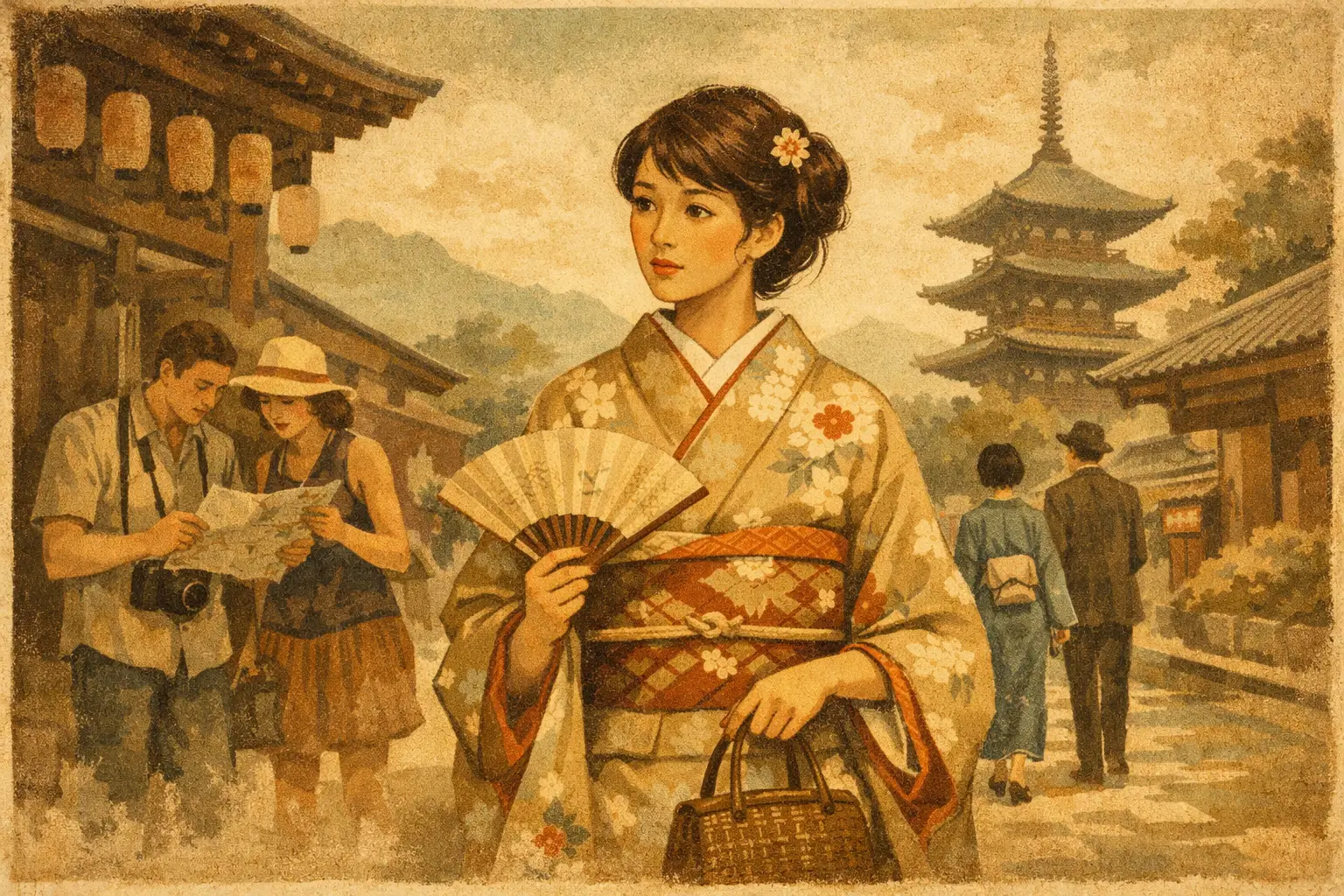
The first time you try on a kimono, it can feel like a beautiful puzzle. There is fabric everywhere, the shape is unlike Western clothing, and one wrong fold can make you wonder if you have accidentally dressed yourself backward. If you have been curious about how to wear kimono, the good news is that the basics are very learnable once you understand the logic behind the garment.
A kimono is not just a robe with a belt. It has structure, balance, and a quiet sense of intention that feels close to wabi sabi – elegant, restrained, and deeply aware of form. You do not need to aim for perfection on day one, but you do want to wear it in a way that respects the tradition it comes from.
How to wear kimono the right way
The most important rule comes first: wrap the left side over the right side. Always. The reverse, right over left, is used for dressing the deceased, so this one detail matters more than any accessory or styling choice.
From there, the goal is to create a clean, straight silhouette. Kimono do not usually celebrate curves in the way modern Western fashion often does. Instead, they create a long column shape from shoulders to ankles. That is why the layers, ties, and folds all work together to smooth the body rather than contour it.
If you are wearing a casual kimono such as a yukata, the process is simpler. If you are wearing a more formal kimono, there may be extra layers and accessories involved. Either way, the basic wearing method follows the same rhythm.
Start with the underlayers
Traditional kimono are usually worn over undergarments, and formal kimono often include a nagajuban, which is an under-kimono that helps protect the outer garment from sweat and body oils. If you are trying kimono at home for cultural appreciation, an event, or a festival, think of the underlayer as both practical and part of the silhouette.
Choose clothing underneath that is light and close to the body. Avoid bulky seams, thick waistbands, and padded bras that create uneven lines. A smooth base makes everything easier. If you are wearing a yukata in summer, you may keep things more minimal, but comfort still matters.
Put on the kimono and find the length
Slip your arms through the sleeves and hold the kimono open in front of you. The center back seam should run straight down your spine. Then lift the garment so the hem falls around your ankles. Traditionally, women adjust extra length by folding fabric at the waist, while men usually wear kimono cut closer to their height and without that same folded section.
Once the hem is where it should be, bring the right side across your body first, then the left side over it. Keep repeating that to yourself if needed. Right first, left on top.
At this point, the fit should feel snug but not restrictive. You want enough hold to stay in place while walking, sitting, and moving your arms, but not so tight that the fabric pulls awkwardly.
Tie it in place before the obi
Before the wide belt goes on, kimono are usually secured with one or more thin ties called koshihimo. These hold the shape while you adjust the overlap, smooth the back, and create a neat front line.
If you are dressing yourself, this is often the moment that feels most awkward. That is normal. The fabric can shift, and it takes a few tries to get the front panels flat. Take your time and smooth downward with your hands. A kimono should not look bunchy or twisted.
For women, the fold at the waist, called the ohashori, should sit evenly below the obi. For men, the line is simpler and lower, with less visible folding. This is one reason men’s kimono can feel easier for beginners.
Add the obi
The obi is the wide sash that defines the finished look. It is also where formality, gender, and occasion start to matter a lot. A casual half-width obi for a yukata is much easier to tie than a formal fukuro obi worn with a dressed-up kimono.
If you are new to this, start simple. A casual obi tied in a basic bow or drum style is more than enough to begin with. The point is not to impress anyone with a difficult knot. The point is to wear the kimono correctly and comfortably.
The obi usually sits around the waist for women and a bit lower for men. It should feel secure, because it helps keep everything together, but it should not leave you gasping for air.
Styling matters, but occasion matters more
One of the easiest mistakes people make when learning how to wear kimono is treating all kimono as interchangeable. They are not. Color, pattern, fabric, sleeve length, and obi style all signal different levels of formality.
A cotton yukata is common at summer festivals and onsen towns. It is relaxed, breathable, and beginner-friendly. A silk kimono with a formal obi is a different world. That kind of outfit may be worn for ceremonies, celebrations, or traditional arts, and the details become more specific.
So yes, wear what you love, but also ask what the moment calls for. A bright, playful yukata at a matsuri makes sense. The same look at a formal tea gathering may not. That sensitivity is part of the beauty. There is a little mono no aware in it – an awareness that clothing belongs to time, season, and setting.
Seasonality is part of the charm
Kimono culture pays attention to the season in ways many of us are not used to. Fabrics get lighter in warm weather. Colors and motifs often reflect nature. Cherry blossoms in spring, maple leaves in fall, bamboo in winter – these are not random decorations.
If you want your outfit to feel more authentic, notice those seasonal cues. You do not need encyclopedic knowledge, but a little awareness goes a long way. Kimono are wearable culture, and the motifs often say something before you do.
Footwear, posture, and the small details
Kimono are not only about what you put on. They also change how you move. When the garment is wrapped and tied properly, your stride naturally becomes smaller. Your posture gets taller. Your gestures soften a little. That is part of the experience, not a problem to solve.
Traditional footwear includes zori and geta, often worn with tabi socks depending on the garment and formality. Yukata are commonly paired with geta, while more formal kimono may call for zori. If you are not ready for wooden sandals, be honest about that. It is better to walk safely and respectfully than to wobble through the day in shoes you cannot manage.
Hair accessories, bags, and jewelry should support the look, not compete with it. A kimono already carries visual presence. Too many extras can make it feel costume-like. Restraint usually works better.
Common mistakes when wearing kimono
The biggest mistake is wrapping it the wrong way. After that, the most common issues are uneven hems, too much bulk around the waist, and choosing an obi or accessory set that does not match the occasion.
Another mistake is thinking that kimono should fit like a bathrobe or a fashion dress. They follow a different design language. Straight lines are good. A slightly structured feel is good. Simplicity is good.
And one more thing: avoid treating kimono as exotic dress-up. For many Japan lovers worldwide, this clothing carries memory, craft, ceremony, and regional history. You can absolutely enjoy it, photograph it, and feel amazing in it. Just approach it with curiosity rather than performance.
How to wear kimono with confidence if you are a beginner
Start with a yukata if you can. It is lighter, easier to tie, and much less intimidating than formal kimono. Practice the wrap and the basic silhouette a few times before wearing it out. A mirror helps, but so does walking around your room, sitting down, and standing back up. Kimono comfort is learned through movement.
If you get the chance to be dressed by someone experienced in Japan, take it. Watching skilled hands work is one of the fastest ways to understand the garment. You notice the logic of each fold, the care in each adjustment, and the calm precision that makes the finished look feel almost effortless.
For many people, learning to wear kimono opens the door to other parts of Japanese culture too – textile design, seasonal customs, tea culture, even the visual rhythm you see in ukiyoe prints. That is part of what makes it so rewarding. It is not only about clothes. It is about stepping a little closer to the cultural world that shaped them.
If your first attempt feels clumsy, that is fine. Keep the left over right rule in mind, aim for clean lines, choose the right level of formality, and let the garment teach you how it wants to be worn. The more time you spend with kimono, the less it feels like a puzzle and the more it feels like a conversation.