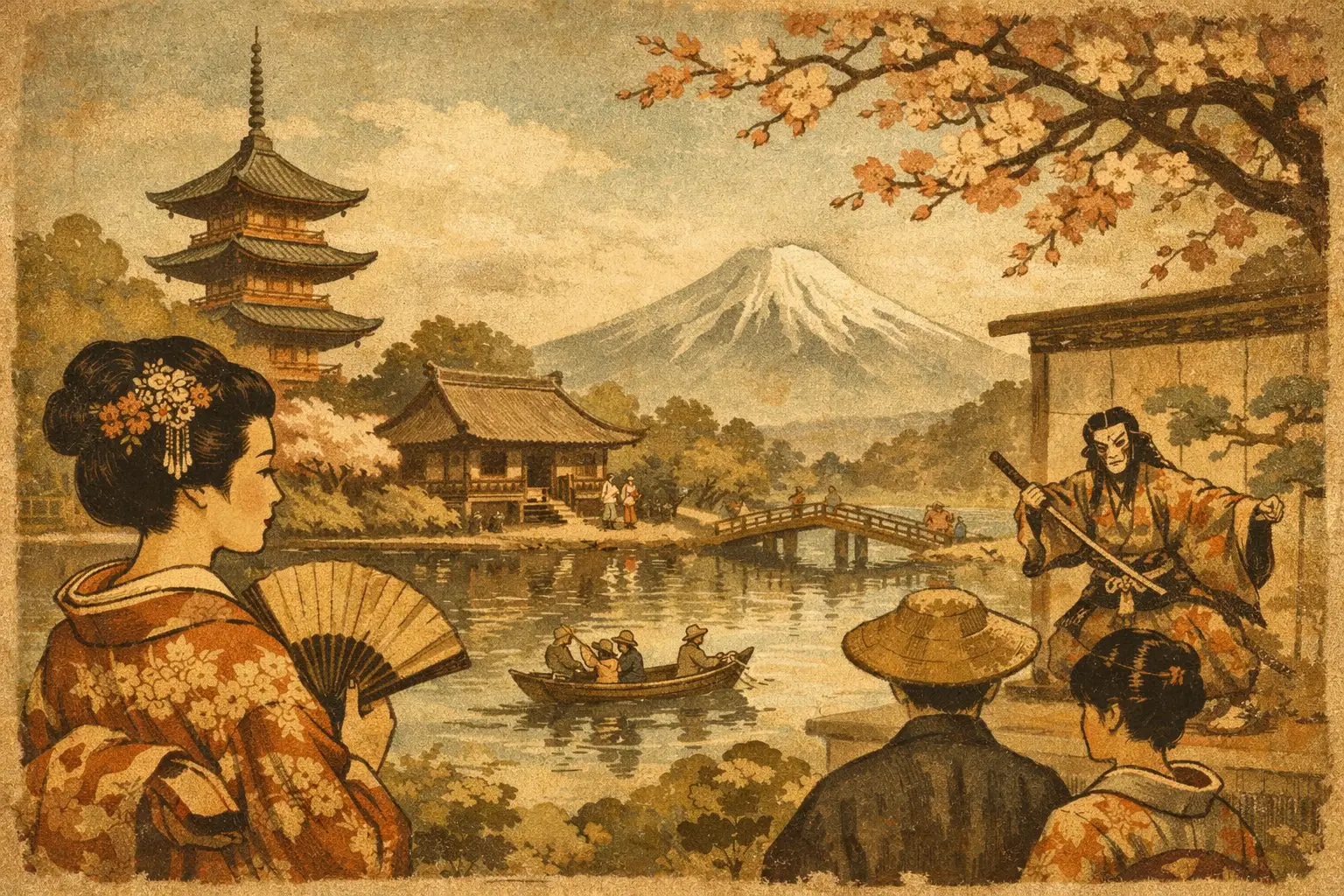
You can feel japanese cultural heritage in places that are not trying to impress you. It is there in the soft creak of a temple floor, in the indigo depth of a hand-dyed cloth, in the way a tea bowl looks slightly uneven and somehow more beautiful because of it. For many of us who love Japan, that is the real pull – not just seeing famous sites, but noticing how history still breathes through ordinary moments.
That is what makes Japan so compelling for travelers and culture fans alike. Heritage here is not sealed behind glass. It shows up in food, architecture, seasonal customs, festival sounds, and the quiet discipline behind traditional arts. If you are crazy for Japan, this is where the connection gets deeper.
What japanese cultural heritage really includes
When people hear the word heritage, they often think of castles, national treasures, or UNESCO lists. Those matter, of course. Himeji Castle, Kyoto’s old temple districts, and pilgrimage routes like Kumano Kodo are powerful examples of the historical side of Japan. But japanese cultural heritage is much wider than famous landmarks.
It also includes intangible traditions – skills, rituals, aesthetics, and ways of living that have been passed on across generations. Think of washoku, the food culture built around seasonality and balance. Think of noh and kabuki theater, where movement and sound carry centuries of meaning. Think of shodo calligraphy, where one brushstroke can reveal patience, training, and personality all at once.
This is one reason Japan leaves such a strong impression. The heritage is both material and lived. You can stand in front of a shrine gate that has weathered centuries, then walk into a workshop where a maker is still shaping paper, lacquer, clay, or steel with techniques older than many countries.
Why it still feels so present
One of the most fascinating things about Japan is that the old and the new do not always fight each other. They often sit side by side. A neighborhood can have a convenience store on one corner and a centuries-old shrine on the next block. A young designer may use traditional sashiko stitching in modern fashion. A chef may serve a deeply seasonal meal in a space that feels minimalist and contemporary.
That coexistence gives japanese cultural heritage its unusual energy. It is not just preserved. It is adapted, practiced, and woven into daily life. Some traditions stay close to their historic form, while others evolve to survive. That balance is not always easy. Tourism can flatten meaning when experiences are packaged too neatly, and mass production can imitate handmade work without honoring the craft behind it. But when heritage remains connected to real communities, it does not feel staged. It feels alive.
There is also a strong emotional thread running through many Japanese traditions. Ideas like mono no aware – the gentle awareness of impermanence – shape how people appreciate cherry blossoms, autumn leaves, old wood, fading light, and fleeting seasons. Wabi sabi, with its love of simplicity and imperfect beauty, helps explain why a worn surface or irregular form can feel more moving than something polished to perfection. These are not just abstract concepts for textbooks. They help explain why Japanese art, gardens, ceramics, and spaces feel the way they do.
The everyday places where heritage shows up
If you want to connect with heritage in Japan, the best experiences are not always the grandest ones. Sometimes they are small, local, and easy to miss.
Traditional crafts are one of the richest entry points. A visit to a pottery town, a washi paper studio, or a workshop making chochin lanterns can reveal just how much knowledge is held in the hands. The finished object matters, but the process matters too. Watching someone carve, dye, weave, or fire materials gives you a clearer sense of continuity than a museum label ever could.
Food is another direct path. Japanese cuisine is often discussed through famous dishes, but heritage lives in technique, region, and rhythm. Fermentation, knife skills, seasonal ingredients, and presentation all carry long histories. Even a simple meal can express local identity. A bowl of soba in a mountain town, sweets tied to a shrine festival, or kaiseki that follows the mood of the season can tell you a lot about place.
Bathing culture also deserves more attention in this conversation. Onsen and sento are not just about relaxation, although they are certainly wonderful for that. They reflect ideas about purification, community, and the body in relation to nature. The experience can feel very personal, but it is also cultural. Mountain hot springs, wooden bathhouses, and the etiquette surrounding them are part of a living heritage that many visitors come to cherish.
Temples, shrines, and the rhythm of memory
Temples and shrines are often the first places international visitors think of, and for good reason. They are visually striking, deeply atmospheric, and closely tied to local history. But their real power is not just architectural.
These spaces are part of ongoing practice. People visit to pray, mark the New Year, celebrate milestones, mourn losses, and join matsuri festivals. You may arrive as a traveler with a camera, but the place is still functioning as part of community life. That changes the feeling completely.
It also reminds us that heritage is not frozen in the past. A shrine can be ancient and still be part of someone’s weekly routine. A temple can preserve old statuary while hosting ceremonies that matter right now. This is where respect matters. Slowing down, observing etiquette, and paying attention to what local people are doing can turn a quick stop into a more meaningful encounter.
Japanese cultural heritage and craftsmanship
Craftsmanship may be the clearest expression of japanese cultural heritage because it connects beauty, labor, and philosophy so directly. Whether you are looking at kimono textiles, woodblock prints like ukiyoe, lacquerware, blades, bamboo baskets, or ceramics, the object carries more than style. It carries discipline.
There is a tendency among visitors to focus only on the finished product, especially when shopping. That is understandable. We all want to bring home something beautiful. But part of appreciating Japanese craft is understanding repetition, apprenticeship, and material sensitivity. A handmade item often reflects years of training and a deep relationship with natural resources.
That does not mean every traditional object must remain exactly as it was in the Edo period. Some crafts survive because artisans find new uses, new audiences, and new designs. A modern home may not need every historical object in its original form. Still, the values behind the craft – precision, seasonality, restraint, and care – can remain intact even as the context changes.
What travelers and fans should keep in mind
Loving Japan from abroad can be joyful, but it also comes with responsibility. Heritage is easy to romanticize. We might imagine a timeless, perfectly preserved Japan and overlook the reality that traditions depend on working people, aging communities, funding, and younger generations willing to continue them.
That is why thoughtful travel and thoughtful collecting matter. If you visit a heritage site, go beyond the photo spot. If you buy craft goods, learn something about where and how they were made. If you attend a cultural event, treat it as part of living community life, not just content for social media.
It also helps to accept that not every experience will feel ancient or cinematic. Some heritage sites are modest. Some towns feel quiet rather than dramatic. Some workshops are practical, dusty, and full of routine. That is not a flaw. Often, that is exactly where the most authentic feeling begins.
For all Japan lovers worldwide, this is part of the magic. Japanese cultural heritage is not only found in major landmarks or famous images. It is in the humble tea cup, the sound of festival drums at dusk, the noren curtain moving in front of an old shop, the careful wrapping of a purchase, the garden stone placed just so. The deeper you look, the more you notice that heritage in Japan is less about distance from the present and more about continuity within it.
If you want a stronger connection to Japan, start by paying attention to the things that endure quietly. They often tell the richest story.