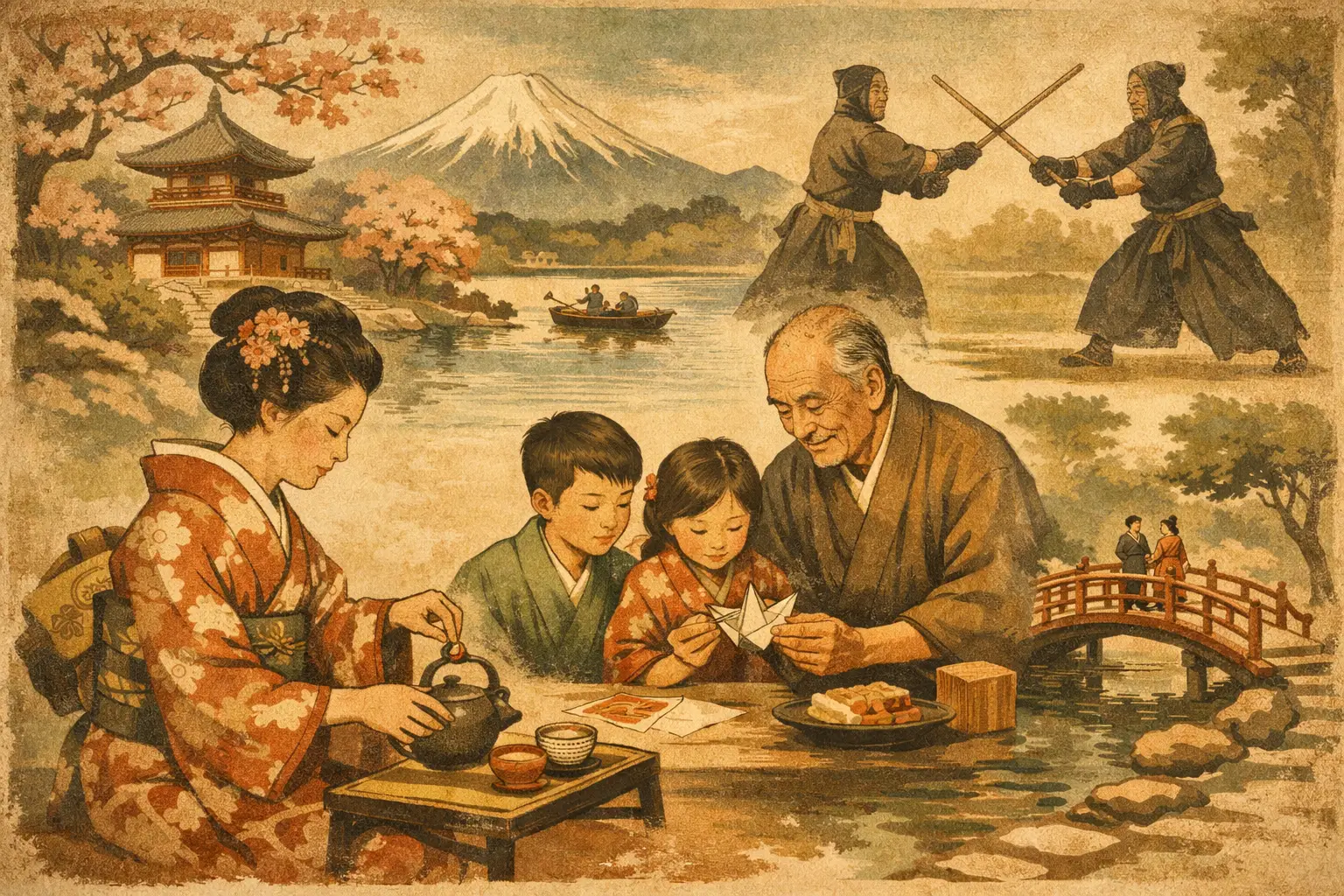
A tea bowl with an uneven rim. A shrine bell ringing just before sunset. Steam rising from an onsen in the mountains. Japanese cultural traditions are not locked away in museums – they still live in ordinary gestures, seasonal habits, and places you can actually visit. That is part of what makes Japan so magnetic for so many of us. You are not just looking at history. You are standing inside it.
For all Japan lovers worldwide, this is where the excitement really starts. The best traditions are not only the famous ones. They are the practices that reveal how Japan connects beauty, discipline, community, and the passing seasons. Some are formal, some are deeply local, and some seem simple until you experience them in person.
Why japanese cultural traditions feel so alive
One reason Japanese traditions feel different from the way many people imagine “heritage” is that they are woven into daily life. A festival is not always a performance for tourists. A shrine visit at New Year is often something families genuinely do. A carefully wrapped gift, a bow, or the way food reflects the season can carry values that have been passed down for generations.
There is also a strong respect for repetition. In many cultures, repeating the same form can feel rigid. In Japan, repetition often becomes refinement. The same tea gesture, brushstroke, or craft method is practiced again and again until it holds meaning beyond function. That is where ideas like wabi sabi and mono no aware begin to make sense. Beauty is not always flashy. It can be quiet, fleeting, worn, and deeply felt.
Of course, tradition in Japan is not frozen. It changes with time, region, and modern life. A neighborhood matsuri may now share space with convenience stores and train stations. A kimono may be worn for Shichi-Go-San, graduation, or a festival rather than every day. That does not make it less real. It shows how traditions survive by adapting.
Seasonal rituals at the heart of japanese cultural traditions
If you want to understand Japan, start with the seasons. They shape food, poetry, travel, clothing, decoration, and even mood. Spring cherry blossom viewing is the obvious example, but hanami is more than pretty scenery. It reflects mono no aware, the awareness that beauty is precious because it does not last.
Summer brings matsuri, fireworks, and Bon season, when families honor ancestors. In many towns, these events still create a powerful sense of local belonging. Lanterns, music, dancing, and shared food turn streets into communal spaces. If you attend one, you can feel that tradition in motion rather than as a static display.
Autumn is tied to harvest, moon viewing, and the changing leaves that draw travelers to temple grounds and mountain roads. Winter has its own rhythm too, from New Year decorations and shrine visits to hot baths and seasonal dishes that gather people around warmth. Japan often expresses time through atmosphere, and that gives traditions an emotional texture many visitors remember long after the trip ends.
New Year and the power of renewal
Few moments show this better than New Year. Hatsumode, the first shrine or temple visit of the year, is both personal and collective. People pray for health, success, safety, and a good year ahead. There is order, symbolism, and a feeling of reset.
For travelers, this period can be wonderful but also complicated. Some businesses close, transport gets crowded, and popular religious sites fill up fast. Still, if you want to see how tradition lives in modern Japan, New Year is one of the clearest windows.
Tea, incense, and the art of paying attention
The tea ceremony is one of the most recognized Japanese traditions, but it is often misunderstood. Many first-time visitors expect something decorative or theatrical. What they find instead is a practice of attention. Every movement matters. The room, the utensils, the sweets, the hanging scroll, and the season all contribute to the experience.
This is one of the strongest examples of Japanese cultural traditions turning an ordinary act into a refined encounter. Drinking tea is not the point by itself. The point is presence, respect, and awareness.
Incense appreciation follows a similar path. Kodo, sometimes called the way of incense, asks participants to “listen” to fragrance. That wording tells you a lot. The senses are guided with care, and subtlety matters more than instant impact. For visitors used to fast, loud experiences, this can be a refreshing shift.
Craft traditions that carry memory
Japan’s traditional crafts are one of the most exciting ways to connect with culture because they are so tangible. You can hold the result in your hands, and often you can meet the people keeping the techniques alive. Pottery, washi paper, lacquerware, indigo dyeing, woodblock prints inspired by ukiyoe, bamboo work, and chochin lantern making all reveal a different side of the country.
What makes these crafts special is not only skill. It is the relationship between maker, material, and place. Clay depends on local earth. Paper depends on fiber and water. Dyeing traditions reflect regional plants and methods. A craft village or workshop often tells a local story as much as an artistic one.
There is a trade-off here, though. As interest grows, some experiences become more commercial and simplified for short-term visitors. That is not always bad – accessible workshops can spark lifelong appreciation. But if authenticity matters to you, it helps to look for places where working artisans still produce for daily use, religious practice, or serious collectors rather than only for souvenir demand.
Kimono, etiquette, and visible tradition
Kimono is one of the most iconic symbols of Japan, but it is not just costume. Fabric, pattern, season, sleeve length, and occasion all matter. A formal kimono for a ceremony communicates something very different from a casual yukata worn at a summer festival or onsen town.
For many international fans, wearing kimono is a dream experience. It can be beautiful and meaningful, especially when done with context and respect. The key is understanding that kimono has social language built into it. Even a simple rental experience becomes richer when you learn why certain motifs appear in certain months or why the garment is tied and layered in specific ways.
Etiquette works in a similar way. Bowing, removing shoes, wrapping gifts carefully, and handling business cards properly are not random rules. They reflect awareness of space, hierarchy, and consideration for others. You do not need perfect manners to appreciate Japan, and most locals do not expect visitors to know every custom. But making the effort changes how you experience the culture.
Sacred spaces, pilgrimage, and everyday spirituality
Shrines and temples are central to understanding Japan, but not because the country fits neatly into one religious category. Shinto and Buddhism often coexist in ways that can surprise visitors. A person may visit a shrine for one life event and a temple for another without seeing contradiction in it.
This flexible, lived spirituality is part of what makes Japan so compelling. You see it in ema prayer plaques, purification at shrine entrances, temple incense, roadside statues, and mountain pilgrimage routes such as Kumano Kodo. These are not only sacred landmarks. They are pathways of memory, hope, grief, gratitude, and endurance.
If you visit, pace matters. A quick photo stop can be visually impressive, but slowing down changes everything. Listen to the gravel underfoot. Watch how people approach the main hall. Notice what is offered, what is left unsaid, and how nature is often treated as part of the sacred setting.
Bathing culture and the tradition of restoration
One tradition many visitors feel immediately is Japanese bathing culture. Onsen and sento are not just about getting clean. They create a rhythm of restoration. Wash first, soak second. Be quiet. Respect shared space. Let the bath do its work.
This can feel intimidating if you did not grow up with communal bathing, especially with rules around tattoos, noise, and etiquette. But once you understand the basics, the experience can become one of the most memorable parts of Japan. The setting matters too – a forest rotenburo, a historic bathhouse, or a simple local sento each carries a different mood.
Bathing also connects to a wider Japanese appreciation for renewal through routine. It is practical, yes, but also emotional. Warm water, mineral scent, wood, stone, and silence create a kind of reset that stays with you.
What to look for when you experience these traditions yourself
The best approach is curiosity without rushing. Ask what season a practice belongs to. Notice local variation. A festival in Kyoto will not feel the same as one in rural Kyushu. Tea in a formal school setting will differ from tea served at a small garden cafe. Tradition in Japan is rarely one-size-fits-all.
It also helps to accept that some meaning will remain just out of reach, at least at first. That is normal. Part of loving Japan is returning to the same subjects again and again and seeing more each time. That is true whether you are fascinated by calligraphy, swords, shrines, food presentation, or the quiet elegance of handmade objects.
If you keep showing up with respect and real interest, japanese cultural traditions stop being background aesthetics. They become ways of seeing. And that shift, more than any checklist, is what brings Japan closer to everyday life.