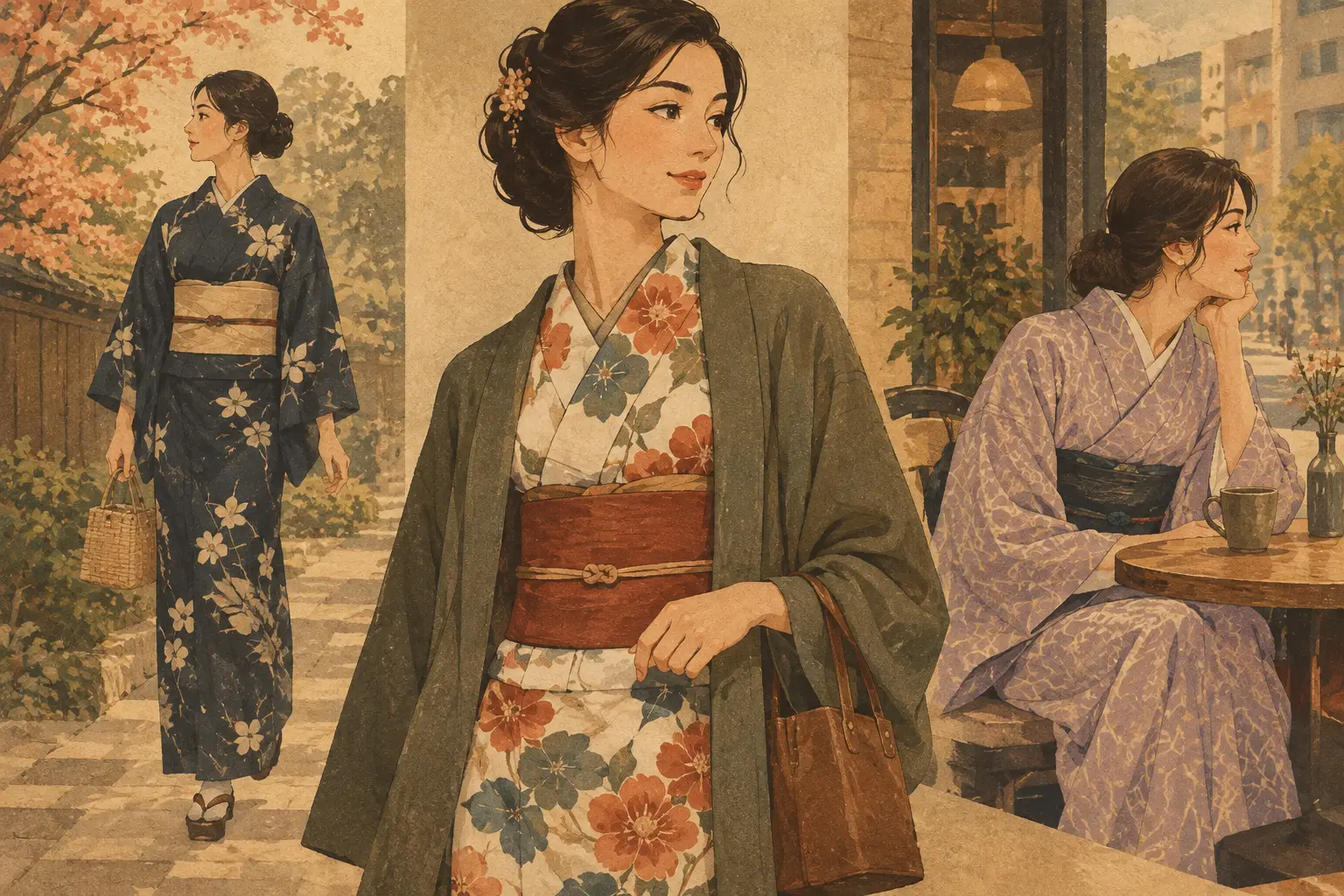
A kimono jacket over a plain white tee can look effortless. The same garment worn with the wrong closure, an overly theatrical accessory, or no attention to its history can feel like costume. That tension is exactly why modern kimono styling trends are so exciting: they invite Japan lovers worldwide to bring beauty, texture, and personal expression into daily life while treating a living tradition with care.
Kimono fashion is not one fixed look. In Japan, formal rules still matter for ceremonies, seasonal occasions, and traditional settings. At the same time, designers, vintage lovers, and creative dressers are finding fresh ways to wear kimono-inspired pieces outside those settings. The best results begin with curiosity, not a need to look “Japanese enough.”
Modern Kimono Styling Trends Start With the Right Piece
The word kimono simply means “thing to wear,” but in common English it can be used too broadly. A full kimono is a T-shaped robe with a precise dressing process, layers, and an obi belt. A yukata is a lighter cotton garment, often associated with summer festivals and onsen towns. A haori is a short kimono-style jacket, traditionally worn over a kimono and now especially easy to incorporate into an international wardrobe.
For everyday styling, a haori is usually the most approachable choice. It gives you the beautiful straight lines and textile drama of kimono clothing without asking you to recreate formal dress. Look for vintage silk haori with a subtle woven pattern, hand-painted flowers, shibori-style texture, or a lining that reveals a surprise scene when the jacket moves.
A yukata can also work beautifully in warm weather, particularly as a light outer layer over a tank and wide-leg pants. Full kimono are best saved for occasions when you are ready to learn the correct dressing basics or work with someone experienced. Wearing a formal garment casually is not automatically disrespectful, but knowing what you have makes a real difference.
The haori over denim look is still strong
One of the most wearable trends pairs a haori with jeans, a simple knit top, and clean leather boots or loafers. The denim grounds the silk, while the haori keeps the outfit from becoming ordinary. Choose straight-leg or relaxed jeans rather than heavily distressed styles. A vintage textile already carries enough visual energy.
For a softer look, wear a dark haori over a slip dress or a monochrome matching set. The contrast between a structured, rectangular garment and fluid modern clothing feels especially elegant. Keep the rest of the palette quiet so the textile can speak.
Let the Obi Inspire, Not Overwhelm
The obi is one of the most recognizable elements of kimono dress. Traditional obi tying is an art, and different forms suit different garments and occasions. If you are wearing a full kimono, do not treat an obi as a random sash. It helps hold the garment in place and has its own rules of proportion, placement, and formality.
For contemporary outfits, an obi-inspired belt is a more flexible option. A wide fabric belt over a blazer, shirt dress, or oversized linen shirt creates the strong waistline associated with kimono styling without pretending to be formal kitsuke, or kimono dressing. This is where the trend becomes personal rather than imitative.
The trade-off is comfort. A wide belt can look striking but may bunch when sitting, especially over thick layers. If you plan to wear it for a full day at a museum, market, or Japan-themed event, choose a softer wrap style and test it at home first. Style should let you move, eat, and enjoy yourself.
Fewer accessories create a stronger outfit
Kimono textiles are often rich with symbolism: cranes for longevity, pine for endurance, chrysanthemum for elegance, and waves for movement and good fortune. When the fabric has a detailed motif, avoid piling on statement jewelry, printed bags, and loud shoes. One sculptural ring, small earrings, or a simple pendant is usually enough.
This restraint has a connection to wabi sabi, the Japanese appreciation of quiet beauty, texture, and imperfection. It does not mean every outfit must be minimal. It means noticing where the beauty already lives. A tiny repaired spot, a softened silk edge, or a faded pattern in a vintage garment can be more compelling than something brand-new and flashy.
Color Is Moving Beyond the “Red and Black” Shortcut
Many people first imagine kimono in bold red, black, gold, or cherry blossom pink. Those colors are beautiful, but current styling is opening up a wider range. Smoky blue, persimmon orange, moss green, muted lavender, tobacco brown, and soft cream make vintage and contemporary kimono pieces feel fresh in everyday wardrobes.
Seasonality remains a lovely guide. Light cotton yukata, breezy indigo, and water-inspired patterns suit summer. Autumn welcomes rust, plum, brown, and maple motifs. Winter styling can lean into deep navy, charcoal, and layered textures. In spring, pale greens and floral details feel natural without requiring a head-to-toe blossom theme.
You do not need to follow seasonal symbolism perfectly outside Japan. Still, paying attention to it can make getting dressed more meaningful. It is a small way to practice mono no aware, an awareness of the changing, passing beauty of each season.
Wide Pants, Tailoring, and Layering Are the Modern Silhouettes
Skinny jeans and a long kimono jacket can work, but looser shapes currently create a more balanced line. Try a haori with pleated trousers, wide-leg denim, a midi skirt, or relaxed linen pants. The garment’s straight cut looks especially good when the clothing beneath it has room to move.
Tailoring is another strong direction. A patterned haori over a crisp button-down and tailored black pants can feel polished enough for dinner, a gallery visit, or a creative workplace. Add understated shoes and let the haori replace the role of a blazer.
Layering needs some editing. A kimono-style outer garment over a hoodie, scarf, oversized bag, and several necklaces can lose its shape. If the day is cold, choose one warm base layer and one outer garment. A fitted turtleneck under a haori is often more effective than a bulky sweatshirt.
Wear Japanese Craft With Respect, Not as a Costume
The most meaningful modern kimono styling trends are connected to appreciation for makers, textiles, and context. Before buying a garment, ask what it is, where it came from, and whether it has signs of age or damage. Vintage kimono can be wonderful, but silk may be fragile, and many pieces were made for occasional wear rather than hard daily use.
Avoid wearing a full kimono with caricatured makeup, a fake geisha costume, or accessories that reduce Japanese culture to a party theme. Geisha are professional artists with a specific cultural history, not a fashion category. The same care applies to religious imagery and family crests, called mon. If you are uncertain about a motif, take time to learn before making it the centerpiece of an outfit.
Respect also includes practical care. Do not casually machine-wash silk. Air garments after wearing them, keep them out of direct sun, and store vintage pieces clean and dry. If you find a garment with a small flaw, consider whether it can be displayed, gently worn, or transformed into a smaller item rather than discarded. That mindset honors the labor held in every stitch.
Make the Look Yours
There is no prize for copying a street-style photo exactly. The most convincing outfits pair a kimono-related piece with items you already love: favorite jeans, comfortable shoes, a well-cut dress, or a dependable white shirt. Start with one piece, wear it somewhere low-pressure, and notice how it changes the way you carry yourself.
A haori may become your travel layer for cool airplane cabins. A yukata-inspired robe may turn an ordinary summer afternoon into a small ritual of beauty. A vintage textile may remind you why you fell for Japan in the first place: not because it is distant or exotic, but because it offers new ways to see craftsmanship, season, and everyday life. Wear that feeling with confidence, and let it lead you toward deeper learning.